

 GMA Brandtalk
 Tracking
 Archives

ADVERTISEMENT
Filtered By: Lifestyle
Lifestyle
Thang Long water puppets and poetry in the heart of Hanoi
+
Make this your preferred source to get more updates from this publisher on Google.
Hanoi, Vietnam “Your birthplace is awashed in brackish waters/And my poor village is just full of pebbles and rocks./ You and I were strangers from faraway places/Who have never dreamt of an encounter./ Gun beside gun and head beside head,/sharing a blanket in wintry nights/you and I quickly become close friends…” Thus started the poem “Comrade” of Chinh Huu (real name Tran Dinh Dac), a Vietnamese poet who was also a captain in the army and deputy secretary general of the Vietnam Writers Association. He received the Ho Chi Minh Prize for literature and arts in 2000 and this poem has become a popular song in the country. This and so many other beautiful Vietnamese poems were our fond memories of our stay in Hanoi, the capital city, also called Thăng Long (昇龍) or "Rising Dragon" poetically by the locals. Together with Filipino poets Marjorie Evasco and Dinah Roma Sianturi, I was an invited guest of the Vietnam Writers Association on the occasion of the first Asian Pacific Poetry Festival in Ha Long Bay, and the 10th National Poetry Day of Vietnam in Hanoi. It was quite dark when my husband Alex and I exited from the Noi Bai International Airport in Hanoi. A bespectacled, kind-looking gentleman who turned out to be Ngo Huong Giang, a Vietnamese poet, whisked us off to our residence, the prestigious Ho Tay (West Lake) Villa. The next day dawned foggy with a little rain, and as we went around the vast gardens of the residence complex, we noted that the West Lake looked moody and mysterious in the morning light. Small boats were docked near the periphery of our villa, and some locals were seen rowing around the lake. There was a mysterious-looking temple nearby with a graphic depiction, a la Dante, of the fires of Hell for those who strayed. Exploring the city on our own, Alex and I took a cab to the Ho Chi Minh Memorial gardens, as suggested by friend Nguyen Phan Que Mai. She was one of the busiest Vietnamese poets during the festival, doing translations and emceeing among many task, yet maintaining her composure in her beautiful and colorful ao dais. 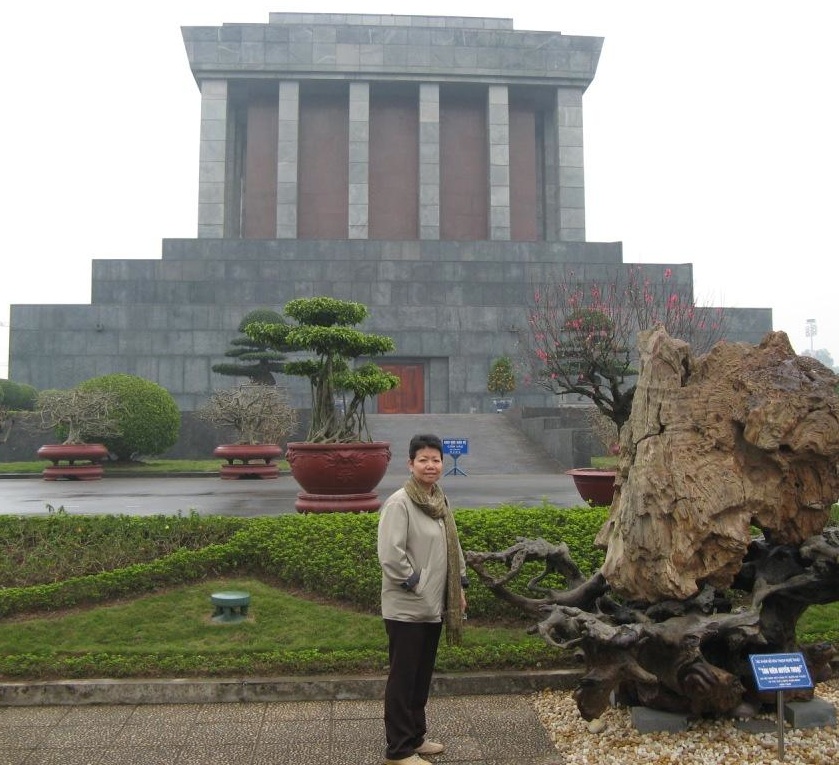 The Ho Chi Minh Mausoleum (at left) is in Ba Dinh Square, right in the heart of town. Fondly called Uncle Ho, the Vietnamese leader had read the Declaration of Independence creating the Democratic Republic of Vietnam here on September 2, 1945. It is a huge granite building, gray and somber, with many people solemnly filing past the most revered figure in Vietnamese history. It was probably the rain, too, that added to the feeling of solemnity as we went around the complex. There were bonsai gardens, topiaries, koi ponds, formal English gardens, and in one area, the Ho Chi Minh temple where visitors lighted joss sticks and offered prayers. In an inner courtyard we joined a crowd to look from afar at the Presidential Palace, a very European-looking building painted yellow-ochre. Built in 1906 to house the French Governor-General of Indochina, it was constructed in the “Beaux Arts” architectural design, a bit odd in the tropical setting surrounded by mango trees. The Palace is off limits to the general public, although the next day all of us poets were received by the Vietnamese president Truong Tân Sang very warmly within its first-floor state rooms. Further on and a bit away from the Presidential Palace was the House of Stilts of Uncle Ho, said to be the place where he worked and resided, as he was averse to living in the opulence of the French palace. The House on Stilts had two simple rooms, and there were still, on exhibit, his simple bed, his books, and writing implements. Curiosity led us to the Ho Chi Minh Museum, where we enjoyed the various multi-media exhibits, a historical depiction of the country’s struggle for independence from colonizers, the very many poems written by revolutionaries, and a room for Picasso’s Güernica-inspired art. Alex and I walked around the periphery of the square, and caught the hum of Hanoi life: the busy traffic, students in their uniforms, flower wreath sellers. We noted the unique architecture of many houses: tall, narrow, colorful, with verandas or balconies in each story, sometimes as high as four stories, with a pagoda-like structure at the top.
 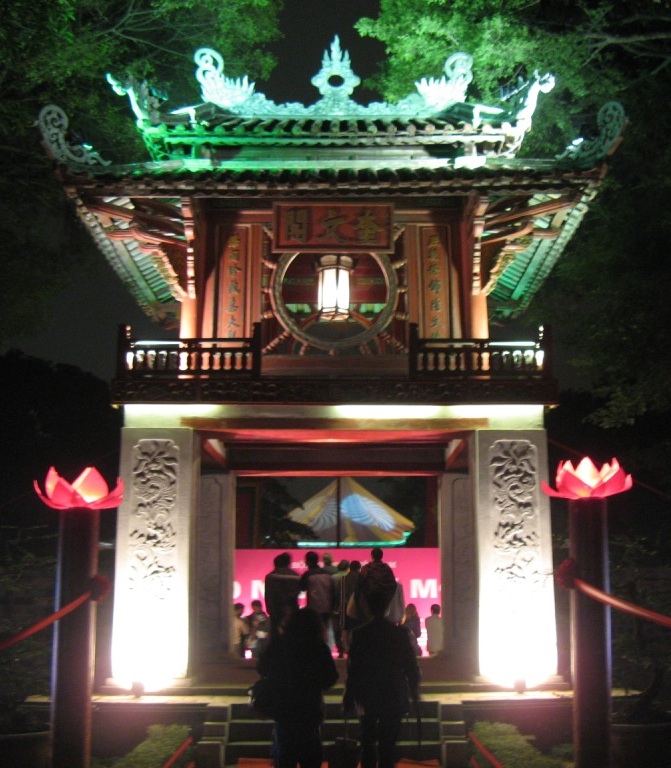 Later, we joined other guests for the eve of the much-celebrated 10th National Poetry Day of Vietnam held in the Temple of Literature (right), which was also the first national university of the country. Built in 1070 during the reign of King Lý Nhân Tông, the temple of Confucius had several courtyards. Beautiful colored lights beckoned as we walked in, with red banners announcing the happy occasion and welcoming everyone from around the world. All the poets participated in the candle-lighting ceremony. After that there was poetry reading, interspersed with folk dances and indigenous music showcasing instruments from the varied ethnic groups of Vietnam. Fired up by this night of poetry and music we were eager to go back the next day and join the city and its people in celebrating Poetry Day itself, on February 5. With the light of day we were able to behold with awe the blue stone stelae that held more than 800 names of those who passed the King’s examinations. Poetry reading and dances and meeting up with new poet friends were the day’s highlights. Marjorie Evasco looked elegant in her jusi Filipiniana ensemble, while Dinah Sianturi wore a very becoming multi-colored silver batik blouse. Red balloons, with poetry attached to them, were set free from the temple grounds, and the words seemed to have reached the heavens, indeed! That night we were invited to watch a show at the Thang Long Water Puppet Theater along Dinh Tien Hoang St. in the heart of town. Alex and I were able to go around the Hoan Kiem (Returned Sword) Lake, just across the theater, before the performance. The sprawling park was vibrant with all the lights, the laughter of the people – some having an al fresco bowl of steaming pho (Vietnamese noodles) on low plastic chairs – and the general happy din of living. The stage of the water puppet theater had a big rectangular pool, where the puppets were maneuvered through long poles by the puppeteers submerged in waist-deep water behind screens. The art was thought to originate in the 11th century in the Red River Delta, where farmers amused themselves with the puppets made of lacquered wood when the rice fields flooded. An orchestra using traditional instruments and a soloist formed the musical background; the story line was usually a folk tale. The show ended with a crescendo of fireworks, as a brightly lit dragon dramatically flew up and disappeared into the black night.
 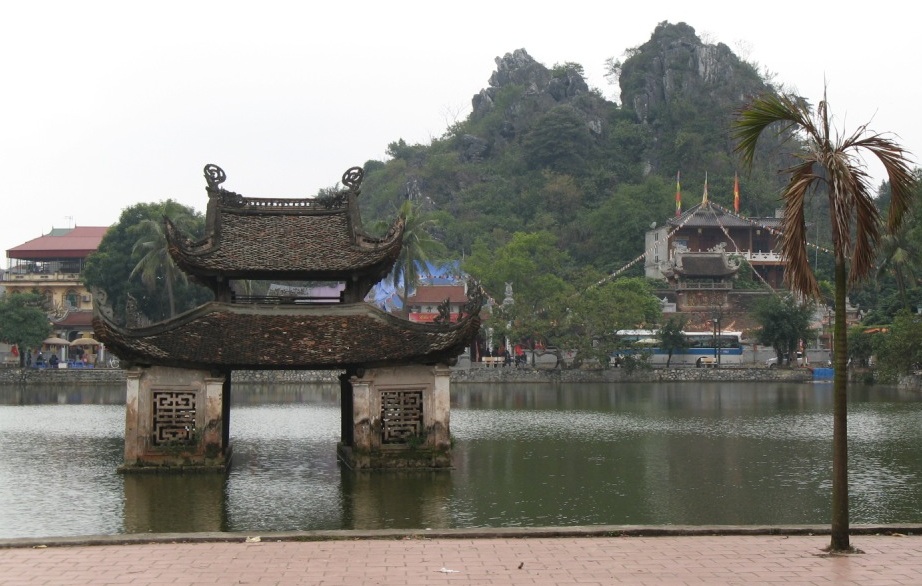 To cap our stay on a high note, the organizers invited us to join the monks in a Buddhist temple just outside Hanoi for prayers and blessings, and a midday vegetarian meal, just in time for the 15th day lunar full moon that night. The tranquility of the lake (above) in front of the temple, the ancient 16th century statues of the Tían Fu Shi, and the overall camaraderie among the poets were indeed priceless. This warmth was more evident during the Closing Ceremonies at the upscale Dae Woo Hotel. Poets went around, taking photos and feeling nostalgic that all too soon good things must end. Friends Mary Croy from Madison, a long-time Hanoi resident; Sue Wotton from New Zealand and her partner Doug; Helen Thompson, from the U.S. but now living in Japan; Indian friends Sukrita and Mamta; Thai poet and historian Pornpen; Japanese friends Goro, Mariko and Yuka; and Vietnamese poets President of Vietnamese Writers Association Huu Thinh, Tuyet Nga, and Ngo Huong Giang all promised to keep in touch. Indeed, thinking of our trip to Hanoi made me remember the warmth of all poet friends, the friendship made, and the poem of Chinh Huu, a war poem that ended in an unforgettable lyrical manner: “…Tonight, amidst the quiet jungle of frosty fog / you and I stand side by side waiting for the enemy to come/ On the muzzles hangs the moon.” – YA/TJD, GMA News
The Ho Chi Minh Mausoleum (at left) is in Ba Dinh Square, right in the heart of town. Fondly called Uncle Ho, the Vietnamese leader had read the Declaration of Independence creating the Democratic Republic of Vietnam here on September 2, 1945. It is a huge granite building, gray and somber, with many people solemnly filing past the most revered figure in Vietnamese history. It was probably the rain, too, that added to the feeling of solemnity as we went around the complex. There were bonsai gardens, topiaries, koi ponds, formal English gardens, and in one area, the Ho Chi Minh temple where visitors lighted joss sticks and offered prayers. In an inner courtyard we joined a crowd to look from afar at the Presidential Palace, a very European-looking building painted yellow-ochre. Built in 1906 to house the French Governor-General of Indochina, it was constructed in the “Beaux Arts” architectural design, a bit odd in the tropical setting surrounded by mango trees. The Palace is off limits to the general public, although the next day all of us poets were received by the Vietnamese president Truong Tân Sang very warmly within its first-floor state rooms. Further on and a bit away from the Presidential Palace was the House of Stilts of Uncle Ho, said to be the place where he worked and resided, as he was averse to living in the opulence of the French palace. The House on Stilts had two simple rooms, and there were still, on exhibit, his simple bed, his books, and writing implements. Curiosity led us to the Ho Chi Minh Museum, where we enjoyed the various multi-media exhibits, a historical depiction of the country’s struggle for independence from colonizers, the very many poems written by revolutionaries, and a room for Picasso’s Güernica-inspired art. Alex and I walked around the periphery of the square, and caught the hum of Hanoi life: the busy traffic, students in their uniforms, flower wreath sellers. We noted the unique architecture of many houses: tall, narrow, colorful, with verandas or balconies in each story, sometimes as high as four stories, with a pagoda-like structure at the top. Later, we joined other guests for the eve of the much-celebrated 10th National Poetry Day of Vietnam held in the Temple of Literature (right), which was also the first national university of the country. Built in 1070 during the reign of King Lý Nhân Tông, the temple of Confucius had several courtyards. Beautiful colored lights beckoned as we walked in, with red banners announcing the happy occasion and welcoming everyone from around the world. All the poets participated in the candle-lighting ceremony. After that there was poetry reading, interspersed with folk dances and indigenous music showcasing instruments from the varied ethnic groups of Vietnam. Fired up by this night of poetry and music we were eager to go back the next day and join the city and its people in celebrating Poetry Day itself, on February 5. With the light of day we were able to behold with awe the blue stone stelae that held more than 800 names of those who passed the King’s examinations. Poetry reading and dances and meeting up with new poet friends were the day’s highlights. Marjorie Evasco looked elegant in her jusi Filipiniana ensemble, while Dinah Sianturi wore a very becoming multi-colored silver batik blouse. Red balloons, with poetry attached to them, were set free from the temple grounds, and the words seemed to have reached the heavens, indeed! That night we were invited to watch a show at the Thang Long Water Puppet Theater along Dinh Tien Hoang St. in the heart of town. Alex and I were able to go around the Hoan Kiem (Returned Sword) Lake, just across the theater, before the performance. The sprawling park was vibrant with all the lights, the laughter of the people – some having an al fresco bowl of steaming pho (Vietnamese noodles) on low plastic chairs – and the general happy din of living. The stage of the water puppet theater had a big rectangular pool, where the puppets were maneuvered through long poles by the puppeteers submerged in waist-deep water behind screens. The art was thought to originate in the 11th century in the Red River Delta, where farmers amused themselves with the puppets made of lacquered wood when the rice fields flooded. An orchestra using traditional instruments and a soloist formed the musical background; the story line was usually a folk tale. The show ended with a crescendo of fireworks, as a brightly lit dragon dramatically flew up and disappeared into the black night. To cap our stay on a high note, the organizers invited us to join the monks in a Buddhist temple just outside Hanoi for prayers and blessings, and a midday vegetarian meal, just in time for the 15th day lunar full moon that night. The tranquility of the lake (above) in front of the temple, the ancient 16th century statues of the Tían Fu Shi, and the overall camaraderie among the poets were indeed priceless. This warmth was more evident during the Closing Ceremonies at the upscale Dae Woo Hotel. Poets went around, taking photos and feeling nostalgic that all too soon good things must end. Friends Mary Croy from Madison, a long-time Hanoi resident; Sue Wotton from New Zealand and her partner Doug; Helen Thompson, from the U.S. but now living in Japan; Indian friends Sukrita and Mamta; Thai poet and historian Pornpen; Japanese friends Goro, Mariko and Yuka; and Vietnamese poets President of Vietnamese Writers Association Huu Thinh, Tuyet Nga, and Ngo Huong Giang all promised to keep in touch. Indeed, thinking of our trip to Hanoi made me remember the warmth of all poet friends, the friendship made, and the poem of Chinh Huu, a war poem that ended in an unforgettable lyrical manner: “…Tonight, amidst the quiet jungle of frosty fog / you and I stand side by side waiting for the enemy to come/ On the muzzles hangs the moon.” – YA/TJD, GMA News 
