

 GMA Brandtalk
 Tracking
 Archives

Out-of-the-box tech innovations for a quake- and flood-proof PHL
Floods and earthquakes are among the most devastating phenomena on our planet. While we can’t completely prevent them, there are ways to minimize the damage they bring. This was the message of meteorologist Nathaniel “Mang Tani” Cruz, the host of “Hamon ng Kalikasan,” GMA News TV’s weather magazine show. While advocating traditional vigilance measures like drills, inspections, and perpetual alertness, Mang Tani presented on September 20 and 27 some innovations that could save lives and millions of pesos in damages. Brutter and Bruno’s “earthquake-proof” table Students are regularly instructed to seek refuge under tables during earthquakes, but ordinary tables offer little resistance to hundreds of kilograms of falling debris. Instead of waiting for comprehensive reforms and updates in building codes, Arthur Brutter and Ido Bruno decided to create tables that would last longer than the roofs above their heads. This earthquake-proof table was designed by the Israeli pair in partnership with the Bezalel Academy Labs in Jerusalem. They want to save, by their estimate, more than 300 million students worldwide attending school in inadequately prepared buildings in quake-prone zones. So far, the results look unshakeable. The table can withstand the falling weight of up to a ton of compact mass, and has been nominated for design awards and feted in several festivals worldwide. “Equipping a class with earthquake-proof tables is roughly 10 times cheaper than strengthening its walls, and more than 400 times cheaper than building a new class[room or] school that is up to earthquake building standards,” said Brutter and Bruno to the Core77 Design Awards 2012 Committee. No news yet regarding the table's mass production, but this is an innovation that would be very much welcome in Filipino classrooms. Rubber base isolators Weak buildings may give way in the event of an earthquake at Phivolcs Intensity Level V (Very Strong). This is because a building’s rigidity works against its favor when the ground moves violently in all directions: the building bears the entire impact of forces shaking it in all directions, causing it to tear apart and fall. Even if a building may be structurally sound enough to withstand damage, strong earthquakes can dislodge fixtures and heavy furniture that may injure or trap anyone inside during the event. In other countries, houses and other establishments are constructed with rubber base isolators to serve as a buffer between the ground and the building itself. In a way, base isolators work like automobile shock absorbers because they absorb the impact from outside while protecting the structure from the brunt of the force. The device is composed of two main parts: a Teflon-laminated sliding isolator and a laminated rubber isolator. The former supports the structure’s vertical load and reduces the transmission of the earthquake force, allowing it to “slide” around a given base. Meanwhile, the rubber isolator’s elasticity smoothly pulls the building back to its original place. However, this technology does not guarantee a building won’t crumble when a quake hits. But an investment like this could prevent the loss of life and major inconveniences when the time comes. Thinking out of the box At the height of the monsoon rains, Architect Paulo Alcazaren took a different approach to figuring out a solution to the floods. Thinking out of the box, he asked himself: What if tricycles could be converted into boats? What if we built over esteros instead of along them? What if we could power water pumps using a simple padyak mechanism? Based on his imagined answers to these quirky questions, Alcazaren posted a few quick three-minute sketches to his Facebook wall: 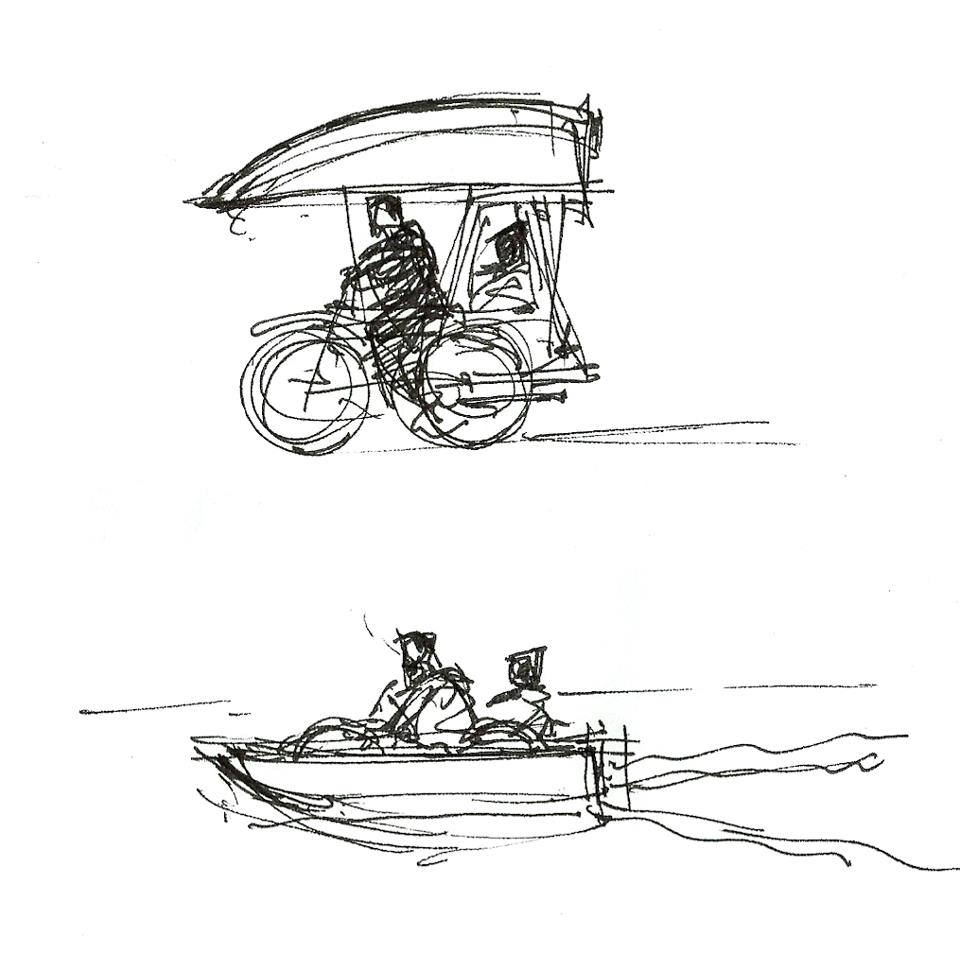 “Patawa pero seryoso,” said Alcazaren about his sketches. “Ang hirap kasi na puro seryoso ang posting mo sa social media, wala naman tulong yan. At least nag-iisip tayo ng solusyon na naiiba sa standard reactions sa floods like mega dikes.” Even if some of his ideas prove to be ultimately crazy, infeasible or outrageous, Alcazaren opened a few floodgates of his own to start the conversation on how else Filipinos can innovate for disasters. Planning the urban landscape Instead of trying to fight nature, Architect Felino “Jun” Palafox has been a staunch advocate of orienting cities to adapt to the demands of Mother Nature. He says that the haphazard, patchwork development in Metro Manila is a significant contributor to flooding in the city. “Our drainage system and flood control systems in Metro Manila are already obsolete,” said Palafox, explaining that the current flood maps have not been updated to cope with its population of more than 11 million people.
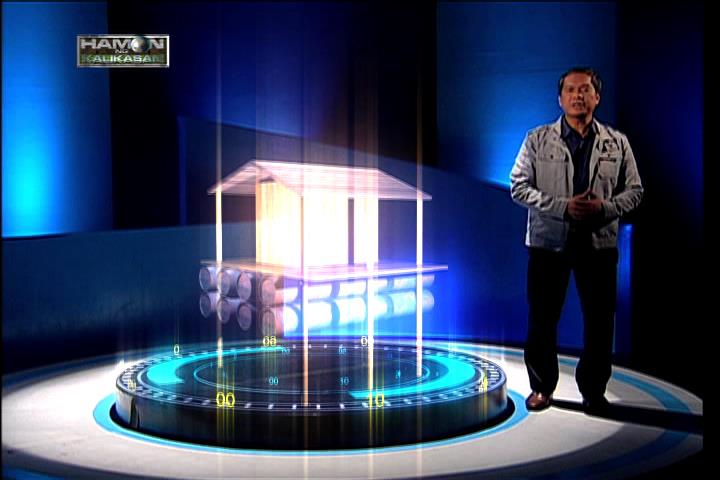 GMA resident meteorologist Mang Tani stands next to a 3D image of a floating house designed by Urban Planner and Architect Jun Palafox. Will residents of flood-prone Metro Manila eventually have to live in houses like this?
