

 GMA Brandtalk
 Tracking
 Archives

ADVERTISEMENT
Filtered By: Lifestyle
Lifestyle
Fashion first aid for spills, stains, rips and other wardrobe mishaps
+
Make this your preferred source to get more updates from this publisher on Google.
No piece of clothing is immune to wear-and-tear or damage. Whatever the cause—whether you wore the wrong outfit on a rugged trip, you were around some very careless company, or you yourself are hopelessly klutzy—there is usually a quick way to remedy these clothing emergencies. From a zipper that can't zip to a stubborn coffee stain or a run in your stockings, here are some tried-and-tested ways to keep those seams in check:
1. Keep that fashion first-aid kit handy. 
Don’t be intimidated—it’s simpler than it sounds.
Basically your fashion first-aid kit should consist of safety pins, safety pins, and more safety pins! In your moment of need, they will come to the rescue (these nifty little knickknacks have the word “safety” in them for a reason). Their saving powers cover a wide range of repairs; from a missing button, loose waist or broken strap to even heftier jobs like the earlier mentioned zipper that won’t zip. All you need to know is how to pin properly, so that the pin is concealed but secure.
Basically your fashion first-aid kit should consist of safety pins, safety pins, and more safety pins! In your moment of need, they will come to the rescue (these nifty little knickknacks have the word “safety” in them for a reason). Their saving powers cover a wide range of repairs; from a missing button, loose waist or broken strap to even heftier jobs like the earlier mentioned zipper that won’t zip. All you need to know is how to pin properly, so that the pin is concealed but secure.
Other additions to your kit can include masking tape, lacquer (i.e., nail polish) and a bleach pen or a simple pack of tissue. Use masking tape on loose hems (yes that works) and other folds that come out of place. Just make sure the fabric isn’t too heavy, and don’t expect it to hold for long. Tape should buy you just enough time to go to the restroom and change or get your hands on a safety pin or needle and thread.
Lacquer is great for stopping runs in stockings and basically any lightweight fabric that is rapidly coming undone (like a prized scarf, perhaps). A bleach pen, on the other hand, can really come in handy on those white dress days, especially if you’re the spill-prone sort of person.
A more traditional approach to stain removal is soap and water. As soon as you notice the stain, rush to the nearest sink and soak it, using the tissue to dab it off. Usually it isn’t advisable to rub, but if you’re feeling confident about the fabric, rubbing will get your job done much quicker.
2. Take preventive measures.
Another way to keep your clothes from running into any accidents is to “dress preventively.” That is to say, dress appropriately for the occasion. When you know you’ll be getting dirty, wear an outfit that you don’t mind roughing up. Bring a bleach pen if you’re wearing white, and don’t wear nice shoes to Divisoria.
When you’re wearing something valuable like a suit, be extra careful. A common problem with suits is when the breast pocket gets stained from a boutonnière . Usually this is because the tape used for the flower arrangement is dyed. As a preventive measure, put masking tape or clear tape on the part of the boutonnière that will come into contact with the fabric of the suit, so that it acts as a sort of shield against the dye.
Observing proper laundering, ironing and storage is also a good way to extend the life span of your clothes. The most basic rules here are: always separate colors when using the washing machine and hand wash delicate pieces.
Dry your clothes in the shade because sunlight usually causes colors to fade. Take them down when they are slightly damp and iron at once. Check tags for iron settings or test iron on a small corner of the garment if you are unsure about the fabric.
If you have someone doing all of these things for you, make sure they know how to do them properly because poor laundry practices are the quickest way to damage your clothes.
3. Go the extra mile (or yard).
While safety pins are a quick fix, they shouldn’t be made to hold permanent repairs. If you really want your clothes to last, simple stitches should do the trick.
Darning is a great way to mend small holes by reconstructing the fabric using small, interwoven stitches. (Again, don’t be intimidated. It’s simpler than it sounds.) A diagram here shows you exactly how to do it.
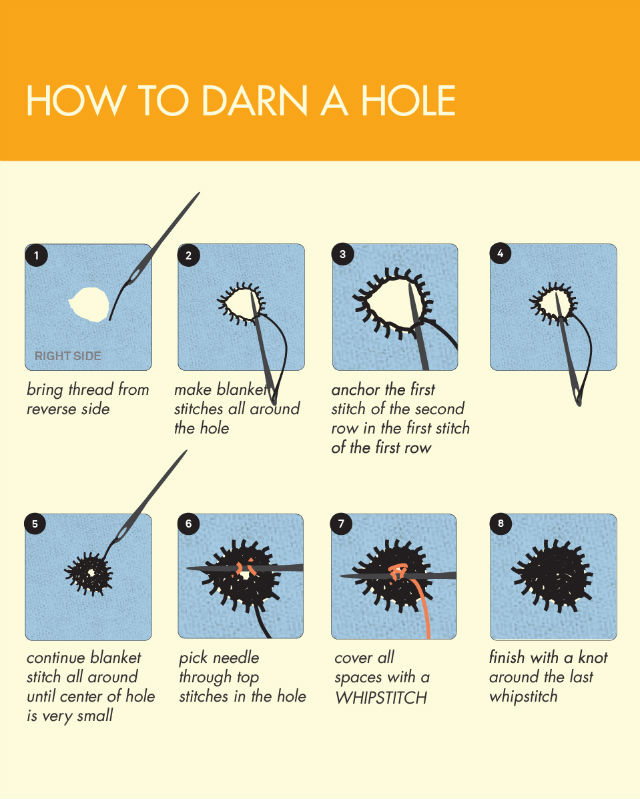
Bigger holes, on the other hand, can be covered with patches. If you’re concerned about matching the fabric, most pairs of pants or shorts have pockets from which you can cut the patch (take it from the inner part that isn’t visible).
The basic backstitch is an all-around stitch that can be used for most garment repairs. It’s sturdy and quick and, most importantly, very easy to do. The whipstitch, too, is very versatile and much more thread-efficient without being flimsy like the running stitch.
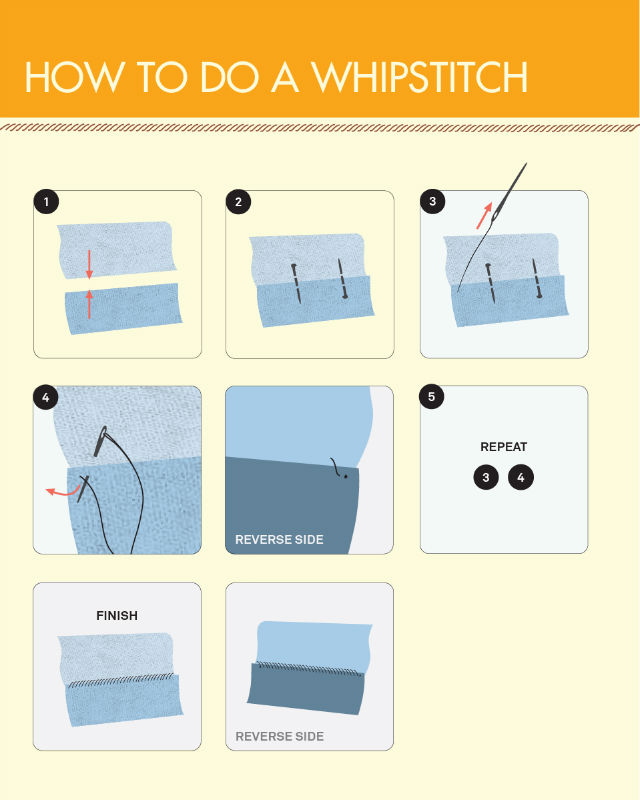
Whatever solution you decide to go with, know that your wardrobe (and your pocket) will be much better off when you decide to level up those first-aid skills—not to mention the number of potentially embarrassing moments you can spare yourself from ever having to experience. —KG, GMA News
Illustrations by Jica Lapeña
Illustrations by Jica Lapeña

