We use cookies to ensure you get the best browsing experience. By continued use, you agree to our privacy policy and accept our use of such cookies. For further information, click FIND OUT MORE.
Make this your preferred source to get more updates from this publisher on Google.
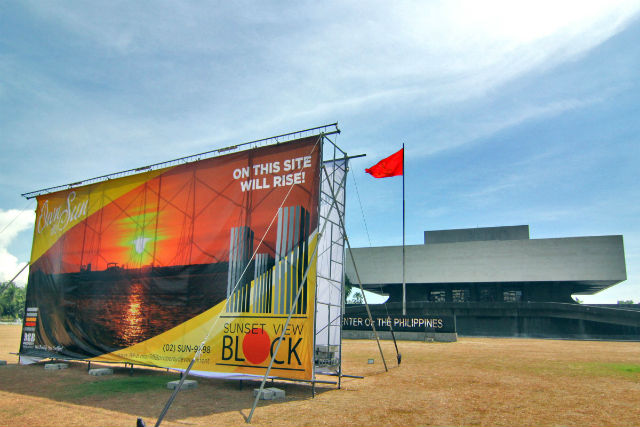
When artist-activist Carlos Celdran posted a photo on his Facebook timeline of yet another billboard declaring yet another high-rise claiming yet another historical piece of land, the general reaction from viewers was outrage. And how couldn’t they be mad, when this time the impending high-rise threatened to take over the front lawn of the Cultural Center of the Philippines? “On this site will rise!” the billboard proudly and loudly declared. Beneath the statement, a logo of the future condominiums called the Sunset View Block.
The billboard on the front lawn of the Cultural Center of the Philippines is, in reality, a protest piece that criticized the building of properties on heritage sites. Danny Pata
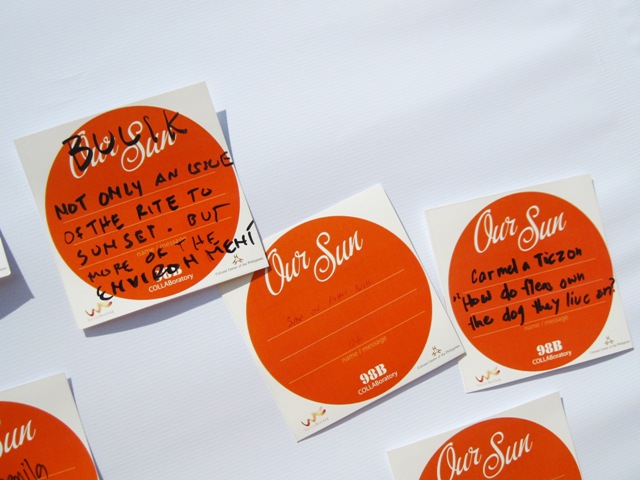
The billboards quickly spawned an angry mob on Celdran’s Facebook page. Most of the commenters could hardly believe that anyone would dare touch the CCP in favor of a building that allowed you to “Own the Sun.” It took a closer look for the mob to realize that the billboard was, in fact, a protest piece that criticized the building of properties on heritage sites--more specifically, the construction of a financial and entertainment center called the “Solar City” on a portion of reclaimed land in Manila Bay. If it pushes through, the project is expected to block many strollers' view of the iconic Manila Bay sunset. The other side of the billboard was a protest freedom wall. Under a big protest statement that ended with “the sun rises and sets for us all,” sunset advocates wrote their messages on small pieces of paper. They were few, and unreadable to passersby who breeze through Roxas Boulevard on the way to somewhere else.
The other side of the billboard was a protest freedom wall.
The piece was done by art collaboratory 98B which described it as “a satirical art installation that reacts to developers who are set on destroying and slapping a price tag on Manila’s beloved sunset.” As a satire, it isn’t the wittiest or the most clever. There certainly could have been more humor, more exaggeration of truth. In terms of design and placement, the billboard was much too realistic, too pretty even, to make viewers realize how ridiculous the object of satire actually is. The most absurd part about the installation was that it threatened to rise right in front of the CCP, and were the CCP under any threat of demolition, the satire would have worked perfectly. Based on social media reactions, more people were alarmed at the idea of the CCP being torn down or replaced by a condo. They were more concerned for the CCP than the endangered Manila Bay sunset--and though there is nothing wrong with that, it is the sunset that the protesters are trying to save.
On the reverse side of the billboard, concerned citizens wrote their views on the construction of a financial and entertainment center on a portion of Manila Bay.
That said, perhaps a stronger statement would have been made had the installation been set across the baywalk itself, blocking the sunset and actually showing people what they stand to lose if reclamation plans push through. Still, the installation managed to inspire strong opinions. It engaged people and made viewers want to fight for culture, for heritage, for beauty. Even with mixed messages and a confusing location, the piece turned out to be a striking image, a metaphor for capitalism standing in the way of culture. — DVM/KG/HS, GMA News


 GMA Brandtalk
 Tracking
 Archives