

 GMA Brandtalk
 Tracking
 Archives

ADVERTISEMENT
Filtered By: Money
Money
As PHL stocks surpass expectations, analysts are baffled
+
Make this your preferred source to get more updates from this publisher on Google.
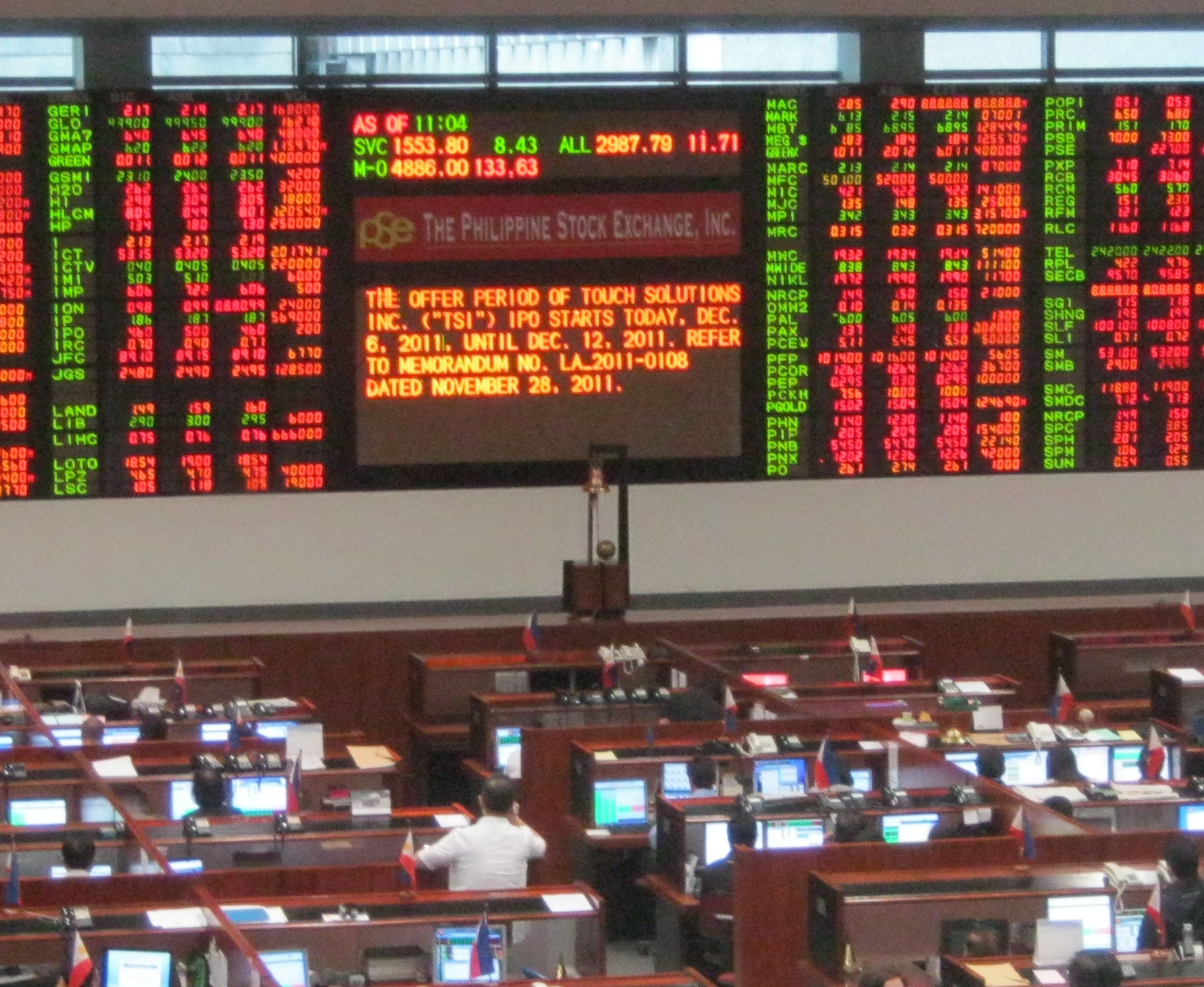
The benchmark PSEi soared to its 31st record high for the year this week, baffling analysts in how to update their respective forecasts for the main index.
Astro del Castillo, managing director of First Grade Holdings Inc., said 2013 is a "really challenging" year for the market, but "a very welcome challenge," considering full-year expectations is just a few steps away.
“We have never seen such interest in the market in the past few years,” he said.
Earlier this year, analysts interviewed by GMA News Online predicted the benchmark PSEi to hit the uncharted 7,500 level for the year after the Philippines on March 27 received from Fitch Ratings an investment grade rating.
The PSEi on March 27 soared 182.35 points or 2.74 percent to 6,847.47, its 24th record close, on upgrade.
The PSEi on March 27 soared 182.35 points or 2.74 percent to 6,847.47, its 24th record close, on upgrade.
On May 15, the index soared to its 31st all-time high close of 7,392.20, fueled by first quarter corporate earnings and the relatively peaceful midterm elections on Monday.
"Eventually nag-a-adjust din ang target, and in this case, very tough mag-forecast kasi bull market. It’s difficult to see where the bulls are going," Del Castillo noted.
He noted that if the market will breach 7,500, immediate target is pegged at 7,800.
"Given the good investment and economic environment, the investment grade from major institutions for the Philippines, plus Moody’s still pending credit rating for the Philippines, market could still reach upside of 7,800 to 7,850, or 35 percent higher than the market
performance from 2012," del Castillo said.
Betting on PSEi at 8,000 level
performance from 2012," del Castillo said.
Betting on PSEi at 8,000 level
Freya Natividad, analyst at 2TradeAsia.com, said the main PSEi index may reach 8,000 on the upside, pushed by the recent credit rating upgrades from Standard & Poor's Ratings Services and Japan Credit Rating Agency Ltd. (JCR), plus the latest cut in rate of the central bank special deposit accounts (SDA).
However, “challenges would be infrastructure spending, kung gaano ka-aggressive ang private sector at ang government,” she said.
On April 25, the Monetary Board slashed the SDAs yield by 50 basis points to 2 percent. Its the third SDA rate cut for the year, driving investors to look for other instruments—including equities—to place their funds.
The Philippines received its second investment grade rating from debt-watcher S&P on May 2 while JCR on May 7 raised the Philippines' creditworthiness, which was already at investment grade, to BBB from BBB-, with a stable outlook.
An investment grade rating lowers the cost of government and private sector borrowings, which could lead to easier funding for investments. It stokes investor confidence in the Philippines as it supports the assessment that the country has strong macroeconomic fundamentals and the capacity to pay-off debts.
Some analysts maintained their 7,500 target for PSEi for the whole of 2013, despite the credit rating upgrades from Standard & Poor's and JCR.
Arlysa Narciso, analyst at AB Capital Securities Inc., said the 7,500 is "achievable" for the full year, given positive economic fundamentals, plus encouraging first quarter results, and the three credit rating upgrades. "There may still be a few hurdles and the ratings alone just added confidence in the Philippines," she added.
"It's still the same... We’re looking at 7,500... Outlook has already factored in [the upgrades] in the recent days," said Manny Cruz, market strategist at Asiasec Equities Inc.
"We are not discounting a major correction along the way," he added.
Vulnerable to profit-taking
The market is now vulnerable to profit-taking since it has surpassed the 7,300 levels on better first quarter earnings and the boost from investment grade, BDO Unibank Inc. market strategist Jonathan Ravelas said.
Analysts noted the Philippines is now the most expensive in Southeast Asia.
Philippine equities currently has a P/E ratio of 21.88 times, the second highest in Asia after Japan at 27.55 times. Against peer markets, the Philippines is the highest compared with Malaysia's 15.16 times, Indonesia's 16.75 times and Thailand's 15.77 times.
Though Philippine equities trade at 21 times, Narciso said "this is not really putting much weight on investors"—if you look at it against the government policies now in place.
"Foreign investors are to put money in the country as government's programs and transparency is big thrust for us. It is easy to trust government as it cleans up its backyard," she noted.
2TradeAsia's Natividad said "foreign investors do not see a problem with high valuations as there are other factors giving them an upside, like GDP growth."
Del Castillo said high valuations are just a second thing for investors as they focus mainly on market liquidity.
"In terms of P/E ratio, sobrang taas na tayo. Although they are still sensitive to high valuations, investors are ignoring valuations during a bull run because of prospects of liquidity. The market is too liquid due to economic environment, interest rate," he added. — VS, GMA News

