

 GMA Brandtalk
 Tracking
 Archives

ADVERTISEMENT
Filtered By: Lifestyle
Lifestyle
Nepal on a whim: A six-day journal
+
Make this your preferred source to get more updates from this publisher on Google.
He was bored out of his wits staring at the endless desert expanse, while I had tried in vain to round up friends for a summer beach outing. So when my friend Nash posted a status message about a coin toss choice that pointed to Nepal, and my favorite airline offered promo fares to Kathmandu, I jumped at the chance to finally tick off one of my dream travel destinations.
Normally, I read up on a new place I'm visiting with the fervor of a student cramming for the final exams, but this time, I was too busy with the May 13 elections that I only managed a cursory glance at the Lonely Planet website, leaving most of the planning to Nash. He knew hordes of climbers would be heading for the Everest 60th anniversary climb, but what we didn't know was that the end of May is the start of the monsoon season. This means off-season for tourists, which is good for getting bargains, but not so great at getting around, so we simply changed plans as we went along our weeklong adventure.
Day 1: Lalitpur/Patan
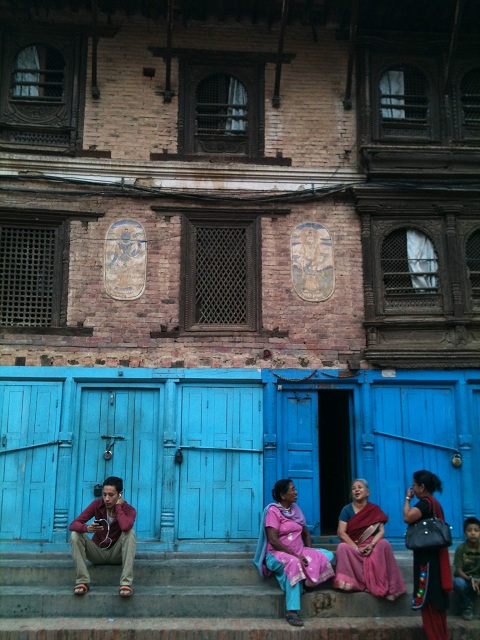 Most guidebooks said Thamel was tourist central in the city of Kathmandu, where most lodging and dining options are found. But we wanted a cultural experience, and so Nash chose a traditional house instead in Lalitpur, also known as Patan. The town is one of the many World Heritage Sites in Kathmandu Valley that had loads of character, although it was cramped and creaking in many places.
 Out in the streets, the motorbikes and toy-sized cars zipping by carelessly along the narrow and winding thoroughfares were an instant turn-off. It was like a miniature version of Vietnam, which has wide avenues, at least. In this centuries-old town there were no sidewalks to speak of, and pedestrians had to press closely into the stores lining what were really no more than alleys. There was dust everywhere – in the streets, the hotels, the modern buildings, and the ancient temples.
Strangely, the central area called Durbar Square and surrounding alleyways seemed more charming in the evening, when the stores had closed and the place was almost deserted at the early hour of 9 p.m. The shuttered wooden entrances held a hint of mystery that was missing earlier in the day as we went around the crowded temples, where the intricate architecture and artwork had seemed to lose their soul in the crush of tourist traffic and commercial ventures.
Day 2: Pokhara
Early the following day, we boarded the Greenline tourist bus for the six-hour drive to Pokhara, which we decided earlier was a must-see sight; it had consistently topped the list of recommendations in most travel sites. As the bus wove its way out of Kathmandu, we got the impression that many parts of the city looked like unkempt versions of the less attractive urban areas of Baguio City and La Trinidad. Too, it was almost easy to compare the winding highway going west to Halsema Road, with its steep drop to a raging river below and lack of safety barriers.
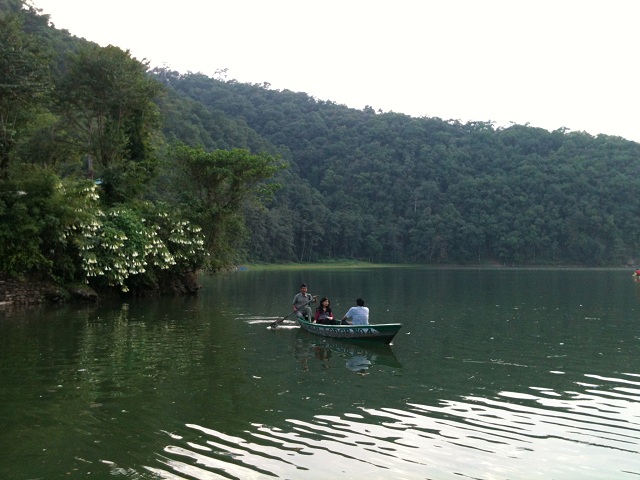 We arrived on a sweltering Sunday afternoon expecting dreamy vistas of snow-capped mountains, but found a landscape looking a bit like San Pablo City instead. Where is Annapurna, we wondered, as the hotel van made its way along the lakeside street lined with souvenir stalls and guest houses. Even with thick forested slopes surrounding the serene body of water, Lake Phewa – the main attraction of Pokhara – was not very impressive at first, as we looked around at familiar backpacker scenes of dreadlocks and barefoot bohemian types.
 As it turned out, the monsoon season did not only bring weather that was either hot and muggy or wet and gloomy, but also meant cloudy skies that obscured the Himalayan range most of the time. We did get a brief glimpse of the nearly 7,000-meter Machapuchare or Fish Tail peak while walking the length of the lake district later in the afternoon, but for the most part, this leg of the trip would become our “bleeding hearts” stop: staying in a lodge run by a women's group, Nash getting an ayurvedic massage from an old blind man while I had a foot massage from a deaf and mute orphan, and checking out what were supposedly fair trade shops that seemed too numerous to be genuine.
Day 3: Sarangkot
Determined to get a good view of Annapurna, we consulted our travel guide and saw a promising vantage point – the village of Sarangkot just above Pokhara. And so after a rainy side trip to a Tibetan refugee camp, the cleanest place we saw on our entire trip, we hailed a taxi for the 30-minute uphill drive in the hope of getting a clear shot of snowy mountain scenery.
Finally, the Nepal of National Geographic and Discovery Channel, I mused silently from the balcony of our modest guest house after a breathless climb up a well-kept stone stairway. Eagles swooped down and roamed the picturesque canyons, while afternoon fog blanketed the verdant ridge. The village was pleasantly cool, and I could have spent hours just gazing at the mountains and Pokhara valley below or reading a good book, if only our lodging house was more tidy and homey. Note to self: next time, bring a sleeping bag to enjoy community immersion better.
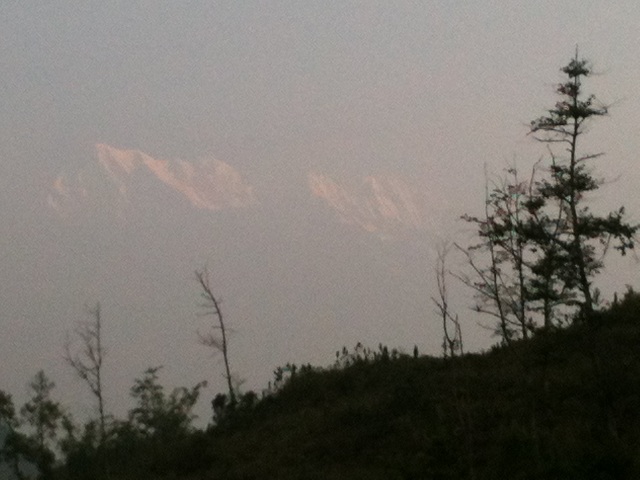
At dawn, as I made my way up the view deck, snow-capped peaks suddenly rose high above the green mountains. They were suspended in mid-air past the clouds, like a mirage. At last, Annapurna! Its lower slopes were hidden from view and the image was very faint, and I soon realized my dumb mistake while reading all the stuff about fantastic mountain views from the Pokhara Valley: I had imagined that it would be just like gazing at Mount Apo from Davao City, but towering at 8,000 meters, Annapurna soared above the clouds compared to our tallest peak, which only stands 3,000 meters high. Oh well, I just had to find consolation among the hikers who had come a long way, only to be disappointed not to see the sun's rays reflected on the majestic mountain range because of the clouds.
Day 4: Phewa Lake
Down in Pokhara for a respite before our long trip back to the capital, we found cheap rooms at a family-run lodge near the lakeside park, on the quieter side of town. Nash kept taking snapshots of dogs everywhere, marveling at their peaceful demeanor, while I kept track of the wonderful birds flying freely around the trees and rooftops, especially the crested ones. Trekking and bird-watching are definitely the best things to do in this exotic country, but since this first trip was more jaunt than journey, those pursuits would have to wait for a more relaxed schedule.
Walking around the lake, we noticed a terraced open-air restaurant across the water and decided to paddle over. The impulsive decision proved fortunate, as we caught a glimpse of Annapurna's peaks 3 and 4 when the clouds parted just enough to show their ghostly outline on the far horizon. As the setting sun cast its long shadows on the water, I sipped an aptly named Sarangkot Sunset cocktail in honor of the mountain I “climbed” the previous day, which was the closest I got to trekking in Nepal.
Day 5: Chitwan National Park
This was not in our plan, but when I saw on the map that Chitwan was a short-ish detour from Pokhara to Kathmandu, my explorer instincts took hold and as luck would have it, the Greenline bus had a scheduled trip there so off we went. Traffic along the narrow mountain road was heavy, with passenger buses competing for space with huge trucks sporting “all India permit” signs. 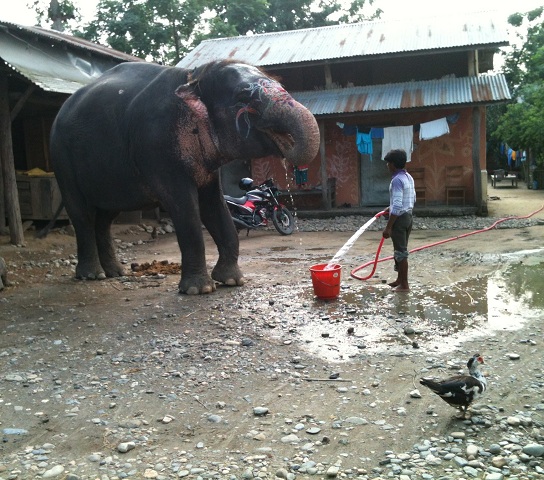 Somehow, we made it safely to the sleepy village of Sauraha, just outside the park, where most tourist lodging is found.
Our organized tour started with a short nature trek to the edge of the park where off-duty elephants, which are used by wardens in patrolling the vast wilderness area, were chained to their posts for the night. In the fading afternoon light, the grassy plains and clear waters of the Rapti river calmed the spirit, but Nash saw something else that might explain the serenity of the locals. “Is this ganja?” he asked our guide, pointing to the bushes growing wild on the roadside. “It most certainly is!” came the cheerful answer from a passing westerner, to everyone's laughter. Now, we know why the hippies and hipsters love it here …
Somehow, we made it safely to the sleepy village of Sauraha, just outside the park, where most tourist lodging is found.Our organized tour started with a short nature trek to the edge of the park where off-duty elephants, which are used by wardens in patrolling the vast wilderness area, were chained to their posts for the night. In the fading afternoon light, the grassy plains and clear waters of the Rapti river calmed the spirit, but Nash saw something else that might explain the serenity of the locals. “Is this ganja?” he asked our guide, pointing to the bushes growing wild on the roadside. “It most certainly is!” came the cheerful answer from a passing westerner, to everyone's laughter. Now, we know why the hippies and hipsters love it here …
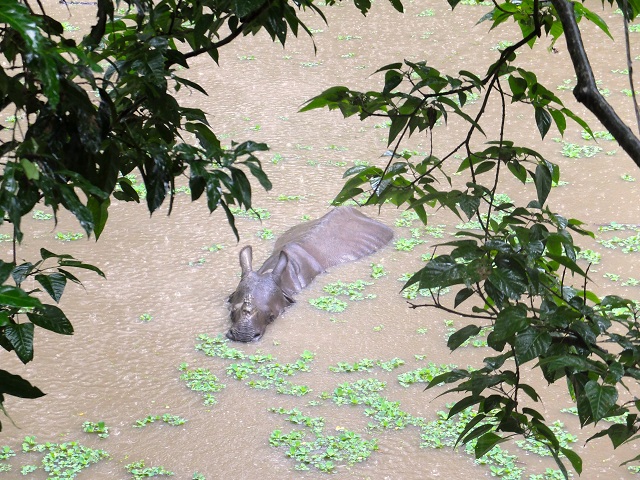
In the morning we had an early date with an elephant, which would take us on a two-hour safari into the Chitwan jungle. Just like Africa, the park had its own “big five” wildlife, although I didn't care much about the crocodile and the Bengal tiger. Our only wish was to see a one-horned rhino, and we were not disappointed: just thirty minutes into the forest, we saw one in a watering hole, making up for all our discomfort atop a lumbering elephant in the relentless rain.
Day 6: Bakhtapur
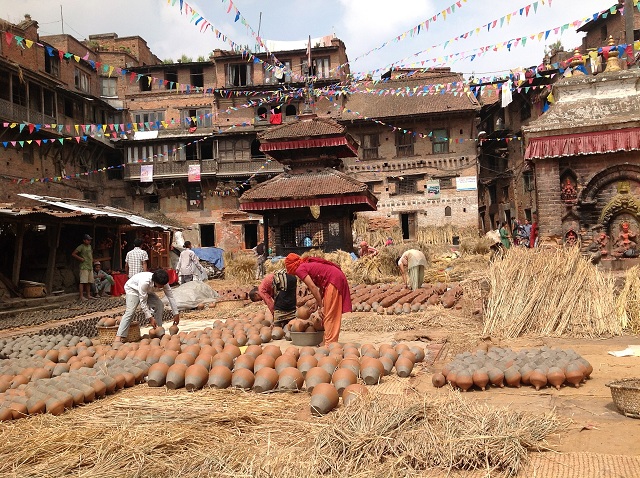
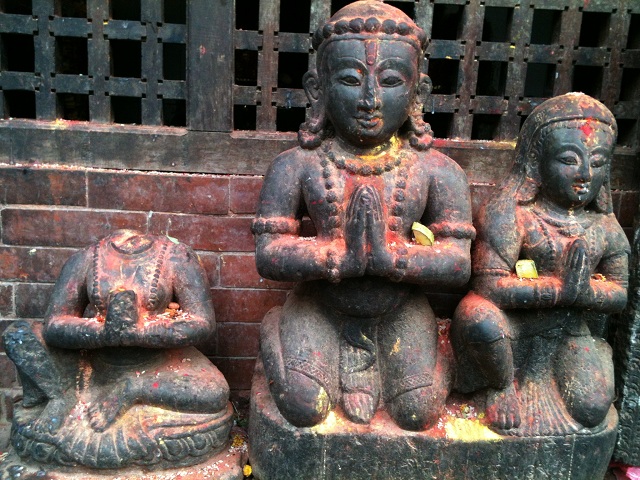
We ended our trip in another World Heritage Site near Kathmandu, a fitting end to a whirlwind tour of Nepal's natural and cultural splendors. Breakfast at the hotel rooftop was a sentimental last look at the birds flying freely from the bodhi trees to flower-decked balconies, and the cobblestoned streets below. I bought yak-bone beads for a friend and a Tibetan singing bowl for myself, before taking in another eyeful of wood carvings and stone statues, and a peek at potters' square. The images of gods adorned with red dye, the places of worship that shooed away camera-toting tourists, and even the pesky touts offering all kinds of services became digital memories that would soon be shared on social media.
 Nothing says archetypal Third World like Nepal, with its uncollected garbage and locals grovelling for every bit of tourist dollar. We became accustomed to load shedding, their euphemism for the daily power outages that gave rise to widespread use of solar panels and a hybrid energy mix in order to meet the electricity needs of guests. The unmistakable poverty in the cities and countryside made us feel a little more blessed to be living in seemingly upwardly mobile Philippines.
 But then again, nothing says Old World civilization like Nepal either, with its ancient decorative arts preserved for the benefit of today's travelers, and traditional cultures surviving a communist rebellion and other upheavals. If you can get past the dust and trash in the streets, it's worth a journey if only to feast your eyes on centuries-old Hindu culture, gorgeous nature, and some of the most good-looking people on the planet. – KG, GMA News

