
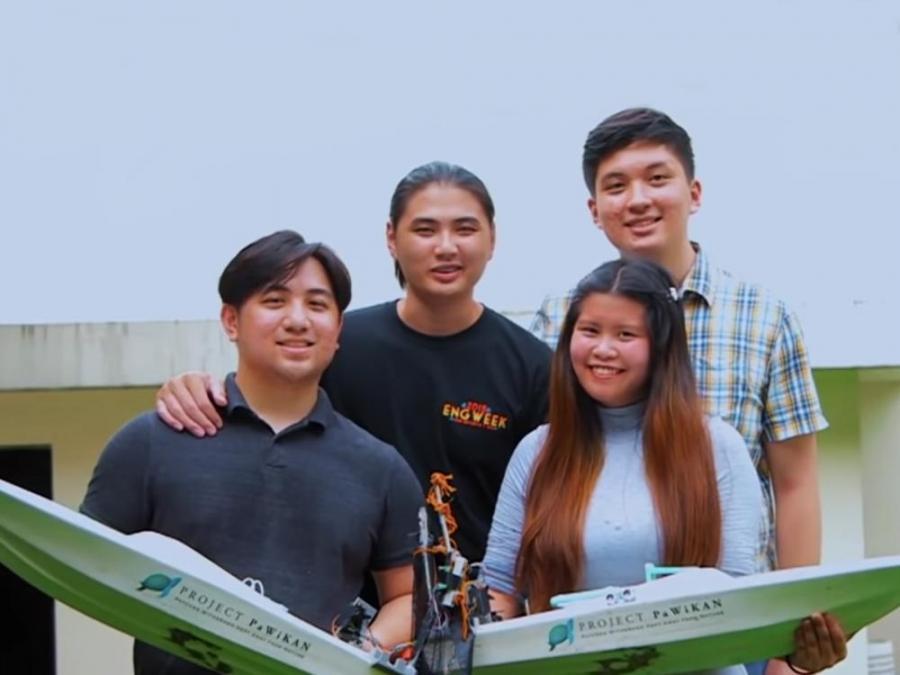
Filipino ECE students create trash-collecting boats
Around GMA
Around GMA
Balitang Bisdak: April 9, 2026 | Livestream PH 911 Emergency System 60% complete with cutting-edge technologies Marian Rivera graces private tour of Vietnam-based fashion brand in ManilaArticle Inside Page
Showbiz News
Learn more about this young Filipino student-engineers' invention that competed in NASA's 2019 International Space App Challenge.
The future looks promising when it comes to developing technology that helps solve our environmental problems, as four Filipino Electronics and Communications Engineering (ECE) students from the De La Salle University (DLSU) in Manila invent trash-collecting boats that can help reduce plastic pollution in oceans.
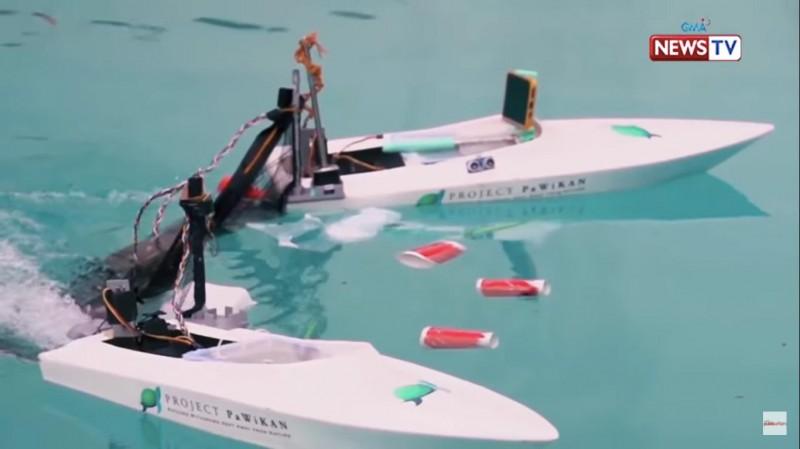
Ocean's 4's Project PaWiKan / Source: iJuander
Plastic pollution remains one of the major environmental problems in the world, especially in the Philippines.
According to World bank researchers, Filipinos dispose of more than 17.5 billion plastics every year, a great number of which end up in the ocean.
Moreover, in the 2015 report of the Ocean Conservancy and McKinsey Center for Business and Environment, the Philippines ranked as the world's third-largest source of plastic leaking into the ocean, next to China and Indonesia.
Plus, the country also reportedly has the highest volume of unmanaged plastic waste in Southeast Asia.
This is exactly what prompted four ECE students from DLSU-Manila, collectively known as Ocean's 4, to create vessels that will help collect garbage patches in the ocean and simultaneously help with recycling.
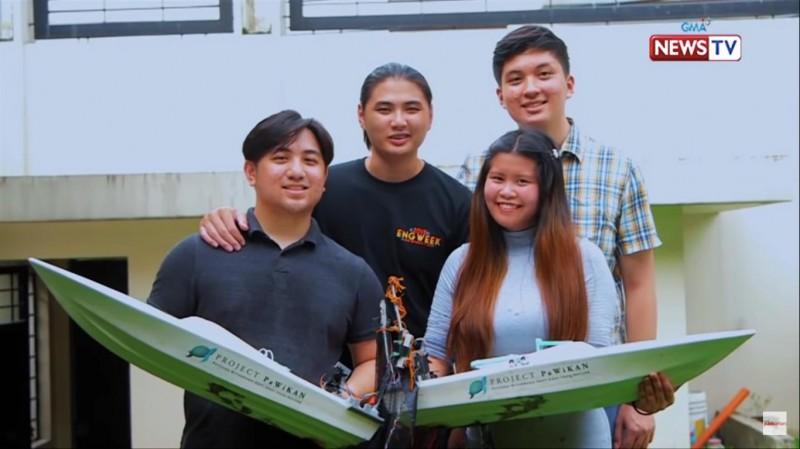
Ocean's 4, the team behind Project PaWiKan / Source: iJuander
Samantha Maxine Santos, Antonio Miguel S. Alejo, Grant Lewis Bulaong, and Janos Lance L. Tiberio are the members of Ocean's 4, the group that developed Project PaWiKan.
Project PaWiKan was the Philippine representative in the National Aeronautics Space Administration (NASA's) 2019 International Space App Challenge.
In an interview in GMA News TV's 'iJuander,' Samantha explained the inspiration behind the name of their invention and its great features.
“Project PaWiKan because it stands for Patches Withdrawn Kept Away from Nature, and patches meaning the garbage patches, which are plastics that accumulate all over five major oceanic currents all over the world.
“We're the first one to use two vessels. We're the first ones to use a net that's mobile. And we're the first one that's using an autonomous system. So, meaning, kahit walang taong nagko-kontol, we can do it.
Janos then explained how their 2-vessel trash-collecting creation works.
“'Yung naka-set up namin dito is dalwang bangka, may lambat sa gitna tapos 'pag umandar na 'yung mga boat, mata-trap 'yung garbage sa gitna.
“Tapos may naka-connect siya na camera na may computer vision na algorithm na nagde-detect ng trash based on video input.
“Nakikita rin natin 'to doon sa ground station namin doon sa laptop mismo.”
Also, with the help of data from NASA, they can locate garbage in the ocean.
Plus, there's another meaningful goal behind Ocean's 4's ingenious invention.
Samantha emphasized, “'Yung ultimate goal ng Project PaWiKan ay to provide livelihood for local oceanic communities. So 'yung mga community na nasa beach, sa mga marine areas.
“Because when we collect the plastic from the middle of the sea or other garbage, they can reform that, they can recycle it into other products.
Learn more about Ocean's 4's Project PaWiKan in the 'iJuander' video below.
For more inspiring stories like this, watch 'iJuander' every Sunday at 7 p.m. on GMA News TV.
And for more lifestyle content, head out to GMA's Lifestyle page.
Check out also another ingenious invention by Filipino students: the flip-flop power bank.
