

CHECK LIST: Avoid getting scammed in a business franchise
Around GMA
Around GMA
5K flood-hit residents in Olongapo receive aid from GMA Kapuso Foundation Babae, Patay Human Mabangga ang Gisakyang Motor sa Sidecar sa Mixer Truck | Balitang Bisdak Authentic Japanese food, MAY PINOY TWIST! | Farm To TableArticle Inside Page
Showbiz News
The economy is tight and people might be engaging in fraudulent activities to take advantage of your hard-earned money. Read on to find out how you can get into business in a fast yet safe manner.
The COVID-19 pandemic has terribly hit the Philippine economy, and most Filipinos have turned to doing businesses to keep them and their families afloat.
Even in the world of showbiz, celebrities have revisited their other natural flairs and turned their interests to something income-generating:
For other people, however, one of the easiest entryways into making business is through franchising.
Jorge Wieneke, President of the Association of Filipino Franchisers, Inc. (AFFI), supports this idea, explaining that franchises have already been tested in the market and have existing operating guidelines that can be replicated even by newbies in the industry.
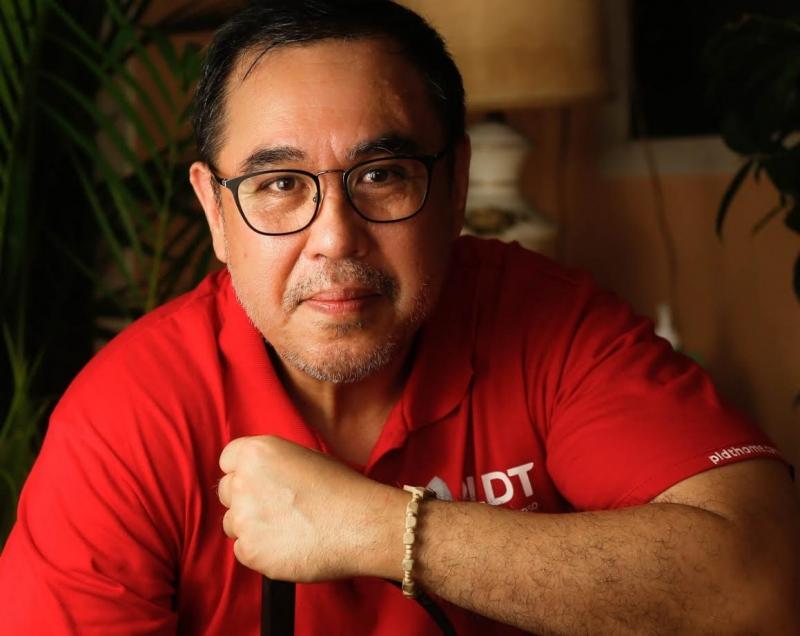
“Franchising is a proven business method that has been tried and tested. It is a method of expanding your business without any cash out on your end. Franchising is your concept on loan to the second party, provided they abide by the set standards of the company.
“There's already a set business system. There's already a supply chain system. At the same time, ang advantage of getting a franchise, may tutulong sa'yo. May magtuturo sa'yo.”
While Jorge is enthusiastic that Filipinos have shown greater interest in franchising businesses, he also wishes to warn the public about unqualified and misguided business franchises being offered at present.
“If you get a franchise, be wary and be cautioned na 'yung kukunin niyong franchise ay seryosong franchisor, matagal na siya sa negosyo at matagal nang nagpa-franchise, talagang 'yun ang core competence niya.”
Check list: How not to fall for franchising scams
As people find new ways to make ends meet, others, unfortunately, may have resorted to taking advantage of someone else's hard-earned money through fraudulent activities.

Jorge wishes to educate and empower aspiring franchisees by discussing how they can avoid getting scammed by illegitimate business franchisors.
1. Franchise contract
Franchising is a long-term commitment between the franchisor and the franchisee. Thus, it is important that the two parties are bound by a contract that details their obligations in doing the business together.
“You have to study the contract, even consulting a lawyer just so everything is clear. Sa franchise contract, nakalagay po doon 'yung obligasyon ng dalawang parties. You have to understand what these obligations entail.”
Some of the responsibilities of the Franchisor include the following: (1) granting of the license to the franchisee, (2) continuous supply of raw materials or a dependendable supply chain, (3) proper training of franchisee's staff, (4) operation manual and transfer of technology, (5) continuous product development, (6) marketing assistance, and (7) monitoring of store and business performance.
Meanwhile, franchisees must be committed to (1) pay the franchise fee, royalty, service fee, and supplies, (2) faithfully follow the rules and regulations, and the standards of the franchisor, (3) use the trademark and service mark properly, (4) sell only the products prescribed in the franchise contract, (5) successfully complete the training under the franchisor and its succeeding retraining programs, (6) maintain confidentiality of product information and other trade secrets, and (7) disclosure of movements in their operations, from something as simple as informing the franchisor of relocations to giving consent for inspections.
2. Background check
Jorge encourages the public to take a deeper look at the businesses they are interested to franchise.
An aspiring franchisee must need to see if the franchisor has an organizational chart with departments performing different functions such as accounting, marketing, and operations. It is also important to check if the business has permits, and has a commissary, if in food business, and other necessary backend structures to support the activities of the business.
Business franchises that operate in malls, communities, and other public spaces seem more credible than those that are not visible, unknown and unheard of.
“Nakikita mo ba sila sa mga malls? Or at least makikita mo sila sa labas, sa groceries, sa mga community area. Kasi kung hindi mo naman sila nakikita, ibig sabihin baka baguhan sila. Kailangan may certain brand presence ang isang business para malaman mo na talagang legit sila, na hindi ka niloloko, na talagang nag-e-exist sila.”
And since franchising is the transfer of a business concept and promises mentoring, it is vital to find a business proponent who is truly savvy about the ins and outs of his or her venture.
“'Yung founder ba o propent, talagang ito ba ang ginagawa niya? Talaga bang eksperto siya sa pagkain, eksperto siya sa derma, 'yung mga ganun.”
3. Registration and membership
Legitimate businesses open for franchising must also be registered under the Department of Trade and Indutry (DTI) and be a member of one of the three franchise associations in the country, namely AFFI, Philippine Franchise Association (PFA), Association of Filipino Franchisers Inc. (AFFI), and Filipino International Franchise Association (FIFA).
“Sila-sila (franchise associations) mismo ang nagpo-police within their ranks. At saka sila rin nag-i-screen kung talagang totoo 'yung franchisor, hindi fly by night.
Jorge advises the public, “Check nila sa DTI kung may complaint 'yung gusto nilang kunin na brand. I-check din nila sa mga asosasyon kung kumusta ito. It's better to check from the association. At least gumawa ka ng konting investigation.”
4. Registered in the International Property Office (IPO)
Credible businesses are registered in the IPO. Make sure that the brand that you are buying into is duly registered in this office, meaning the proponent really owns the copyright of the business marks.
5. Track record
Another way to check the legitimacy of the business up for franchise is by being informed of its track record.
A business's period of activity in the market may be a good indicator of its stability and profitability.
“Actually dapat more than a year in existence 'yung mother store. Kasi baka mamaya hindi pala sustainable 'yung business.”
Jorge also stresses that another good measure of a business is it has already accomplished a return on investment in its flagship store and even in its other franchisees.
“Humingi siya ng listahan nung mga napa-franchise na nila. Tanungin lang nila, 'Kumusta sila? Kumusta ang negosyo nila?' Dapat meron siyang successful franchisees na naka-reach ng return of investment. Tignan mo 'yung mother store nila kung kumusta. Tanungin mo rin kung ilan 'yung company-owned nila.”
6. Franchise program development
As business franchising is a long commitment, it shouldn't be a one-off deal. There should always be support coming from the mother company. Interested franchisees may ask for the franchisors program development to chek the sustainability and efficiency of the business operation.You need to know what the company's plans are for the future.
As earlier mentioned, it is the franchisor's obligation to provide continuous training and assistance as well as to work on product developments.
“Meron ba silang franchise program development? To say, meron silang mga learning programs. Like continuous ba 'yung mga training na ibinibigay nila sa inyo?”
7. Price of franchise
While the economy is tight, franchising still comes with a reasonable price. Thus, Jorge expresses his doubt towards businesses offering franchises for PhP 20,000 or less.
“Magduda po kayo if ang ino-offer sa inyong franchise is less thang PhP 20,000 po. Baka ang ibinebenta nila 'yung PhP 20,000, hindi mismo 'yung produkto.
“Parang napakamura naman nito? Can they really support the franchisees? Kasi parang 'yung produkto mo, kinopya mo lang.. Franchise ba 'yung binibili mo or multi-level? These type of “franchisors” actually are just selling their products then leave the “franchisee” alone after they pay the fee and just rely on the recurring income on supplies. Rather than being called a “franchise”, this is more of a “dealership.”
According to Jorge, expect an amount higher thant PhP 20,000 as franchise fee for a complete franchise package, explaining that it comes with (1) the use of the brand name and the marks, (2) business sytem which should be presented in the manual, (3) cart, signage, and billboard, (4) small wares, mobilization set-up, (5) local and system-wide marketing support, (6) operational and technical support, (7) centralized commissary, and (8) continuous product development.
“”Yan po ang commitment of a turn-key package of a franchise. So lahat po ito, ginastusan po ito ng franchisor. So kung minsan magtataka ka kung papaano nila ino-offer ng PhP 20,000?
“Too cheap may be an indicator na baka hindi safe. Kasi paano niya ime-maintain 'yung service niya? Kasi may after-service po 'yan eh.
Jorge, despite being the AFFI president, speaks for the rest of the franchise associations when he says, “We are one in protecting our beloved industry, our industry which gave us our livelihood, and made us who we are now. Kaya in return, we are committed to educating the people who want to franchise and people who want to have their businesses franchised on the proper ways of franchising. [We want] to protect and to create a responsible franchising industry.”
Further he encourages that Filipinos must not be discouraged from getting into franchising despite the prevalence of scams.
“It's nice to see that people are going into franchising or selling franchising. But what is important is sana 'yung mga nagpapa-franchise, knowledgeable in franchising. Because franchising business is an obligation.
"There are obligations na deliverables doon sa nag-franchise kasi 'yun mga nag-franchise, hard-earned money nila 'yun. So kailangan alam nila kung ano 'yung obligasyon nila. This is a long-term commitment. So sana mag-ingat lang ho tayo, doon sa mga baguhan na baguhan na nagpapa-franchise. Not just because mura pwede na.”
For more lifestyle content, head out to GMA's Lifestyle page.
