
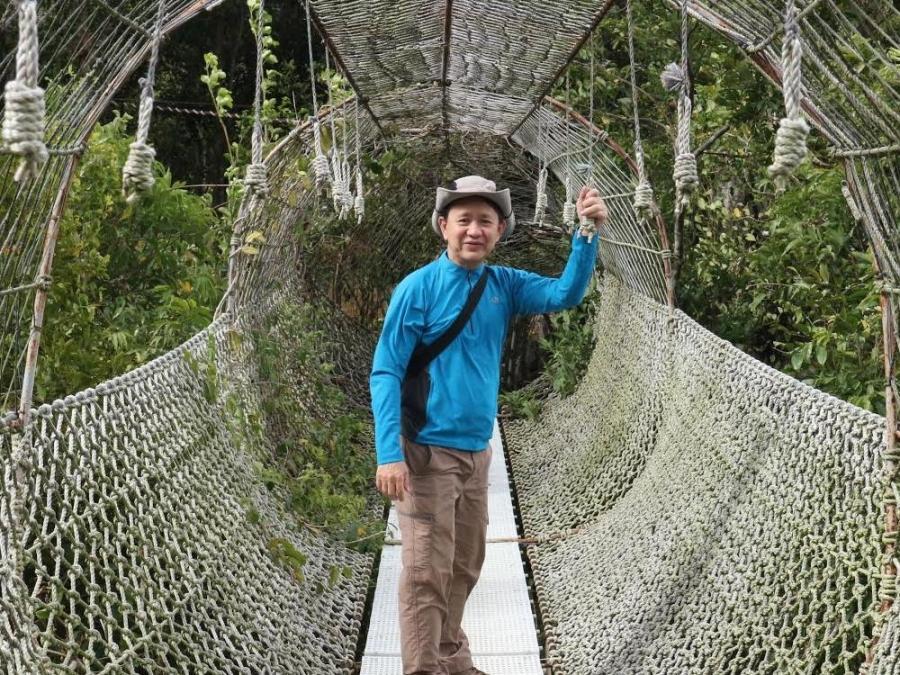
Why ecotourism is key to reviving our tourism industry amidst the COVID-19 pandemic
Around GMA
Around GMA
Dalawa, patay sa sunog sa isang bahay sa Sampaloc, Manila 14 nabbed, 174 rescued in Davao City steel facility raid More Than a Beauty Queen: Celeste Cortesi Shares Her Story in Celeste Unscripted, Premiering Globally on GMA Life TVArticle Inside Page
Showbiz News
Believe it or not, ecotourism has always promoted safe and sustainable practices even before the pandemic.
The global tourism industry suffered a major blow due to the COVID-19 pandemic. And now that tourism activities are gradually resuming, shareholders and travelers must act together---and responsibly---to help revive the industry.
Ecotourism expert and forester Roberto Cereno details in an exclusive interview with GMANetwork.com why we should pay more attention to ecotourism as we start to travel again.

Sir Robby Cereno at Mount Pico de Loro, from Robby Cereno (FB)
Cereno is the newly-appointed vice chancellor for Community Affairs of University of the Philippines Los Baños (UPLB) and the concurrent director of the Training Center for Tropical Resources and Ecosystems Sustainability (TREES) of the College of Forestry and Natural Resources. He is also the former deputy director of the Makiling Center for Mountain Ecosystems and the former head of Makiling Botanic Gardens.
With his years of expertise, he highlights the critical role of ecotourism in the local tourism and economy.
What is ecotourism?
Ecotourism in its basic principle is tourism with a conscience. It's tourism that lets visitors enjoy nature while also being mindful of the environment.
According to Cereno, there are five key principles that make a place a true ecotourism destination. These are the 5 E's: enjoyment, economic benefit, engagement, education, and environmental protection.
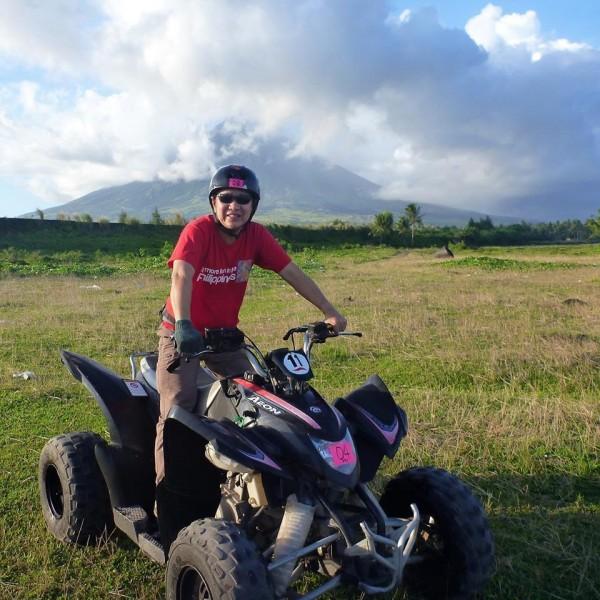
Sir Robby Cereno riding an ATV closer to Mayon Volcano, from Robby Cereno (FB)
He explains, “Number one is visitor enjoyment. Kaya nga tayo paulit-ulit na 'It's more fun in the Philippines' because we're selling the enjoyment, we're selling experience of nature na hindi mae-experience sa urban areas. So we are selling nature-based enjoyment.
“Second 'E' is 'yung economic benefit. So it's a kind of tourism na kailangan mag-bring about ng economic benefit sa mga [tao]. 'Yung nakikinabang 'yung local industry, local guides, mga local player. 'Yun 'yung economic benefit.
Kasi kapag may mga economic activities ang isang lugar, asahan mo may employment, may kita, so may livelihood. 'Yung kita na 'yun, 'yun ang isang incentive for them na maging sustainable 'yung kanilang pamumuhay.”
Cereno further highlights the need for proper engagement of shareholders to tourism projects. There's also a need to focus on conservation education.
He continues, “Engaged dapat ang local people right from the start. From the beginning of the conceptualization of the project, nakokonsulta na sila kung ano 'yung gagawin natin dito.
“Kailangan built-in diyan 'yung educational component, awareness-building, and ang magdadala diyan 'yung mga guide. 'Yung guides natin sa bundok, hindi lang sila porters. Sabi ko, 'pag walang kuwento, walang kuwenta.' Ang isang biyahe, dapat may kuwento.
He likewise stresses that the main objective of ecotourism is to protect the environment.
He emphasizes, “Ang bottomline ng ginagawa natin is always environmental protection. 'Yun 'yung magdadala sa atin sa sustainability. Kasi kapag wala kang sustainable destinations, wala ka ring tourism. Kaya ka nagkakaroon ng ecotourism because meron kang sustainable destinations, because your destination is your capital. 'Pag hindi mo prinotektahan ang iyong kapital, wala kang negosyo.
“Pag sinira mo ang bundok na 'yan, anong ipapakita mo? Eh di wala kang experience, wala kang ibebenta. Kaya 'yung source ng iyong benta, ng iyong destination, ng activities mo, galing 'yan doon sa how you protect your environment, 'yung destination.”
Ecotourism is not a new concept but it is important to note that all five components must be present to truly claim that a site is an ecotourism destination.
Furthermore, ecotourism has always been espousing the "new normal" practices even before the pandemic.
1. Domestic travel
While the government has loosened up a few quarantine guidelines, travel restrictions still remain. Tourist destinations in areas with low cases of COVID-19 operate under a travel bubble but most provinces and other countries keep a strict border control.
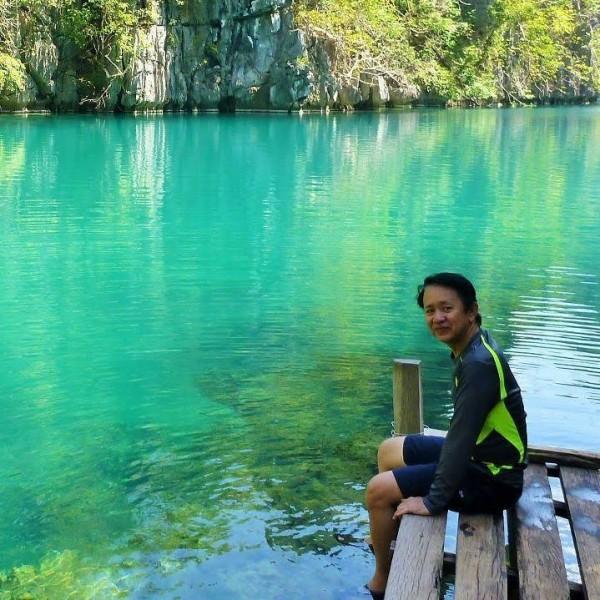
Sir Robby Cereno at Kayangan Lake, Palawan from Robby Cereno (FB)
“Ang dami pa ring countries na ayaw papasukin 'yung ibang nationalities, people from countries na may mataas na incidents. May travel restrictions na nangyayari,” Cereno says.
Thus, the best option for now is to prioritize traveling locally and the best destinations for that are ecotourism spots.
He even notes that domestic tourism comprises a big chunk of our tourism revenues, saying, “Bulk naman talaga ng tourist ay domestic. Pinakamalaki talagang chunk ng tourism ay domestic. Hindi lang napapansin.”
2. Safe and healthy practices
The COVID-19 pandemic has forced us to adapt to new practices. Limited operations means planning your routines ahead, and following schedules and protocols. Big gatherings are prohibited, physical distancing is advised, and being out in the open lessens the risk of contracting the virus.
This is already normal practice in ecotourism.
Ideal ecotourism destinations require us to do pre-bookings and arrange for our trips ahead of time. Ecotourism caters to small groups and brings us closer to nature and the outdoors.
With this design, ecotourism has always been teaching us to live the “better normal.”
3. Unique Selling Point
What sets ecotourism sites apart from usual travel destinations is that it offers a unique selling point (USP)---an authentic experience that cannot be enjoyed in other places especially in the urban areas.
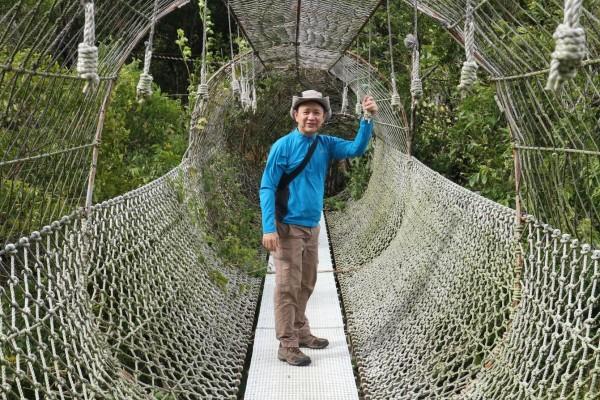
Sir Robby in Masungi,, from Lemuel Buquid
This component in ecotourism asks industry players to utilize the strength of their area and highlight natural resources, ultimately drawing people to a specific destination.
“Not all destinations are equal sa kanilang USP. Not even all mountains have the same mountaineering experience, magkakaiba 'yan eh. Pag pupunta ka ng [Mt.] Pulag, siyempre ang pambato mo doon 'yung sea of clouds, 'di ba. Punta ka ng [Mt.] Guiting-Guiting, iba naman 'yun. Punta ka naman ng [Mt.] Apo, iba naman, unique naman experience mo doon.”
4. Community involvement
When tourism suffered due to the COVID-19 pandemic, the local communities took the worst hit.
"'Yun din ang nag-suffer eh nung nagkaroon ng COVID[-19], 'yung mga local people na umaasa sa tourism kasi walang tourists na dumating,” he explains.
But through ecotourism, local shareholders can be involved and engaged in the activities, helping them make up for their lost livelihood and profit. It starts from the grassroots; from local tour guides to mountain porters, from fishermen and farmers to people working at the town's restaurants as well as artisans.
5. Prevention of another health catastrophe
Scientists have traced that the new coronavirus was transmitted to humans through the consumption of wild animals, particularly bats. The last thing we need is another crisis caused by irresponsible treatment of nature. Cereno strongly believes that ecotourism is key in preventing another health catastrophe.
He says, “Ecotourists, they are the eyes and ears of protection.”

Sir Robby Cereno at the mangrove boardwalk of Balanga Wetland and Nature Park, from Robby Cereno (FB)
Ecotourism, when practiced the right way, leads to sustainability and discourages illegal and disruptive activities.
He illustrates this, saying, “'Pag may ecotourism, may mountaineering, hindi mangyayari 'yung sa mga illegal poachers, loggers eh. Sila magsusumbong eh.”
Eight months under quarantine has led to a lot of challenges. Our travel plans were canceled and the industry suffered. However, with the help of ecotourism, we can well be on our way to revitalizing ourselves, our local communities, and even nature.
