
Buckle up, kids! What you need to know about the Child Car Seat Law
Around GMA
Around GMA
Protesters rally in Denmark and Greenland against Trump annexation threat Check out the scenes from the Miss World Philippines press presentation Brgy. chairman, nephew killed in Cotabato shootingArticle Inside Page
Showbiz News
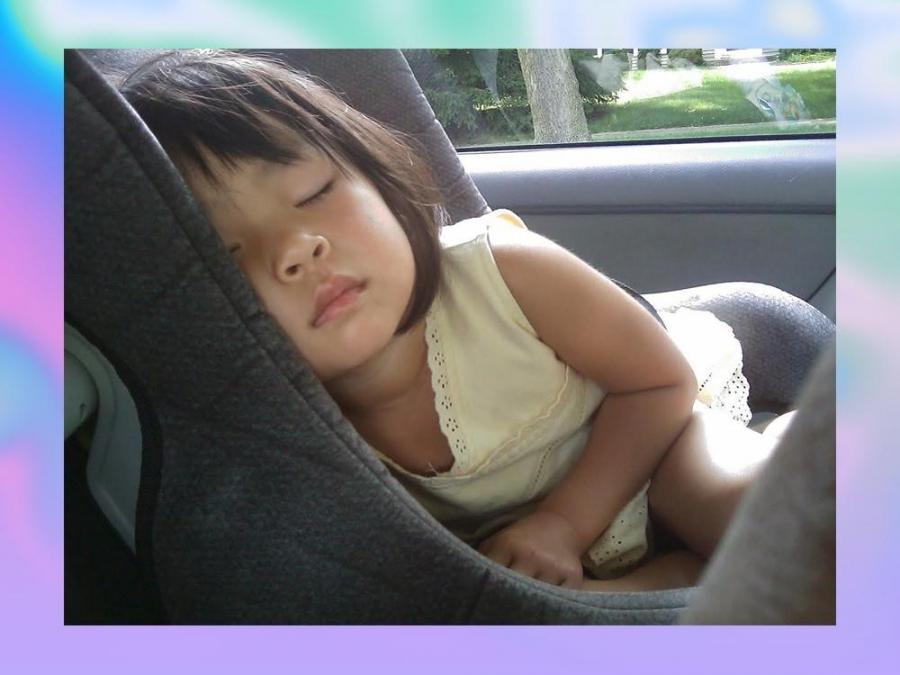
The law aims to protect children from incurring injuries, or worst, death, in case of road accidents.
Attention, parents! Starting February 2, the Republic Act No. 11229, or the Child Safety in Motor Vehicles Act, will be fully rolled out.
The Land Transportation Office (LTO), however, has clarified that no motorists will be apprehended for violating the law, at least three to six months from now.
This is to give the public enough time to learn about the law, its set standards, and corresponding penalties.
“Enforcement is not only about apprehension--it also covers information dissemination as well as warnings,” Roberto Valera, the LTO's deputy director for law enforcement, reportedly said during a virtual meeting with media representatives.
“Instead of issuing a TOP (temporary operator's permit) or a show cause order, we'll be in warning mode as well as information dissemination.”
What is the Child Safety in Motor Vehicles Act?
The law, whose principal authors were former Senator JV Ejercito and Buhay Party-list Representative Mariano Velarde Jr., was signed by President Rodrigo Duterte on February 22, 2019.
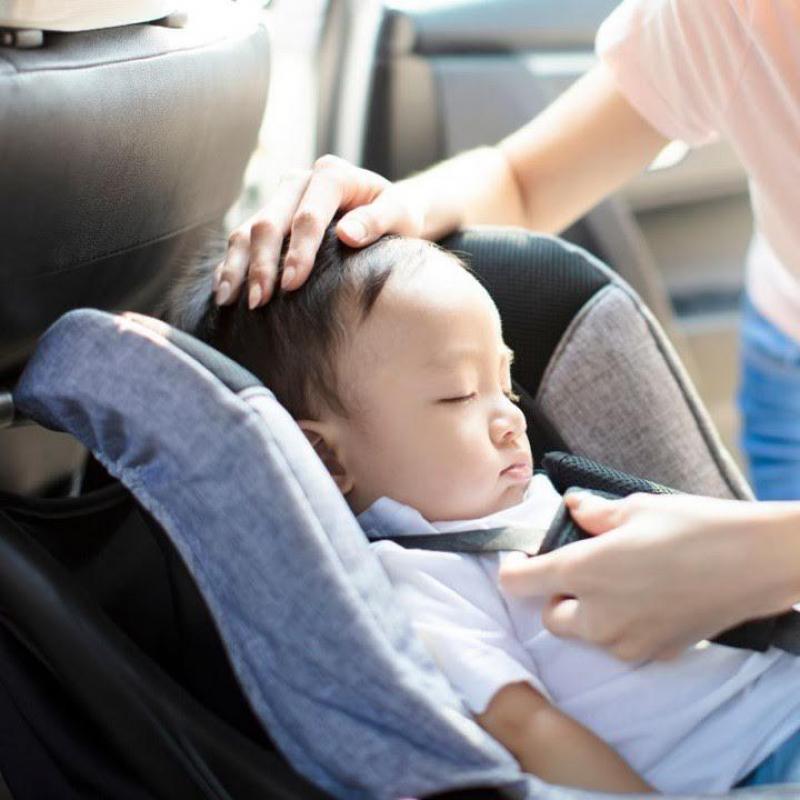
Under the law, all private vehicles must have child restraint systems or device “capable of accommodating a child occupant in a sitting or supine position... as to diminish the risk of injury to the wearer, in the event of a collision or of abrupt deceleration of the vehicle by limiting the mobility of the child's body.”
This would prevent injury or death among child passengers in case of road mishaps.
Children 12 years old and below should be in a child restraint device or kids car seats at all times when on the road and while the engine is running.
Likewise, children 12 and under are not allowed to sit in the front seat of a vehicle.
However, 12-year-old children who meet the 150 centimeters height requirement could sit in front but should be secured properly by a seatbelt.
Exceptions on the use of child restraint system will be applied in certain situations like medical emergencies or when a child has a medical or developmental condition.
At the moment, the law only applies to private vehicles. The Department of Transportation (DOTr) is reportedly studying the possibility of installing child restraint systems on public utility vehicles.
A separate legislative proposal must be filed in case the feasibility is deemed impractical.
Can I use any child car seat?
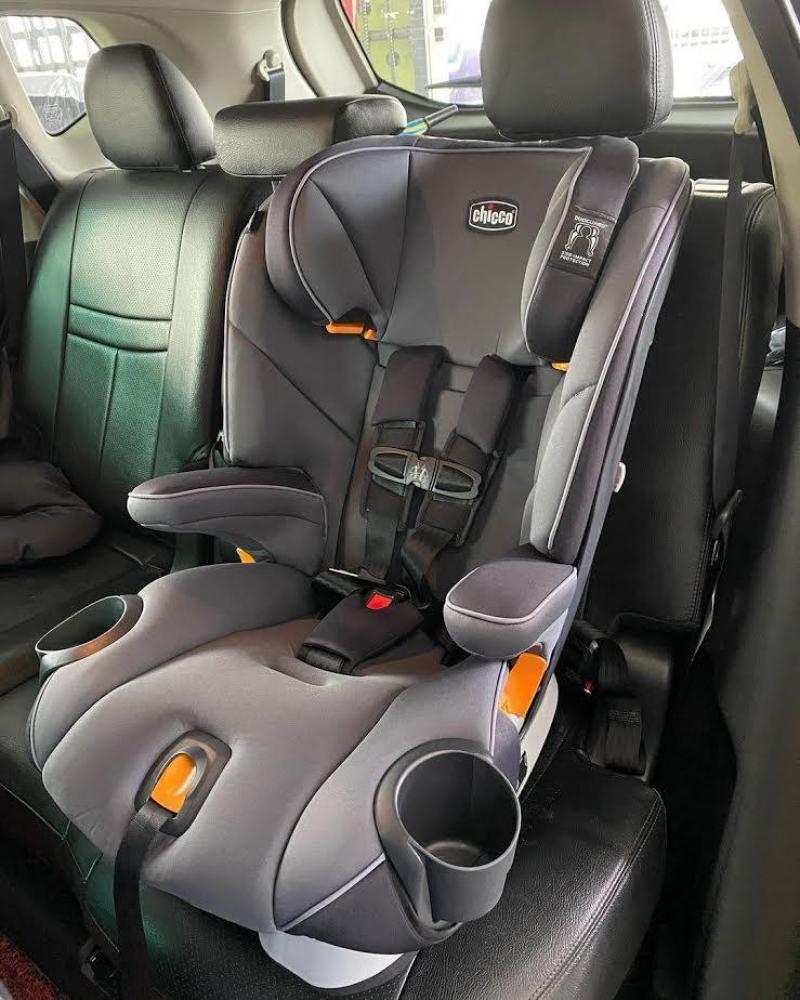
All child car seats must comply with the United Nations (UN) Regulation No. 44.
This means that there are standards that child car seat products must adhere to before hitting the market.
The Department of Trade and Industry - Bureau of Product Standards (DTI - BPS) is in charge of updating local standards based on the regulations set by the UN.
Parents and guardians should make sure that the child car seat is not past the manufacturer's specified expiration date.
Meanwhile, child car seats with no indicated expiration date must meet safety standards issued by the DTI-BPS.
Parents should keep an eye on the Philippine Standard mark or Import Clearance Certificate (ICC) stickers when buying a child car eat to make sure of the quality.
Parents who have already purchased a child car seat before the law was signed are requested to get a clearance from the nearest LTO office. They must bring the car seat so that LTO officials could check the item's condition.
Installation of car seats
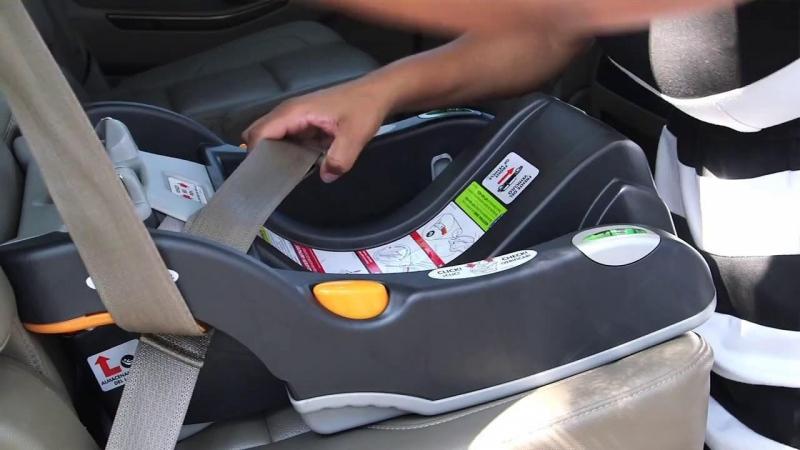
Buying a car seat is one thing, installing it is another thing. The LTO was said to be tasked to put up fitting stations to assist parents.
Car seat manufacturers and retailers are mandated to provide instruction manuals to serve as a guide in installing the product safely and securely inside the car.
Penalties
A fine of P1,000 and P2,000 will be slapped on violators for the first and second offense, respectively.
Third and succeeding offenses will merit a hefty penalty of P5,000 plus suspension of driver's license for a year.
Meanwhile, those who would be caught with substandard, expired child seat unit, and car seat sans the PS Mark, LTO clearance, or ICC sticker would have to shell out P1,000 for the first offense, P3,000 for the second offense, and P5,000 and one-year revocation of driver's license for third and succeeding violations.
What the numbers say
The Department of Health (DOH) points to road accidents as one of the top causes of death in children more than deadly illnesses including dengue.
About two children perish daily due to road accidents in Metro Manila according to the DOH.
Meanwhile, the UNICEF reported that road traffic injuries and drowning are the leading causes of death among children and adolescents worldwide.
“For children and young people between the ages of 5 and 29, road traffic injuries represent the leading cause of death,” the UNICEF wrote on its website.
