
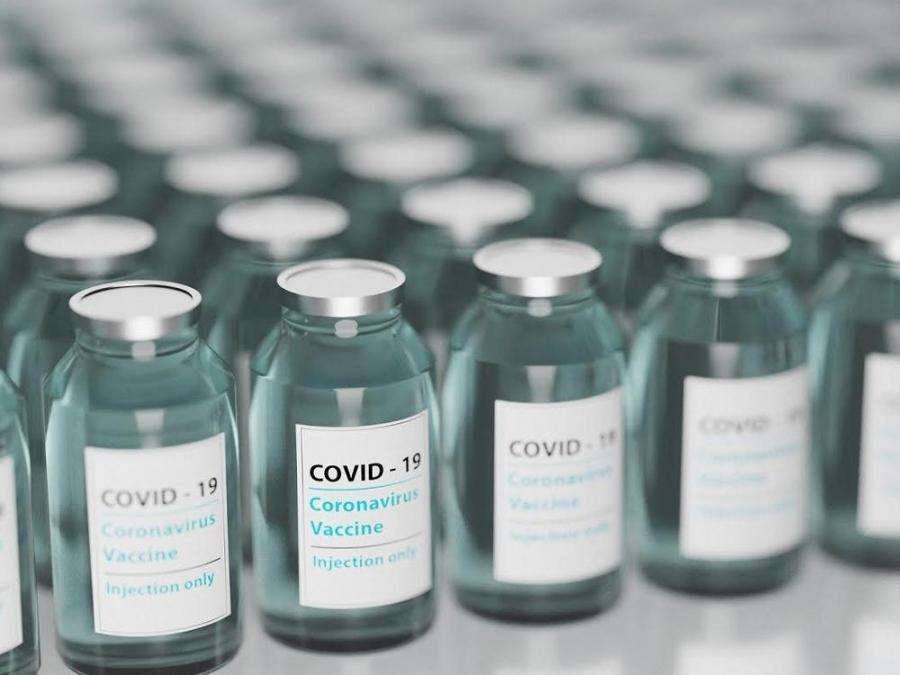
Can you mix and match COVID-19 vaccines? What studies say thus far
Around GMA
Around GMA
Sarah Discaya transported to Cebu, brought to court Sarah Discaya arrives in Cebu; up for detention in Lapu-Lapu City jail MPTC waives toll fees on its expressways on Christmas Eve, New Year's EveArticle Inside Page
Showbiz News
The Philippines is conducting a study on the effectiveness of mixing Sinovac with other brands.
The erratic supply of vaccines has prompted the Philippine government to conduct a study to determine the probability of mixing Sinovac doses with other brands.
Sinovac by far is the most constant in terms of supply and availability here in the country, which explains why it's the preferred brand to be used in the research.
The Department of Science and Technology (DOST) will partake in the study running from June 2021 to November 2022.
Experts will study the efficacy of combining different COVID-19 vaccines for the first and second doses.
It's worth noting that the Philippines is not the only country seriously looking at this prospect.
The United Kingdom's National Health Service (NHS) is conducting its own study on this, as well as Canada through government funding.
Initial findings from the U.K. study have revealed that mixing different types of COVID-19 vaccines increase the likelihood of a person experiencing mild or moderate reactions such as headache, fever, and fatigue.
At least 40 percent who got Pfizer and AstraZeneca doses reported feeling feverish, as compared to the 21 percent recorded for individuals who received two shots of the same Pfizer vaccine.
However, these inconveniences were regarded as “short-lived” and no reasons for concern.
Some experts argue that these reactions might mean that the person's immune system is reacting positively to the drug.
“This is probably the first sign of success,” Dr. Zain Chagla, McMaster University associate professor and infectious disease specialist, told CBC in an interview.
“We know what we're aiming for here is a fairly profound immune response.”
Likewise, a study conducted on mice reportedly revealed that the combination of Pfizer and AstraZeneca doses boosted its immunity better than when it received two doses of the same brand.
“If we can show that these mixed schedules generate an immune response that is as good as the standard schedules, and without a significant increase in the vaccine reactions, this will potentially allow more people to complete their Covid-19 immunization course more rapidly,” Dr. Matthew Snape, University of Oxford associate professor in pediatrics and vaccinology, mentioned to BBC.
All initial findings are inconclusive and more studies are still being done to determine the efficacy of administering two different vaccine brands on individuals.
The status quo, at the moment, dictates the public get inoculated with the same brand of vaccine.
This is also how most people prefer it at this point.
“What I'm hoping is that we won't rule out any combinations,” said Dr. Snape.
“That's how we need to look at it: are there any combinations we shouldn't be giving, because they don't generate a good immune response? And I'm hoping that won't be the case.”
Take a look at the local celebrities and personalities who already got the shot against COVID-19:
