
Understanding preferred gender pronouns of LGBTQ+
Around GMA
Around GMA
Balitanghali Livestream: March 12, 2026 The Human Element at Sea: Why the New STCW Amendments Matter for Filipino Seafarers 14 people rescued from distressed motorboat in SuluArticle Inside Page
Showbiz News
Why are pronouns so important in the LGBTQ+ community?
For most people, using pronouns for members of the lesbian, gay, bisexual, transgender, and queer (LGBTQ+) community is still confusing. And understandably so since there's a lot to take in.
The use of different pronouns is mostly applicable in the English language and other languages that use sex (male and female) specific pronouns.
Why is this so important for the LGBTQ+ community?
“In English, our most commonly used pronouns (he/she) specifically refer to a person's gender. For queer, gender non-conforming, non-binary, and transgender people, these pronouns may not fit, can create discomfort, and can cause stress and anxiety,” explains LGBT Life Center on its website.
Also, according to the organization, a study was conducted and using the correct pronouns in transgender youth reduces suicide risks and depression.
“Think about your pronoun (it's probably “he” or “she”). Now imagine someone calling you the one you don't think of yourself as. Imagine them doing it over and over and over, even after you've corrected them,” the organization says.
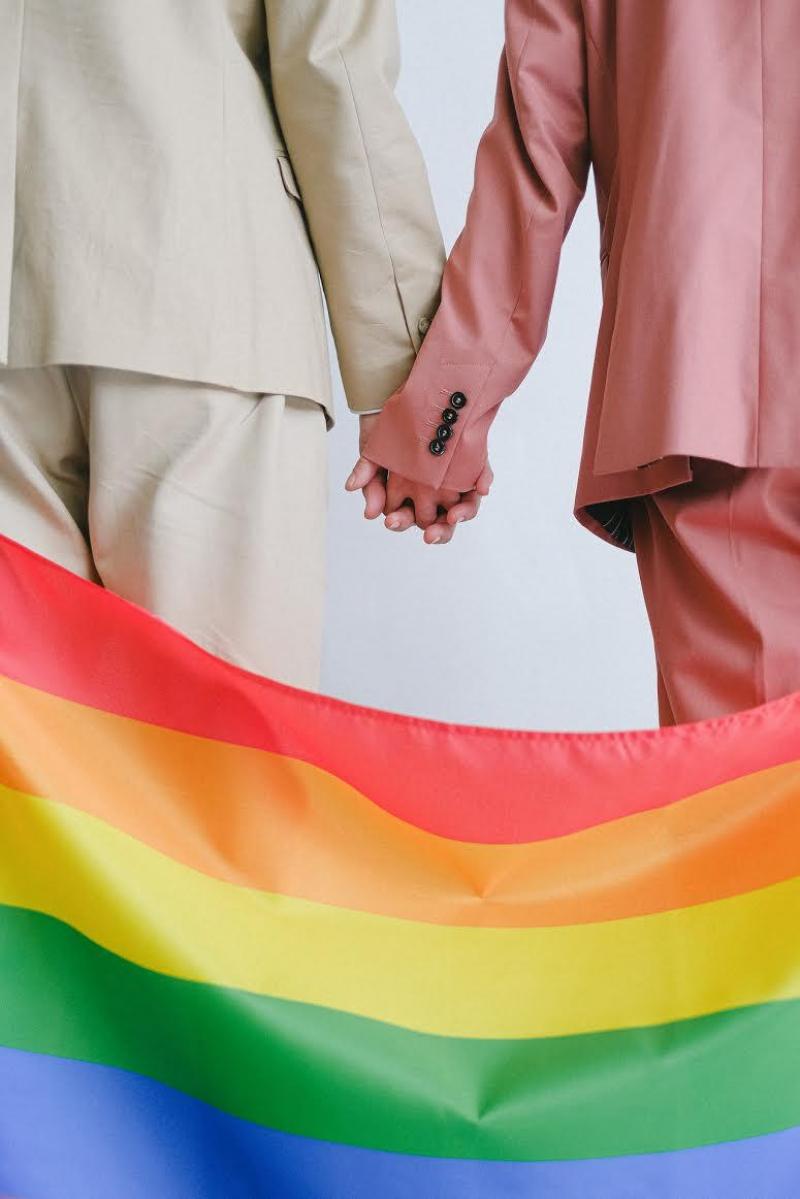
June is Pride Month
Source: Photo by Anna Shvets from Pexels
Sex and gender identity
First, let's tackle gender identity. This has been a sensitive subject for many members of the LGBTQ+ community.
Sex is different from gender. Sex is the label assigned by the doctor at birth. A newborn is either labeled male or female but a baby can also be labeled as intersex. Intersex individuals are those who do not fit the typical definition of male and female bodies. This is due to different factors including chromosomes, gonads, and genitals.
Gender, on the other hand, is more complex. According to LGBT Life Center, “Gender identity is the internal perception of one's gender, and how they label themselves, based on how much they align or don't align with what they understand their options for gender to be.”
Here's how the organization breaks down gender identity:
· Cisgender: Applies to someone whose gender matches their “assigned” sex at birth.
· Transgender: Applies to a person whose gender is different from their “assigned” sex at birth. Doctors typically assign gender based on sexual organs, but sex and gender are different.
· Non-binary: Non-binary, similar to genderqueer, is a spectrum of gender identities that are not exclusively masculine or exclusively feminine--identities that are outside the gender binary of male and female.
· Genderqueer: Similar to “non-binary” - some people regard “queer” as offensive, others embrace it.
· Genderfluid: Applies to a person whose gender identity changes over time or changes at different times.
LGBT Life Center also notes that sexual orientation is different from gender identity.
“Note that sexual orientation is an emotional, romantic or sexual attraction to other people; of the same gender, different gender, or multiple genders,” it said.
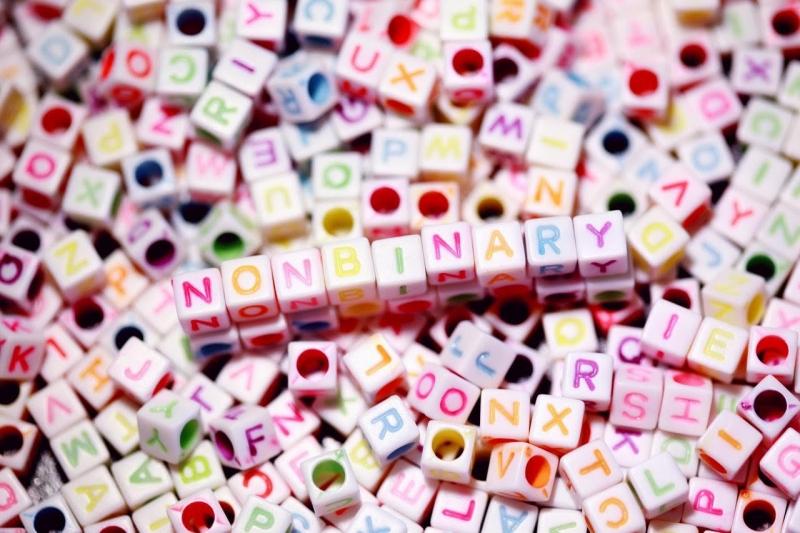
Non-binary is an identity outside the gender binary of male and female
Source: Photo by Sharon McCutcheon from Pexels
Preferred gender pronouns
When it comes to using pronouns, it's a little bit more complicated with the English language since its pronouns are sex specific (male or female). For other languages like Tagalog, pronouns are more gender-neutral like ako, ikaw, siya, iyo, etc.
Preferred gender pronoun (PGP) is the pronoun of choice of an individual. This is based on a person's gender identity.
However, gender identity doesn't necessarily have a “fixed” pronoun. Most cisgender and transgender people use he/she, his/him/her pronouns while non-binary and genderqueer individuals use multiple pronouns depending on their preference.
The most common one is they/them/their. This pronoun, which is traditionally used as a plural pronoun, is now used by individuals as a singular pronoun. This is seen as a gender-neutral pronoun that is why some members of the LGBTQ+ community prefer to use this.
Another commonly used pronoun is “ze” or “zie” pronounced as “zee.” The object and possessive forms of this are “zir” and “zirs” pronounced as “zeer” and “zeers.” The reflexive form of this is “zirself.”
There's also “sie” which uses the forms “hir” (pronounced as “heer”), “hirs,” and “hirself.”
According to West Oregon University, specifically for the transgender community, the pronouns ze/per/hir/they are used to replace he/she or him/her.
"These pronouns offer inclusion and accuracy for someone who doesn't identify by the male/female gender classifications," it says on its website.
Hir is a "non-gender specific pronoun used instead of her and him;" while sie, ze, and ve are "non-gender specific pronoun used instead of she and he."
There are individuals who prefer not to use a pronoun at all but only their names.
“Whatever their name is! Some people don't want to use pronouns at all and will ask you to refer to them by their name alone,” LGBT Life Center explains.
But, people should also be careful to avoid “deadnaming.” Deadnaming is addressing someone using an old or “dead” name. This is common with transgender individuals since they don't use their birth names anymore. Remember to use the chosen name of the individual.
There are more pronouns but the safest and most respectful way for people to address this is to ask. Ask the individual concerning his/her/their preferred pronoun. It's important to educate oneself when it comes to this aspect to become a better ally of the LGBTQ+ community.
For more stories like this, head to GMA's Lifestyle page.
Here are some celebrities who are out and proud members of the LGBTQ community.
Keywords:
