
What is the difference beween PUI and PUM?
Around GMA
Around GMA
Anne Curtis breaks silence on Bong Suntay's remarks: 'I do not accept your non-apology' 'TINMAN 12–12 Years Strong: The Legacy Continues' returns to Ilocos Norte Nikko Natividad's wife Cielo Eusebio speaks up about viral intimate video scandalArticle Inside Page
Showbiz News
Are you still confused about the difference between Patients Under Investigation (PUI) and Persons Under Monitoring (PUM)? Here's a clarification from the Department of Health (DOH).
Patients Under Investigation (PUI) and Persons Under Monitoring (PUM) are terms often heard on the news these days whenever coronavirus disease 2019 (COVID-19) is being reported. However, many are still unaware of the difference between the two terms.
The Department of Health (DOH) released a Screening Tool for COVID-19 Assessment where the difference between the two terms was detailed and identified.
The basic difference between the two is that PUIs require hospital admission whereas PUMs only need to self-quarantine for 14 days.
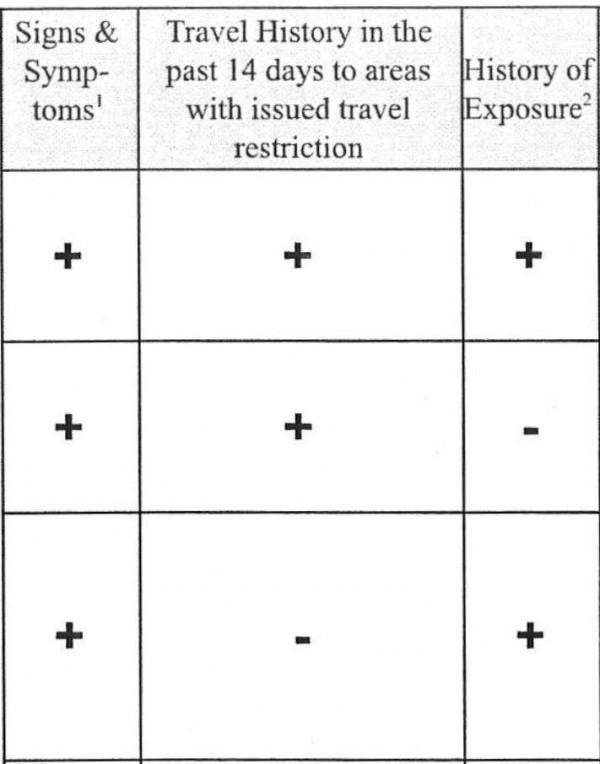
A person is declared a PUI when he or she is exhibiting the coronavirus symptoms, has traveled in the past 14 days to areas with issued travel restriction, and has a history of exposure to COVID-19.
DOH will consider symptoms such as high fever (≥38°C), cough, and other respiratory symptoms.
History of exposure include: A) contact with a confirmed or probable case of COVID-19 infection and B) worked in or attended a health care facility where patients with confirmed or probable COVID-19 patients were being treated.
Here is a chart advised by the DOH to determine a PUI:
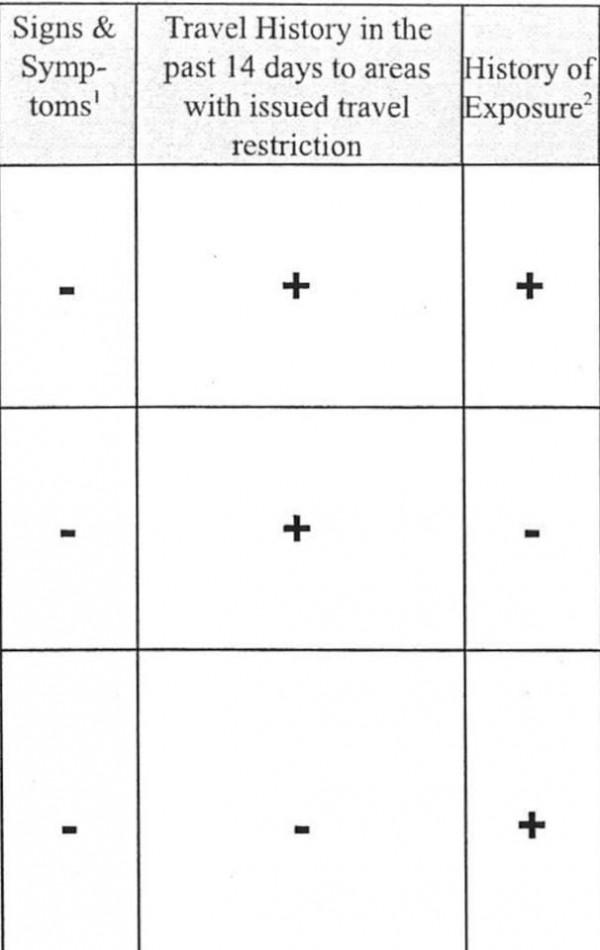
A PUM, on the other hand, is not showing any coronavirus symptoms but has a travel history to areas with issued travel restriction or a history of exposure to the novel virus.
Here is a chart advised by the DOH to determine a PUM:
For those who wish to be part of GMA's efforts to help stop the spread of COVID-19, you may visit the Kapuso Foundation by logging on to https://www.gmanetwork.com/kapusofoundation/donate.
Source: https://www.doh.gov.ph/sites/default/files/Screening-tool-02262020.pdf
Learn more about COVID-19 management here:
COVID-19 Testing: RT-PCR Test vs. Rapid Antibody-based Test
How RITM perform COVID-19 Testing
Why ventilators are essential in treating COVID-19 patients
