

 GMA Brandtalk
 Tracking
 Archives

ADVERTISEMENT
Filtered By: Lifestyle
Lifestyle
Caring for your eyes when you're diabetic
+
Make this your preferred source to get more updates from this publisher on Google.
As urbanites' lives become more stressful, more people are becoming diabetic, even in the Philippines which is not as fast-paced as other countries.
Experts have pointed out that diabetes is more prevalent in urban areas than in rural areas. “There is less stress in rural areas,” Dr. Mary Ann Lin-Abrahan of the St Luke's Medical Center said at a gathering of physicians from the Philippine Society of Endocrinology and Metabolism, Diabetes Philippines last year.
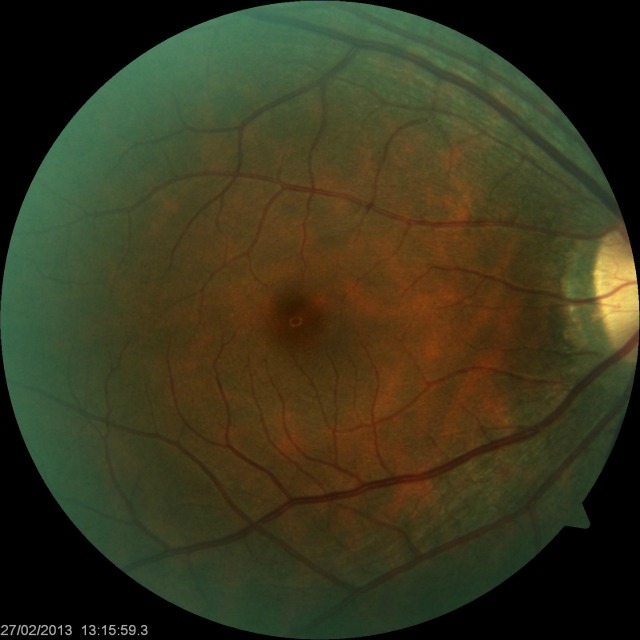
A detailed photo of the author's eye taken with the Visucam 500. Photos courtesy of PELI
Diabetes brings with it many possible complications, and one of them is diabetic retinopathy, an ailment affecting the eyes.
“Diabetic retinopathy occurs when vessels in the eyes become leaky. As a result, protein goes to the surrounding retina, causing swelling. And if it affects the macula (the center of the retina), it will cause blurring of vision,” Dr. Franz Marie Cruz, a neuro-ophthalmologist practicing at the newly launched Pacific Eye and Laser Institute or PELI in Makati City, told GMA News Online.
According to the World Health Organization, diabetic retinopathy caused five percent of world blindness in 2002, affecting almost 5 million people.
“As the incidence of diabetes gradually increases, there is the possibility that more individuals will suffer from eye complications which, if not properly managed, may lead to permanent eye damage,” the WHO added.
“Most diabetics will develop diabetic retinopathy,” Cruz noted.
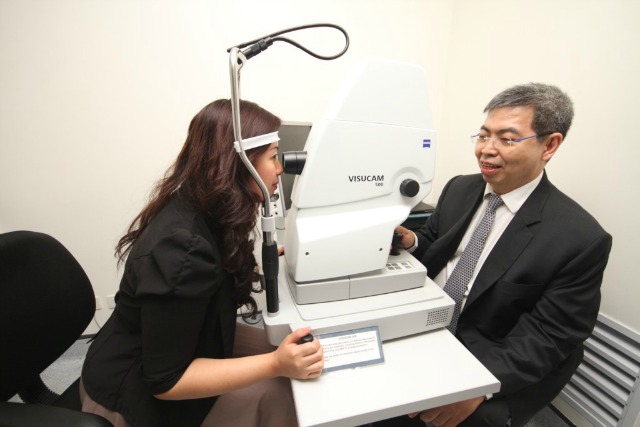
Dr. Harvey Uy, medical director of PELI, conducts an eye examination using the Visucam 500.
Eye exams
Dr. Cruz said diabetic patients with type 1 (juvenile onset) and type 2 (adult onset) diabetes have to have their eyes checked.
“For those with type 2 diabetes, there should be an eye exam including dilated fundus examination at the time of diagnosis,” she said. “Those with type 1 diabetes, on the other hand, should have an eye exam five years after diagnosis.”
After the initial exam, Cruz said a yearly eye examination should be conducted to check if a patient has developed diabetic retinopathy. This test involves dilating the pupils with eyedrops, and looking into the retina with the use of a machine.
One of the new ones, which is used at PELI, is Visucam 500 which allows eye doctors to make detailed diagnosis of diseases such as diabetic retinopathy, glaucoma, and age-related macular degeneration. It can even check the vitamin levels of the eyes and take photos of the pupils at no discomfort to the patient.
Cruz said opthalmologists may inject medication to the eyes to treat the swelling in diabetic retinopathy.
“Some people, in advanced cases, develop new blood vessels which are prone to bleeding. We treat this with laser to dry up the abnormal vessels,” Cruz added.
Their clinic has another machine that is used for this purpose. “Treatments can frequently be completed in a single visit,” a company statement said.
When diabetic retinopathy becomes even more advanced, surgery is performed, said Cruz.
To prevent the disease, she said diabetics should strictly control their sugar and cholesterol levels.
“Follow the diet specifically recommended for diabetics,” Cruz advised. – YA, GMA News

