

 GMA Brandtalk
 Tracking
 Archives

ADVERTISEMENT
Filtered By: Newstv
NewsTV
Seoul, South Korea: A living heritage
+
Make this your preferred source to get more updates from this publisher on Google.
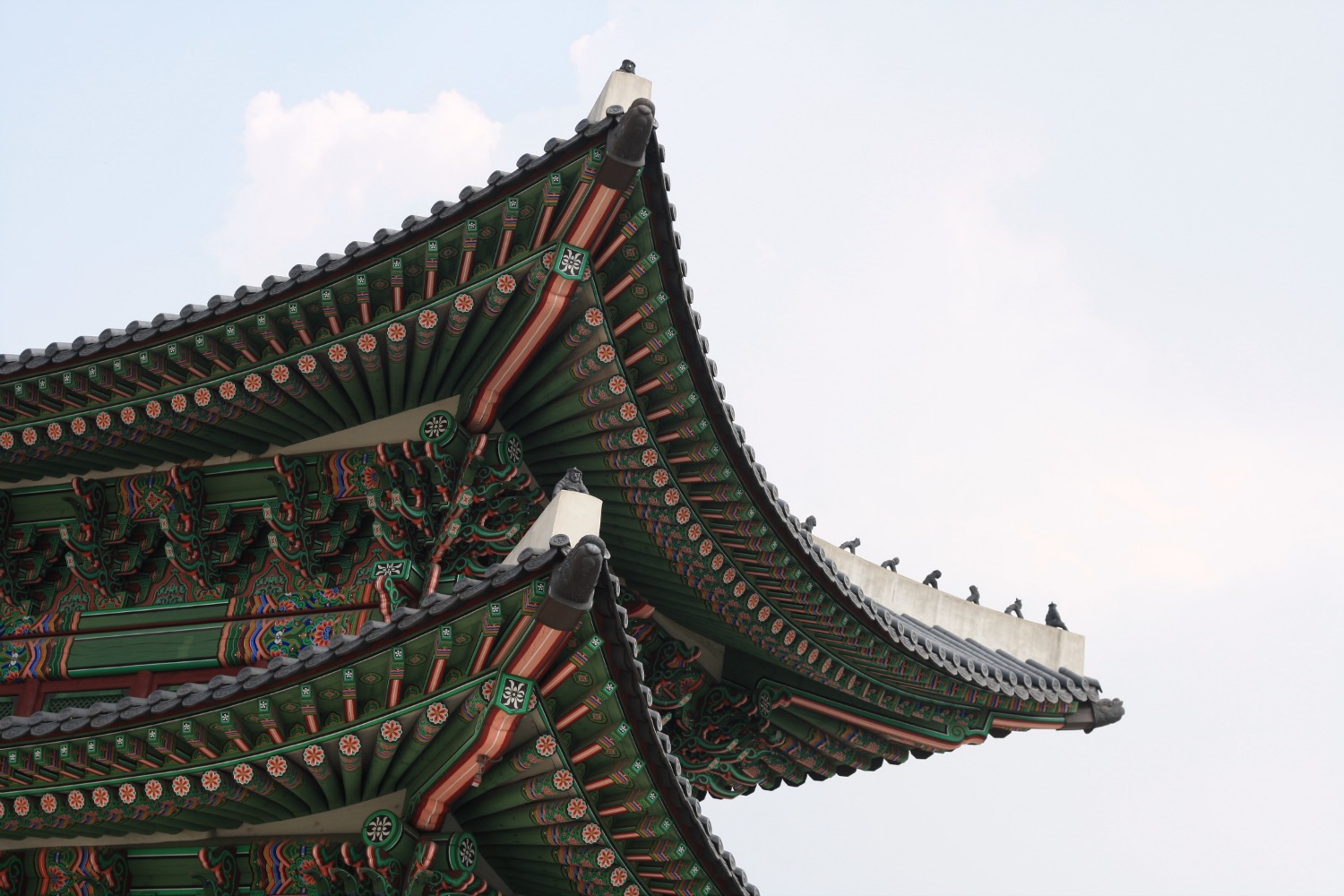
Painted roof tiles adorn Gwanghwamun, the main gate of the Gyeongbokgung palace complex. The gate, along with most of the buildings, have been meticulously restored several times. | Photo: Cristina Tantengco
You’d never guess that Gyeongbokgung has been burnt and demolished several times since being built in 1394. In fact, the Japanese occupation of the early 1900’s left only ten buildings standing — 10 out of roughly 400 buildings!
When Drew Arellano and our “Biyahe ni Drew” crew visited Seoul, we found that the marvel of Seoul’s heritage is not simply in the size of their palaces and heritage villages. It’s in how much effort the people of Seoul have put into preserving their heritage, and how their history has become a part of daily life.

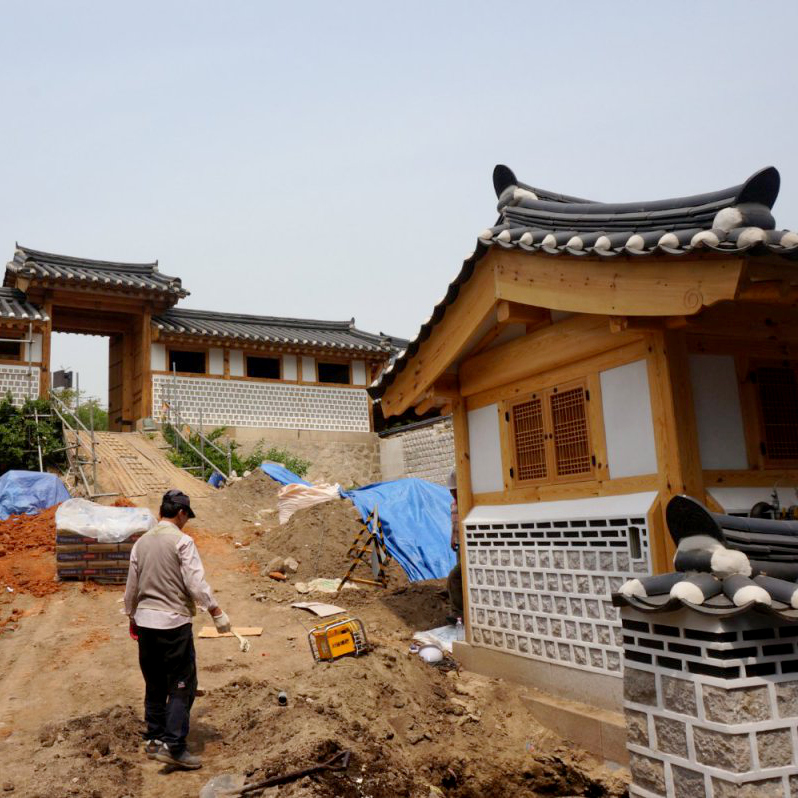
Bukchon Hanok Village
This UNESCO World Heritage site is not frozen in time. On the contrary, Bukchon is a mostly residential area, and you’ll see signs reminding visitors to keep the noise down.
Here, residents convert their hanok homes into mini-museums and charge a small entrance fee. Because residents are directly invested in preserving their neighborhood, you can bet that Bukchon will be well taken care of for years to come.
Bukchon is also home to practicing artisans like master carpenters, paper craft makers and calligraphers.
Their homes are open to visitors too, and they even offer afternoon classes!
Businesses have set up shop to cater to shopping tourists, making Bukchon a good place to buy inlaid lacquerware to try traditional Korean dishes like samgyetang (ginseng chicken soup).
How to get there: Take the subway to Anguk Station (Line 3), Exit 2. Walk straight until you see the tourist information booth.
Nearby attractions: Insadong cultural street, Gyeongbokgung
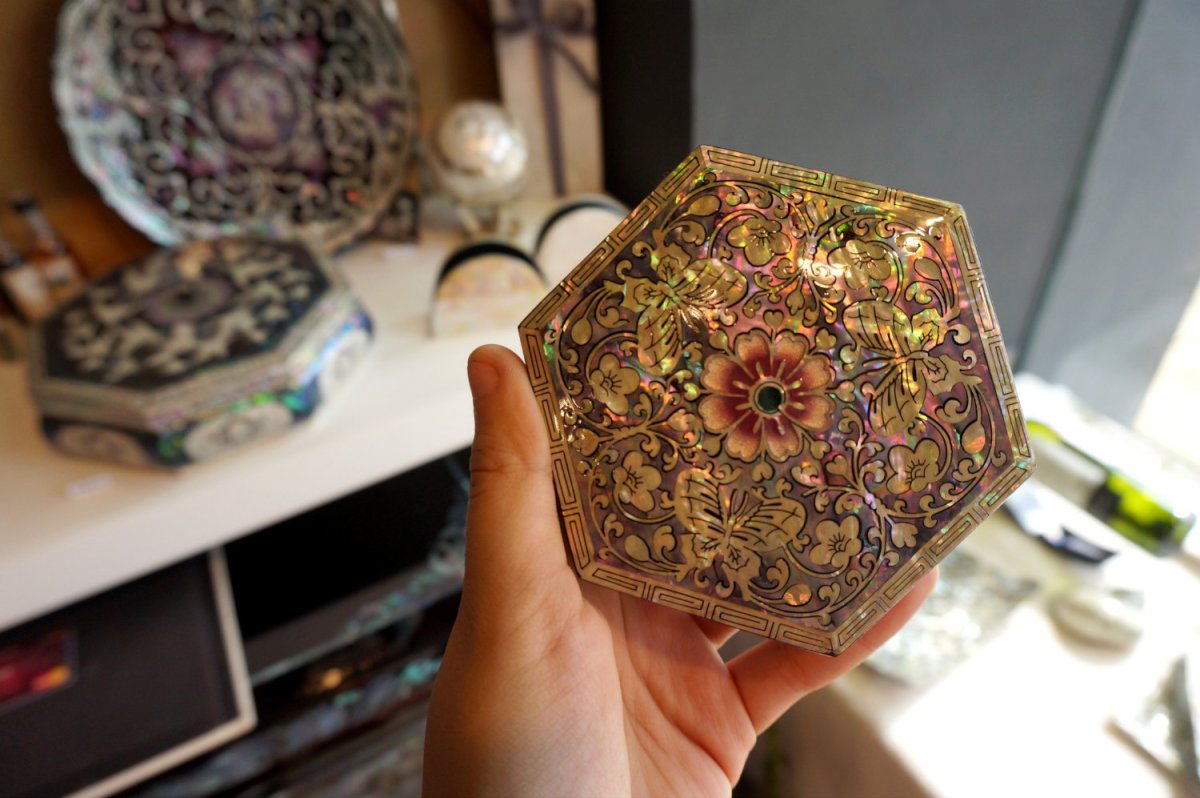
A store in Bukchon Hanok Village sells inlaid lacquerware, one of Korea's traditional products. This jewelry box costs KRW40,000 (USD40). | Photo: Cristina Tantengco
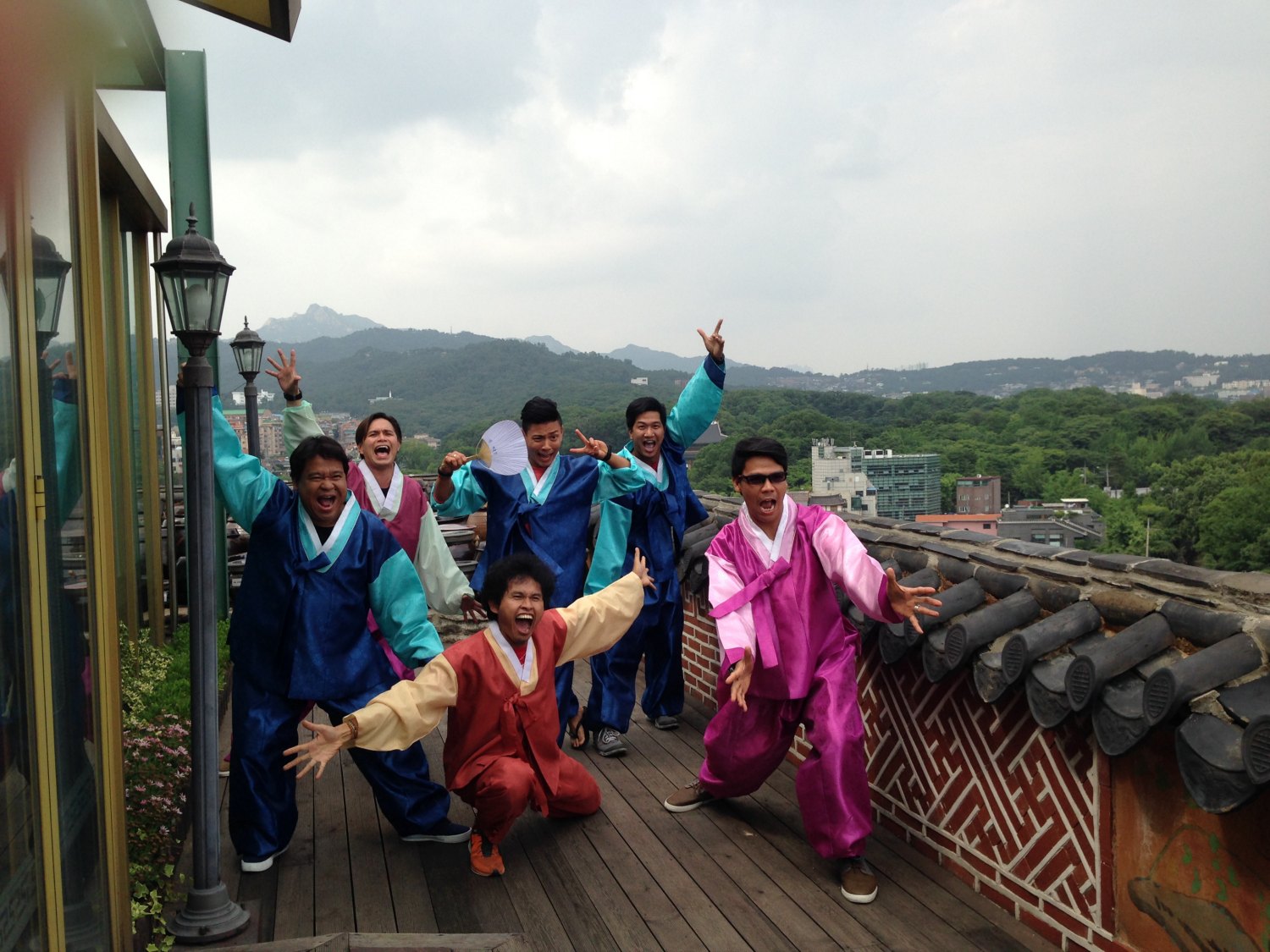
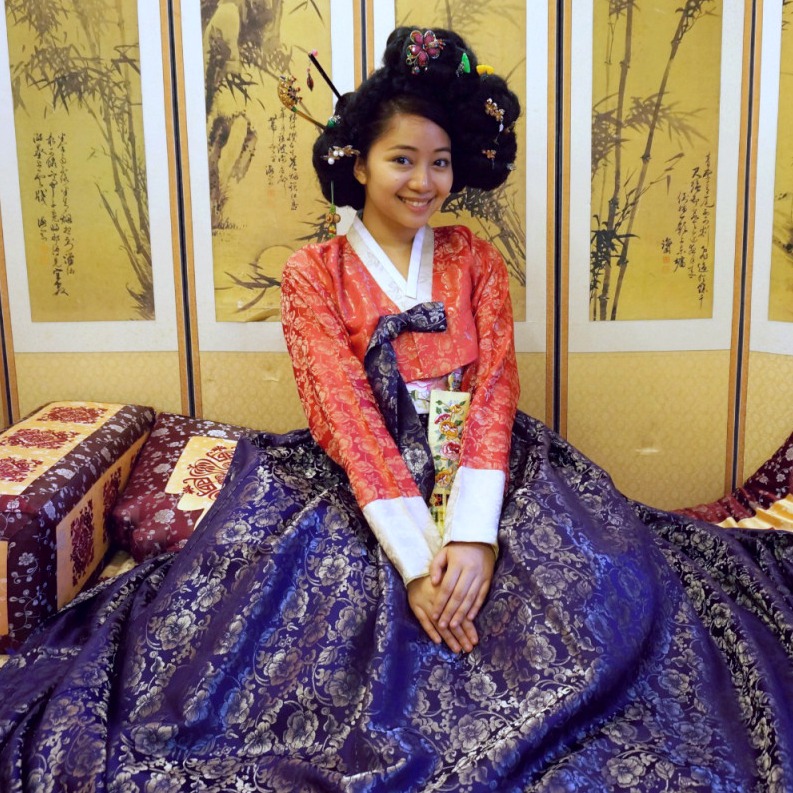
While in Bukchon, the “Biyahe ni Drew” crew signed up to wear hanbok, Korea’s traditional clothing! | Photo: Jerwin Ubaldo
 Insadong
Insadong is the commercial mirror to Bukchon, where one can visit a hanbok cafe and pay to try historically accurate costumes based on the Joseon dynasty.
The busy main street is peppered with shops selling proudly Korean products, from name seals to tea made on Jeju Island, from celadon pottery to Korean-style street food.
You’d think that such a place would be dominated by tourists and avoided by locals, yet we saw a mostly Korean crowd!
How to get there: Take the subway to Anguk Station (Line 3), Exit 4. Walk straight and turn left.
Nearby attractions: Insadong cultural street, Bukchon Hanok Village
There are many more history-rich spots in South Korea’s capital city, but what’s doubly amazing is that they’re found all over Seoul — even in business districts. For example, cultural monuments such as Gyeongbokgung and the nearby Gwanghwamun Plaza are walking distance from modern landmarks like Seoul City Hall and the Cheonggyecheon Stream.
Cheonggyecheon itself shows the dedication that South Koreans have to their own country, this kind of “love your own” unspoken philosophy. The stream, not unlike the Philippines’ estero waterways, was once paved over and turned into a flyover.
In the mid-2000’s, then-Seoul mayor Lee Myung-Bak had it dug up and turned into a walk-friendly park with exhibits that depict Seoul’s history.
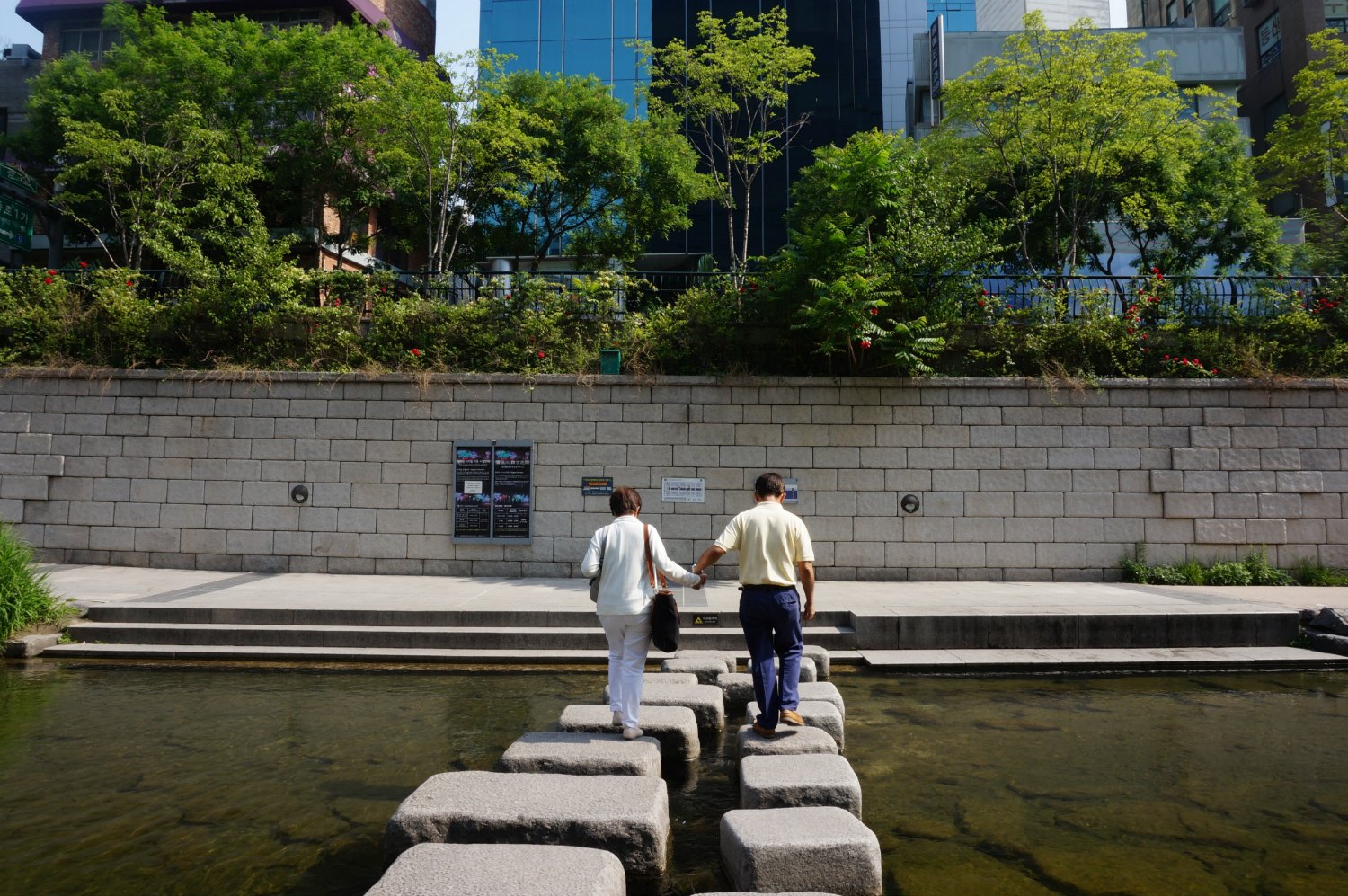
Cheonggyecheon stream runs in the center of Seoul's central business district, at once a reminder of the past and present. | Photo: Cristina Tantengco
The story of Seoul’s history is no secret. Unlike our country’s capital city, Manila, where old buildings are torn down to make way for malls and where condominiums blot the skyline behind important monuments; Seoul manages to balance modernity with history.
Through the palaces, heritage villages, and parks, history is on display for everyone to see.
— Graphics by Isabella Laureta/CM, GMA News

