

 GMA Brandtalk
 Tracking
 Archives

ADVERTISEMENT
Filtered By: Scitech
SciTech
Skin-like plastic bleeds, heals after injury
+
Make this your preferred source to get more updates from this publisher on Google.
Researchers have developed a new self-healing plastic that takes a cue from human skin when cut or scratched: bleed a little, then regenerate.
The plastics change color to warn of wounds and heal themselves when exposed to light, according to researchers who described it before the American Chemical Society.
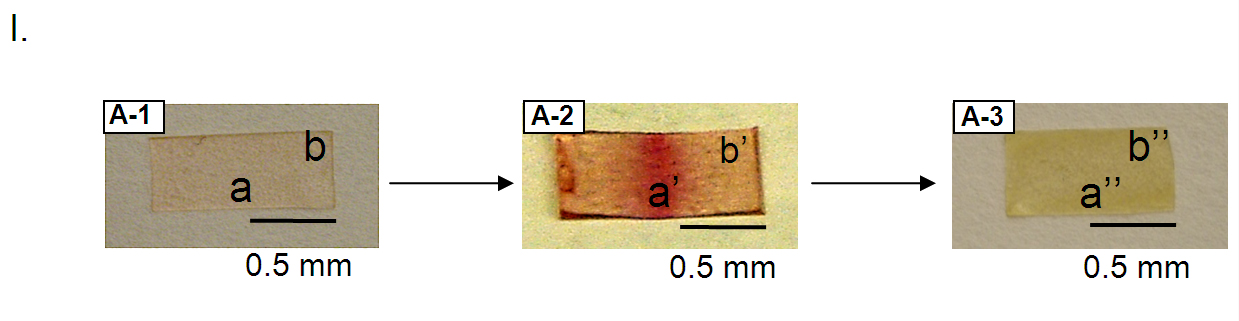
“Mother Nature has endowed all kinds of biological systems with the ability to repair themselves. Some we can see, like the skin healing and new bark forming in cuts on a tree trunk. Some are invisible, but help keep us alive and healthy, like the self-repair system that DNA uses to fix genetic damage to genes. Our new plastic tries to mimic nature, issuing a red signal when damaged and then renewing itself when exposed to visible light, temperature or pH changes,” said Professor Marek Urban, who reported on the research.
Urban, who is with the University of Southern Mississippi in Hattiesburg, said such a plastic can potentially be used a wide range of potential applications.
Vehicle fenders may repair scratches by mere exposure to intense light, or critical structural parts in aircraft might warn of damage by changing color along cracks.
“Where degradation occurs or [there is] mechanical damage, the color would start to change,” Popular Science quoted Urban as saying.
Plastics have replaced many metals and materials due to their strength, light weight and corrosion resistance —but may be difficult to repair if scratched or cracked.
Urban’s group developed plastics with small molecular “bridges” that link the chains of chemicals that compose plastic.
When the plastic is scratched or cracked, these links break and change shape, with Urban tweaking them so changes in shape produce a visible color change.
But once exposed to light or changes in pH or temperature, the bridges re-form, healing the damage and erasing the red mark.
Urban acknowledged research funding from the U. S. Department of Defense.
A scientific holy grail
Considered a holy grail of materials science, self-healing plastics have spawned many approaches by scientists.
One involves embedding plastics with capsules that break open when cracked or scratched and release repairing compounds.
Another is to make plastics that respond to an outside stimulus like light, heat or a chemical to repair themselves.
Repeated self-healing, environment-friendly
Urban said the new plastic has the advantage of being able to heal itself repeatedly, and is more environment-friendly compared to many other plastics.
He said the process for producing the plastic is water-based, instead of relying on potentially toxic ingredients.
Presently, his team is working on incorporating the technology into plastics that can withstand high temperatures. — TJD, GMA News

