

 GMA Brandtalk
 Tracking
 Archives

Health workers’ lament: Most BHWs work for low pay, no job security and benefits
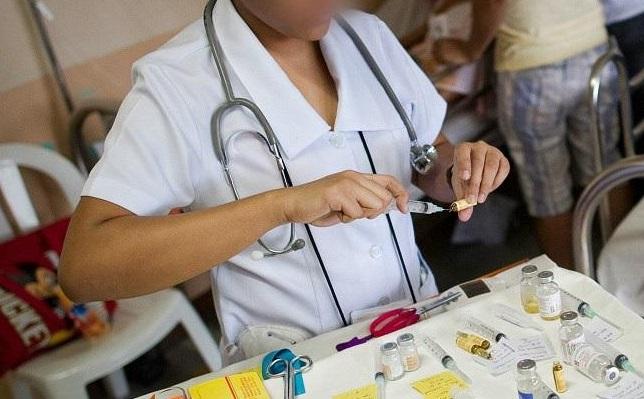
Even if they perform critical work in promoting and protecting public health in communities, most barangay health workers (BHWs) in the Philippines are working without job security and health benefits, and for wages that are not enough to support their families.
This was according to the National BHW Confederation of the Philippines as it called for the immediate passage of the Magna Carta of Health Workers to improve the working conditions of BHWs all over the country.
During the hearing of the Senate committee on health and demography on Tuesday, Khonan Cerial, president of the National BHW Confederation of the Philippines, said the enactment of a Magna Carta that would benefit BHWs is “timely, necessary and just.”
“Despite their indispensable roles, BHWs remain among the least protected and least compensated health workers in the country. For decades, they have served without health benefits, without clear job security, and without adequate safeguards against risk and political displacement,” Cerial said.
“Their situation stands in stark contrast for their immense contribution to public health and community well-being,” he added.
He cited a 2025 national survey conducted by their group, which revealed that 89.37% of their 6,409 BHW respondents reported that their salaries were not enough to support the basic needs of their families.
Cerial lamented that in some areas, BHWs only receive a monthly honorarium of P100.
“This confirms what the BHWs have been saying for years, we do critical work but remain among the lower paid workers in the health system, surviving on honoraria rather than receive wages that reflect our responsibilities,” he said.
Cerial added that the same survey showed that 33.5% of BHWs reported their work environments as “sometimes unsafe,” while 7.46% said they worked in unsafe environments.
In addition, 22.56% of BHWs said they experienced verbal and non-verbal harassment or violence in the workplace, while 10.17% said they were terminated after elections.
Most of the BHWs also admitted that they need more training as public health workers.
“We raise this call not only as advocates but as the collective voice of the frontline community health force who quietly and tirelessly serve our communities every day,” Cerial said.
He added: “Barangay health workers are the backbone of primary healthcare in the Philippines, working within the barangay, the basic unit of local governance. BHWs ensure that vital health services reach every household, especially families who are the most vulnerable and underserved.”
The BHW group called on the Senate to pass the Magna Carta for Health Workers so that BHWs will be finally given the “protection, dignity, and recognition they deserve.”
According to the Department of Health (DOH) 2025 BHW census, there are 277,767 active barangay health workers, 72% of which are registered and accredited. — JMA, GMA Integrated News

