We use cookies to ensure you get the best browsing experience. By continued use, you agree to our privacy policy and accept our use of such cookies. For further information, click FIND OUT MORE.
Make this your preferred source to get more updates from this publisher on Google.
I'm an American citizen, even if I haven't lived in the United States since I was 13 years old. In 1997, after having lived in the United States for almost 20 years, my parents decided to sell their home, pack up their three American-born children, and move back to the Philippines for good. At the time, I had just finished eighth grade. I had never even visited the Philippines before. Nor did I speak a word of Filipino. Fifteen years later, I’m 29 years old and have lived in the Philippines longer than I ever lived in the U.S. Almost all the people nearest and dearest to me are here in the Philippines. I’ve studied and worked in the Philippines for my entire adult life. In short, I may have American citizenship, but the Philippines is my home. I’m a Filipino in mind and heart. This is why I consider my right to vote in the American elections a real privilege. So many people around the world are affected by decisions made by U.S. leaders, yet they cannot participate in selecting them. In casting my own vote, I’ve tried to think about the kind of U.S. president my fellow Filipinos and other non-Americans would choose if given the chance.
According to a survey of 21 countries conducted by Globescan for the BBC World Service, at least 50 percent of respondents from around the world supported the reelection of President Barack Obama. Nine percent said they would support Romney. Screengrab taken from Globescan.com.
I believe one of the most important global issues at stake in the U.S. elections is global warming. The United States makes up less than 5 percent of the world’s population, but historically is the biggest producer of carbon emissions. Here in the Philippines, one of the countries most vulnerable to the devastation of climate change, the havoc wrought by the habagat, Tropical Storm Ondoy, and Typhoon Sendong are just a taste of things to come. The world needs American leaders who are willing to make the reduction of U.S. carbon emissions an urgent priority. Another issue that hits close to home for me and many other Filipinos is immigration. For many years before my family returned to the Philippines, my own parents were also undocumented immigrants in the United States. I’m fortunate enough to enjoy American citizenship simply because I was born after my parents went to the U.S. Meanwhile, many other young Filipinos who entered the States as minors face the risk of being separated from their families and uprooted from their homes. So many non-Americans around the world have relatives who have immigrated to the U.S. to escape conflicts at home, or to seek a better life for themselves. I believe the U.S. needs an immigration system that’s fair but humane, and that recognizes the contributions of many undocumented immigrants to their communities in the U.S.
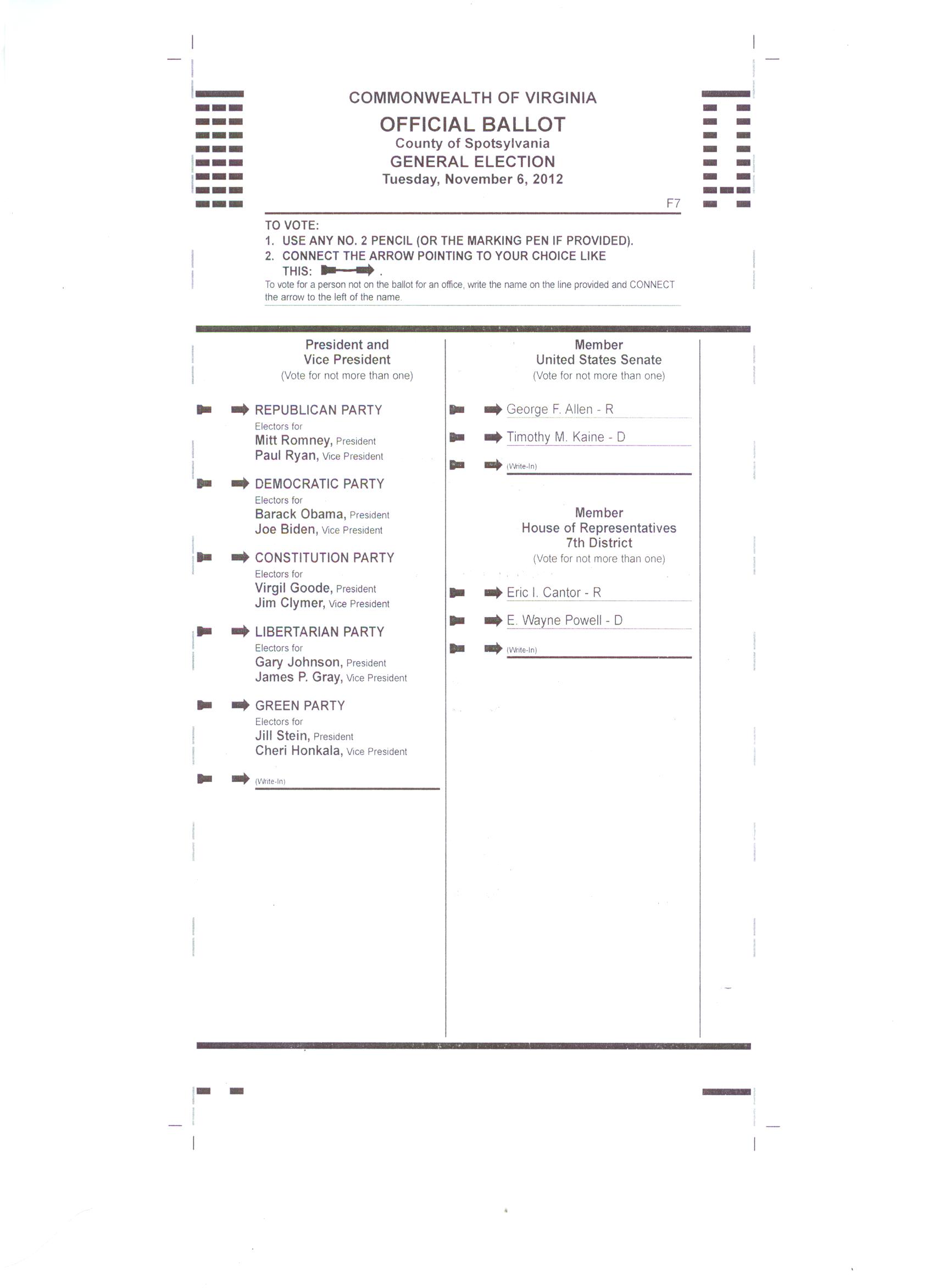
Absentee voters of the County of Spotsylvania in Virginia, USA filled out ballots like this one.
In 2008, I was a first-time voter in the US elections. I learned how to register through a Facebook page run by Youth Vote Overseas, a non-profit organization dedicated to educating young American voters outside the U.S. Through the Facebook page, I learned about important deadlines, how to register, and how to send my ballot. I also got to interact with other American voters living abroad. At any other point in history, my vote would have probably been too marginal to matter. I was a first-time youth voter, an absentee voter, a woman, an Asian-American, and a Democrat voting in the traditionally Republican state of Virginia. Yet that year, my state elected its first Democratic presidential candidate since 1964. I couldn’t help but feel that my vote—or at least, the votes of many other people not too different from myself—actually made a difference. Empowered by my experience in 2008, I voted again in the 2012 elections. Of course, Facebook, Twitter, and Google were my go-to sources of information on the voting process. Though I was a bit intimidated by the paperwork involved, I was also buoyed by enthusiastic and encouraging tweets, status updates, and photos shared by other overseas voters. The question is, could absentee voters actually have a big impact on the U.S. elections? The U.S. Department of State estimates that there are already around 6.3 million Americans living and working outside the United States today. Fewer than 20 states have bigger populations than this, and the numbers are expected to grow. For the first time, America has a president who spent a significant portion of his childhood living overseas. President Obama’s own mother, Ann Dunham, also lived for many years as an American expat in Indonesia. As technology makes it easier than ever for American citizens abroad to vote, I hope that more of them will. If it’s possible for a one-time overseas American to be elected President, maybe it’s not so far-fetched that American overseas voters could one day also have a decisive influence over America’s choice of leader. I can’t wait to find out in 2016.


 GMA Brandtalk
 Tracking
 Archives

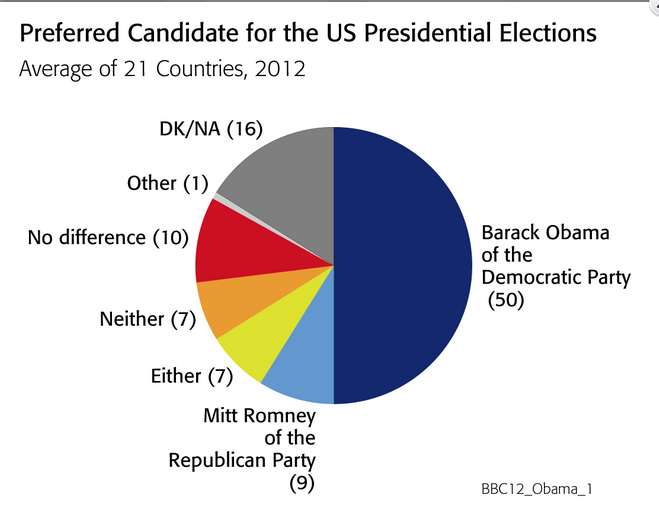 According to a survey of 21 countries conducted by Globescan for the BBC World Service, at least 50 percent of respondents from around the world supported the reelection of President Barack Obama. Nine percent said they would support Romney. Screengrab taken from Globescan.com.