

 GMA Brandtalk
 Tracking
 Archives

ADVERTISEMENT
Filtered By: Topstories
News
Outside the box: In memory of trees
+
Make this your preferred source to get more updates from this publisher on Google.
The whirring noise was oddly familiar. For a while I thought I was back in my adopted homeland of Palawan, getting rudely awakened by neighbors clearing their wooded landholdings.
And then, amid the fog of sleep at the end of a long and busy week, it hit me: I hate the sound of chainsaws in the morning.
And then, amid the fog of sleep at the end of a long and busy week, it hit me: I hate the sound of chainsaws in the morning.
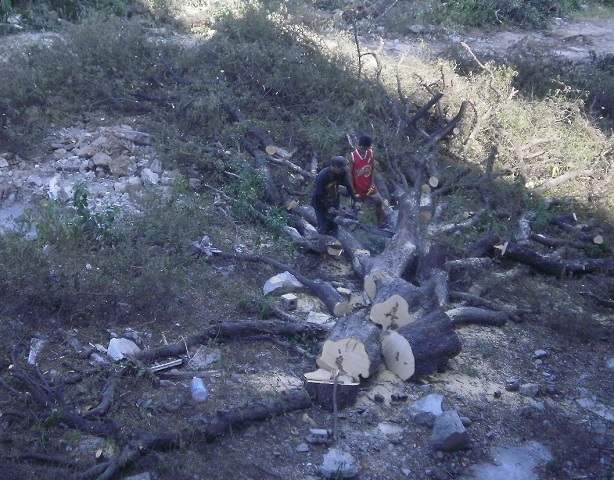 Rushing to the window, I saw four men beside the remains of a freshly cut mango tree. One of them was wielding the chainsaw and slicing the trunk into smaller pieces, while a helper picked up the branches. Two more sat on a fallen tree, now just another log on the ground. I counted up to seven tree stumps in what used to be a grove with thick canopies just a week ago, now turned into a barren wasteland.
 The trees were in the empty lot beside our high-rise compound. The sprawling space had been a veritable wilderness among the jumble of houses and buildings along a bustling avenue in Quezon City. A colony of birds had built nests in the branches of some trees, which were seasonally laden with low-hanging fruits. Refreshing breezes came through the greenery, a welcome sight for many residents like me whose weekend exercise consisted of several running or walking laps around our so-called jogging track that ran around the four towers so far.
Sales agents had been offering units on that lot in a planned condominium for several months now, so I knew it was inevitable that those cherished trees would soon be gone. Somehow, I was hoping the owners would preserve even just two or three of the fully grown ones in this quiet grove, seeing how these trees had nurtured a thriving ecosystem in this urban setting.
But it wasn't meant to be, and I was left commiserating from the top of the wall with the swallows shrieking all over the place incessantly, perhaps mourning, perhaps wondering where their homes had gone. Unlike militant squatters that had staked a claim on the city, the birds could not set up barricades to protest the loss of their natural habitat.
There used to be a sampaloc tree here, an acacia there, I think, where those stumps with reddish rings had been unceremoniously thrown. Mostly, there were mango trees. Perhaps four or five of them had started flowering and bearing fruit at the onset of summer.
There used to be a sampaloc tree here, an acacia there, I think, where those stumps with reddish rings had been unceremoniously thrown. Mostly, there were mango trees. Perhaps four or five of them had started flowering and bearing fruit at the onset of summer.
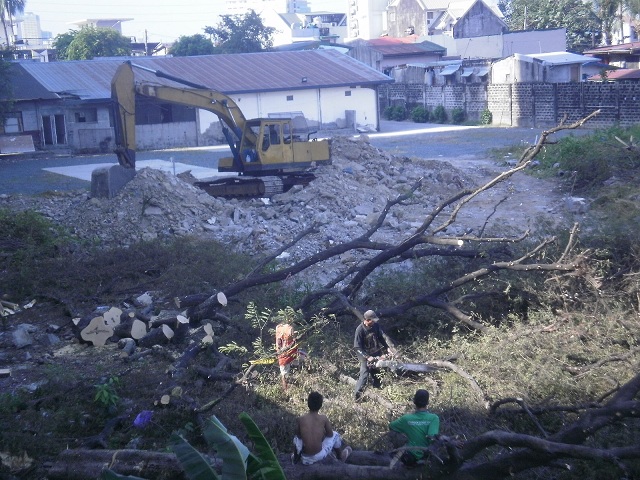 They were all gone now. Instead, piled near the wall was a growing mound of garbage in bright yellow sacks. Beside it, a dull yellow bulldozer stood idle after having done its share of leveling the ground and carving a dirt road for the wrecking crew.
 In the shade, the cool morning breeze was calming. But down below, the rising sun cast a harsh glare on the broken ground where the tall buildings had not cast their shadow.
There was sadness, utter sadness at the madness of it all.
Then again, I do live in a high-rise as well. It's a tired Friday morning, and families with small kids in tow were already in the pool for an early swim in the clear waters. Later in the day, the swimming pool would get cloudier as more people descended on the main recreation area in the compound.
I wonder how many trees the developer cut to build these five towering blocks? Can these two adjoining narrow pieces of land – in this neighborhood where many houses have put up banners saying, “No to high-rise!” on their gates – really fit a growing cluster of high-rise buildings?
I wonder how many trees the developer cut to build these five towering blocks? Can these two adjoining narrow pieces of land – in this neighborhood where many houses have put up banners saying, “No to high-rise!” on their gates – really fit a growing cluster of high-rise buildings?
The men had finished cutting up the huge mango tree and were walking down the path towards the last straggler, a paltry falcatta that must have missed their mark earlier. Two whacks with a machete for the thinner sapling, and then a final blow from the chainsaw for the thicker one.
The carnage was over. – KDM, GMA News

