
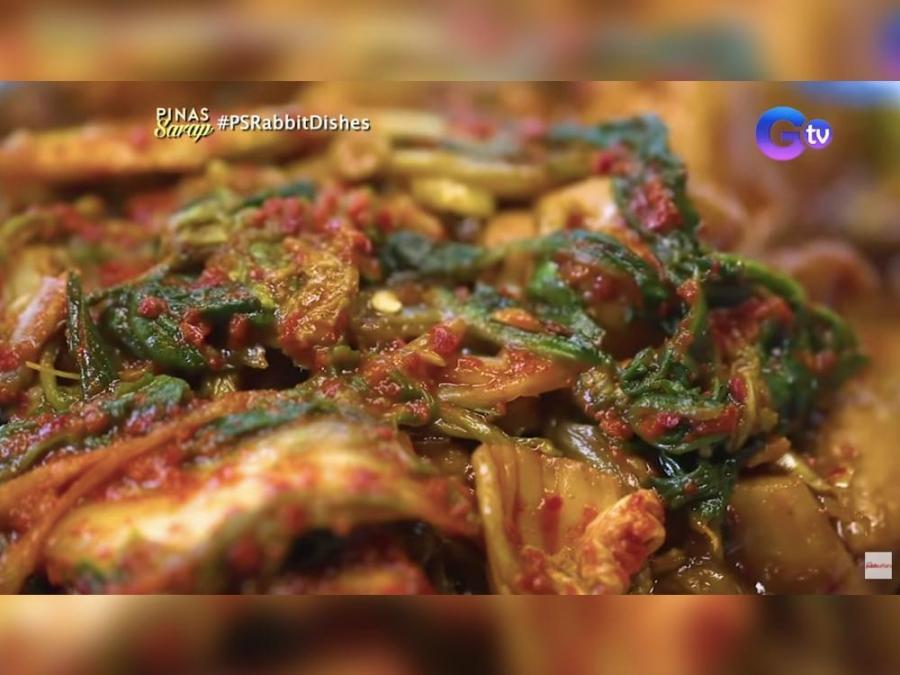
Pinas Sarap: Are you up for an exotic rabbit dish?
Around GMA
Around GMA
Strong 6.7-magnitude quake strikes southern Peru — USGS Man lands in hospital after fire razes home in Bacolod Otherworld Festival Manila is happening this NovemberArticle Inside Page
Showbiz News
Learn how to make Kimchi Rabbit HERE:
Rabbits are primarily known as pets, but in other parts of the world such as Europe, they are raised and bred for meat production.

Pinas Sarap host Kara David tries the Kimchi Rabbit / Source: Pinas Sarap
In the Philippines, rabbit farming is slowly gaining momentum, especially now that the African Swine Fever or ASF has become prevalent and people need an alternative to pork.
In a recent Pinas Sarap episode, host Kara David visited the rabbit farm of Lorets Estalilla in Porac, Pampanga.
Lorets showed Kara his rabbit farm, which houses over 100 rabbits. Among the breeds that Lorets has on his farm are the New Zealand White, Californian, Flemish Giant, German Giant, and American Blue.
They come in three varieties according to size: small, medium, and large. Medium breeds such as the New Zealand White and Californian are often used for meat production.
While many still find it cruel to raise and breed rabbits for human consumption, Lorets believe rabbit farming is essential for the survival of human meat-eaters.
He said, “Maraming naaawa, ma'am, sa pag-ano ng rabbit. Pero kailangan din natin 'yan. Kasi lalo na ngayon, laganap yung ASF ng baboy, so ito 'yung naisip nilang parang pamalit para at least (masolusyonan) natin 'yung (kakulangan) ng karne sa hapag natin.”
Lorets, who has been in the business of rabbit farming for meat production for over a decade, has already thought of different recipes that can be made using rabbit meat.
One of them is his take on the popular Korean dish, kimchi, the Kimchi Rabbit.
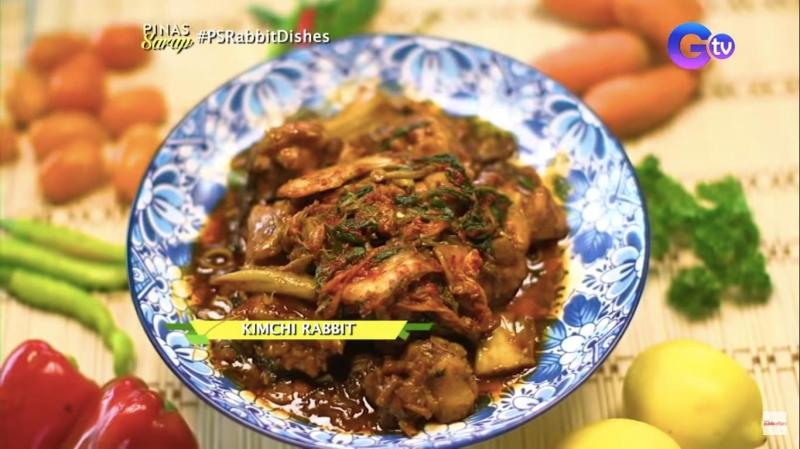
The Kimchi Rabbit / Source: Pinas Sarap
If you want to cook this exotic dish at home, you'll need the following ingredients:
- 3-month-old rabbit meat
- ginger
- lemongrass (tanglad)
- garlic
- green chili pepper
- water
- soy sauce
- ground pepper
- sugar
- oyster sauce
- kimchi paste
Here's the step-by-step procedure on how to cook Kimchi Rabbit:
1. Saute ginger and lemongrass.
2. Add garlic and green chili pepper.
3. Add the rabbit meat.
4. Add water and soy sauce
5. Add ground pepper, sugar, and oyster sauce
6. Let it boil for 15 to 20 minutes or until meat is tender.
7. Add kimchi
Kara noticed that the rabbit meat is very much like the native chicken. It needs a bit more boiling than your regular chicken.
And when Kara tried the Kimchi Rabbit, she says it has that signature spiciness of kimchi and the rabbit meat itself is a bit tougher than chicken, has more bones, and has no fat at all.
Kara also said, “'Pag hindi siya sinabing rabbit, hindi mo iisiping rabbit siya. Kasi lasa siyang manok.”
Watch and learn how to cook the exotic Kimchi Rabbit dish in the Pinas Sarap video below.
For more recipes like this, watch Pinas Sarap every Tuesday, 5:45 P.M. on GTV.
Viewers abroad can also watch Pinas Sarap via GMA's flagship international channel, GMA Pinoy TV. For the program guide, visit www.gmapinoytv.com.
And for more lifestyle content, head out to GMA's Lifestyle page.
You might also want to learn how iconic Binondo Chinese dishes are made HERE.
