
Bubonic plague: What are its symptoms, treatment, and prevention?
Around GMA
Around GMA
Netizens delighted over rescue dog, Che-che, who smiles at the sound of her name Babae, Patay Human Mabangga ang Gisakyang Motor sa Sidecar sa Mixer Truck | Balitang Bisdak Authentic Japanese food, MAY PINOY TWIST! | Farm To TableArticle Inside Page
Showbiz News
People are panicking about a recently reported probable case of the Bubonic plague in Inner Mongolia. Find out how you can avoid it HERE:
The Bubonic Plague became one of the trending topics of the day after a suspected case was reported in Bayan Nur, a city in the Chinese region of Inner Mongolia.
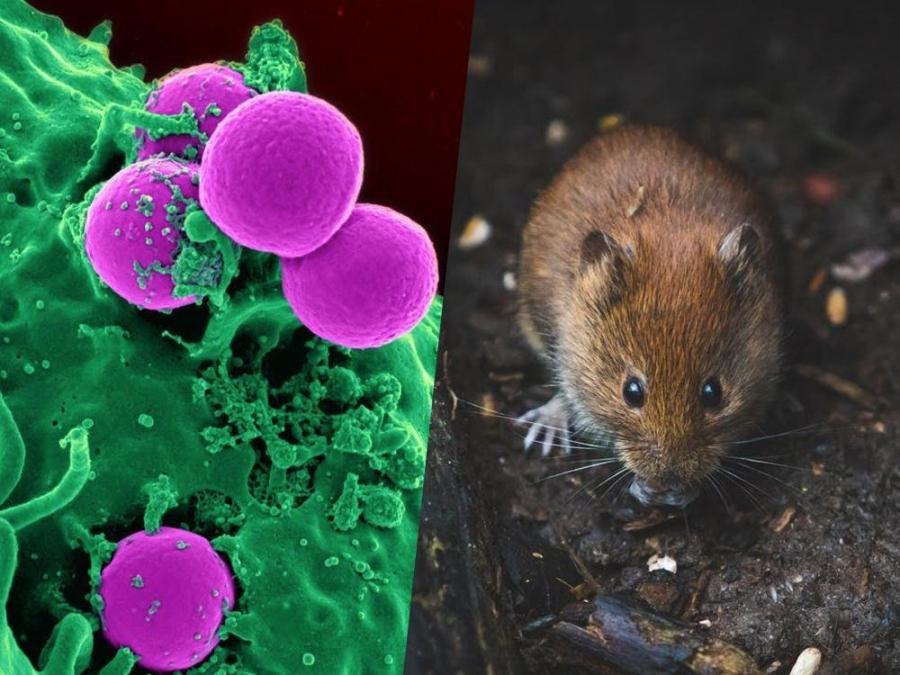
According to the Center for Disease Control and Prevention (CDC), it is an infectious disease caused by the Yersinia pestis bacteria.
The plague often affects rodents, such as chipmunks, prairie dogs, ground squirrels, mice, and other mammals and is passed on to humans through a flea bite.
Moreover, human-to-human transmission is also possible when a person with plague pneumonia coughs droplets into the air and another person breathes it in, much like how COVID-19 is transmitted.
But, human-to-human transmission of the plague is rare according to CDC. And a person usually becomes ill from around one to six days after being exposed to Yersinia pestis.
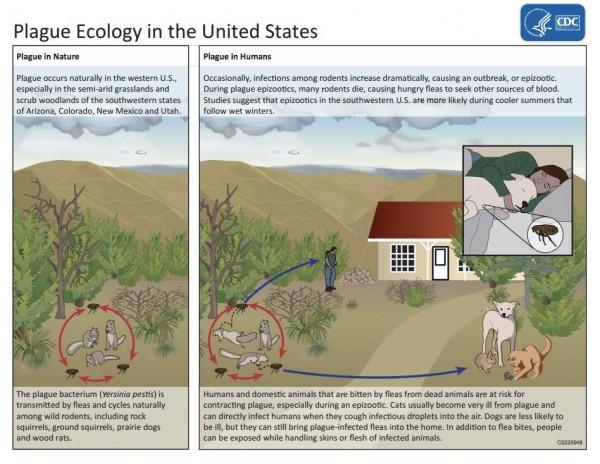
How the plague is transmitted/Source: CDC
The Bubonic Plague or Black Death is known as one of the worst pandemics in history.
It was believed to have originated in China in 1334 and lasted for many centuries before a cure was developed; reportedly claiming about 25 million lives in Europe.
Each year, there are around 1,000 and 2,000 cases of the plague reported to the World Health Organization (WHO) worldwide.
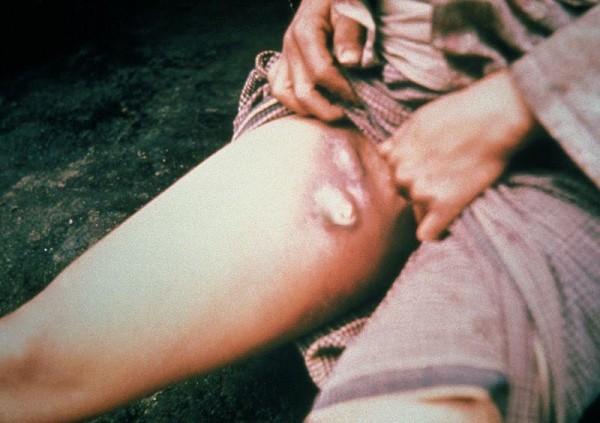
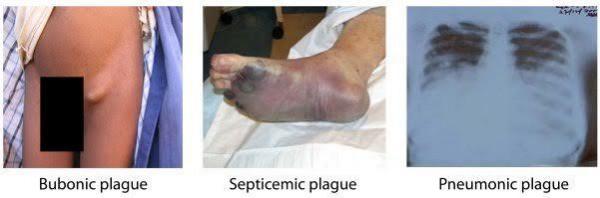
A sample of buboes/ Source: CDC
Signs and symptoms
People infected with the plague experience the following:
- Fever
- Headache
- Chills
- Extreme weakness
- Shortness of breath
- Chest pain
- Cough
- Bloody or watery mucous
- One or more swollen, tender, and painful lymph nodes (called buboes)
- Abdominal pain
- Shock
- Bleeding into the skin and other organs
- Skin and other tissues may turn black and die (a.k.a. necrosis)
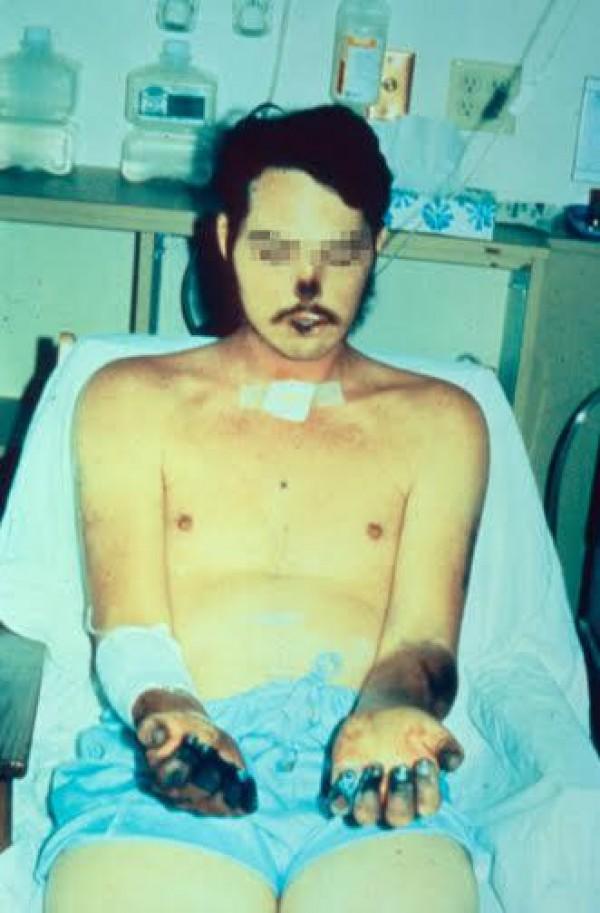
A patient recovering from the plague who experienced necrosis/ Source: CDC
Treatment
The Bubonic plague is curable with antibiotics such as fluoroquinolones like Ciprofloxacin.
However, if left untreated, it can lead to death. So early diagnosis and treatment is key in effectively curing the disease.
Prevention
There's still no vaccine for the plague, although it has already been being developed for years.
So, the best preventive measure to avoid contracting the plague is to refrain from feeding and petting rodents, especially the wild ones. And you should definitely not touch them when they die.
The Bubonic plague may have caused millions of death centuries ago, but is has become a preventable and curable disease. So, there's absolutely no need to panic about the news of a recent possible infection in China.
Just take safety precautions and seek medical attention once you get symptoms.
For more lifestyle content, head out to GMA's Lifestyle page.
New swine flu strain discovered in China can start a new pandemic
TRIVIA: Pandemics in History and How They Ended
