
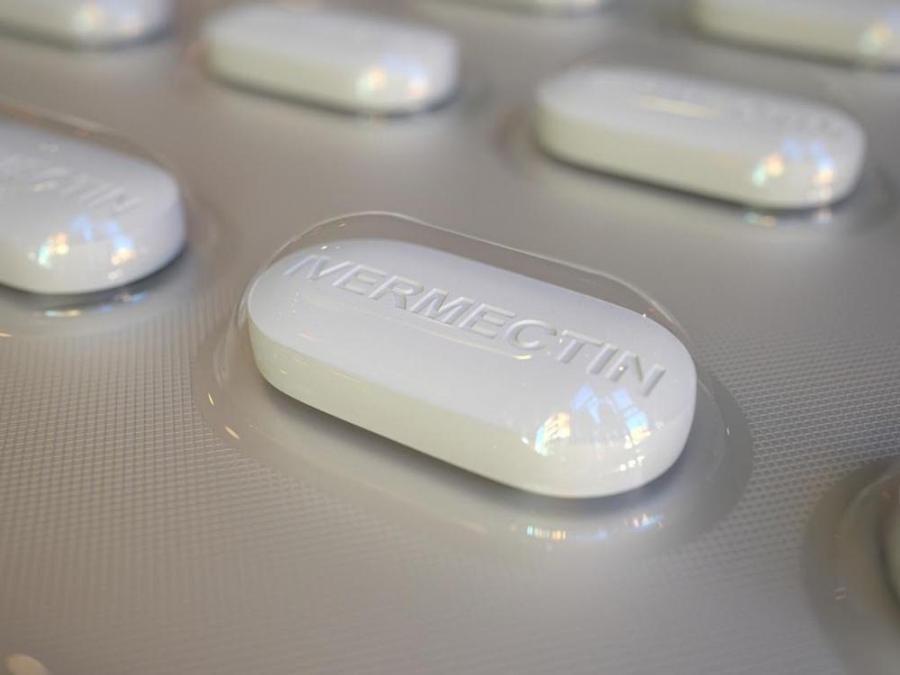
What is Ivermectin, the anti-parasitic drug touted as a treatment against COVID-19?
Around GMA
Around GMA
Unang Balita sa Unang Hirit: (Part 2) June 24, 2026 [HD] Raps filed vs minor in Tacloban school shooting The season's most anticipated portable fan is launching in the Philippines—here's what to expectArticle Inside Page
Showbiz News
Ivermectin can be used as a treatment for both animals and humans. But is it effective against the dreaded COVID-19? Here are what the experts say.
The battle against COVID-19 is far from over. With cases continuing to spike up in some parts of the world so is the emergence of so-called alternative cures to complement the vaccines being rolled out.
One of the options being pushed is Ivermectin, the anti-parasitic drug commonly used on animals.
The drug has gained significant attention recently here in the Philippines after Anakalusugan party-list Rep. Mike Defensor announced that he will be distributing Ivermectin for free to Quezon City residents, with senior citizens on top of the priorities list.
What is Ivermectin?
Ivermectin is a drug used to treat parasite infestations including head lice, scabies, river blindness (onchocerciasis), strongyloidiasis, trichuriasis, ascariasis, and lymphatic filariasis in humans.
For animals, it is widely used against heartworm and acariasis, among many others.
It can be taken orally or applied directly on the skin for external cases.
First discovered in 1975, Ivermectin was first used medically in 1981.
Can humans use it?
As mentioned, Ivermectin can be used by humans, with doctors prescribing it to treat conditions caused by parasites such as head lice and certain worms.
Doctors determine the right dosage by taking into consideration a person's medical condition, weight, and body reaction to the drug.
Is it effective against COVID-19?
There's no sufficient evidence - medically and scientifically - suggesting that it can be used against COVID-19.
In fact, studies conducted to test its efficacy against the virus have come out flat.
The U.S. National Institutes of Health COVID-19 Treatment Guidelines has said that test trials offered little encouraging evidence for it to be allowed to use against COVID-19.
Likewise, the U.S. Food and Drug Administration (FDA) has thumbed down Ivermectin as a potential anti-COVID-19 treatment.
Merck, the pharmaceutical company that manufactures the drug, has also come out to discourage the public from using Ivermectin as a drug to combat COVID-19.
In a statement, the company pointed out that there's “no scientific basis for a potential therapeutic effect against COVID-19 from pre-clinical studies; no meaningful evidence for clinical activity or clinical efficacy in patients with COVID-19 disease; and a concerning lack of safety data in the majority of studies.”
It further said, “We do not believe that the data available support the safety and efficacy of Ivermectin beyond the doses and populations indicated in the regulatory agency-approved prescribing information.”
WHO's take
Rabindra Abeyasinghe, World Health Organization (WHO) representative to the Philippines, has reminded the public and lawmakers advocating for Ivermectin about the drug's lack of approval from established health regulatory bodies.
“The issue with the Ivermectin is that based on initial study and the currently available data, it is not strong enough for us to advocate the use of Ivermectin for treatment of COVID or prevention of COVID,” Abeyasinghe told Congress in March.
“We looked closely at the European Medical Association, they concluded the same thing, we looked at the U.S. FDA (Food and Drug Administration), they concluded the same thing.
“What they are recommending is that we look at carefully-planned, controlled clinical trials to have proof that Ivermectin works.”
He continued, “That is the global evidence that we have, not only from WHO, but also from very stringent regulation authorities and medicines authority both in Europe and in North America.”
He once again reiterated this point during a recent briefing hosted by Malacañang.
“Even if we look at it from a preventive perspective there is no evidence that supports it. That is why WHO came out with a very clear position that the potential use of the Ivermectin as a prophylactic or as a therapeutic agent needs to be evaluated through equally strong clinical trials, not just the (WHO's) solidarity trials,” Abeyasinghe mentioned.
Abeyasinghe also puts into perspective claims that Ivermectin helped people with COVID-19 to survive the illness.
“More than 95% of them recovered without specific treatments. So if you give those patients a particular drug and say that the drug cures them. That is not science; that is not evidence. And this is what is happening again with possibly, Ivermectin,” he explained.
“We have seen that repeatedly, people who have taken for example the Hydroxychloroquine or Ivermectin falling to COVID. So let's refrain from this and let the scientists do what they have to do.”
For more health-related stories, head to GMA Lifestyle's page.
