

Perseid meteor shower: How to best watch it on August 12
Around GMA
Around GMA
Trump administration freezes child day care payments to Minnesota Separate fires hit over 10 structures in Bacolod CityArticle Inside Page
Showbiz News
Look up the sky during the wee hours of August 12 and make a wish because it's the peak of the Perseid meteor shower! Get tips on how to best watch it HERE:
Hey, skywatchers! There's something exciting to look forward to during the pre-dawn hours of August 12: The peak of the Perseid meteor shower!
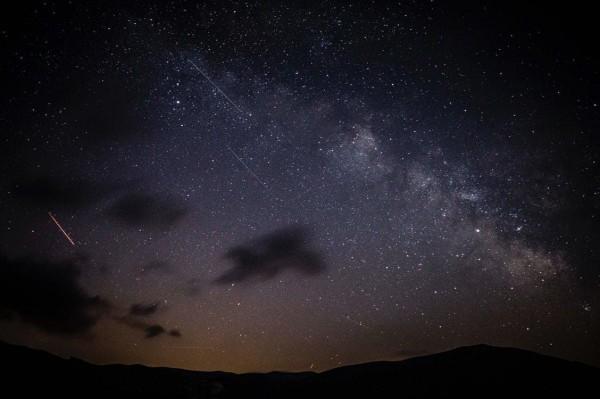
Get ready for another awesome meteor shower on August 12! | Source: Pexels
The Perseids are debris left behind by the comet Swift-Tuttle and it takes its name from the constellation Perseus, which is its radiant or the point where it appears to come from in the sky.
The Perseid meteor shower has begun zooming across the skies during the latter part of July and will peak in the wee hours of August 12.
Moreover, it is dubbed by the National Aeronautics Space Administration (NASA) as the “best meteor shower of the year.” You definitely wouldn't want to miss it!

Pro tips on how to watch the Perseid meteor shower | Source: Pexels
Tips on how to best watch it
According to NASA, all you need to do is find a spot that's far from bright lights, look up, and enjoy.
You won't even need telescopes or binoculars as the Perseids are visible to the naked eye.
Plus, you won't have to look at a specific direction because they can be seen all over the sky anyway.
As an added pro tip, NASA recommends that you let your eyes adjust to the dark, which usually takes about 30 minutes, so you can see more meteors.
So, obviously that means keeping your eyes off your phone screen too as it will affect your eye's night vision.
According to the Philippine Atmospheric, Geophysical and Astronomical Services Administration (PAG-ASA), all should go well given that the sky is clear during the pre-dawn hours of August 12.
They warn though that the waxing gibbous moon might make the meteor shower look a bit faint because of its brightness.
Nevertheless, it will still be worth staying up late for -or waking up early for--as the expected number of meteors to be observed during peak time is about 50 meteors, more or less.
Or, as NASA said, that's about one meteor every two minutes during the peak!
If you can't watch the Perseid meteor shower during wee hours, you can still try viewing it at around 9 p.m., but know that you'll be seeing less meteors compared to when you watch it at its peak.
If the weather in your location doesn't cooperate, you can still watch it through a live broadcast from a camera at the NASA's Marshall Space Flight Center in Huntsville, Alabama--cross fingers that the weather there will be good.
The broadcast will be available on the NASA Meteor Watch Facebook page beginning 8 p.m. CDT on August 11 and will continue until sunrise of August 12.
For more lifestyle content, head out to GMA's Lifestyle page.
You might also want to check out the light pillars and solar eclipse that happened in June.
