
How the poster of a historical animated film stirred an uproar back in 2019
Around GMA
Around GMA
Ruru Madrid feels 'at home' in Tondo while filming upcoming series 'Hari ng Tondo' Foreign Exchange Rate as of July 17, 2026 | Balitang Bisdak Spend Your Weekends with Filipino Blockbusters on GMA Pinoy TV via OSNArticle Inside Page
Showbiz News
The 'Tililing' poster issue brings to mind a 2019 controversy stemming from a poster of an animated movie based on the exploits of famed voyager Ferdinand Magellan.
The controversy surrounding Tililing showed how promotional posters could incite good or bad publicity even before a film hits theaters.
Mental health advocates slammed the movie for its “offensive” and “insensitive” portrayal of people with mental illness.
“We can't judge the movie if we havent seen it yet. Let us just hope that it's done tastefully. The thing is, the poster is problematic,” the Anxiety and Depression Support Philippines wrote on Facebook.
“Not all who will see the original poster will read, investigate or watch. That impression could be resonating in their brains for a long or lifetime.”
Director Darryl Yap defended the film against critics, saying, “Ang aking mga artista sa pelikulang ito ay nagdaan sa mga pagsubok na nagpatatag din sa kanilang kalusugang pangkaisipan, sigurado kaming hindi nila tatanggapin ang isang proyektong ikapapahamak ng kanilang prinsipyo at pagkatao.”
He added, “Kaisa po ninyo kami sa inyong adbokasiya. Maraming salamat po.”
“Revising history”
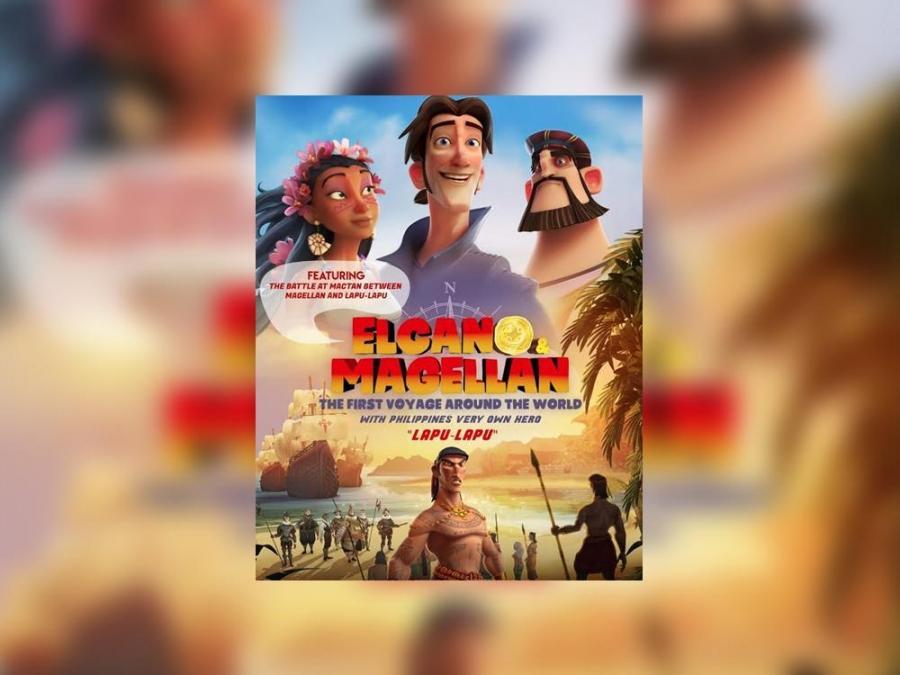
The controversy brings to mind a similar incident in November 2019 this time involving a Spanish-produced animated film and its poster.
Elcano & Magellan: The First Voyage Around the World drew flak from netizens who accused the film of portraying Filipino hero Lapu-Lapu as a villain based on its promotional poster and teaser.
The film retells the story of the 1519 circumnavigation led by Portuguese explorer Ferdinand Magellan and Spanish navigator Juan Sebastián Elcano.
Critics alleged that the movie was trying to “glorify colonialism” and “revising history.”
“Please do not, under any circumstances, support the Elcano and Magellan movie. It portrays colonizers in a good light like they're the heroes when Magellan brought suffering to the native Filipinos,” a netizen wrote on Twitter.
“Imagine depicting Lapu-Lapu as the villain when he defended his homeland from conquerors. This is sickening. Magellan is a colonizer. Stop trying to make him some Dora and Diego,” someone else tweeted.
The backlash prompted the film's Philippine distributor, Crystal Sky Multimedia, to say that it would reevaluate the film with the help of historians, film experts, and members of the academe.
Calling for calm and restraint, the National Historical Commission of the Philippines issued a statement to pacify the film's critics.
“The [National Quintessential] Committee and its Secretariat, the National Historical Commission of the Philippines, respect artistic freedom.
“The NHCP, as the government's Philippine history agency, does not endorse nor critique films and other art forms.
“What we request the public is to be critical and make use of the opportunity to discover by themselves who truly were our ancestors, by reading books about Philippine history, culture and society, or visiting the National Museum and other museums and galleries alike.”
This view was shared by historian Xiao Chua, who condemned censorship based on opposing views.
“Just because you don't agree on something you want it banned?” he wrote on Facebook.
“Espanyol sila, malamang perspektiba nila 'yan. Kung mapanood ng mga bata eh 'di sabihin nating mali. Keber. Kung alam natin ang tama, eh 'di chill lang tayo.”
