
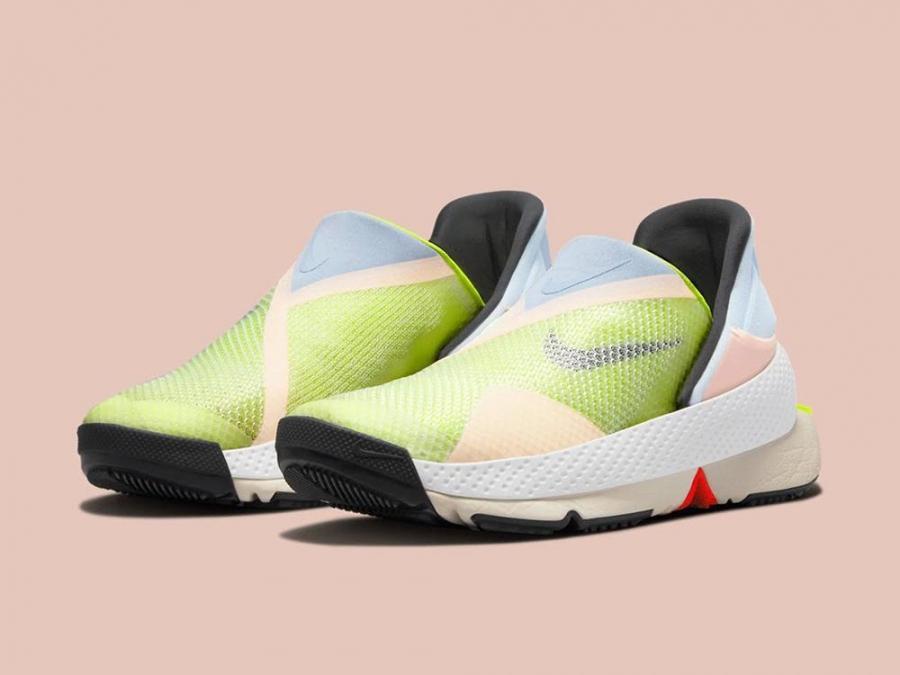
How a heartfelt letter gave birth to Nike's new hands-free sneaker
Around GMA
Around GMA
3 weather systems to bring rains over PH Athletes from Talisay City, Cebu bag 3 golds in 33rd SEA Games Gabbi Garcia reveals PCOS diagnosis, champions body positivityArticle Inside Page
Showbiz News
It all started in 2012 followed by several prototypes and models that aim to help people with special needs.
Sneakers have become the epitome of cool.
So much so that there's a cultural movement around it, a community that is passionate about sneakers, its history, and just anything about it.
Now, sneakerheads have something new to talk about with the release of Nike's GO FlyEase hands-free model.
The shoe, as the name suggests, can be worn hands-free, thanks to the innovation and technology used to come up with its design.
The GO FlyEase hands-free sneaker is made with a "bi-stable hinge that enables the shoe to be secure in fully open and fully closed states.”
Meanwhile, a tensioner that imitates the kicking of a shoe motion makes getting in and out of the pair easy and stress-free. No laces, Velcro, or hands are needed.
“The original concept behind this shoe was to support our adaptive athletes better. And we just quickly, throughout the process, found that this shoe was really universal,” a member of the design team said in a feature titled, Behind the Design.
“You always design for the most extreme case, that's the hardest thing to do. And then it opens it up to everybody.”
Designed with a purpose
For some, the shoe is more than just about its cool design, colorway, and feature.
Many praised the shoe, calling it a game-changer for people with disabilities and limited mobility.
That makes sense considering the inspiration on why the shoe was made in the first place.
In 2012, a 16-year-old with cerebral palsy named Matthew Walzer wrote to Nike suggesting a hands-free hinged sneaker.
“My dream is to go to the college of my choice without having to worry about someone coming to tie my shoes every day. I've worn Nike basketball shoes all my life. I can only wear this type of shoe because I need ankle support to walk,” Matthew wrote.
“At 16 years old, I am able to completely dress myself, but my parents still have to tie my shoes. As a teenager who is striving to become totally self-sufficient, I find this extremely frustrating and, at times, embarrassing.”
Matthew's letter caught the attention of Nike designer Tobie Hatfield, who invited the teen to work with him on a prototype based on his needs and recommendation.
 Tobie Hatfield with Matthew Walzer
Later on, Matthew revealed not expecting any kind of response from the giant shoe company.
He was startled to get feedback. What's even more shocking was that he was invited to meet one of the designers to discuss the idea he had in mind.
“I knew what I was doing was, in football terms, 'a Hail Mary,' and to be quite honest I had very low expectations. I was expecting a very polite letter back in recognition of my request. There are not enough 'thank yous' in the world to express my undying gratitude.”
Several prototypes and models have been created by Nike based on the needs of people with disabilities.

Tobie Hatfield giving Matthew Walzer a hug
The Nike FlyEase model released in 2015 carries unique features tailor-made to people with special needs.
But there is still plenty of room to push the innovation further.
This is where the GO FlyEase shoe enters the picture.
It was, to say the least, the culmination of Matthew and Tobie's vision and years of hard work.
There are also more people with compromised mobility that stands to benefit from the shoe.
“We were also inspired by pregnant women who don't even have kids yet but can barely bend over in their third trimesters,” Sarah Reinertsen, an American Paralympic athlete and a member of the FlyEase design team, told CBS News.
She continued, “If you design for the most extreme needs, then you're unlocking benefits for everybody
“If a shoe works for someone who has no hands, then it will work for people who have two hands.”
