
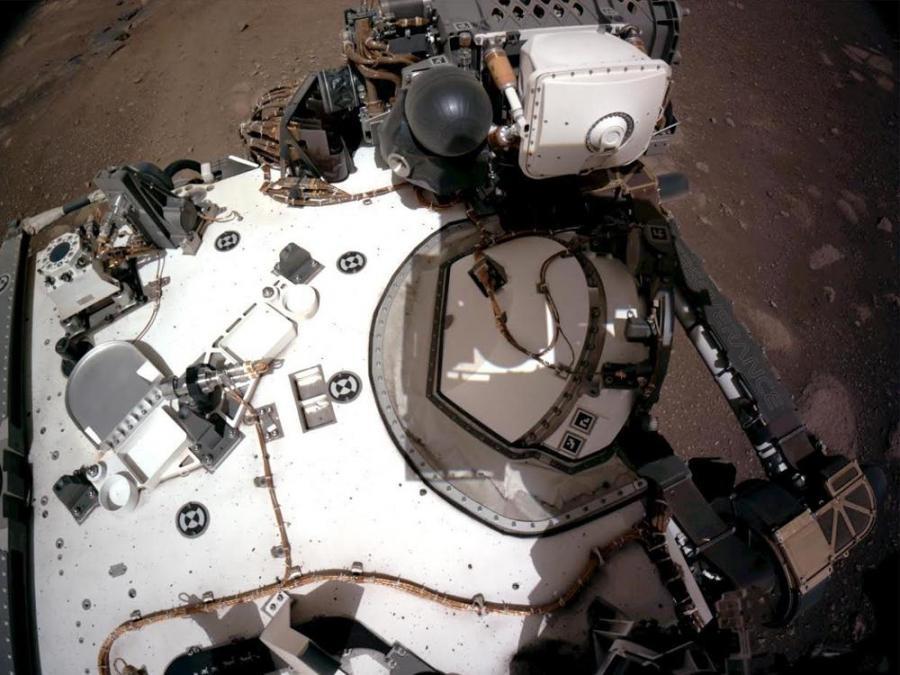
NASA's Perseverance rover creates first oxygen on Mars
Around GMA
Around GMA
Trump wants nations to pay $1 billion to stay on his peace board, report says Girl, 7, hit, run over by pickup truck in Ilocos Sur; dies 'Heated Rivalry' star Hudson Williams makes runway debut at Milan Fashion WeekArticle Inside Page
Showbiz News
Find out how NASA's Perseverance rover was able to produce the first oxygen on Mars.
While humans are busy fighting off COVID-19 on Earth, NASA's Perseverance Rover is busy making historic strides for humanity on Mars.
After making history as the fifth rover to land safely on the Red Planet, the Perseverance Rover has recently achieved a breakthrough feat in space exploration history as it successfully produced oxygen on Mars.
How, you ask? Well, the Perseverance rover converted the abundant carbon dioxide on Mars into oxygen using an instrument called the Mars Oxygen In-Situ Resource Utilization Experiment or MOXIE for short.
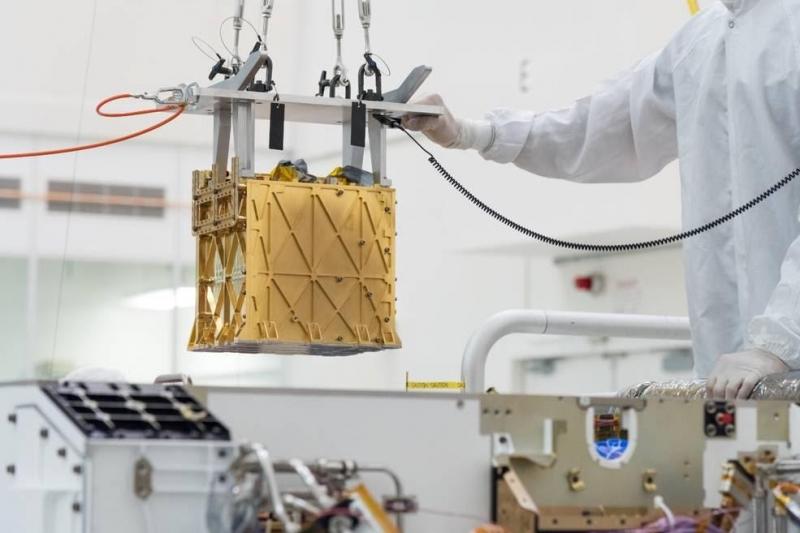 The MOXIE instrument, which converted carbon dioxide into oxygen on Mars / Source: NASA/JPL-Caltech
After warming up for two hours, the innovative instrument was able to produce 5.4 grams of oxygen, which is enough to allow an astronaut to breathe for 10. minutes on Mars.
This milestone achievement, of course, means that human self-sufficiency on Mars may just be within our reach.
Plus, the MOXIE instrument did this while the Perseverance rover was parked at an overlook to capture the flight of the Ingenuity helicopter.
And speaking of the Ingenuity helicopter, NASA also succeeded in performing the first-ever powered, controlled flight on another planet on April 19, Monday.
NASA's solar-powered Ingenuity Mars Helicopter became the first aircraft to achieve what was once deemed impossible.
The Ingenuity helicopter was reportedly able to climb to its prescribed maximum altitude of 10 feet and maintained a stable hover for half a minute before descending and touching back down.
The total duration of its first flight was 39.1 seconds.
And on April 22, the Ingenuity helicopter completed its second successful flight on Mars, which lasted a bit longer than the first one.
The second flight lasted 51.9 seconds and also had a higher maximum altitude and sideways movement.
NASA's Mars mission has so far been fruitful and keeps on yielding positive outcomes ever since the Perseverance rover landed on Mars on February 18, 3:55 p.m. EST.
For more lifestyle content, head out to GMA's Lifestyle page.
You might also want to read about the first-ever space hotel or find out whether the discovery of the gas, phosphine, on planet Venus is a sign of life.
