
We use cookies to ensure you get the best browsing experience. By continued use, you agree to our privacy policy and accept our use of such cookies. For further information, click FIND OUT MORE.
Inside a facility at the foot of Mount Apo, the survival of a species is being meticulously engineered, one decimal point at a time. This effort sits inside a chamber, which looks more like a regular kitchen oven. Yet, this state-of-the-art incubator hums with precision: within its walls, the temperature never fluctuates by more than 0.1 degrees Celsius. The relative humidity is locked within a strict 1% margin.
For 56 days, this artificial womb replicates the canopy of the Philippine rainforest.
And then on December 5, 2025 the shell cracked.
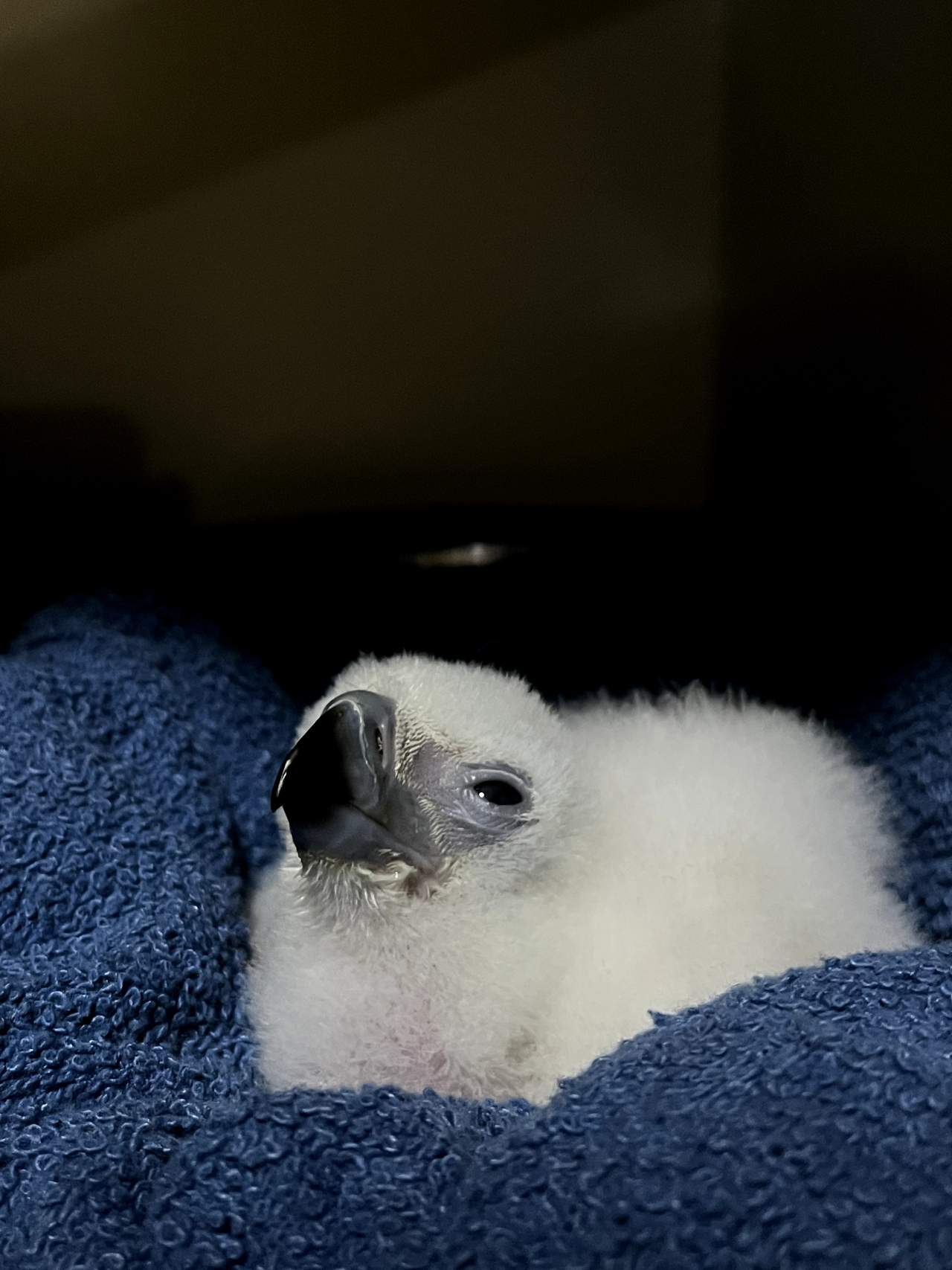
Chick 32 or Bayani is the offspring of Philippine Eagles Dakila and Sinag. Photo: Philippine Eagle Foundation
The birth of Chick 32, triumphantly named Bayani, marks the first successful hatching under the Philippine Eagle Foundation’s (PEF) revitalized conservation breeding program in 13 years.
This milestone comes at a critical moment for the country’s national bird. The International Union for Conservation of Nature (IUCN) estimates that as of 2018, only 180-500 individuals remain in the wild.
According to a paper co-written by Philippine Eagle Foundation’s Jayson Ibañez meanwhile, some 392 breeding pairs, or 784 mature individuals, across Philippine Eagle global range remain.
As the country celebrates Philippine Eagle Week, Bayani’s story is not merely a tale of a cute eaglet beating the odds. Its birth followed years of failures, scientific experimentation, and unlikely international partnerships.
The triumph that led to the newest Philippine eagle stemmed from hard lessons learned at the National Bird Breeding Sanctuary (NBBS) in Barangay Eden, Toril in Davao City.
Five years ago, Chick 29, named Espoir (hope in French) by its adopter Ceva Animal Health (Philippines), Inc., had hatched successfully at the old Philippine Eagle Center. At four months old, however, Espoir was killed by a wild python that managed to slip through a PVC food chute.
That incident prompted immediate, sweeping structural overhauls.
The PEF had to transfer its breeding operations to the higher, isolated altitude of Eden in 2024 to escape a catastrophic avian flu outbreak sweeping the lowlands.
“When it opened, the number of eggs that were produced was five,” Dr. Jayson Ibañez, PEF’s Director for Operations, tells GMA News. One was infertile, while another had a shell so critically thin that it cracked before developing.
Then came Chicks 30 and 31. The first died before reaching two months; the second, named Riley, succumbed at three months to metabolic bone disease.
“We adopted our old sunning protocol, which had been successful for 29 eagles at the old facility,” Dr. Ibañez shares. “But we missed considering that the new breeding facility is relatively at a higher elevation.”
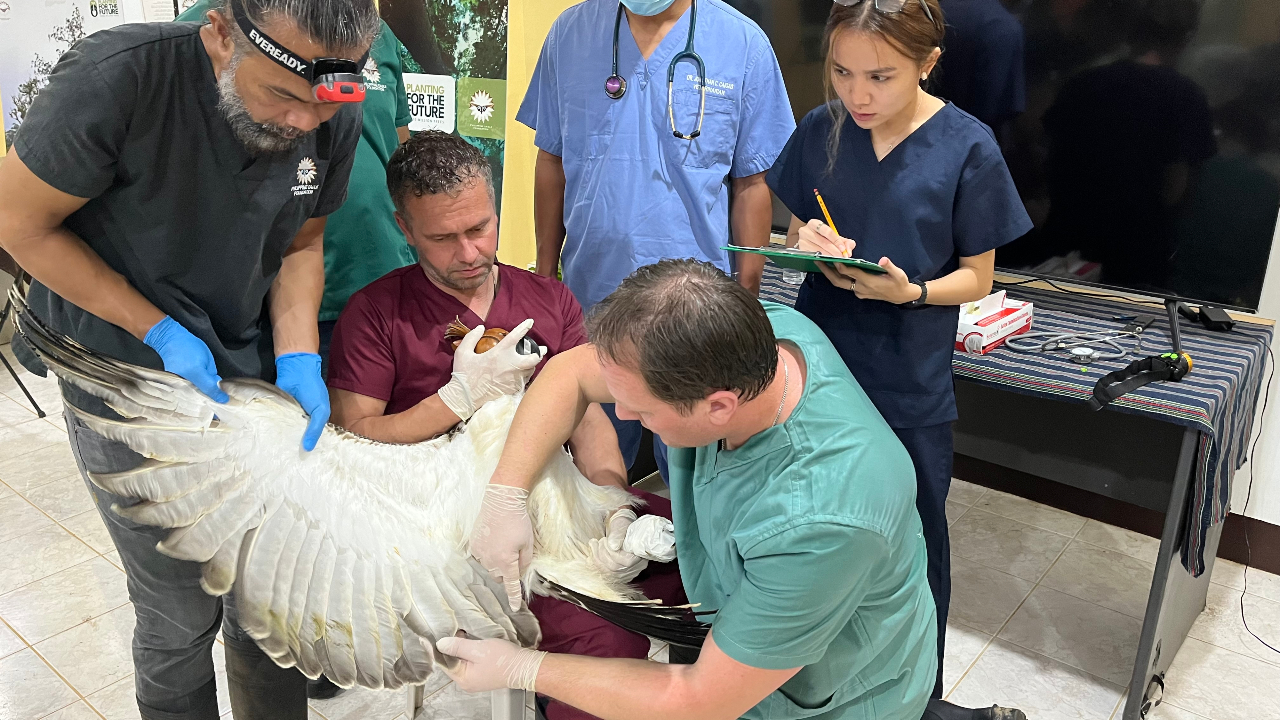
Philippine eagle medical check up at the Philippine Eagle Centre. Photo: Zoo Liberec
Unlike the previous center at 400 meters above sea level, the NBBS sits 600 meters higher–perched at an elevation of 1,000 meters. Up there, the forest canopy is frequently blanketed by thick fog and overcast skies. That meant that Riley simply wasn’t receiving enough sunlight to synthesize Vitamin D3, a vital nutrient for calcium absorption and skeletal development.
Instead of retreating, the PEF team leaned into an “adaptive management environment.” They redesigned the sunning pens to allow the eagles to self-regulate their exposure to UV rays. The team also introduced innovations across “infrastructure, handling and care, and diet,” Dr. Ibañez adds.
“The attention to details—we’re really proud of our team, because they always talk about it. If something goes wrong, the team finds ways to modify it. They offer feedback. And then we decide on an innovation.”
Bayani is the direct “product of a refinement attitude” and proof that the revitalized conservation breeding program is performing its role effectively.
“We implemented faithfully our attitude of learning from previous lessons or learning from mistakes,” Dr. Ibañez adds.
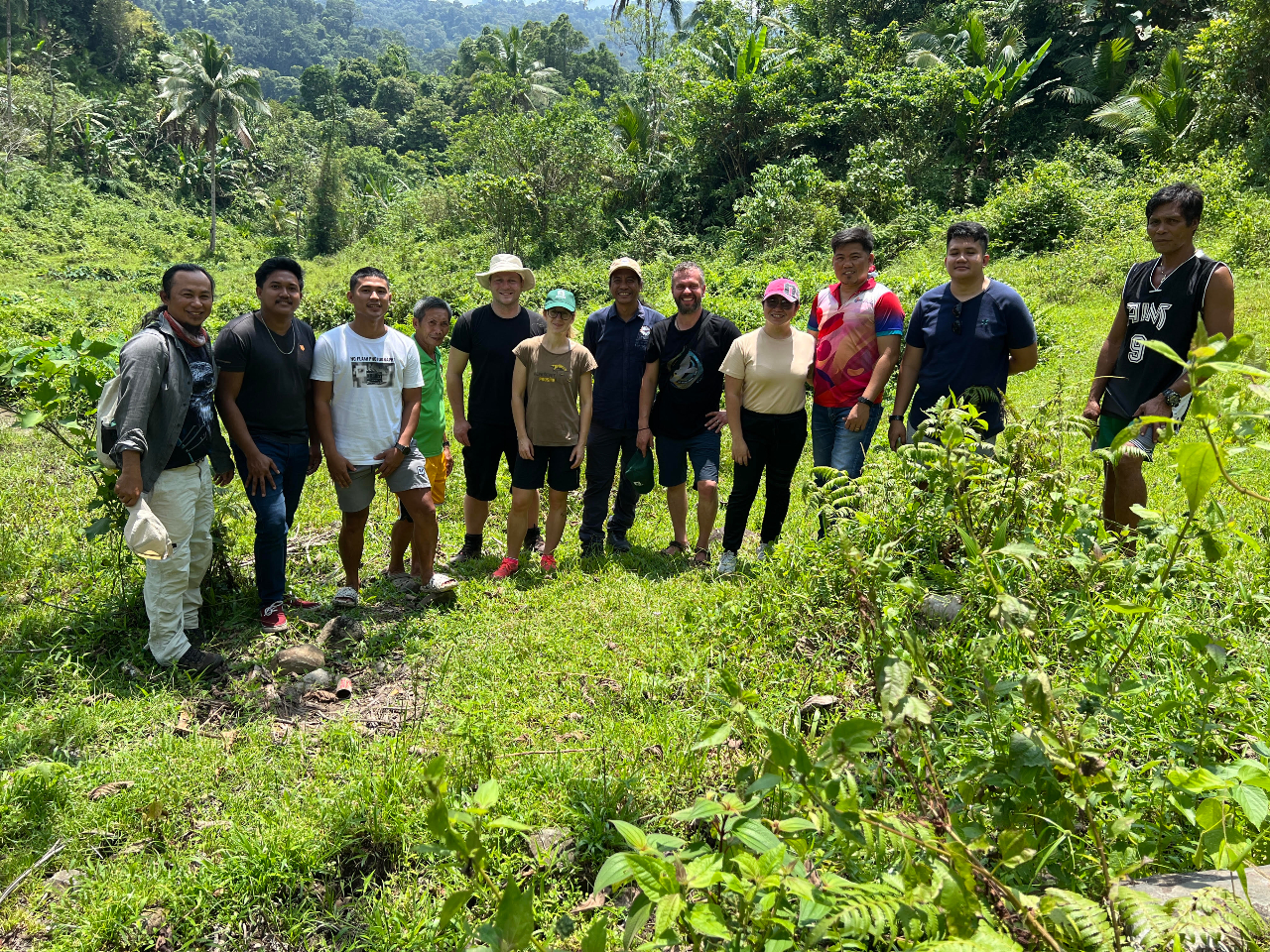
Group photo of Czech and German zoologists in Leyte's Philippine Eagle release site. Photo: Zoo Liberec
The technical breakthrough that stabilized Bayani’s embryonic development came from an unlikely alliance spanning Davao, the Czech Republic, and Germany.
For three years, Czech ornithologists from Zoo Liberec worked alongside Filipino biologists to refine incubation and artificial insemination protocols.
The zoo’s bird curator, Dr. Jan Hanel, tells GMA News that birds of prey are among the most notoriously difficult species to breed in captivity because they require “really precise machines.”
“We recommended a German-manufactured incubator brand, Grumbach, which had already been proven with complex raptor species in Europe and the United States,” Dr. Hanel says.
From his office in the zoo, surrounded by a collection of paintings, wildlife photography, and a taxidermic bird of prey, Dr. Hanel gestures toward a small room housing five unassuming chambers. They look remarkably like standard kitchen ovens.
“Yes, they look like an oven,” Dr. Hanel smiles. “But for me, they are the ovens of life.”
The incubator functions like an ultra-precise micro-biosphere. During incubation, most healthy raptor eggs lose exactly 15% of their initial weight to allow the embryo to develop properly.
This moisture loss can be controlled entirely by manipulating the dry air and humidity inside the chamber. Automated sliders maintain a constant exchange of fresh air, pushing out stale air while continuously monitoring oxygen and carbon dioxide levels.
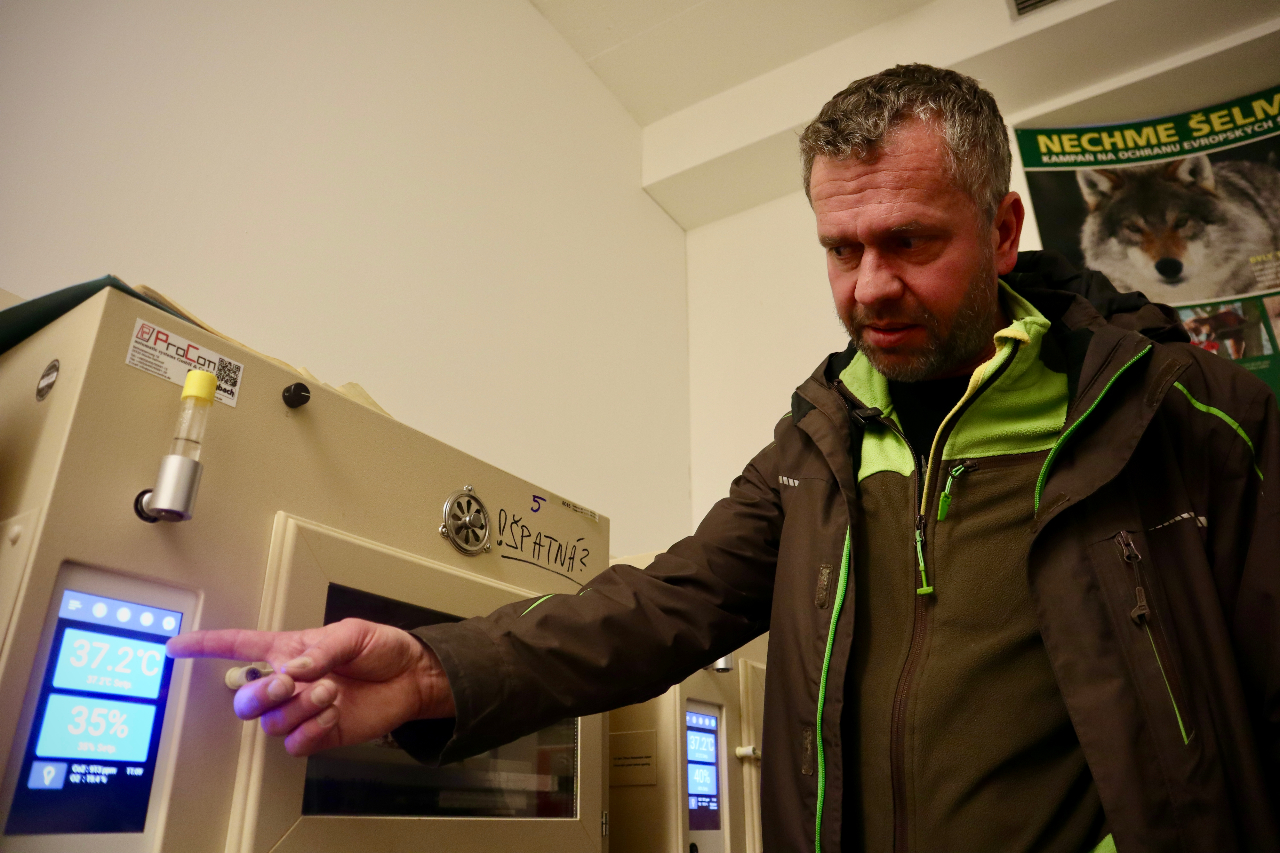
Jan Hanel describes the figures in the incubator. Photo: Andy Peñafuerte III
When told of Dr. Hanel’s poetic description of the machines, Nico Herth, the CEO of Grumbach, laughs.
“Jan has been using these machines for so many years. And yes, the description of the oven of life fits very well because it’s so warm inside.”
Despite his years in manufacturing the technology, Herth’s background was strictly in software engineering—work that he jokes “can be boring.”
He had never actually hatched a bird himself until he decided to run a personal test at his facility.
“We put chicken eggs into incubators,” Herth recalls. Of course, the incubators worked perfectly, but a deeper realization struck him.
“When you see this ‘mini chicken’ fighting its way into this world, breaking free from the shell after being completely exhausted... I finally understood the passion of these breeders around the world. To be honest, it feels like getting another child!”

This incubator, located at Zoo Liberec, is similar to the one used to hatch Bayani. Photo: Andy Peñafuerte III
That profound connection has turned Herth into an active partner in the Philippine eagle’s legacy.
When the egg that bore Chick 32 successfully hatched in Davao, it was Herth who proudly named the hatchling Bayani, Filipino word for hero, in honor of the many women and men who worked together to help it break through its shell.
For Dr. Hanel, Bayani — hrdina in Czech—is a “big symbol for the future” and for “everybody who invests energy, efforts, and whole lives” to preserve the species.
For him and the scientists involved in the project, the machine represents only 50% of the conservation equation. The remaining half rests entirely on human vigilance.
Dr. Ibañez highlights veteran colleagues such as Manong Domingo Tadena—the pioneer conservation breeder who famously reared Pag-asa, the first captive-bred Philippine eagle in 1992—and other dedicated animal keepers.
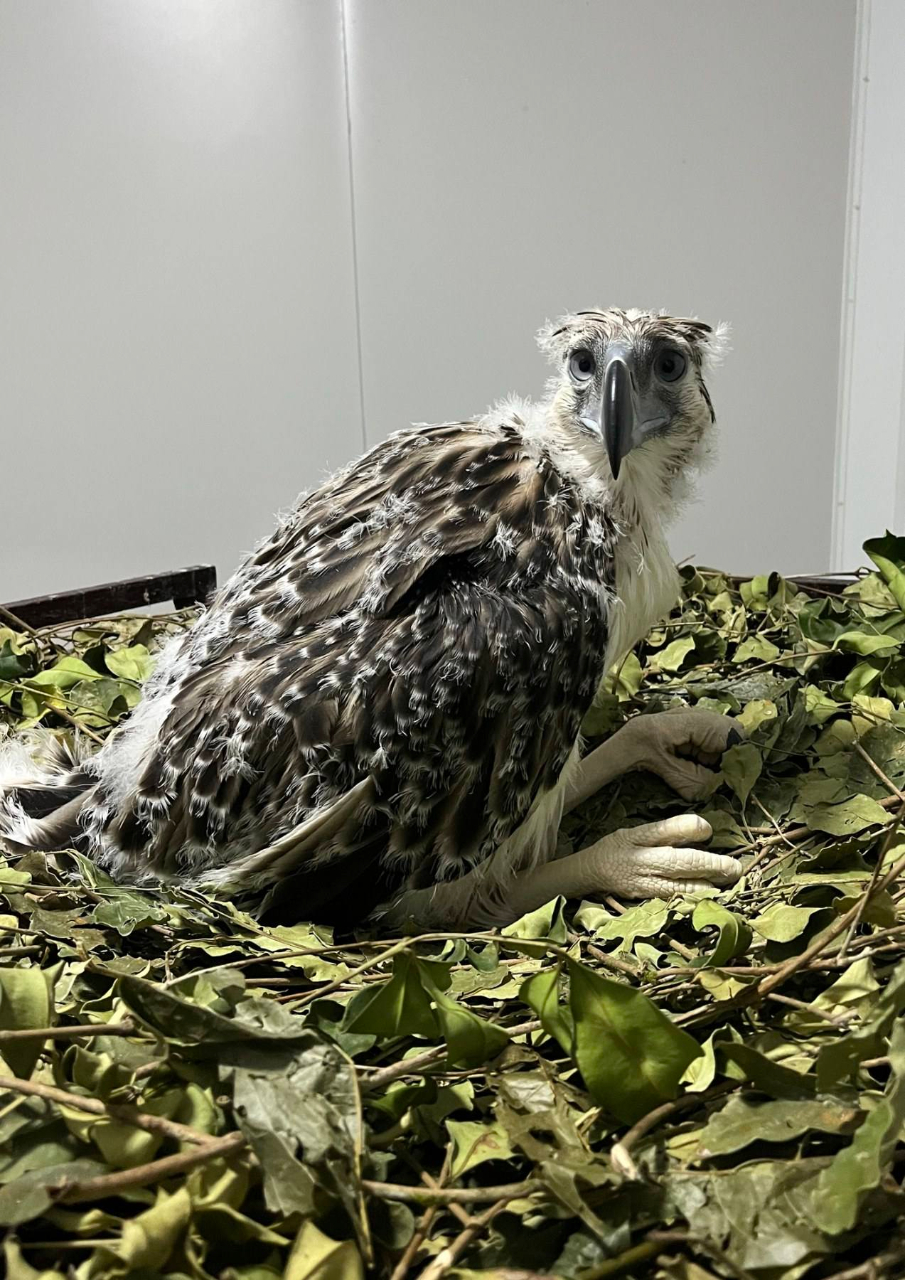
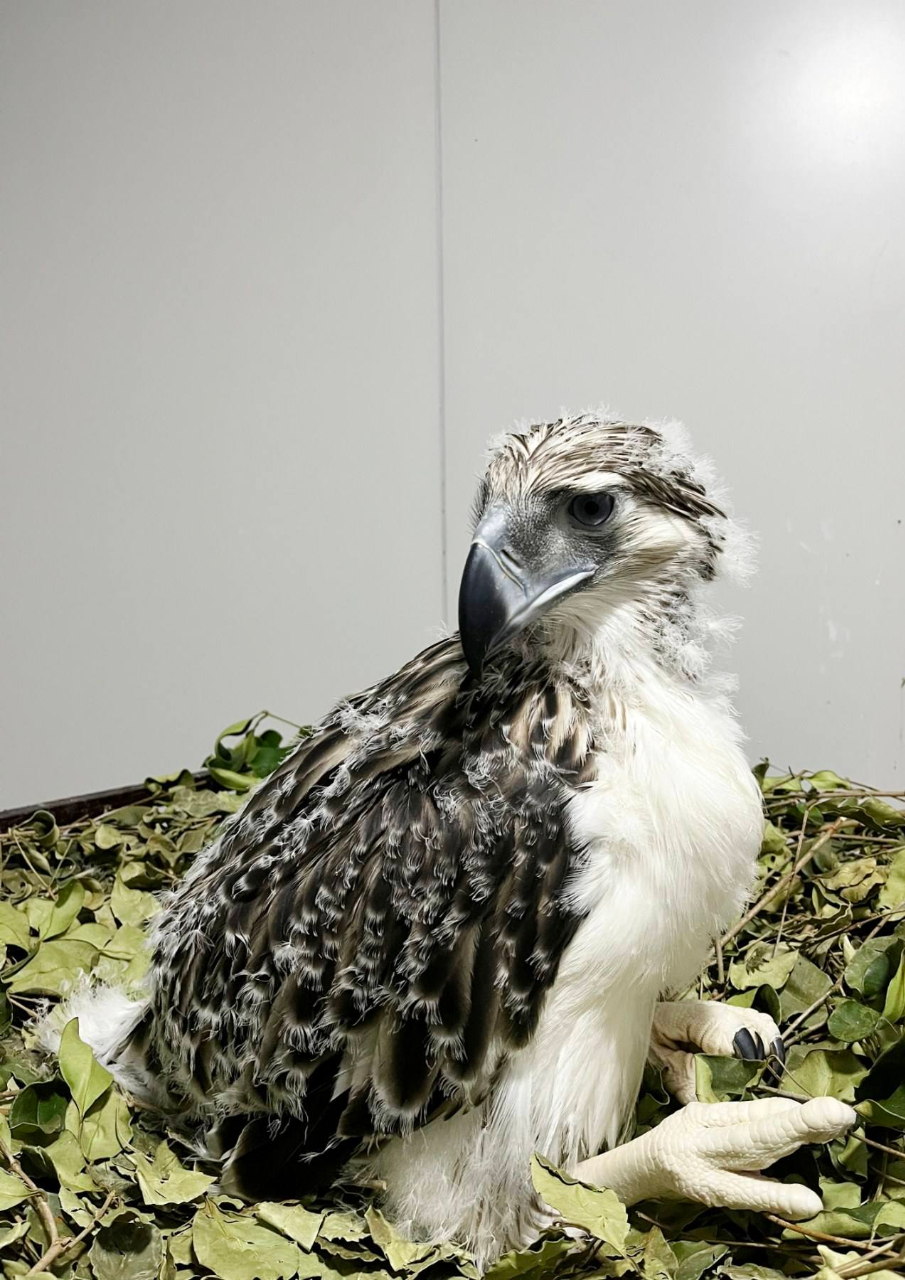
Bayani at three months old. Photo: Philippine Eagle Foundation
Because automated sensors for embryonic heart rates are still in development, these keepers must candle the eggs daily by hand, manually tracking heartbeats and vascular health.
“We had the first 29 eagles at the old facility, in which we used old, donated, or secondhand incubators,” he says. “But our breeders were very successful and skillful.”
He has a slight adjustment to Dr. Hanel’s description of the incubator, saying “it’s really a modern oven of life.”
“It has brought forth three eagles, including Bayani. Being in the right hands, so to speak, the people with passion and care for the eagles, we’ll see more chicks right around the corner.”
Since childhood, Dr. Hanel has held a deep fascination with the Philippine eagle, scientifically known as Pithecophaga jefferyi. He remains captivated by its sheer size: its average wingspan of two meters makes it the world’s largest eagle in terms of length.
On his office wall hangs a frame with a crisp one-thousand-peso bill featuring the apex raptor.
“I brought this currency over to the Czech Republic, here to my office, so I can always see the beautiful Philippine eagle,” he says.
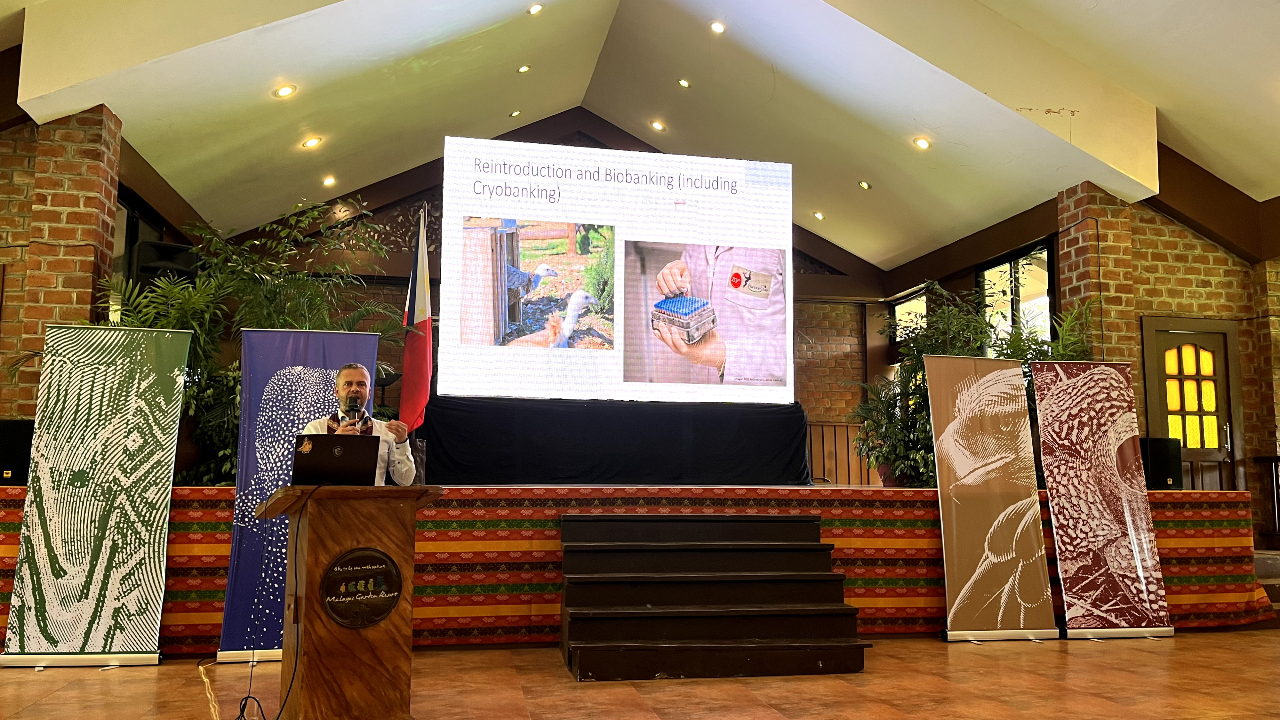
Jan Hanel at the Global Biodiversity Conservation Conference in Davao in 2025 and his presentation about conservation breeding. Photo: Zoo Liberec
As an ornithologist for 26 years, Dr. Hanel has always focused on helping with conservation initiatives for critically endangered birds of prey, “for the benefit of future generations.”
In 2021, he reached out to the Philippine Eagle Foundation, and what Dr. Ibañez describes as a “cold pitch” would spark a cross-border collaboration, and more importantly, a “personal partnership and friendship.”
“It clicked,” Dr. Ibañez recalls of their initial online meeting. “We’re in the same boat. We have the same passion, we have the same interests, and we’re doing the same thing. We’re like-minded, and we’re heart-minded.”
Today, Zoo Liberec and the PEF are preparing to host young Filipino veterinarians and biologists for advanced training in the Czech Republic.
Meanwhile, the Embassy of the Czech Republic in Manila has supported projects related to the conservation of the Philippine eagle, including a study trip of ornithologists from the Philippine Eagle Foundation in Davao to Liberec in 2024, which Dr. Hanel facilitated.
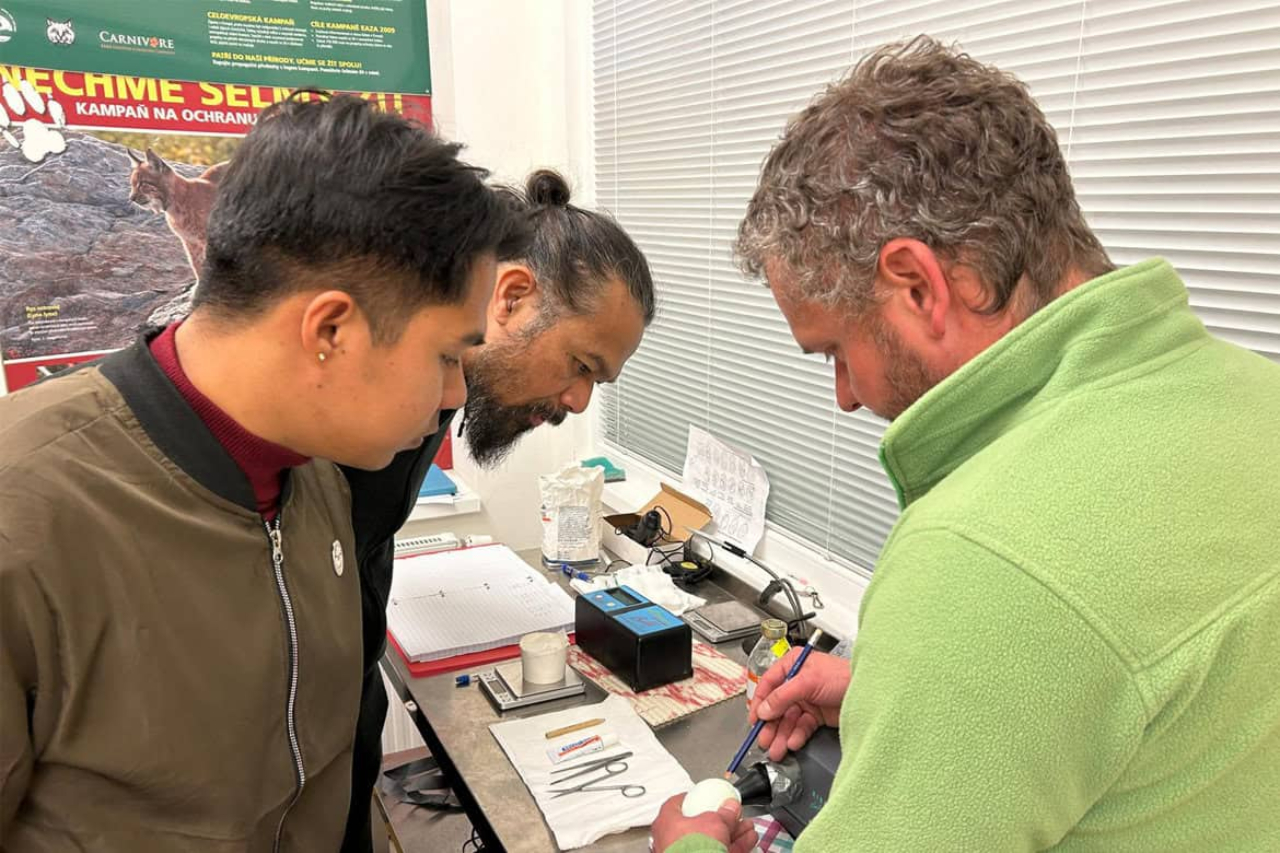
Dr. Jan Hanel (in the foreground, in green) facilitated a study trip for PEF ornithologists to Zoo Liberec in 2024. Photo: Zoo Liberec
Czech Ambassador to the Philippines Karel Hejč tells GMA News that the major goal of their ongoing participation is to raise awareness of the eagle’s critically endangered status.
“Everything starts and falls with the educated population,” Ambassador Hejč states bluntly, adding that he hopes formal educational processes will be integrated directly into the curricula.
“We will keep contributing to the education of the general public in the Philippines because, let’s face it: humans are now the biggest danger for the Philippine eagle.”
Statistical modeling from recent population viability analyses (PVA) reveals that while habitat fragmentation remains a systemic crisis, the single most immediate trigger for the Philippine eagle’s extinction over the next 50 to 80 years is acute human violence, specifically shooting and trapping.
Within these models, sub-adult mortality is the most volatile variable, with young eagles between the ages of three and seven—the exploratory phase before they establish their own nesting territories—accounting for over 90% of the variation in population growth projections. This means that if a juvenile eagle cannot survive its first foray out of its natal forest, the species faces an existential crisis.
Ambassador Hejč recounts a tragic anecdote where a local fisherman killed a wild eagle out of fear that its presence would prompt the government to declare his traditional fishing grounds a “protected area,” thereby destroying his ability to support his family.
This behavioral barrier is echoed by Mariglo Rosaida Laririt, Assistant Director at the Biodiversity Management Bureau (BMB) of the Department of Environment and Natural Resources (DENR).
“Wildlife persecution is very much a part of our daily life in the Philippines,” Laririt observes, noting that threats range from children using slingshots to adults using unregulated air guns.
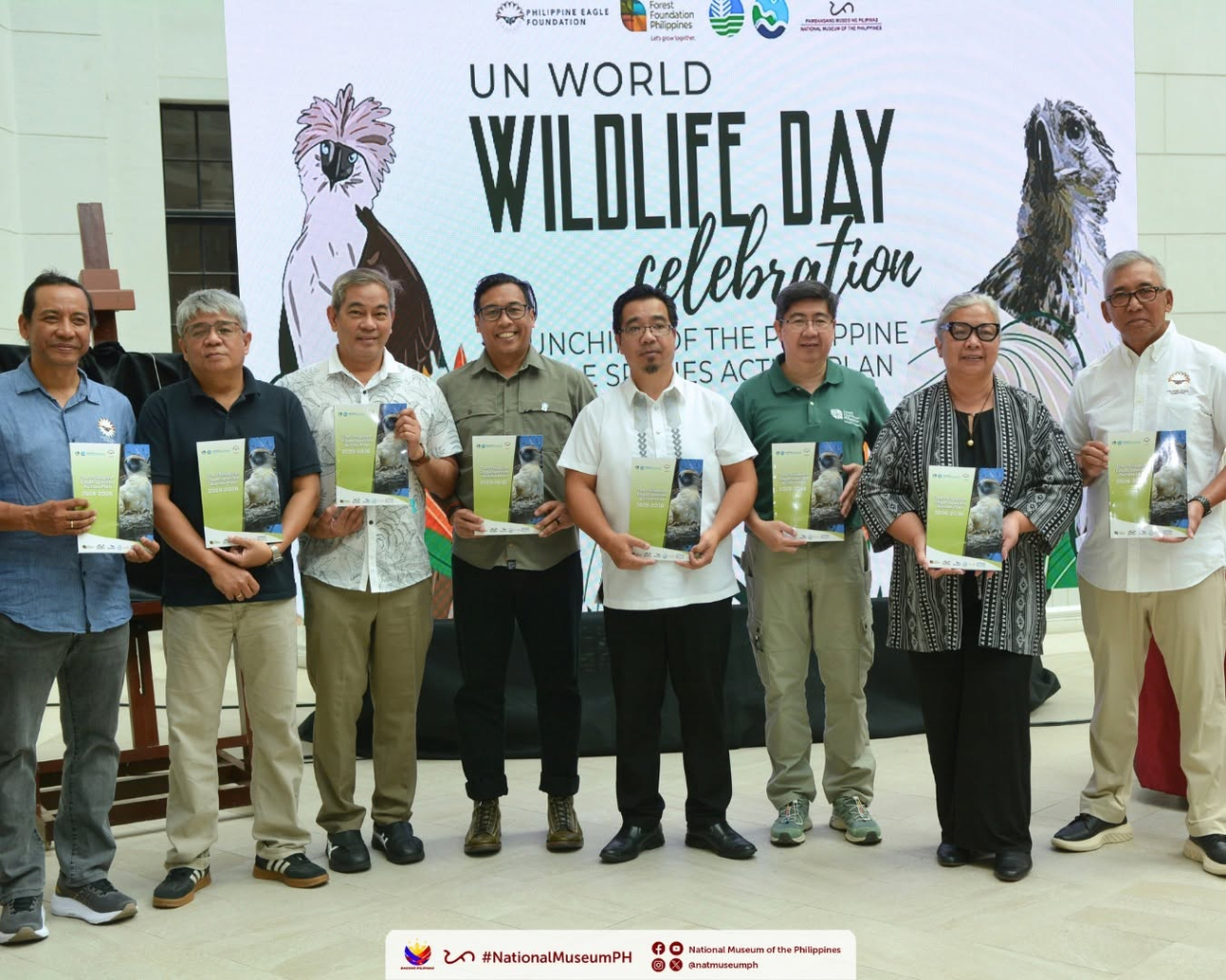
DENR Biodiversity Management Bureau Asst. Dir. Mariglo Laririt (second to the right) was among the Filipino experts who unveiled the Philippine Eagle Species Action Plan (PESAP) during UN Wildlife Day on March 10, 2026. Photo: National Museum of the Philippines via Facebook
Released Philippine eagles often become targets of local anger when they prey on domestic livestock like chickens.
Such unfortunate events, she says, can undo years of expensive research and breeding in a single moment of retaliation.
“As we begin transferring the Philippine eagles back into the wild, we should always consider the issue of informing and educating the people living in those places. We Filipinos must learn to deal with wildlife.”
The long-term roadmap under the Philippine Eagle Species Action Plan (PESAP) 2024-2030 includes priority areas to address habitat loss, hunting, and other existential threats facing the 400 pairs left in the wild.
“It cuts down into very specific targets and the ways to achieve them,” Laririt says of the framework’s systematic approach to conservation.
These intentional action areas include research and monitoring, rescue and rehabilitation, law enforcement, legislation, habitat protection and restoration, education and stewardship, community development, and sustainable conservation financing.
Despite the daunting scale of the plan, Laririt remains optimistic: “When you look at that, you will say, ‘Oh, it’s difficult.’ But it’s not really impossible if all the Filipinos got their hearts and their pockets together.”
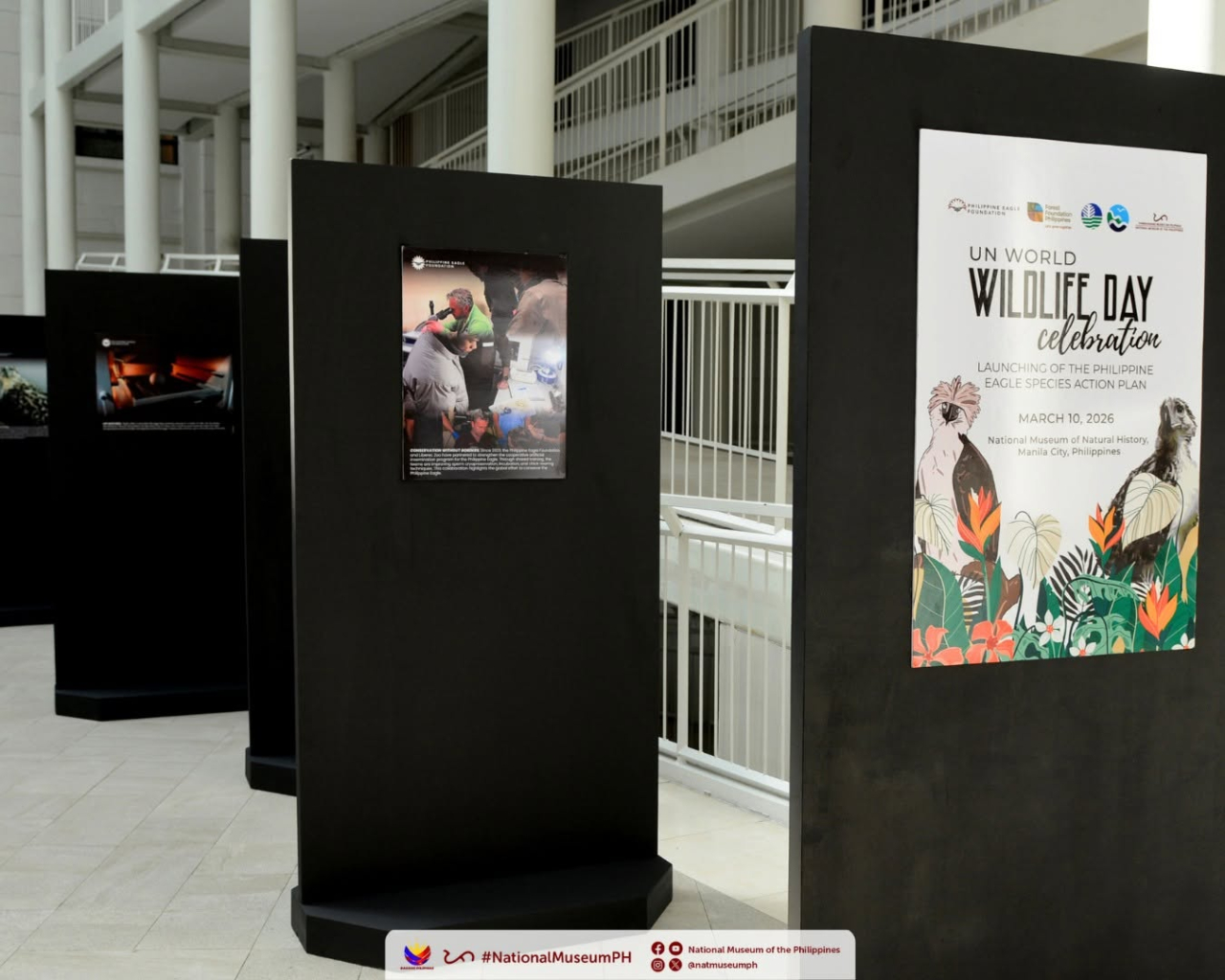
On UN Wildlife Day, the PEF, the DENR, and the National Museum of the Philippines unveiled the Philippine Eagle Species Action Plan. Photo: National Museum of the Philippines via Facebook
One of the most strategic, and heavily debated, long-term goals is an international species loan program.
It previously happened in 2019, when a pair of Philippine eagles named Geothermica and Sambisig were transferred to Singapore under a ten-year formal wildlife loan agreement. Only Sambisig, a female, remains at the Mandai Wildlife Reserve. Geothermica passed away in September 2023.
“We’re looking at the same setup with the Liberec Zoo in the Czech Republic,” Dr. Ibañez says, adding that such a goal will proceed only with permission from the DENR and the national government.
Both Laririt and Dr. Ibañez warn that concentrating the majority of the captive population in a single facility in Davao leaves the species extremely vulnerable to mass extinction from a localized catastrophe.
This “all-eggs-in-one-basket syndrome,” as Dr. Ibañez describes, became a stark reality during the 2022 avian flu outbreak in Mindanao, which prompted the urgent move of breeding birds to the sanctuary in Eden.
Laririt notes that biobanking—the process of collecting, processing, storing, and distributing biological data and samples—as well as creating “mirror populations” can ensure that the genetic line is protected.
“If we’re talking about maintaining mirror populations, we need to ensure habitats are developed so these eagles can still live in countries willing to adopt them, almost like biological immigrants there,” Laririt explains.
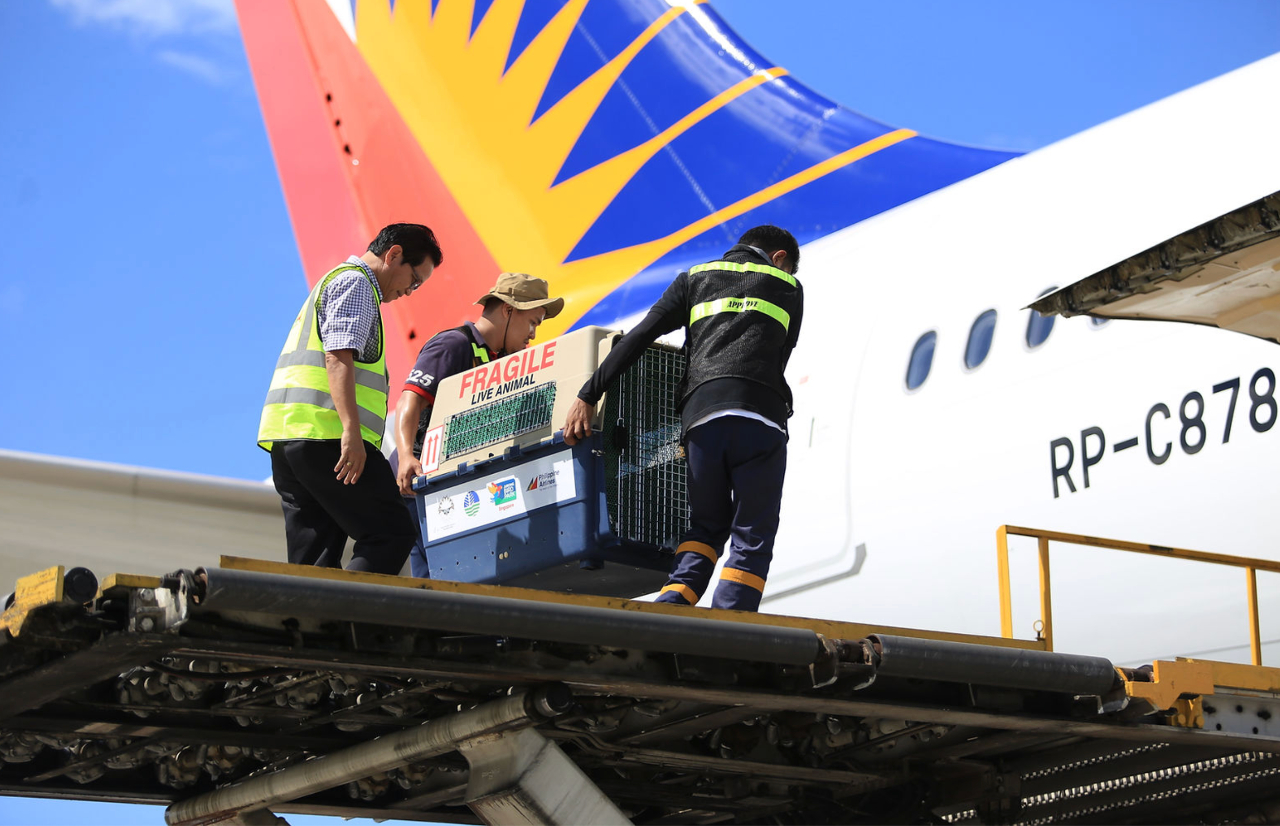
On June 4, 2019, Philippine eagles Geothermica and Sambisig were transported aboard Philippine Airlines flight PR 507 to Singapore. They became the first pair to be placed under an international loan program, pursuant to the Wildlife Loan Agreement signed by the Philippines and Singapore in May 2019. Photo: Philippine Eagle Foundation
To reduce the logistical risks of moving heavy, sensitive raptors across locations, the breeding operations aim to use cryopreservation, or freezing high-quality eagle semen in Davao and flying it to other facilities for precise artificial insemination of loaned females. It was the same technique used for Bayani.
“We’re talking about accelerating breeding so that we can breed as many eagles as possible that can be released in areas where we still have healthy forests, but the wild eagles have already been lost,” Dr. Ibañez added.
However, this international movement raises complex questions regarding national sovereignty over biological assets. Laririt explains that the government remains highly vigilant, and that a decision for another loan agreement will require “as many heads as possible coming together.”
“From a government perspective, we should leave no stone unturned in anticipating potential catches,” she asserts. “At the end of it all, we decide on the basis of what serves the species best.”
As Dr. Ibañez and Laririt note, every loan agreement enforces a non-negotiable requirement that every chick born in a foreign facility be repatriated to the Philippines.
For Ambassador Hejč, the ultimate vision is not to see the Philippine eagle become domestic in other continents, but to ensure that international partnerships provide the temporary support needed.
“There is no such thing as a Philippine eagle soaring above the European skies. Not in a very near future anyway,” Ambassador Hejč emphasizes.
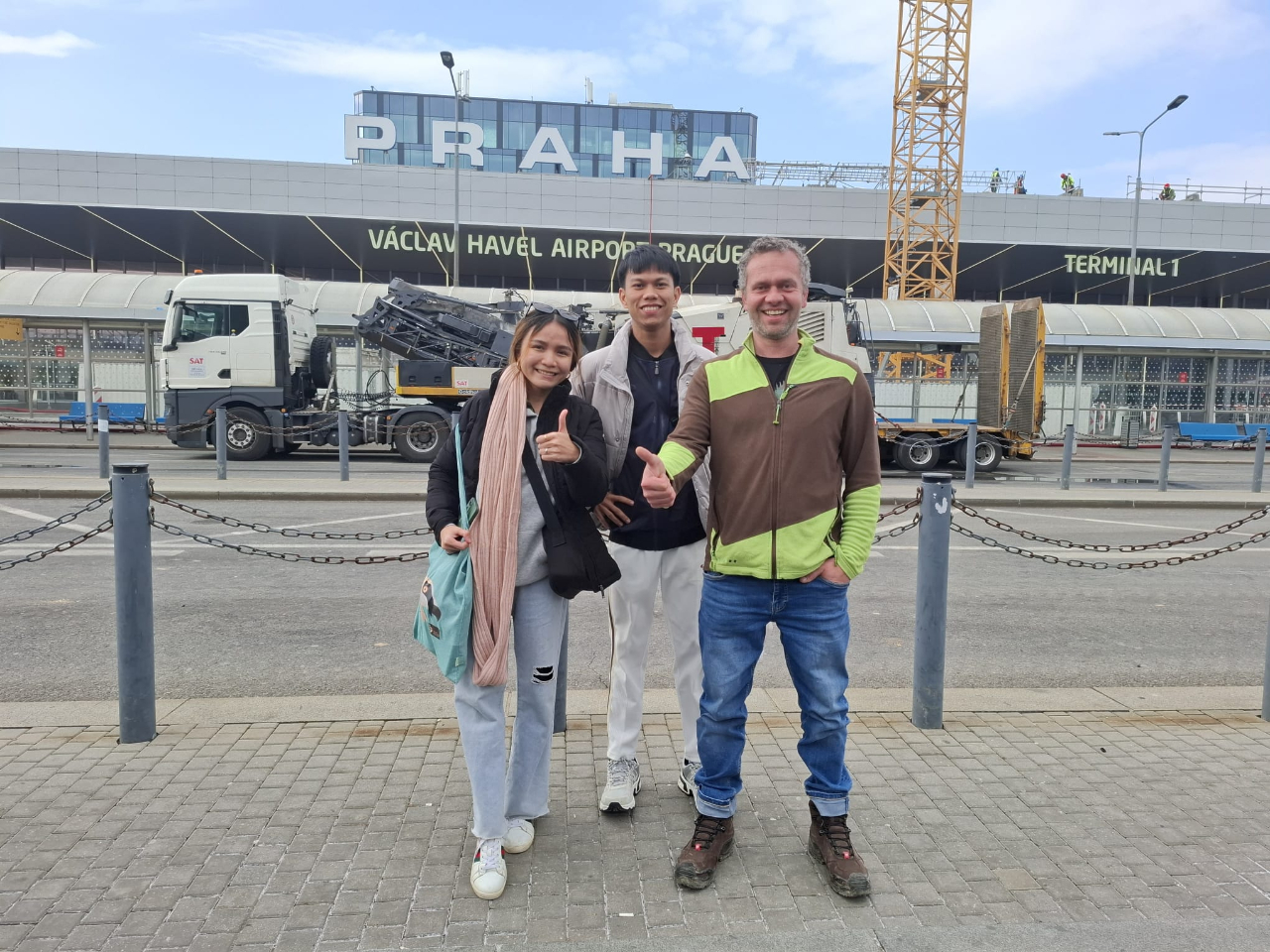
Julia and Dave together with Jan Hanel at Prague airport before their flight to Spain for incubation and hatching training in 2025. Photo: Zoo Liberec
While international protocols are debated in capital cities, the ultimate sovereignty of the forest belongs to the communities living at the edge of the canopy. Dr. Ibañez says more than 90% of the remaining wild Philippine eagle nesting sites exist within ancestral domains, making indigenous communities the “first line of defense”.
At home near the sanctuary, 41-year-old Grace Butal has been sewing intricate beadwork meticulously onto an umpak, the traditional tribal attire of the Bagobo-Tagabawa.
She has been working on this single piece for three months, picking it up during the rare quiet hours of her demanding schedule as a senior community development student at the University of Southeastern Philippines (USEP).
In this piece, an unmistakable figure emerges in beads: the wings of a Philippine eagle.
“Kapag talagang stressed ako, tatahiin ko siya at doon ko ibinubuhos ang emotion ko (When I’m so stressed out, I sit down and sew. It’s where I pour my emotions),” Butal shares.
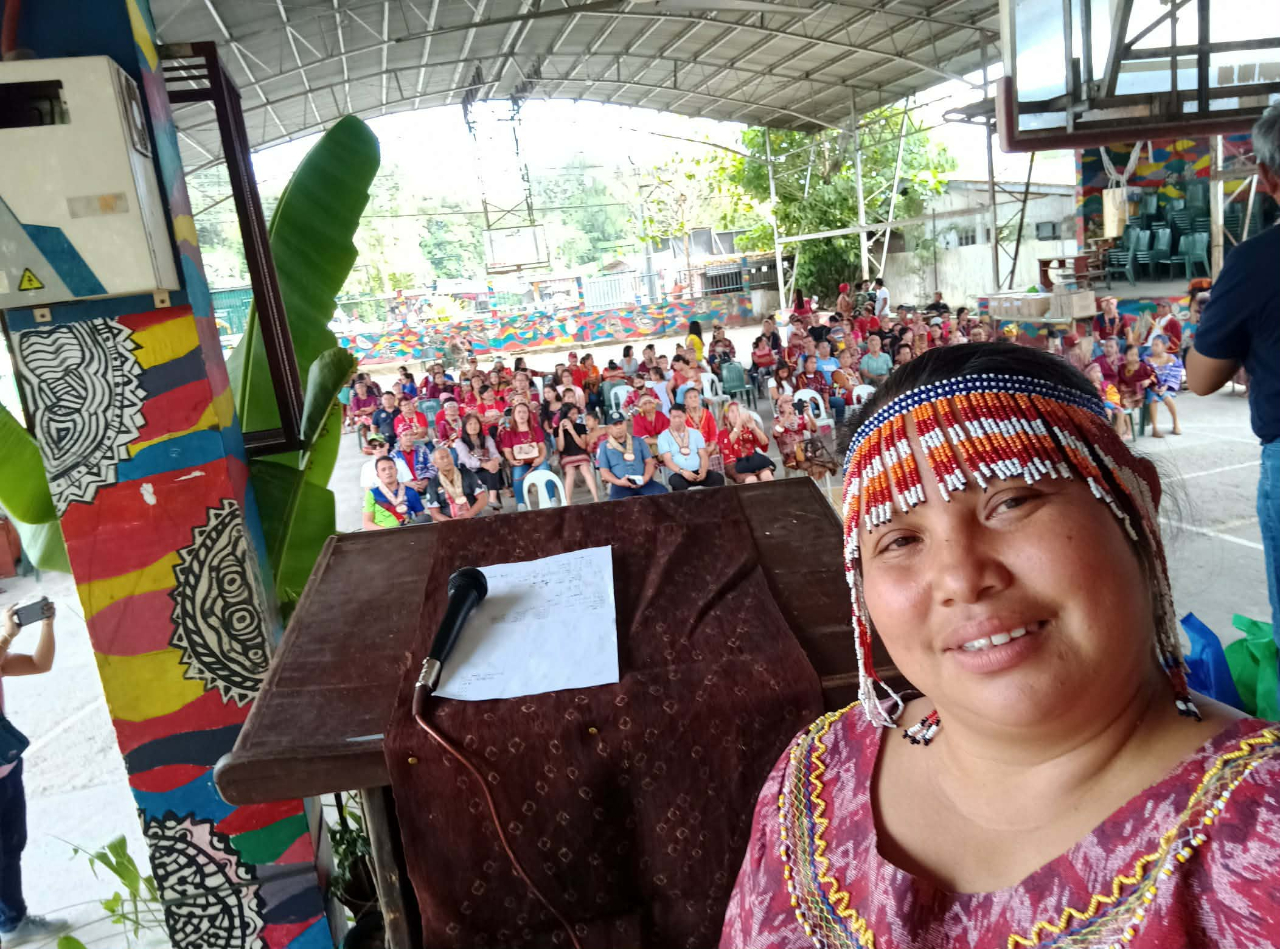
Every year, the Bagobo-Tagabawa tribe hosts the Pasumar Sumari Festival in Davao City's Toril district. Dressed in umpak, the tribe's traditional attire, Butal welcomed the tribe elders and other Toril residents at the festival's second edition. Photo: Grace Butal
“May pagkahalintulad ang Philippine eagle at ang aming tribo. Yung Philippine eagle ay namumuhay talaga sa territory namin. Loyal sa kanyang partner, at territorial din siya (There is a profound parallel between the eagle and our tribe. The eagle lives in our territory; it is loyal to its partner, and it is fiercely territorial).”
For Butal, who has spent the last nine years volunteering as a pioneer Bantay Bukid (forest guard) and local community organizer for the PEF, the survival of the eagle, which the Bagobo-Tagabawa locally revere as the Banog, is an unyielding passion.
So when Bayani finally hatched, Butal says the tribe felt overjoyed and “sobrang proud,” viewing Chick 32’s survival as their own collective accomplishment.
Dr. Ibañez says the Bagobo-Tagabawa feel a deep sense of ownership because they have been involved from Day 1 in the urgent construction and physical security of the sanctuary on their traditional land.
“The indigenous peoples were very welcoming. They liked the idea that they would host the facility,” he adds. “They share in the success because they’re part of it.”
This extends to the ongoing patrols of Bantay Bukid, where they combine ancestral knowledge with modern technology.
Through the PEF’s “knowledge integration” system, forest guards are equipped with radio trackers, mobile phones with GPS apps, and data-logging camera traps.
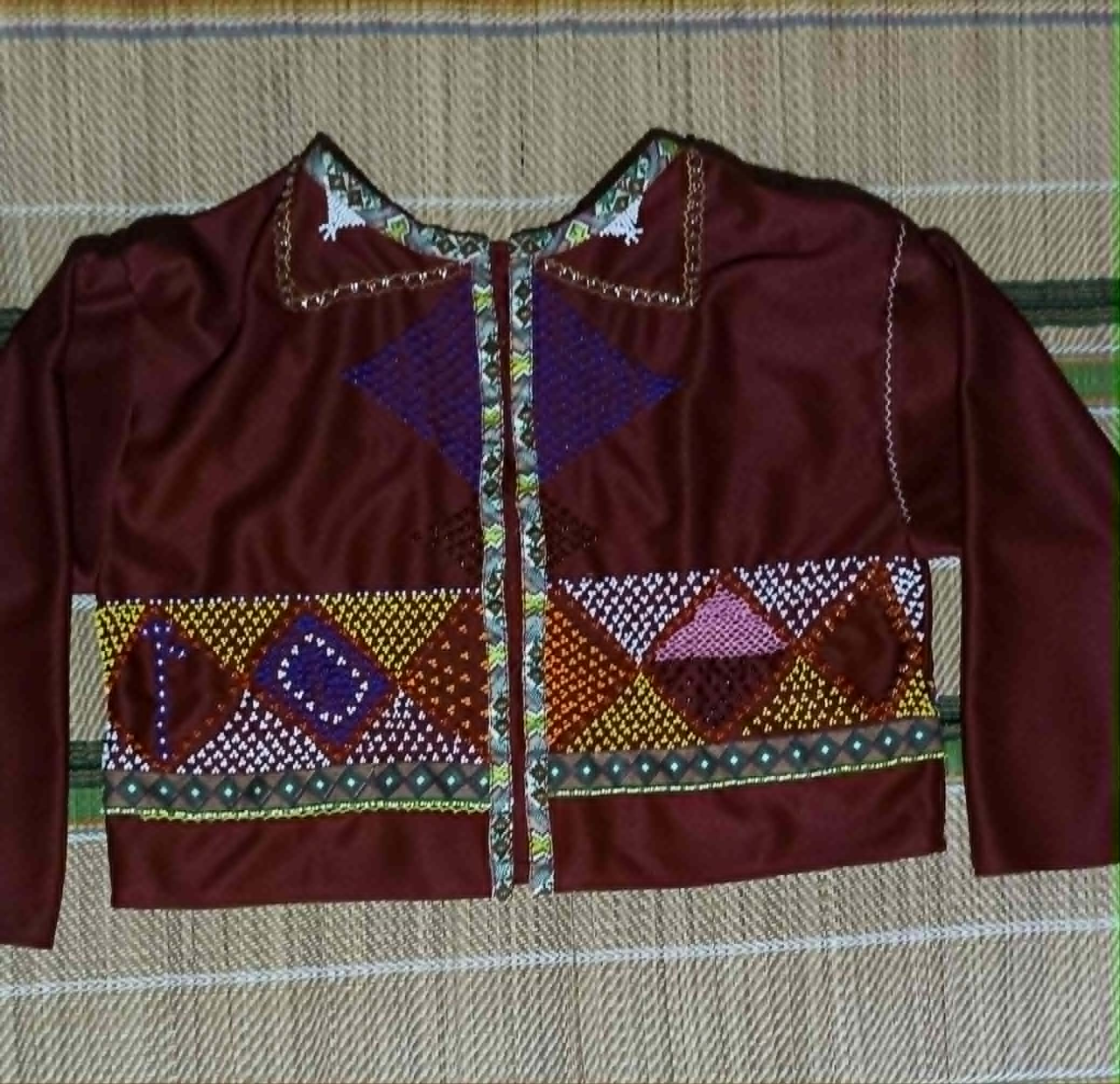
This is still an unfinished piece of umpak, or the traditional attire of the Bagobo-Tagabawa, that Grace Butal has been making since March. She explains that an umpak mirrors the maker’s soul, and thus is never a commodity to be casually sold. Photo: Grace Butal
While navigating the dense, fog-blanketed terrain in the five interconnected ancestral domains that serve as the eagle’s hunting grounds, Butal and her fellow guards use an offline mobile app to log precise coordinates and encounter dates. The data is later mapped by the PEF’s GIS (Geographic Information System) team to track and halt illegal logging and agricultural encroachment.
“This is an example of where technology and tools are not framed to be against indigenous knowledge,” Dr. Ibañez says.
Yet, the technology remains tethered to indigenous insight. Butal shares that patrols are often dangerous, exposing guards to armed intruders, venomous snakes, and wild boars in mating season.
So, before guards enter the strict protection zone, tribal elders still perform traditional rituals to seek the forest spirits’ protection.
“Hindi po kami over-reliant sa technology, kasi iba rin yung lumalabas sa image satellite, lalo na kapag hindi updated yung app (We are not over-reliant on the technology, because what appears in the satellite image is different when the app is not updated),” Butal says, emphasizing that technology cannot replace hands-on experience.

As the Bantay Bukid patrol the sanctuary, they also use apps to record the coordinates of wild Philippine eagles they spot and to report potential intruders. Screenshots provided by Grace Butal
On that very ground, forest guards routinely confront the deep-seated behavioral biases of lowland settlers who brand the eagle as a dangan—a Tagabawa word for a “pest” that steals domesticated livestock.
She points to wild eagles like Lipadas, left blind in one eye after being shot with an improvised “jolen” gun that fires small glass marbles.
“Tayo ang laging harsh sa kanila (We are the ones who are harsh to the eagles),” Butal recalls telling the intruders bluntly.
“Hindi niyo masisisi ang wildlife na kinakain ang hayop o pananim niyo, dahil hindi naman for agriculture purposes ang pinasok niyong area (You cannot blame wildlife for eating livestock when you intrude their natural habitat, which is not for agriculture).”
It is why she views her role not just as a physical guard but as a “cultural bridge” between mainstream legal frameworks and tribal conservation. It has also redefined her place in a traditionally patriarchal space.
“Hindi por que babae ako ay nasa bahay lang ako. Yung pagiging Bantay Bukid ay na-empower ang pagiging babae ko. (Just because I am a woman doesn’t mean I must stay at home. My role has empowered me as a woman),” she says.
“Hindi lang ako nanay. Babae ako. At isa akong Bantay Bukid (I am not just a mother. I am a woman and I am a forest guard).”
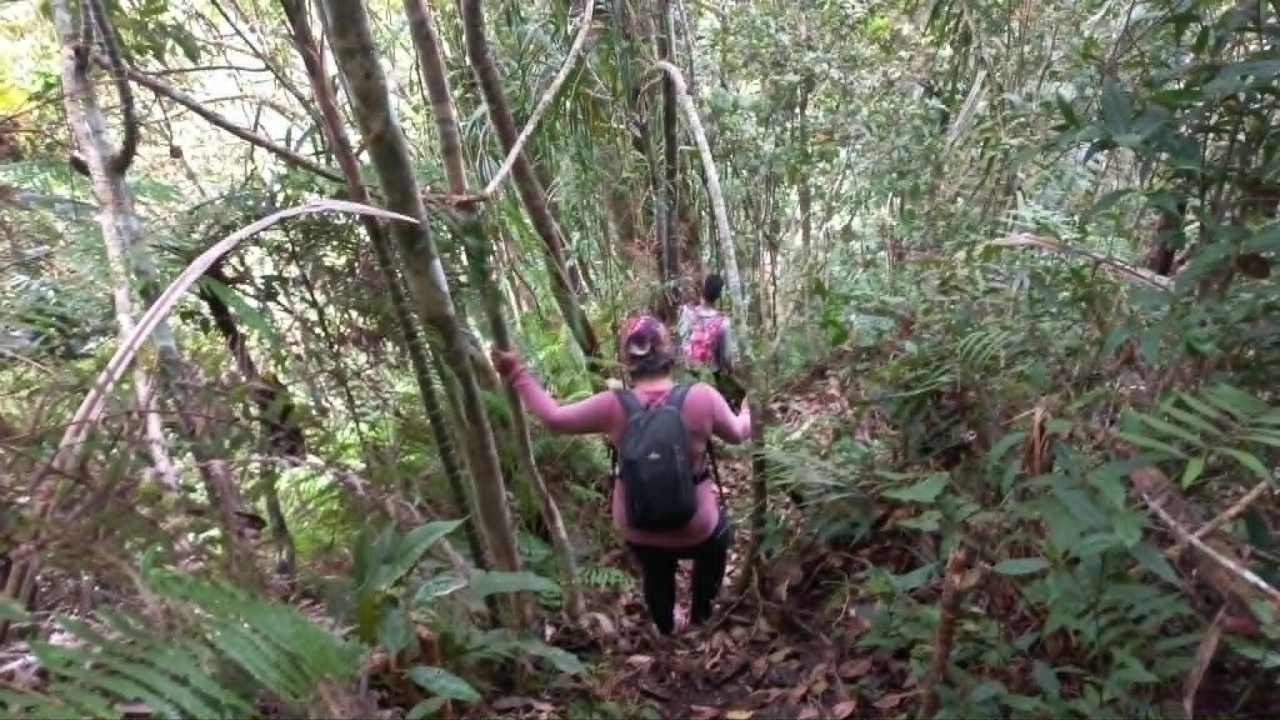
Part of Butal and Bantay Bukid's biodiversity patrols include monitoring of waterways in Baracatan River, between Brgy. Eden and Brgy. Catigan. Photo: Grace Butal
Bayani is now safely past the critical three-month danger zone, a milestone that Dr. Hanel and other conservationists classify as a “total success.” Its skeleton is fully formed, and its growth is stable.
Because Bayani was hand-reared via a process known as “mal-imprinting,” or deliberately socializing it with human keepers rather than an eagle parent, it will never be released into the wild.
“Once Bayani becomes sexually mature, it will bond with the animal keeper so that the bird can be used for cooperative artificial insemination,” Dr. Ibañez explains.
“If we come to that point where we want the offspring to be released back to the wild, that’s when you do the suitable rearing approach, which is, once the chick hatches, it should never see any human.”
The overarching dream of the PEF is to hatch and release at least 20 eagles per year, systematically reintroducing them to vacant but suitable habitats, such as the forests of Leyte, where wild populations were obliterated by Super Typhoon Yolanda.
When asked if that goal is truly realistic, Dr. Ibañez says: “Every successful project starts with a dream, right?”
“But in our case, that dream is also backed up by science and evidence.”
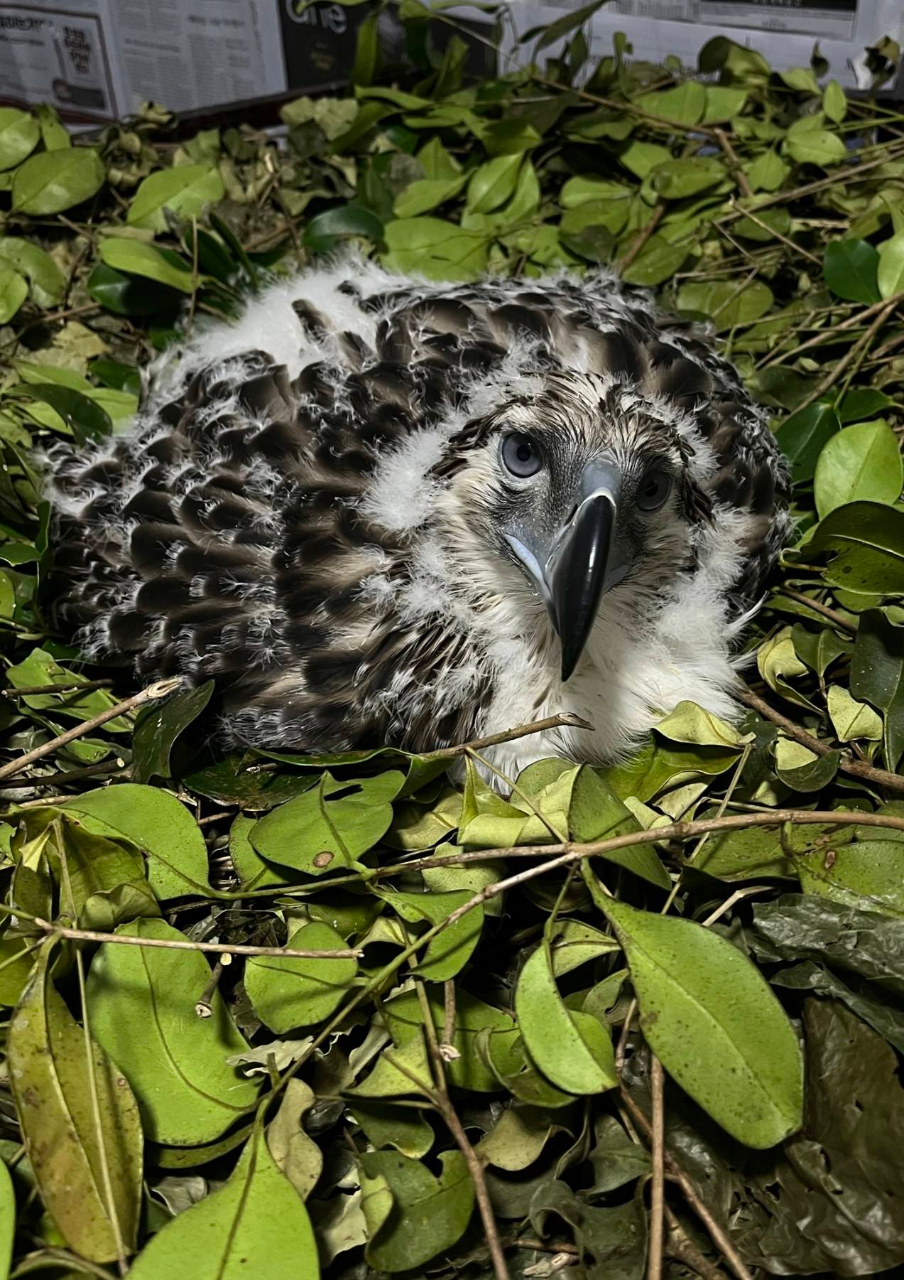
Bayani at three months. Photo: Philippine Eagle Foundation
The scientific indicators reveal an invisible, terrifying crisis. Both Laririt and Dr. Ibañez warn that the genetic pool of the wild eagle population is becoming dangerously uniform. Decades of severe habitat fragmentation have trapped small, isolated groups of eagles in localized inbreeding loops, stripping away the genetic variation required to resist disease outbreaks.
To overcome this, the PEF’s breeding initiatives must introduce an entirely fresh mix of bloodlines directly into the remaining wild populations.
“We have the technology,” he says, “but what we need now are actions on the ground. And we are planning far beyond our own longevity.”
It is a daunting timeline, because a captive-bred Philippine eagle can live for over 40 years. An eagle chick imprinted on a young biologist today may still be alive and breeding when that same biologist has retired.
Dr. Ibañez recalls what Manong Domingo Tadena said about releasing a captive-bred eagle into the wild: “That won’t happen in my lifetime.”
Yet the director told the 77-year-old pioneer, “We’ll try our best to release one at least within your lifetime, and it will become independent.”
This generational handoff is already happening in Butal’s own home. Her youngest son, who recently celebrated his eighth birthday, has grown up watching his mother navigate mapping coordinates and defend the borders of Mount Apo.
Inspired by this intersection of science and sovereignty, his childhood dream is fixed.
“Gusto niyang maging biologist. Mas madali niya kasing natututuhan ang wildlife (He wants to be a biologist. He can easily identify the wild plants and animals already),” Butal says with quiet pride.
“He is our future biologist.”
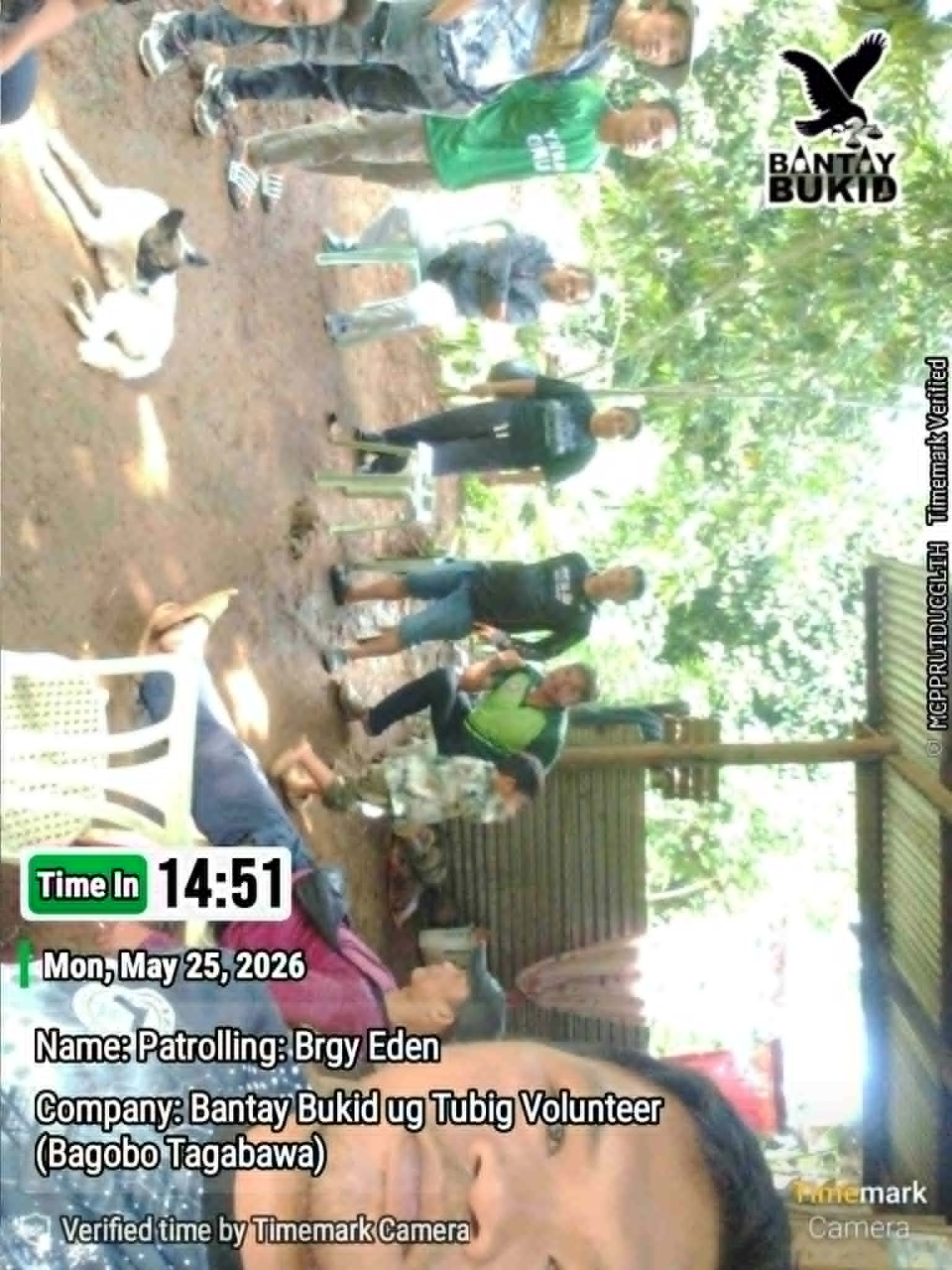
Bantay Bukid as seen in the Timemark app. Screenshot by Grace Butal
Had Butal and the Bagobo-Tagabawa had the chance to name Chick 32, it would not have been called Bayani.
“Siguro, ang ibibigay naming pangalan ay Gimanan (We would have named him Gimanan),” she shares. It’s a Tagabawa word that represents the sacred, untouchable things within their ancestral domain.
“We consider the eagle to be exactly that: a sacred entity.”
The spiritual weight of Gimanan is something the Bagobo-Tagabawa are actively working to pass on to the next generation, ensuring their cultural identity does not go extinct alongside the bird.
Under the Philippine Eagle Species Action Plan, the tribespeople are establishing a “Junior Bantay Bukid” program to introduce children to the bird’s ecological and cultural significance.
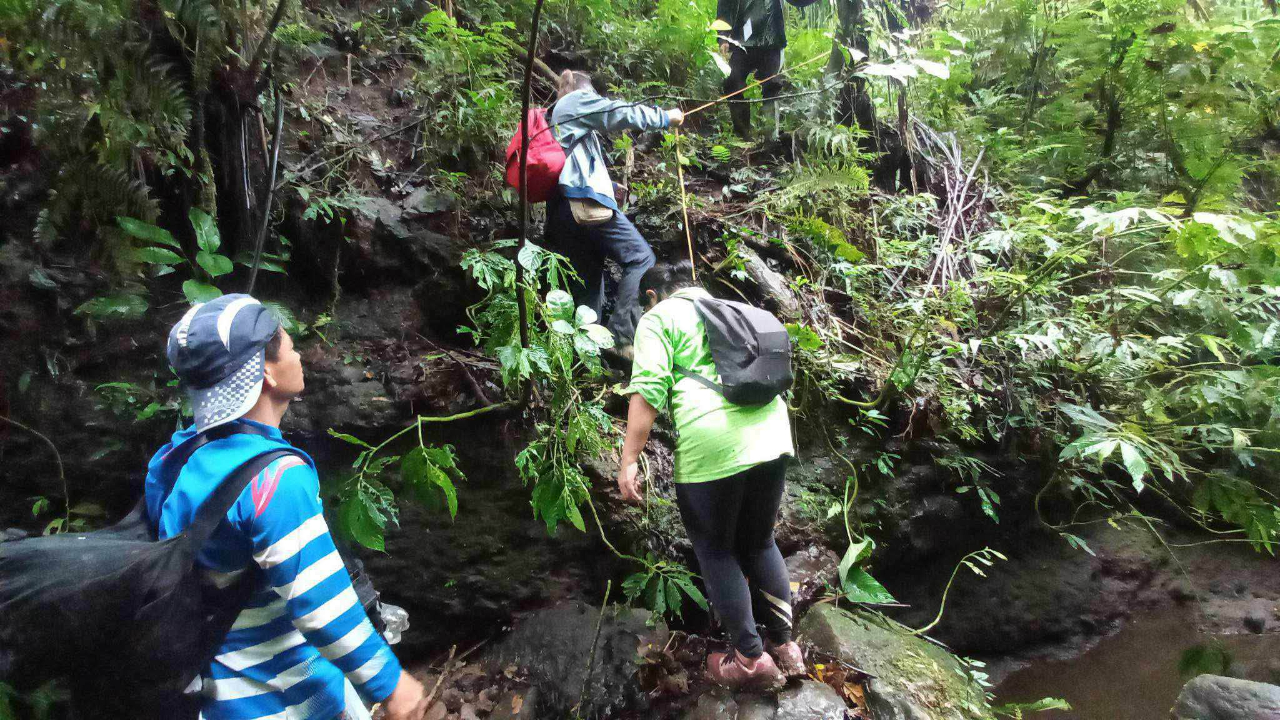
Bantay Bukid guards on a biodiversity patrol in the forest area of Brgy. Tungkalan, Davao City in December 2023. Photo: Grace Butal
At the annual Pasúmar-súmari Festival of Unity every November, the Bagobo-Tagabawa host educational exhibits on eagles, ensuring the youth recognize that the living heritage soaring above them.
Their latest eco-tourism regulations also mandate a strict “tree growing” rule: every outside trekker permitted on the mountain must plant and actively care for native tree species to replenish the historical nesting sites of the raptors.
Ultimately, the preservation of the Philippine eagle operates in what Dr. Hanel calls an “umbrella strategy”, because the raptor sits at the apex of the ecological pyramid.
“If we preserve the Philippine eagle and allow it to populate the Philippine forests in large numbers, it will mean that all other animals and plants are living in a good environment,” he explains.
“This is my hope: that through conservation of apex predators, such as birds of prey, we will preserve the rest of the species and the rest of the planet.”
For Dr. Ibañez, Bayani’s hatching, made possible by precise interventions in a German incubator and foot patrols in Davao, represents the “pinnacle of us being humans”.
“We are intervening in such a good way because we have already lost a lot, and we cannot afford to lose more,” he says, adding that the conservation strategies are akin to paying down the “ecological debts” of ancestors who allowed commercial logging to claim 80% of the eagle’s original habitat.

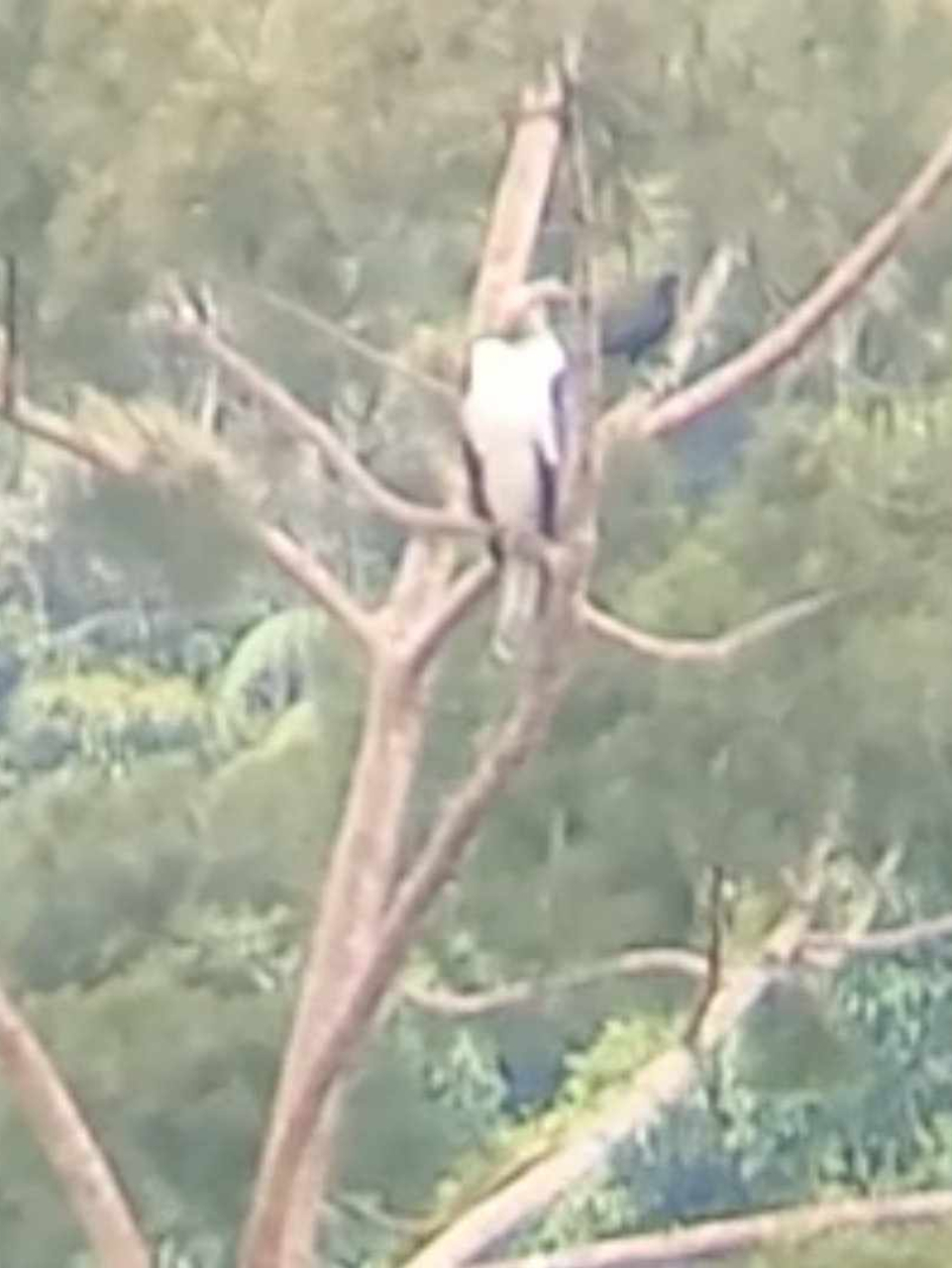
A wild Philippine eagle was spotted by Bantay Bukid volunteer Elgie Caba along Lipadas River in November 2023. Photo: Elgie Caba via Grace Butal
While the precise science of the “oven of life” provides the technical breakthrough, Laririt believes that the return on investment will be measured entirely by a “fundamental change in the heart of the Filipino people.”
“We still need to change many indicators in the way we treat our environment,” she notes, emphasizing a shared vow to ensure that our national symbol remains exactly where it belongs: soaring free above a protected, permanent canopy.
“Education is not the problem nor the solution. It’s something behavioral, something deeper. The way we treat our environment is at the root of all the challenges we face. And what we do to our environment, we are obviously inheriting and reaping the consequences.”
For the communities living at the edge of the canopy, those consequences are an immediate existential threat.
On the slopes of Mount Apo, Butal understands that when a culture allows its apex predator to be hunted into oblivion, the human cost is catastrophic.
“My dream is dumami sana sila, dahil nakalulungkot kung mawala ang agila (I hope the eagle population will multiply. It will be heartbreaking if the eagle disappears),” Butal says.
“Kung wala na ang agila, wala na rin kaming tahanan, wala na ang aming identity. Kapag nawala sila, parang na kaming mga stray dogs na palaboy-laboy na lang. (If the eagle is gone, we no longer have a home and an identity. If they vanish, we become like stray dogs, just wandering around aimlessly.) —LA, GMA News

