
We use cookies to ensure you get the best browsing experience. By continued use, you agree to our privacy policy and accept our use of such cookies. For further information, click FIND OUT MORE.
In one corner of the world, cocaine bricks start floating ashore a sleepy fishing town.
In another, a thrilling chase ensues in the middle of the Pacific Ocean to capture drug smugglers.
These are stories of people who, despite their differences, have chosen to answer the same call.
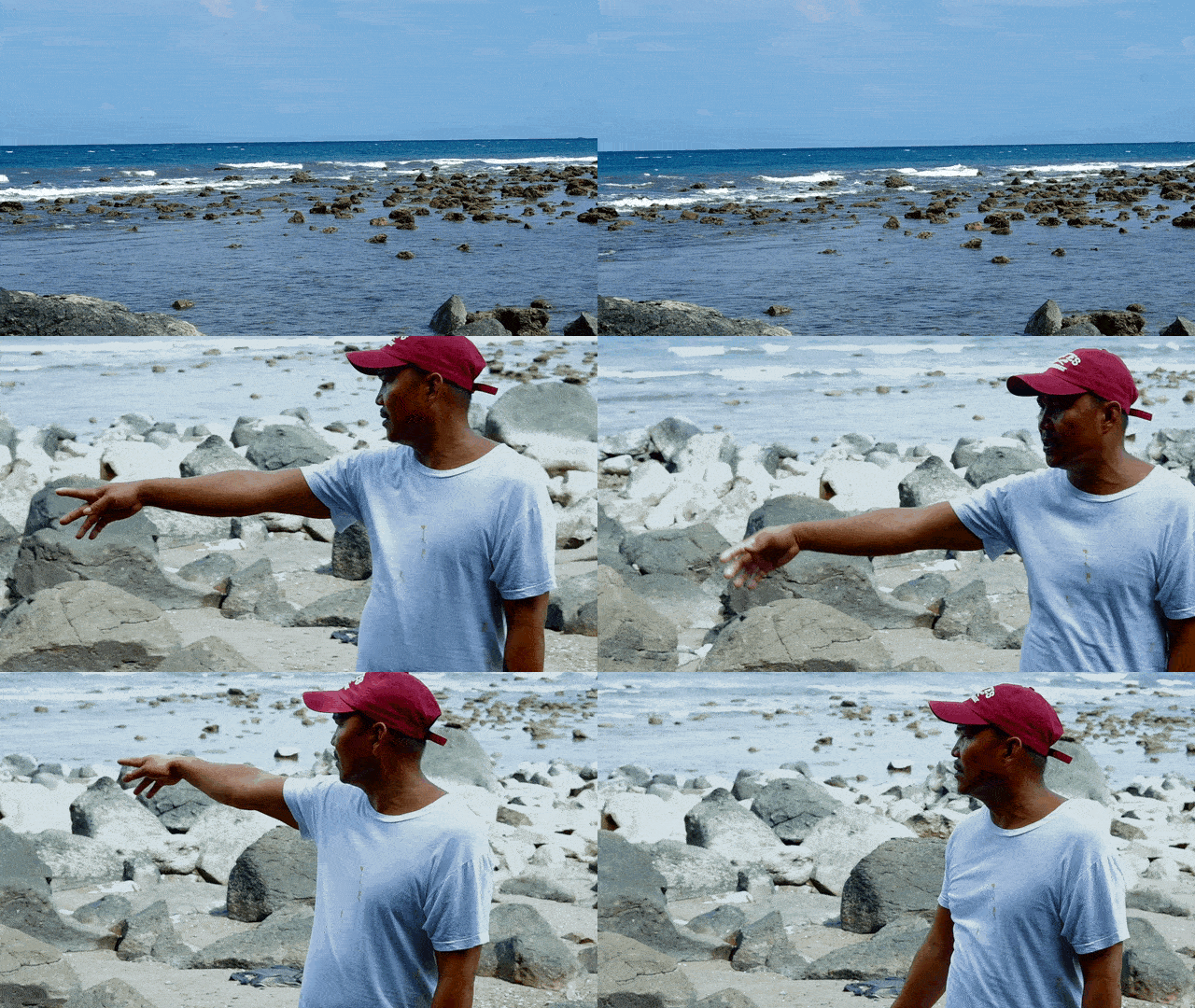
ON A BRIGHT SUNNY DAY IN JULY, Ruel Perez took his family out for a picnic by the beach in the town of Mauban in Quezon.
With the crashing waves in front of them and the sun directly overhead, the 44-year-old fish vendor, his cousin, and his five children enjoyed the leftover fish and rice they packed for lunch.
It was a rare moment for the family — a kind of luxury they only get to do once or twice a year.
Little did he know that the day would bring a discovery that would be flashed all over national news.
It started when Ruel’s son suddenly stood up from the picnic and walked away, looking for a place to take a dump.
He had wobbled toward the small dark rocks scattered on the edge of the pristine beach. Ruel, fearing that a snake could be lurking among the rock formations, stood up and followed his son.
Ruel froze as he slowly came closer to the rocks where his son headed. It wasn’t snakes, however, that stopped him right in his tracks.
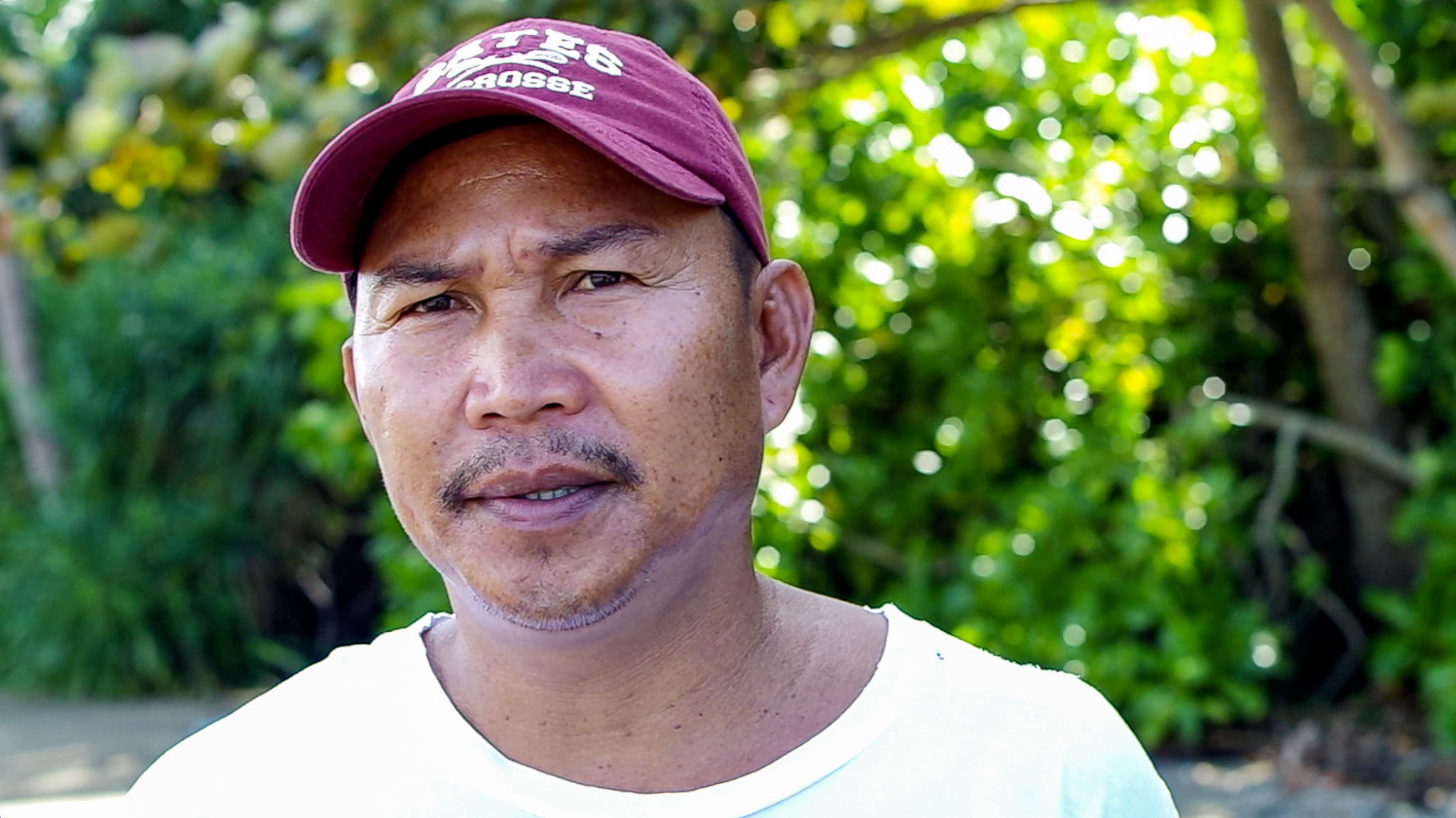
“That’s where I saw it. Two over there, and five over here,” Perez tells GMA News Online, pointing to the different spots on the beach where he saw the bricks of cocaine. “They were scattered, seven of them. They were caught in between the rocks. I already had a suspicion about what it was, so I called the police station.”
Most of the time, it’s fishermen, students, and other random citizens who discover cocaine bricks along the country’s seashore. Most of them, like Ruel, do not hesitate to call the authorities upon discovery.
“What will I do with that?” he asks. “It will just ruin my life, my children’s lives.”
He didn’t want to call anybody else in fear that the bricks might end up in the wrong hands.
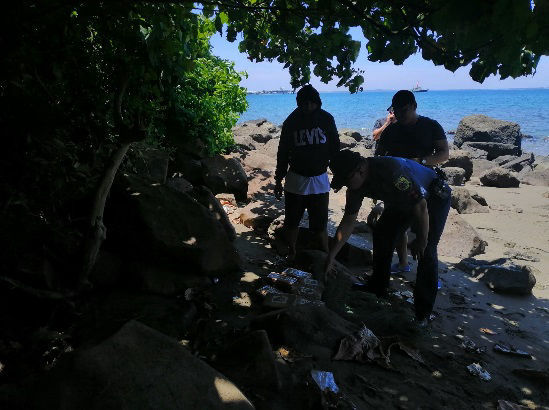
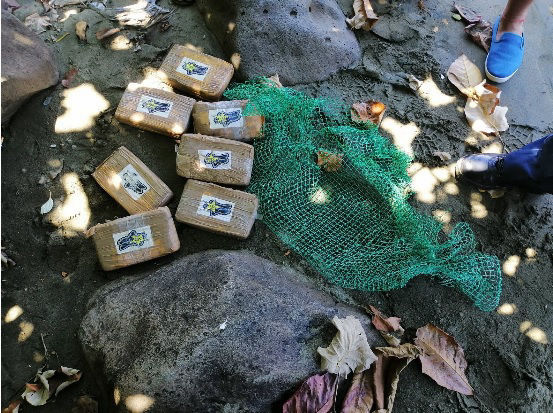
Police officers swarmed the scene after Perez gave them the call. He watched as they took photos and wrapped the bricks in nets to be brought to the station.
The bricks weighed over seven kilos and had a value of P35 million. The flour-like white substance was tightly wrapped in packaging tape, with foreign characters scribbled all over it.
Ruel believes the bricks were left in the middle of the ocean, far from the shore, and were pushed to the coast because of bad weather.
The family’s picnic was cut short because of the discovery. Thankfully, his toddler had no clue about what was going on. When asked by his family about what had happened, Perez simply said that the police had an operation to attend to within the area.
After that hot day in July, Ruel never brought his family back to that shoreline. He has decided he never wants to go back.
“I am scared already. The owner might look around and find me,” he says.
Ruel received a P500 token for his honesty and integrity. Since the incident, life has gone on. He continues to wake up early in the morning to get fish from fishermen and sell it in the market before he would go home and call it a day.
All over the country, millions of pesos worth of cocaine bricks have been floating ashore, particularly along the east seaboard of the Philippines such as Quezon, Dinagat Island, Surigao Del Norte, Surigao Del Sur, Camarines Norte and Camarines Sur. In Mauban, Quezon alone, three cocaine brick incidents have been reported this year, according to local police.
Quezon has the third longest coastline in the country spanning 1,066 kilometers. The Philippine Drug Enforcement Agency is tasked with making sure that drugs are unable to enter the country from the seas, but with just nine members in the Quezon provincial unit, the task is gargantuan.
Because of the lack of manpower, PDEA heavily relies on mobilization of members of the community — people like Ruel Perez — to be on the lookout for when these incidents happen.
“It’s very hard to guard the vast ocean. Even our police officers are having a hard time, what more PDEA?” says William Dulay, the provincial officer of the Quezon unit of PDEA.
According to agency, over 338,120 grams of cocaine have been retrieved from February to July of 2019, amounting to a total of P1.7 billion worth of illegal drugs.
No one knows for certain why these cocaine bricks started washing ashore on the eastern seaboard of the Philippines.
Despite the numerous incidents, PDEA says there’s no conclusive indication that the bricks were intended for local consumption.
“Cocaine doesn’t have a big market in the Philippines. The number of users of cocaine in the Philippines would represent only about two percent of the drug using population, which is dominated by people who prefer using shabu.” PDEA spokesperson Derrick Carreon says.
The official adds that it’s possible that the country is being used by drug syndicates as a transshipment point to smuggle drugs to other countries.
“It shows our vulnerability in terms of being a potential transhipment point,” said Carreon, noting how other countries such as “Hong Kong or probably Australia, New Zealand” could be the final destination for the contraband.
It’s a different story altogether across the Pacific.
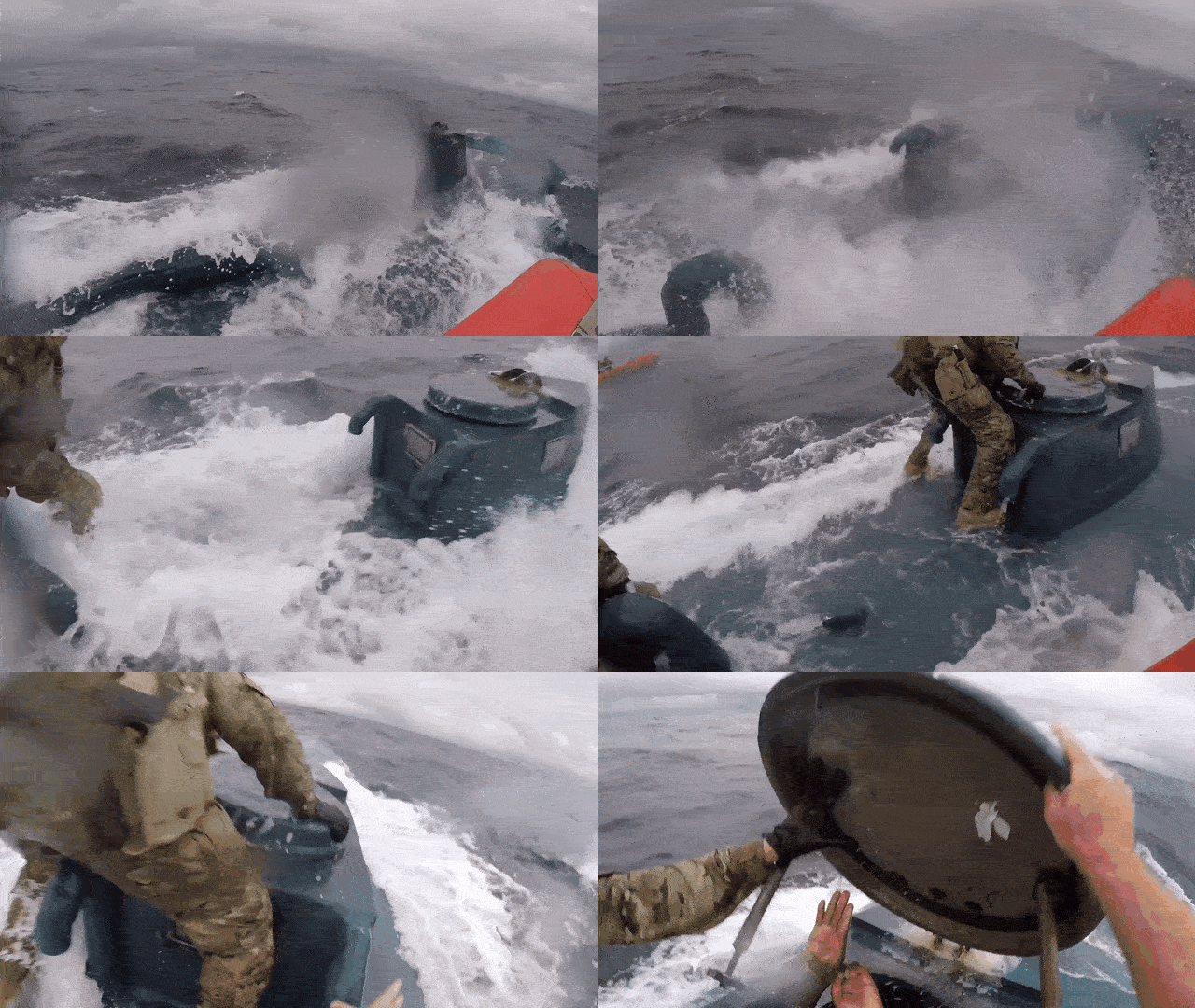
IT WAS A NORMAL JUNE MORNING for Captain Jim Estramonte — at least, what counts for normal for the Commanding Officer of the United States Coast Guard Cutter Munro.
He and his crew were in the middle of the sea, having embarked on a three-month patrol from their base in Alameda, California. He woke up in the morning and was having a cup of coffee when his Operations Officer barged into his office. “We have an SPSS.”
An SPSS, or a self-propelled semi-submersible, was spotted over 200 miles from their ship.
“Those don't come along all that often, maybe once a quarter, somewhere in there,” Jim muses.
The United States Navy's P3, a maritime patrol craft designed to hunt subs, was the one to spot it. But the Munro was the only asset in the area close enough to stop it.
“We saw him in the morning and then we had to race over there to beat them, because doing anything at night... everybody knows it's tougher to do things at night. And at sea there's no lights on the street so it gets real dark, and there was no moon. It was cloudy...when the sun goes down, it gets pitch black. So we raced over there and got there before sunset,” Jim recalls.
What followed was a drug bust that looked like a scene from an action movie. The Munro spent the whole day racing after the sub as fast as it could, before launching two boats and a helicopter an hour before sunset, when they were 15 miles away from the vessel of interest.
“We came up from behind. The video that you folks may have seen is we got our members right on top of it as it was going about 10 miles an hour, 12 miles an hour, which doesn't sound like very fast but when you're going from a moving boat to another moving boat and the water is rushing over, it was quite a move,” Jim says.
“Anyway, we stopped,” he continues. “Then we banged down the hatch. There were five individuals that we had to take from the boat, and almost eight tons of cocaine.”
The bust was one of the crew’s more memorable ones to date.
"It's going to be tough to beat this last one," Jim says. "You know, of all my counter-drug patrols in the Coast Guard, it's been 27 years. Over 10, 12 years at sea. This last patrol is easily the most successful."
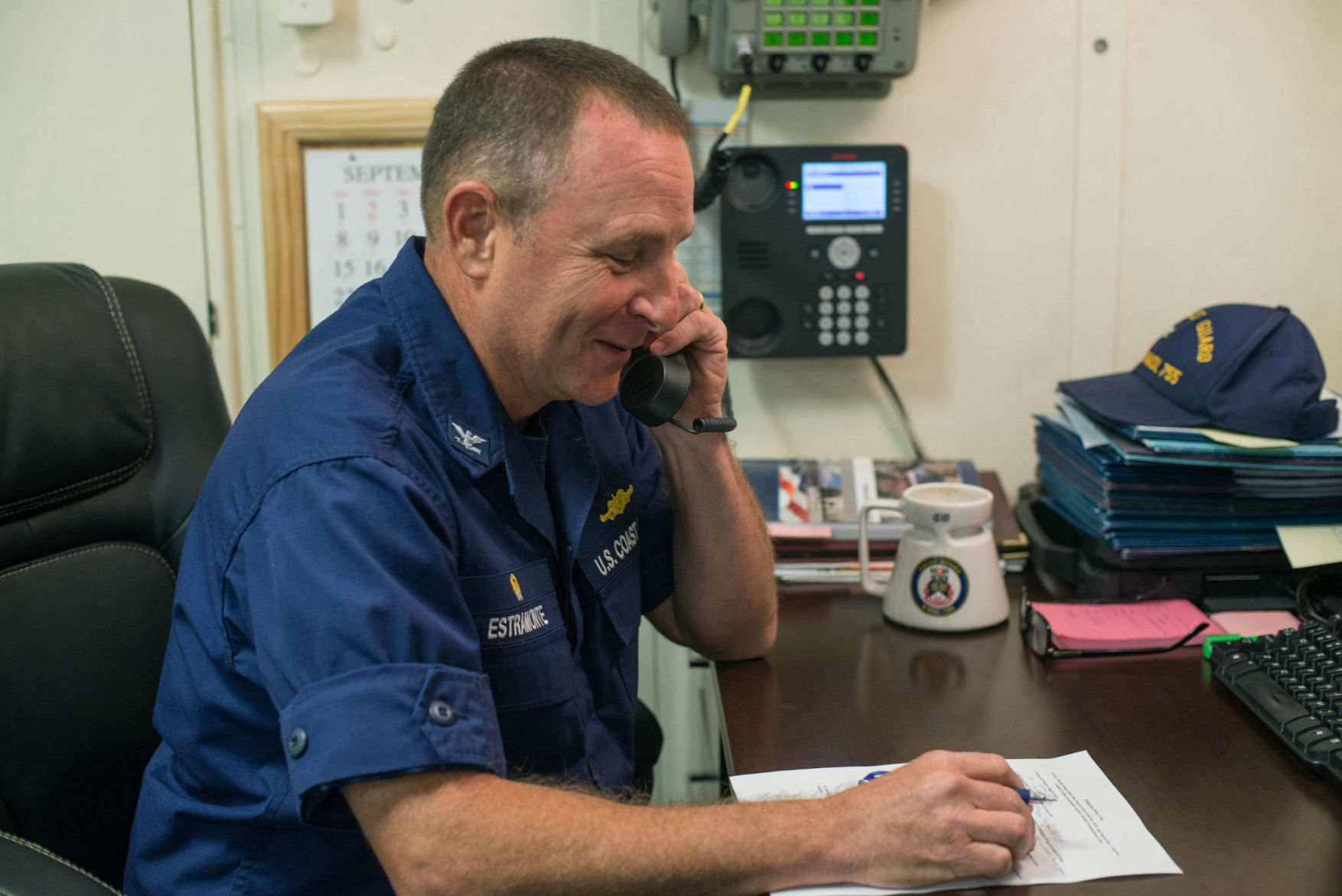
The crew’s isolation at sea means forging unbreakable bonds with their shipmates.
The Munro has 130 personnel aboard, all of them with a specific task and each of them coming from very different backgrounds. Despite their differences, when they’re out there, it doesn’t matter — they’re family.
“That means a lot to me, when you when you call somebody a shipmate,” Jim says. “You get real close to your brothers and sisters out there, and it's a special part, that's why I love going to sea.”
One of the crew members, Carli Carnes, hails all the way from Connecticut. She is a Petty Officer 3rd Class Electricians Mate aboard the Munro.
For Carli, this life is her dream come true.
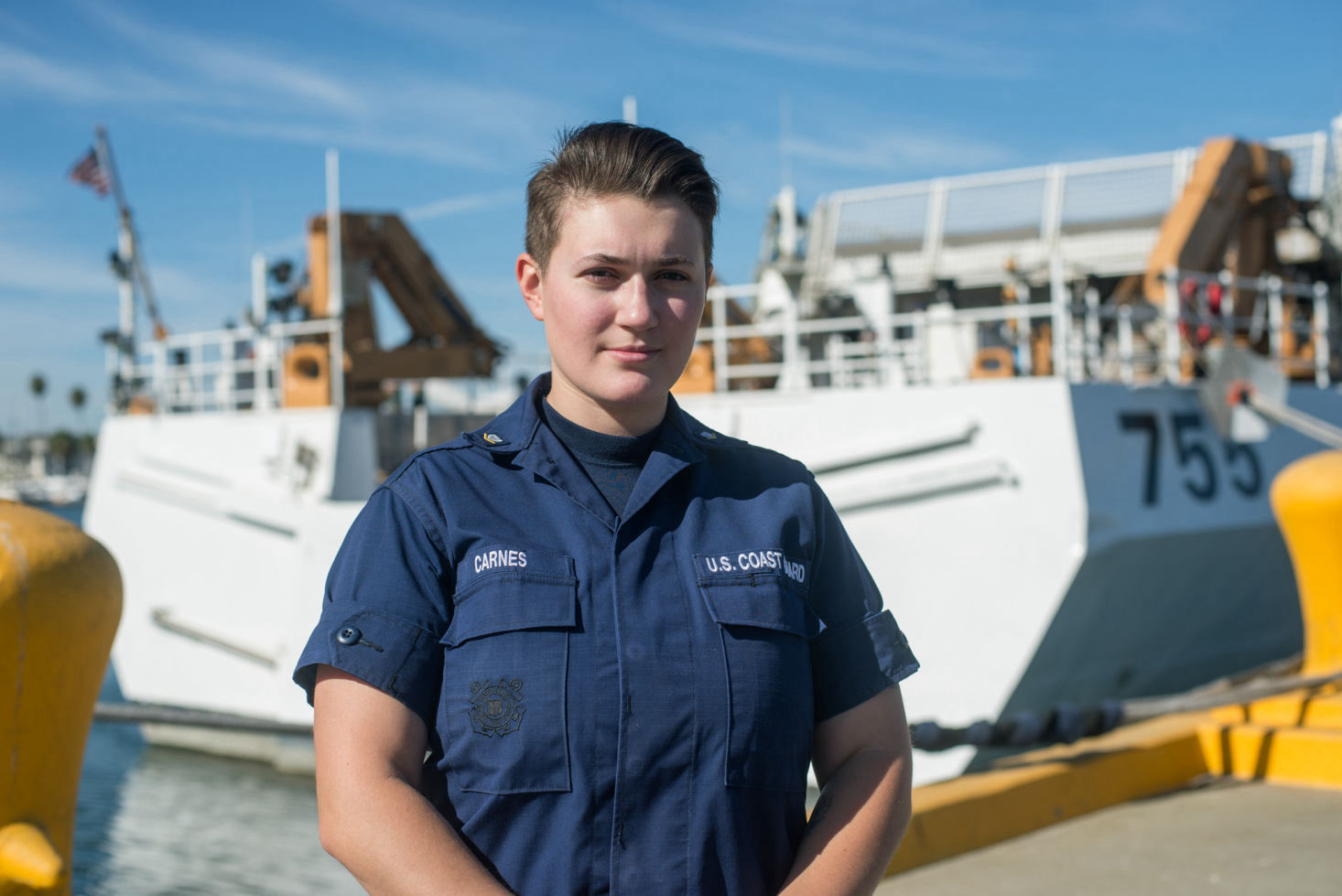
She comes from a military background — her father was in the Marine Corps and the National Guard, while a lot of her uncles are in the Air Force or the Navy. Her oldest brother is in the Army, and her younger brother is about to join the Air Force. She’s the first Coast Guard member in her family, and she’s thrilled to be able to serve the country and travel the world at the same time.
And aside from minor struggles like going to the bathroom while on the boat, it’s not at all bad. She has been in service for three years and she was part of the team that offloaded the cocaine seized at the memorable SSPS boarding in June.
“I'll never forget that. I was on the team that went on the next day for completing the offload. I was one of the last people inside of it, just getting the last of the drugs out and they told me I had 15 minutes to get every last key out of there, and that's what we did,” she recalls.
Her daily life at sea involves maintenance and repairs across the ship. When there’s a bust and she’s called out for the boarding team, she heads to the lockers and changes really quickly, before being launched out from the side of the bow.
She’s been to Guadalcanal, and Fiji, and Costa Rica, and even the ABC islands above Venezuela. She’s able to go to a lot of places like she once dreamed.
But the best part for her is the family she found in the Munro.
“That's really your family, like you spend more time with the people on this boat than you do with your actual family. And so the bonds you form underway when you know you're not seeing anyone else for several months at a time...these people, your work with them every day, you go to bed with them, you wake up with them, you eat with them. So it's just... I've made the best friends my entire life,” she says.
Still, she misses her father in the East Coast.
“The hardest part is probably not always being there for my family. My dad lives in Connecticut so it's hard whenever I miss holidays there, birthdays, and whatnot. You know, I always miss my dad,” she says.
But not everyone aboard the Munro always dreamed of joining the force.
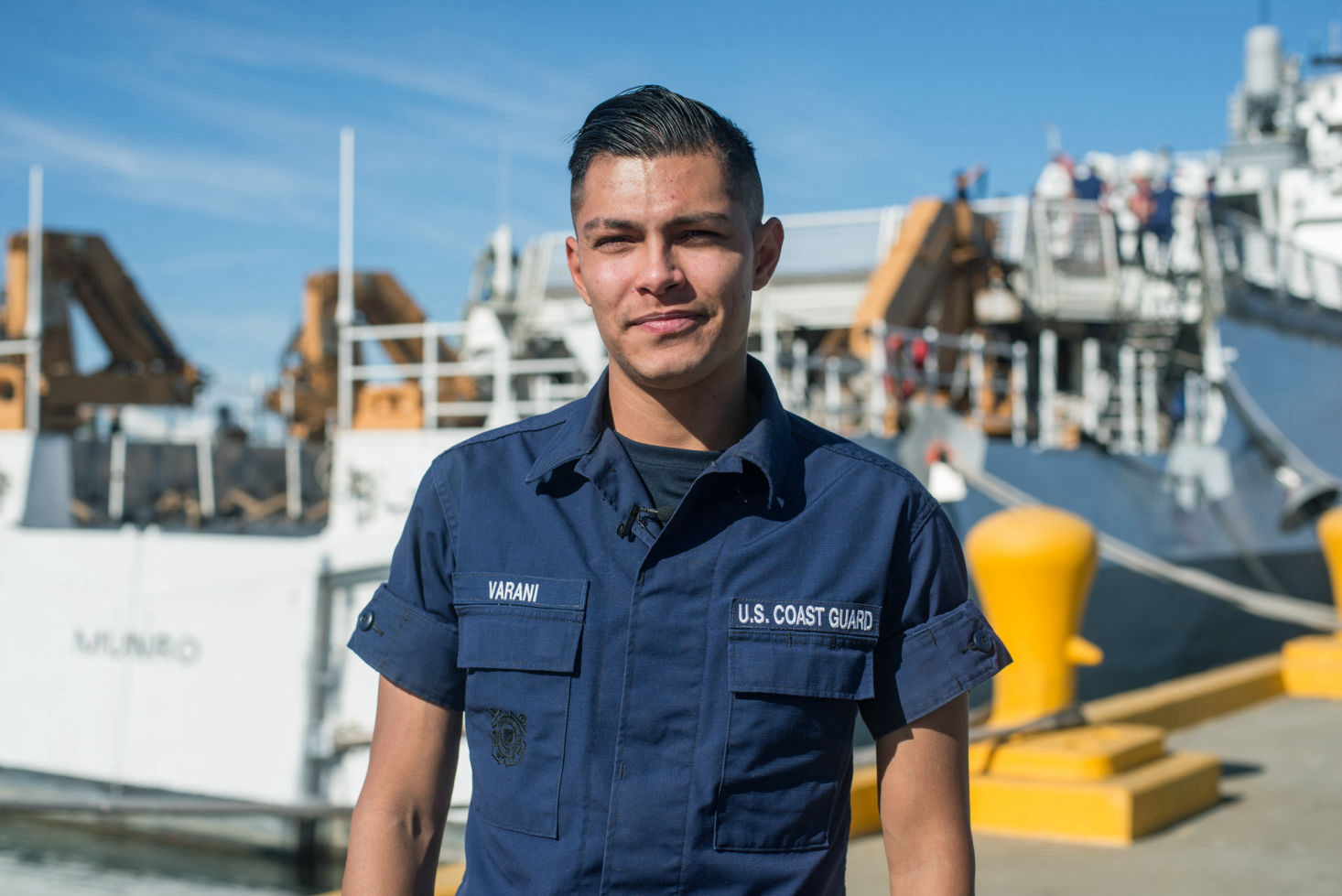
Caleb Varani wasn’t driven by the urge to serve the country in the beginning; he simply wanted a way to go to school.
“I was living at my parents’ house, and then I had all these jobs and whatnot. I couldn't pay for school,” he says. “I decided to join the Coast Guard because I wanted to go to school. I didn't have [money for] tuition. So I was like, well, I'm going to do this for myself. I want to set this goal of joining the Coast Guard and going to school paying for it for myself.”
Caleb is of Filipino and Italian descent. His family originated from Manila and are now settled in San Diego, California. He remembers visiting the Philippines several times when he was a child, when they would go visit his grandparents from his mother’s side.
His father Stephen was part of the USCG and retired as a chief. Growing up, he looked up to him. Still, he didn’t understand what it meant to be part of the Coast Guard until he joined.
“Joining the military is definitely a life-changing experience. I never saw myself joining the military. I always wanted to be a Marine. But I didn't see myself doing that either. So joining the Coast Guard, it really opened my eyes,” he says.
“It's fun, because there's a lot of things that you normally wouldn't do as a civilian, you know, like going to all these places at one time, traveling, just like one of my favorite things... Because I don't think I'll ever go back to those places,” he adds.
But he was also exposed to how tough and intense the work is.
“It could be aggravating at times, you know, the job is not easy,” he said. “It could be intense… Like the jobs that we do, specifically are pretty life-threatening because we don't know what we're going to encounter.”
Caleb’s daily job on the Munro includes maintenance of the equipment: wires, pumps, controllers, engines. He helps handle the contraband that they seize, and he helps out in detainee watch.
“Migrant detainees that we bring on board, I would stand watch for four hours, watching them, feeding them, giving them showers. You know, giving them what they need, their medicine, all that kind of stuff,” he says.
Like everyone else on the Munro, it’s being apart from family that makes it difficult for Caleb. It’s hardest for his Filipino mom, who works as a certified nurse assistant.
“My mom, of course, she's going to be my mom and be emotional and have that sense of me not being there at home anymore,” he says. “You know, it's hard to let your children go. But at times, you know, you have to understand they want to do things and you have to just accept it. I mean, my dad understands and then my mom, she understands but also doesn't want me to be gone.”
On the other hand, it’s the separation that makes the return worth it.
“It could also be heartwarming. When we come back home, all the families are on the pier waiting for us to pull in. We get to take leave, stand down all that stuff. So that's probably the best part, you know, because you're coming home.”
Theirs is a big job. The US, with over 50 states, has a coastline that spans over 19,924 kilometers. The US Coast Guard has an average daily drug haul of 874 pounds of cocaine and 214 pounds of marijuana.
The US Coast Guard has a total of 40,000 personnel on active duty. They also have 243 Coast Guard cutters, 201 aircrafts, and 1,650 boats. The force is not lacking in resources — especially when compared to those on patrol at the other side of the Pacific.
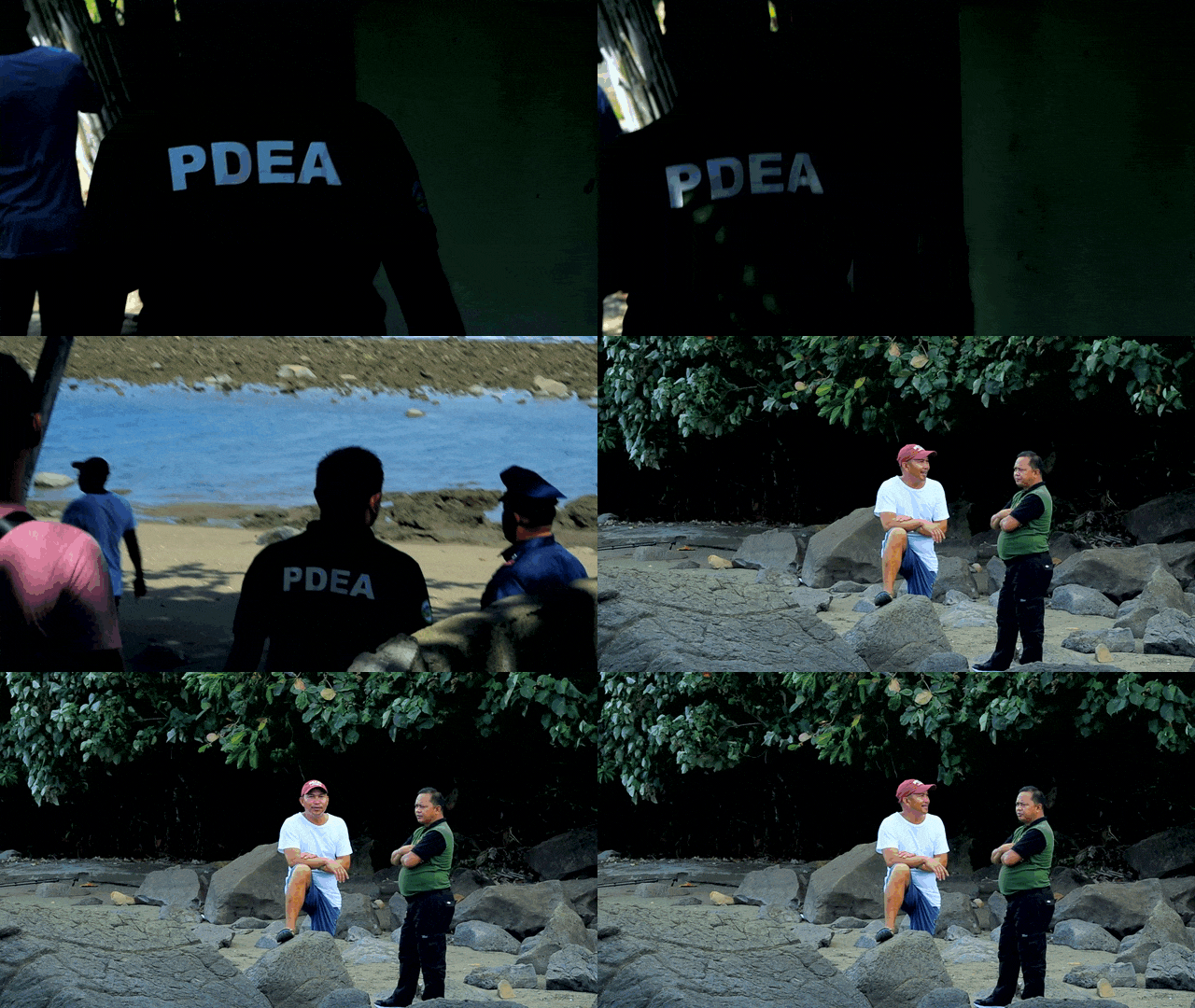
WILLIAM DULAY’S CELLPHONE started to buzz on a Sunday afternoon
The provincial officer of the Philippine Drug Enforcement Agency’s Quezon unit was on his desk finishing up a report while his troops were busy filing their own paperwork when he received the text message.
“The Association of Barangay Councils President of the Mauban municipality told us that cocaine was recovered in Mauban,” William recalls.
Over seven kilos of cocaine were found along the shoreline of Mauban, a town that was 75 kilometers away from PDEA’s provincial office based in San Antonio, Quezon.
Without hesitation, he and two of his men got into their cars and drove all the way to Mauban to verify the information.
The team finally reached the town three hours later. By the time they got there, the cocaine bricks were already wrapped in a net and the police officials present were already done reporting about it.
“We couldn’t do anything else aside from check it out and take photos. That’s the only thing we were left to do,” William says.
Still, the three-hour trip was one of the fastest journeys they’ve undergone; other towns in Quezon would take hours, or even days, to reach.
Quezon is the eighth largest province in the country with an area of over 892,601 hectares.
In some cases, the PDEA agents have to ride boats just to get to the other areas. In a week, his team would be deployed three to four times to different areas in Quezon.
Fortunately, the recovery of cocaine bricks is but a rare occurrence for the province.
“In all our operations here in Quezon, we haven’t captured anyone who came out to be positive cocaine users. It’s really more on shabu and marijuana,” he says. “They only call us when it’s the recovery of cocaine but if it’s shabu, marijuana, we’re already there during the operation.”
It’s during those operations that the job turns more dangerous.
“Our everyday work is already dangerous, right?” he says. “In drug operations, we go to a place where we’ll hold a transaction. We don’t know if there’s danger or not. If they find out that we’re actually operatives, then we’ll die just like that.”
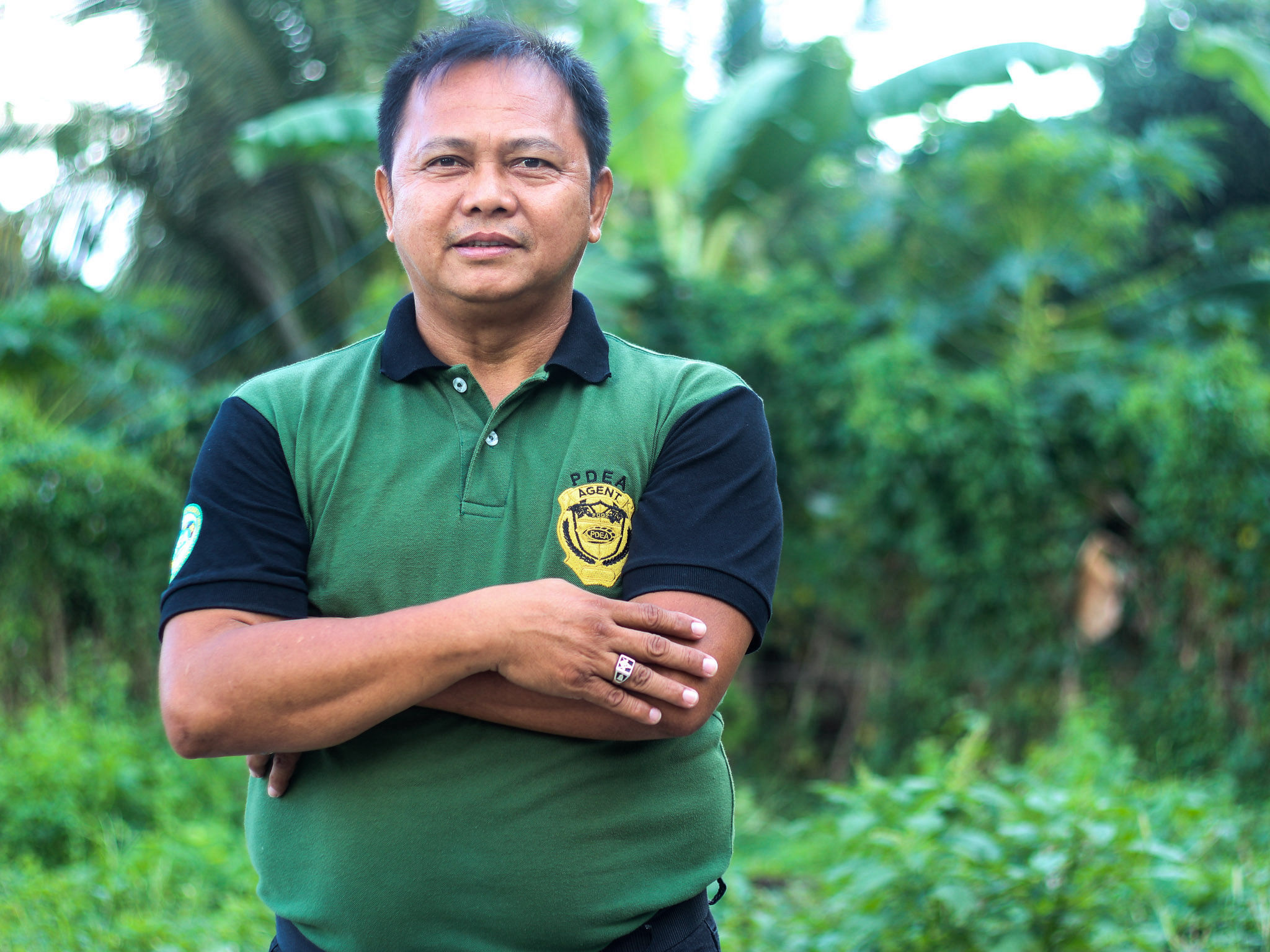
Now 51, William grew up dreaming about working in law enforcement since he was a little boy, and that dream came true when he joined PDEA 13 years ago. He has been deployed all over the country, from Central Luzon and Zamboanga City to Sulu and, for more than a year now, in Quezon.
He is from Olongapo City, Zambales, a three-hour bus ride away where his wife and three children reside.
“The people here actually come from different municipalities, different provinces. Not everyone is from here,” he says.
This means that they tend to leave their families for a period of time and can only come home every now and then. William himself only goes home once month. When there’s not a lot of work, he could go home every two weeks.
“If you’re going to go home, the plane ticket isn’t free. You’d also have to take a boat. It’s not free. So what we do is instead of using the money to travel back home, we’d just save it up. We’d send it to our family,” he says.
But even if PDEA agents were with their families, they would still be on call 24/7. His family has already become used to the nature of William's job after more than a decade. That wasn’t always the case.
William remembers his first drug-bust operation back in 2008. It was PDEA’s annual Christmas party in San Fernando, Pampanga. He had brought his only daughter, his favorite out of his three children, to the event.
While they were having a great time, the agents received a call.
“They needed people. We didn’t have any other choice. I had to leave my daughter in our office. She was just eight years old, alone, and I went with them to the operation,” William remembers.
“I was nervous because it was my first operation. I didn’t know what to do, but what hurt was leaving my daughter at the Christmas Party.”
By the time they got back from the operation already, it was already night-time and the party was over.
“When I got back, my daughter was crying. She asked me why I even brought her with me when I was just going to leave her anyway,” William recalls.
His family has gotten over it, he says. His eldest, a boy, recently graduated with a degree in criminology with the goal of following his father’s footsteps.
“I told him to take the AFPSAT so he could serve in any branch of the Armed Forces, but he wants to join the Army,” William says proudly.
Despite all the sacrifices, William couldn’t imagine doing anything else.
“I like my job. It only becomes bad when you’re no longer happy with the job you’re doing. So far, I’m still enjoying and I can accept any amount of salary they give me. I’m OK with it,” William says.
Still, he is aware of the challenges that faces his team composed of just nine members.
“Because no matter what equipment we buy, good equipment... good guns, the things we use when we conduct an intelligence operation are useless if we don’t have enough people.”
If they need reinforcement during operations, they have to call up agents from Rizal, Cavite, Batangas or Laguna. Because of the lack of manpower, PDEA heavily relies on community mobilization.
In other parts of the country, PDEA has created seaport interdiction units in partnership with multiple other agencies such as the Philippine Coast Guards, Bureau of Customs and the Navy to safely guard the coastline from any possible entry of illegal drugs.
In Quezon, the PDEA team partners with the Philippine Coast Guard and the Philippine National Police’s maritime group when doing operations in the waters.
“So in case someone tries to run away, swims or rides a boat, they’ll block the way while we enter through the shoreline,” William says.
The need to strengthen the agency’s manpower becomes more urgent since the coastline is the number one entry and exit of drugs.
“If they use land, there’s so many checkpoints that’s why it’s rare that drugs enter through land. It’s mostly through the sea since it’s hard to detect,” he says. “It’s easier to smuggle in drugs through the sea, through the coastline because our coastline is really long. You can’t really guard all of it.”
This is true at both ends of the Pacific.
Up in the air, Jesse Keyser flies.
The 34-year-old pilot is the Coast Guard’s eye in the sky when it comes to high seas drug busts.
“You are out there in the middle of the ocean. You are working with the Coast Guard cutters, flying on and off... taking off from the cutters, going after the fast vessels, and coming back,” Jesse says.
“I love it. I like to be the one on scene, seeing things and being able to report it back. It can get dangerous at times when you are out there flying in the middle of the ocean. It can get a little bit risky but I like being part of the action, being on scene, and being the first one out there.”
Jesse had wanted to be a pilot all his life and dreamed of serving the military since he was a child. It only made sense to become a pilot for the USCG.
“Once I made the decision to join the Coast Guard, the decision to become a helicopter pilot became very clear to me,” he says.
He went to the Coast Guard Academy in 2003 and served as an officer in the deck of a medium endurance cutter. In 2009, he trained at the US Navy Flight School for two years, then served as a helicopter pilot in the Coast Guard station in San Francisco.
Now he is a pilot and an Assistant Operations Officer at the USCG’s elite Helicopter Interdiction Tactical Squadron (HITRON), which specializes in airborne use of force and counterdrug operations.
“I get to fly. I got it. I went to the Coast Guard obviously to serve my country,” he says. “Now I’m in counterdrugs... I'm keeping drugs out of the US. A lot of the drugs, not only in the US, but also foreign nations.”
For him, the most important part was the “direct and immediate” impact he has to the public.
The job is no joke. He and his team has done a mission in the dead of the night in the middle of a thunderstorm, during which the occasional lightning would give them a split second of sight.
He has been in 12 drug busts in his two-year career in the HITRON. His most memorable one would be when a suspect jumped overboard after he fired off warning shots from his perch in his aircraft.
“I think the sounds scared the guy and he jumped off the vessel and we saved that guy out of the water because that's out first goal, you know,” he recalls.
“But the boat continued to drive away and they started dumping drugs all over the water. We had to go and mark those positions. They continued to go and at that point we chased down the boat... That was an interesting one. We kind of joked... It was all parts. You know, somebody jumped in the water, dumping the drugs all over, we're chasing down the boat, it was all around.”
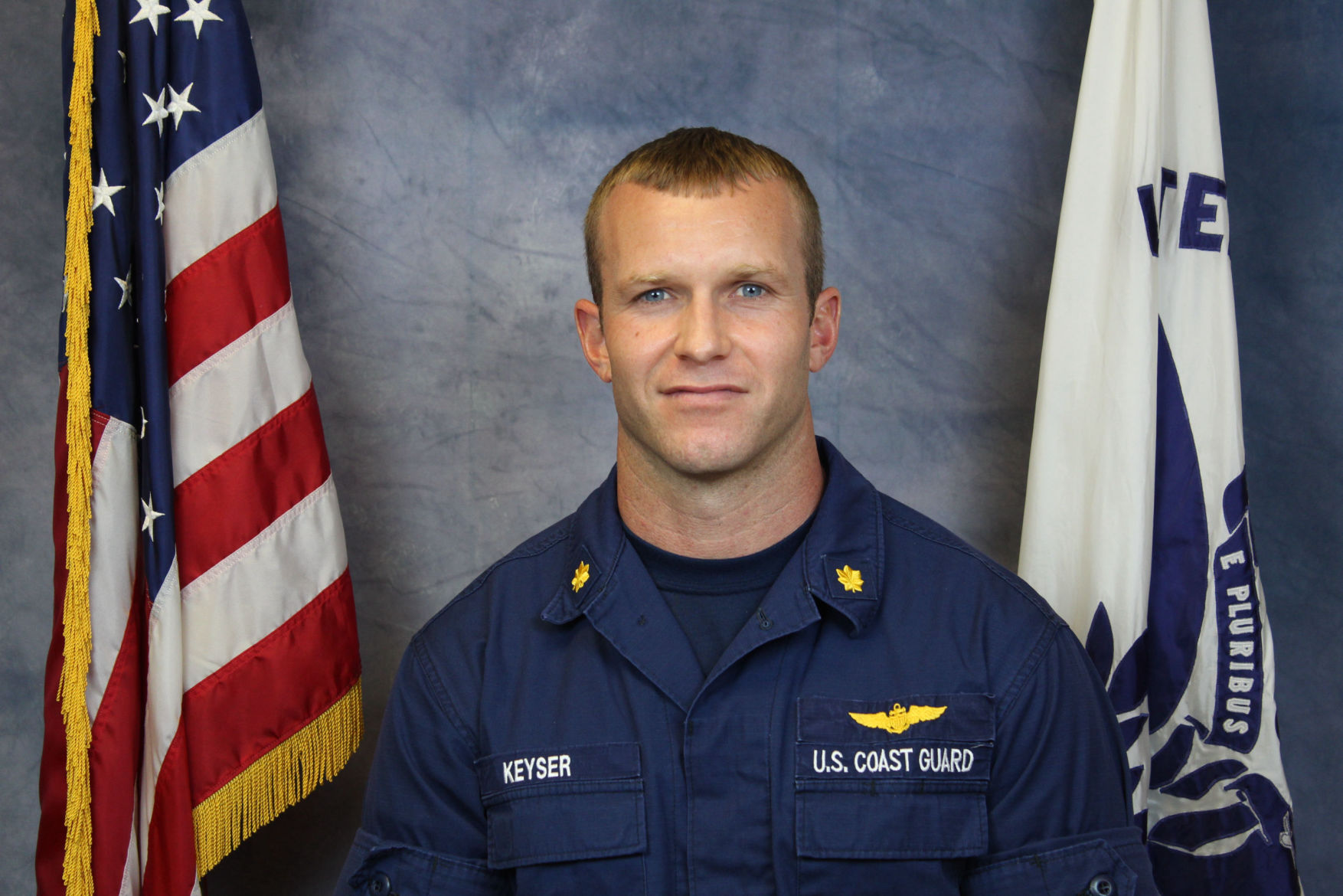
Jesse Keyser grew up wanting to be a pilot.
Contributed photo
Jesse shares the struggle of the crew members when it comes to being away from family, having three kids himself. And if the crew aboard the cutters are isolated in the middle of the sea, pilots like Jesse are even more so in the air.
He sometimes feels like an outsider even among other crew members.
“We do our best to integrate with the crew, to be part of the crew, even though we're not part of the crew for the years that they are on board. We kind of show up. We're these outsiders that fit in there,” he says.
Despite the personal challenges they face, the pilots are a game-changer when it comes to drug interdiction.
“From the sky, we can actually chase the boats down quicker than some of our surface assets. We get on scene and make the cases go quicker and obviously, get more success,” he says.
“HITRON brings an airborne use of force. I think we're a pretty important tool in the counterdrug program... as far as counteracting these cartels and keeping the drugs off the streets. I think HITRON plays a pretty vital role,” he adds.
And it’s not only a point of pride for Jesse, but his family too.
“I know they miss me when I'm gone....But you know, every time I hear them talk about, ‘Oh daddy is flying a helicopter in the sky. Daddy does that.’ It brings a smile to my face and I know that I'm hopefully making them proud.”
This project was produced in partnership with the U.S. Embassy in the Philippines and the U.S. Department of State’s Foreign Press Center.

SHARE THIS STORY