
We use cookies to ensure you get the best browsing experience. By continued use, you agree to our privacy policy and accept our use of such cookies. For further information, click FIND OUT MORE.
By AILEEN RAE PEREZ
and THEODORE JASON PATRICK ORTIZ
May 5, 2021
People carry a body of a man, who died from the coronavirus disease (COVID-19), during his cremation at a crematorium in New Delhi, India. REUTERS/Adnan Abidi
As a journalist and founding trustee at the People’s Archive of Rural India, Shalini Singh, 40, was fully aware of the unprecedented surge of COVID-19 cases in her country for the past two months.
Her mom Anita was the first to be infected in their household, getting COVID-19 nine days after she had her first dose of the vaccine. As a senior citizen, Anita was part of the government’s first tranche of beneficiaries. Looking back, Shalini was thankful her mom overcame her doubts in getting inoculated.
“My aunt had [the vaccine], so that gave her the confidence to feel like, OK, let’s go ahead and get it done, and she was fine. She didn’t have any adverse reactions. Of course, we did get worried when she got sick, but the severity was probably mitigated because she was vaccinated,” she said.
With people scrambling for hospital beds and medical attention, Shalini hoped that her mom’s situation wouldn’t require them to go to the hospital: “Whatever happens, let us or let her be treated at home. I don’t have the resources, the energy, connections, or anything that would’ve helped me get a hospital bed for her. All of our health infrastructures were so strained; the whole world knows right now the crisis that India is going through with COVID. Your whole infrastructure is completely stretched and the doctors are breaking down.”
Shalini also recalled a relative’s harrowing search for a hospital in New Delhi: “My uncle, who’s 94, has been turned away from a hospital close to our house, because they said, ‘We don’t have oxygen, we don’t have a bed.’ It took my uncle three, four hospitals before he finally got a bed, and that was also because one of my cousins knew a doctor who was working in a far-off place in Delhi. My cousin is in America, and she was spending the entire night coordinating with us and her brother, who is in Delhi, was driving around, looking for a hospital, requesting, arguing... it wasn’t easy.”
With all the stress of taking care of her mom, Shalini failed to practice safety protocols. It was just a matter of time before she got sick.
“I should have masked up, or I should have stayed isolated, but at that time, my mother did not know how to check her digital thermometer; she did not know how to check her oximeter. She didn’t even know what an oximeter was until I told her what it is. It’s just difficult to have stayed isolated. Our help was wearing a mask the moment my mother got sick, and that was very prudent of her, but despite that, because she was cooking for us and taking care of us, it wasn’t easy for her to escape the virus.”
Their helper Geeta, 52, tested negative despite having all the symptoms of COVID-19. Shalini thinks this was a false negative.
“We do have reason to believe that there are a lot of false negatives coming out of the reports in India, especially because the labs are telling us that they’ve been asked not to test as widely as they should [because] they’re overworked… they just don’t have the people and the technicians to do the testing and give you the reports... we have to request people that we knew to help us get the test done. I feel that all three of us are positive because we have all the symptoms, but the results show different things,” Shalini said.
India’s Ministry of Health and Family Welfare has recorded over 300,000 new cases of COVID-19 daily since April 21. With a population of 1.38 billion, India has over 19.9 million people that have contracted the virus. Reports show that around 3,000 people die every day, reaching a total of 218,959 deaths, as of May 3. However, many believe that the numbers are undercounted.
“We’re not testing enough people for us to have a clear picture of what’s going on. Labs have been told to hold off testing and all of that’s going to make a difference to the numbers. Given the situation, data is a very important aspect of understanding this virus,” Shalini said.
Hospitals are now overwhelmed with people gathering outside hospital buildings, begging for oxygen and asking for their loved ones to be admitted as tanks and beds run out. Crematoriums have been swamped with cadavers, resulting in mass funerals. Traditional funeral pyres have even been set up in parking lots.
“It’s just heartbreaking to see the funerals, people getting cremated, there’s no place for people to get through their last rites! In Delhi, the cremation grounds have run out of wood. They now have to approach the forest park for more wood, given that the load for burning pyres has gone up,” Shalini said.
“The unofficial figures could be way higher by 10, 15, 20 percent. So, the load in the cremation grounds is kind of telling you a different picture, even if the government denies that,” she added.
India thought it had COVID-19 under control, but they were proven wrong.
With a flawed testing system and hospitals bursting at the seams with COVID-19 patients, efforts to rush the nation’s vaccination program seemed futile. On April 28, the vaccine registration for people ages 18 to 45 opened, but the site crashed 10 minutes after its launch.
“A lot of people from the lower-income neighborhoods believe that there is no such thing as COVID or it’s a global conspiracy. This virus also has a class dimension –– people say you should isolate, then you have families of five or six living in a huddle of 10 square meters. Where are they going to isolate?” Shalini said.
There is also a question of price as Bharat BioTech’s COVID-19 vaccine, which is manufactured in India, costs from $8 to $16, compared to the cheapest vaccine from Novovax at $3.00 per dose.
“Somebody who’s already economically strapped, who doesn’t have anything to eat, is he going to spend that money on his next meal, or is he going to get a vaccine?” Shalini asked.
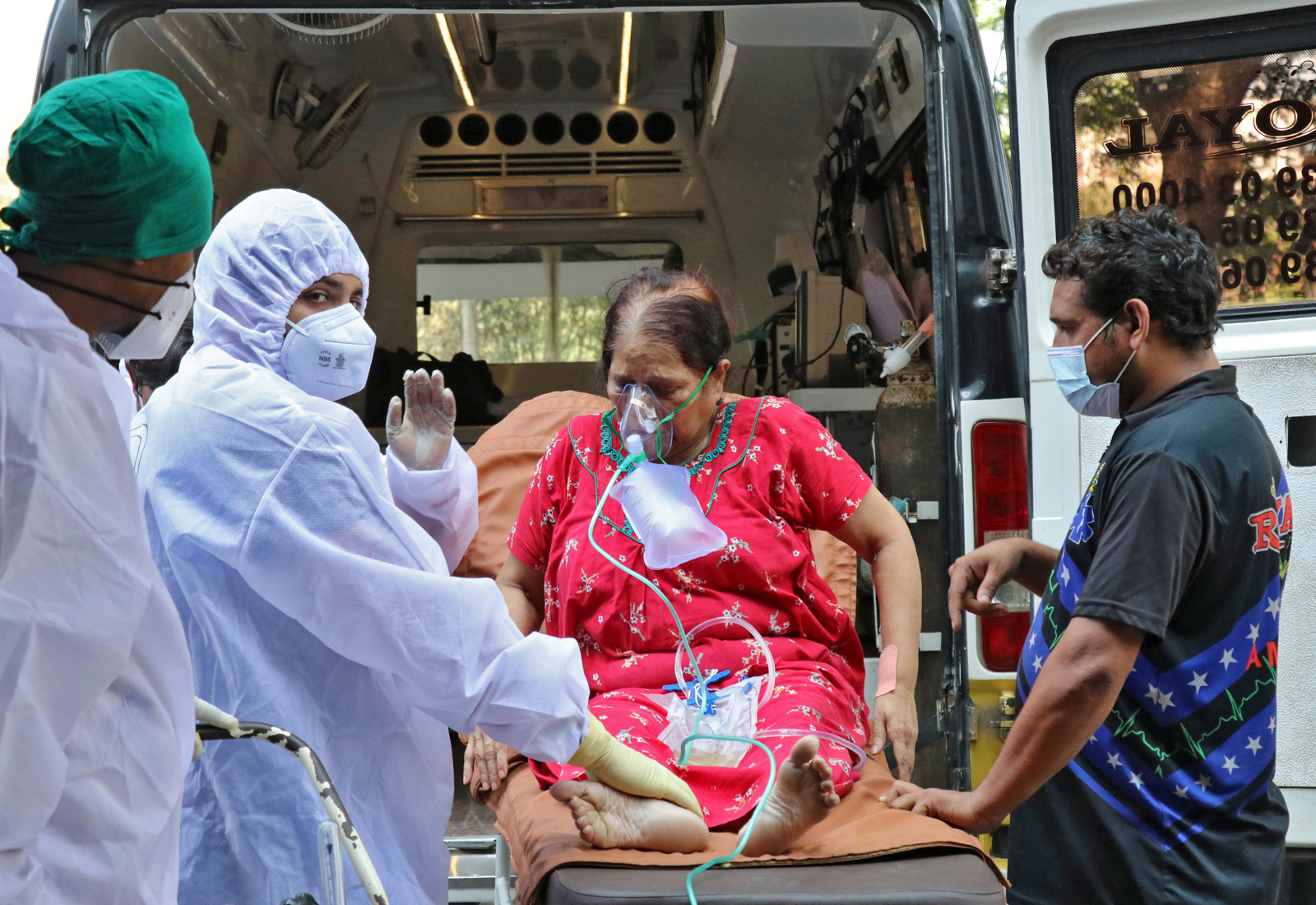
Healthcare workers and relatives carry a woman from an ambulance for treatment at a COVID-19 care facility, amidst the spread of the coronavirus disease (COVID-19) in Mumbai, India. REUTERS/Niharika Kulkarni
Last year, India seemed to have won the fight against COVID-19. Based on data from John Hopkins University, daily cases dipped from the peak of 97,000 in September 2020 to zero new cases on January 8, 2021. The country was even able to limit its new COVID-19 cases to around 8,000 to 20,000 in the first two months of 2021.
“At the beginning of the year, we have political leaders saying, ‘This is the end game of the virus, we’ve beaten it!’ The temporary hospitals and beds have already been taken down because they thought, ‘OK, we’ve beaten it,’ but apparently not,” Shalini said.
On April 12, hundreds of thousands of Hindu devotees trooped to the Ganges River to celebrate the second bath of Kumbh Mela, one of the most sacred pilgrimages in Hinduism which is celebrated every 12 years. Massive groups disregarded social distancing and health protocols even as daily cases started to surpass the 100,000 mark starting on April 4.
“It just doesn’t make sense, I mean, your country is clocking one of the highest numbers of COVID cases and we’re spiraling out of control, how are you allowing people to do this? I mean, my respects to your chosen religion and all of that, but not at the cost of your health.” Shalini said.
On April 28, the last bath of Kumbh Mela, 25,000 people were allowed to dip again in the Ganges River and perform special prayers.
“Potentially, the issue is also the faith of the people in traditional remedies or rituals. I mean, the banging of pots and plates didn’t quite drive away the virus last year as we are clearly seeing in this surge now.” Shalini said.
Journalist Shalini Singh shares her firsthand experience of India's COVID-19 crisis.
Meanwhile, voting for the final phase of the elections in the West Bengal state began on Thursday, April 29. Consequently, Prime Minister Narendra Modi and his Bharatiya Janata Party have been under fire in the last few weeks for holding huge election rallies in the state. Other political parties also joined the rallies.
“If many people are looking up at you for leadership and the way forward and all of that, the minimum that you could do is stay masked all the time. How are you going to get votes if people are going to die, how does it work? Who’s going to vote for you?” Shalini asked.
India’s first three cases happened in late January and early February 2020, as residents returned from Wuhan, China. After a month, two more cases were reported wherein one patient traveled from Italy and one from Dubai. It wasn’t until March 24, 2020, when India underwent a 21-day-lockdown, and by that time, the number of people who contracted the virus reached around 500. By March 30, the COVID-19 cases reached 1,071 with 29 deaths.
“When the pandemic has been reported, we could have just shut down all our airports and tested everybody who’s had any association with any airport in this country, and look at that population in comparison to the entire 1.3 billion people. If some foresight had been done, we could have prevented this disaster. At least to some extent, we could have tried to contain it. Just think of it, 1.3 billion people, 10% might have any association with the airports or would have traveled. Still, it’s so much less if you could have tested them.” Shalini said.
Government officials and cultural leaders are acting at a seemingly glacial pace as the new variant called “B.1.617” is mutating at an exponential rate. Sadly, the rich get preferential treatment despite restrictions imposed by the government.
“A friend [who’s currently working] in London told me last night that [a lot] of charter flights from India have arrived bringing several of the rich and privileged to the UK. The class angle is strong. If you can pay more, you can get more expensive medical care. If you’re poor, forget about it.” Shalini said.
Isolation has also become a function of privilege as the poor cannot even afford to comply with social distancing.
“For a family of five that lives in a 10 square meter hovel, where will they go? To isolate from this virus is also a function of privilege,” she said. “In India, it’s very difficult to socially distance yourself. Socially and culturally, we are not the “distanced” type. A lot of people are not even aware of covid itself, they might just think it’s the flu or a virus or whatever, it’s affected people differently and how they perceive it, how they react to it, the level of awareness is different. In India it’s difficult to paint people with one common brushstroke –– one area in Delhi would be so different from another, one can’t say it’s the same everywhere.”
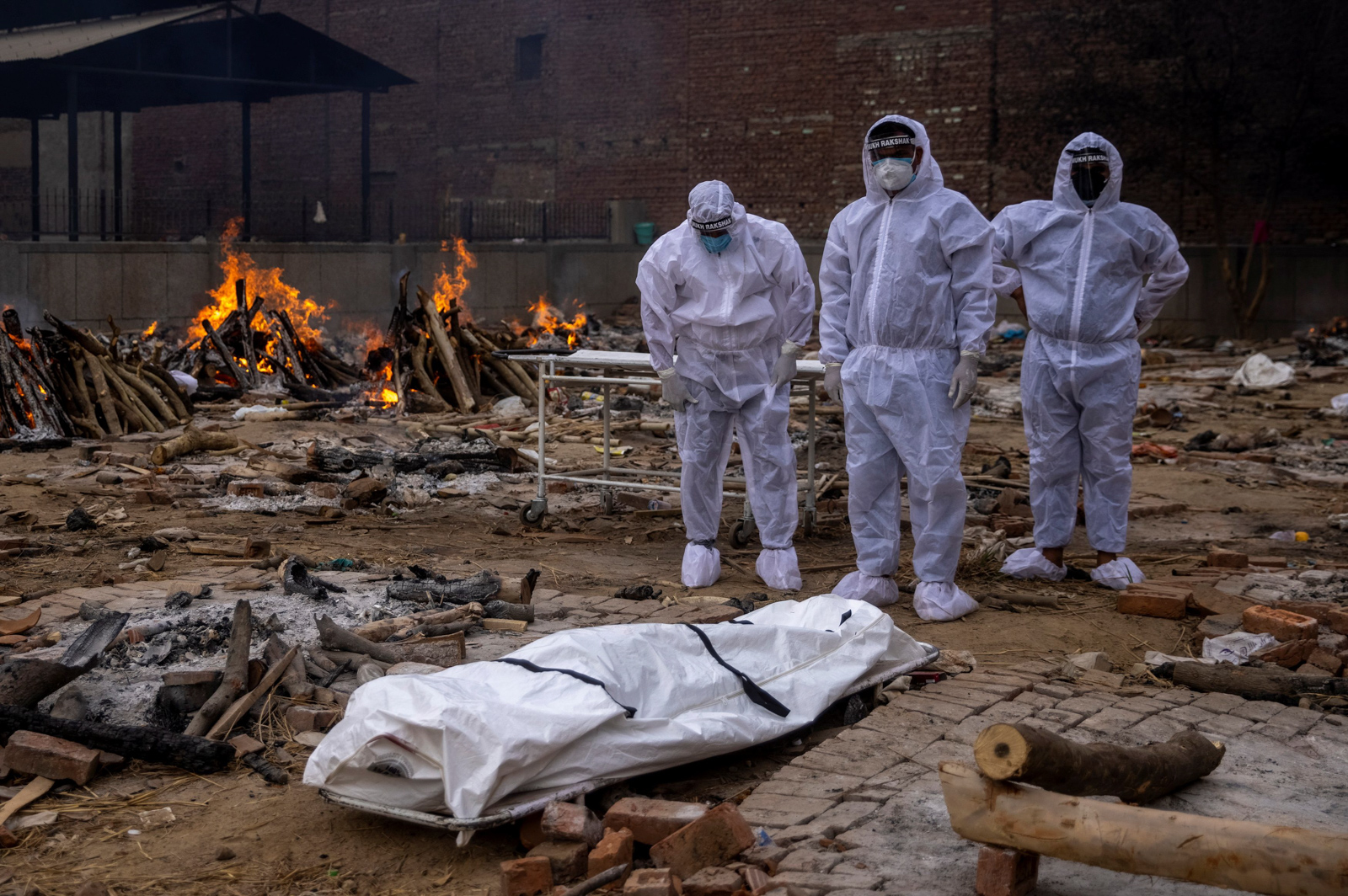
Men wearing protective suits stand next to the body of their relative, who died from the coronavirus disease (COVID-19), before her cremation at a crematorium ground in New Delhi, India. REUTERS/Danish Siddiqui
While the worsening situation in India is making headlines worldwide, the situation may not be far from home as the Philippines experienced a sudden surge in cases in late March. As of May 3, a total of 1,062,225 cases have been reported in the country.
Health Sec. Francisco Duque III has said that if the country doesn’t follow nor intensify its COVID response, we may experience a surge in cases similar to what’s happening in India.
In Metro Manila, where the most number of infections have been reported, hospitals are maxed out and patients are forced to take their chances of getting help at provincial hospitals. Unfortunately, some die while waiting to be admitted.
Dr. Jaime Almora, the president of the Philippine Hospital Association, has claimed that the Philippines had lost its battle against COVID-19: “What we are fearing to happen is already happening. We're not losing. We already lost,” Almora said during an interview in Unang Hirit.
Despite the glaring crisis, officials continued to maintain that the Philippines is doing better than other countries. Shalini finds that rhetoric unfortunate.
“This is not a competition or a comparison. This is a time for cooperation… from a very micro-perspective, my illness, when I saw that my local people and network helped me survive it, this is what we need on a global level to be able to fight something like this that has befallen humanity. And it’s only humanity that could help make it better. This is not the time to flex,” Shalini said.
When lockdowns were imposed in India, Prime Minister Modi also stressed that social distancing is the only way to escape the virus. While he acknowledged that the time would be difficult for people, provisions were not set as the lockdown extended for months.
Shalini noted the drawbacks of using lockdowns to contain COVID-19. “The lockdowns may help curb the spread of the virus, but they lead to a majority of people going hungry. A majority of the population needs to be taken into account when doing lockdowns considering that 70% of the Indian population lives in the countryside and is rural.”
Despite being the biggest vaccine producer in the world, India has only vaccinated 157 million of its 1.38 billion population, according to data from India’s Ministry of Health and Family Welfare. Shalini believes that this is a small number of vaccinations for a country with such a significant number of people: “Vaccination is the long-term strategy. My doctor friends in the US told me that the severity of the virus was lessened for my mother since she had her first dose of the vaccine. My help, on the other hand, is deeply suspicious of the vaccine. She thinks people are falling sick because of the injection. Personally, I would go with what science and medical experts suggest. As of now, fewer than 2% of adults have had two doses, and less than 10% even one.”
“Clearly, the countries that are reaching normalcy have made this a priority, right? The political will and the government initiative and the efforts have been clearly in the right direction,” she said.
The Philippines has imposed a ban on travelers from India.
As the government battles against the crippling effects of the disease, citizens have no choice but to band together and deal with the situation on their own.
Aid has arrived in the form of equipment such as oxygen tanks and ventilators. However, it’s not enough to fill the gap in the nation’s crumbling hospital system. Desperate pleas for hospital slots, oxygen, injections, and medicines continue to flood social media platforms in India, and it didn’t help that published hotlines are either unverified or unavailable.
“People developed their organic ways of dealing with the situation by saying that you know what, let’s help each other. Let’s first verify these numbers and then give them to somebody, which is heartening because that’s a little bit more of a help as opposed to the media flooding you with thousands of numbers [that you have to call], and I’m already panicking because I need help!” she shared.
Indians based in other countries also extended assistance by either giving telephone consultations for those who need medical help or in the form of verifying hotlines.
“I even have a friend in the U.S. who spends time helping out, calling people in Delhi, and volunteering. So, it’s the rise of ordinary people which is keeping us afloat even when others have not been able to do it.” Shalini said.
To boost the country’s morale, the Indian government rallied their countrymen through the pandemic with the phrase “Atmanirbhar,” which means ‘self-reliant’ in Hindi.
While the slogan was supposed to encourage resilience, for Shalini, who fortunately survived the worst part of COVID-19, this phrase meant otherwise: “There are two ways to look at it: you can empower somebody to be truly self-reliant or just tell them that ‘Dude, you’re on your own,’ and right now, you just feel that you’re on your own.”
Shalini reiterated that she was no expert when it comes to politics and managing the health system, but as a law-abiding citizen, her experience with the disease opened her eyes to the reality of her country’s situation: “You can be self-reliant up to a certain point of a certain help that you’ve been given. Atmanirbhar? What do you mean? How are you empowering me to be self-reliant? You’re left to your own devices. Figure it out. That’s the interpretation, right? That’s how I felt. That’s how all of us felt.”
