
We use cookies to ensure you get the best browsing experience. By continued use, you agree to our privacy policy and accept our use of such cookies. For further information, click FIND OUT MORE.
In response, Israel launched a counterattack that resulted in the deaths of more than 14,000 Palestinians as of November 22, according to heath authorities in Gaza.
There is a long-standing history of conflict between Israel and Palestine spanning seven decades. According to Reuters, the conflict “pits Israeli demands for security in what it has long regarded as a hostile Middle East against Palestinians' aspirations for a state of their own.” Many wars and uprisings have been fought in the years since.
For some Filipinos, the conflict is thousands of kilometers away — far away from daily life here.
But that is not the case for many of our countrymen. Israel is home to at least 30,000 Filipino workers, many working as caregivers and nurses, while more than 130 Filipinos live in the Hamas-controlled Palestinian territory of Gaza. At least four Filipinos have died in the attacks on Gaza and two Filipinos were part of those held hostage by Hamas.
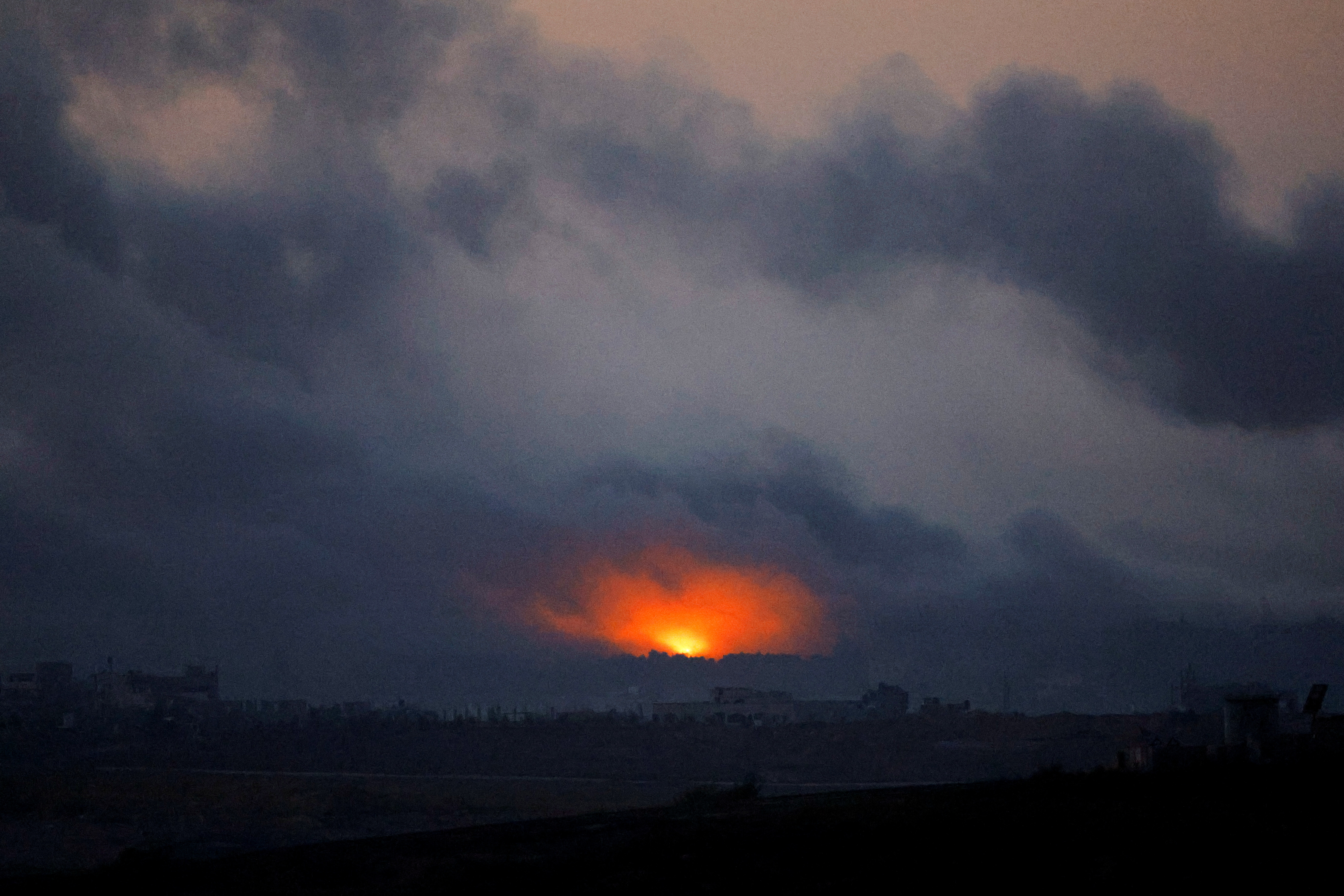
Smoke billows after an Israeli airstrike in Gaza, amid the ongoing conflict between Israel and the Palestinian Islamist group Hamas, as seen from southern Israel, December 2, 2023. REUTERS/Alexander Ermochenko
From Saudi Arabia to Israel
It came as no surprise to veteran journalist JP Soriano when he was sent to Israel to cover the conflict. He was already in Riyadh, Saudi Arabia to cover the joint summit of the ASEAN and Gulf Cooperation Council and the nearest of GMA Integrated News’ reporters to Israel.
But even just getting into the country proved to be a challenge for JP and his videographer, Kim Sorra. With their cameras, batteries, and other equipment, they faced plenty of questions, enough for them to be left behind by their flight to Tel-Aviv.
“Si Kuya Kim, ilang beses na-hold dahil tinitignan kung bakit may mga dalang gano’n and then, tinatanong siya kung bakit kami pupunta ng Israel,” JP recalled.
“Kakasiklab lang noon ng digmaan sa pagitan ng Israel at ng Hamas. Maraming flight ‘yung canceled.”
[Kuya Kim was held up a number of times because they had to check why he was carrying all of that equipment and then they were asking why we were going to Israel... The war between Israel and Hamas had just started then. There were a lot of flights that were canceled.]
Instead, they traveled to Dubai in the United Arab Emirates for a new flight. There, they met overseas Filipino workers (OFWs) who were eager to return to their caregiver jobs in Israel. Because of the war, a second alert level had been raised, barring new OFWs from entering the country for work, but these Filipinos were coming back from a vacation in the Philippines, so they were allowed entry back.
“Kahit delikado, parang gustong-gusto nilang bumalik kasi hindi raw nila maatim na iwanan ‘yung mga alaga nila. Kailangang-kailangan nila ‘yung trabaho dahil ‘yun lang din ang inaasahan nila na pang buhay sa kanilang pamilya,” JP said.
[Even if it was dangerous, they really wanted to return because they could not bear to leave the people they were taking care of. They also needed the work because that is what they are relying on to support their families.]
Upon arriving in Israel, JP and Kim were immediately confronted by the reality of the situation.
“Meron kaming na-receieve na info na may airstrike daw sa may Rishon LeZion, so nagpunta kami dun. Pagdating namin, nakita namin mismo ‘yung residential area kung saan tumama ‘yung rocket,” JP said.
[We received info that there was an airstrike at Rishon LeZion, so we went there. When we arrived, we saw the residential area where the rocket landed.]
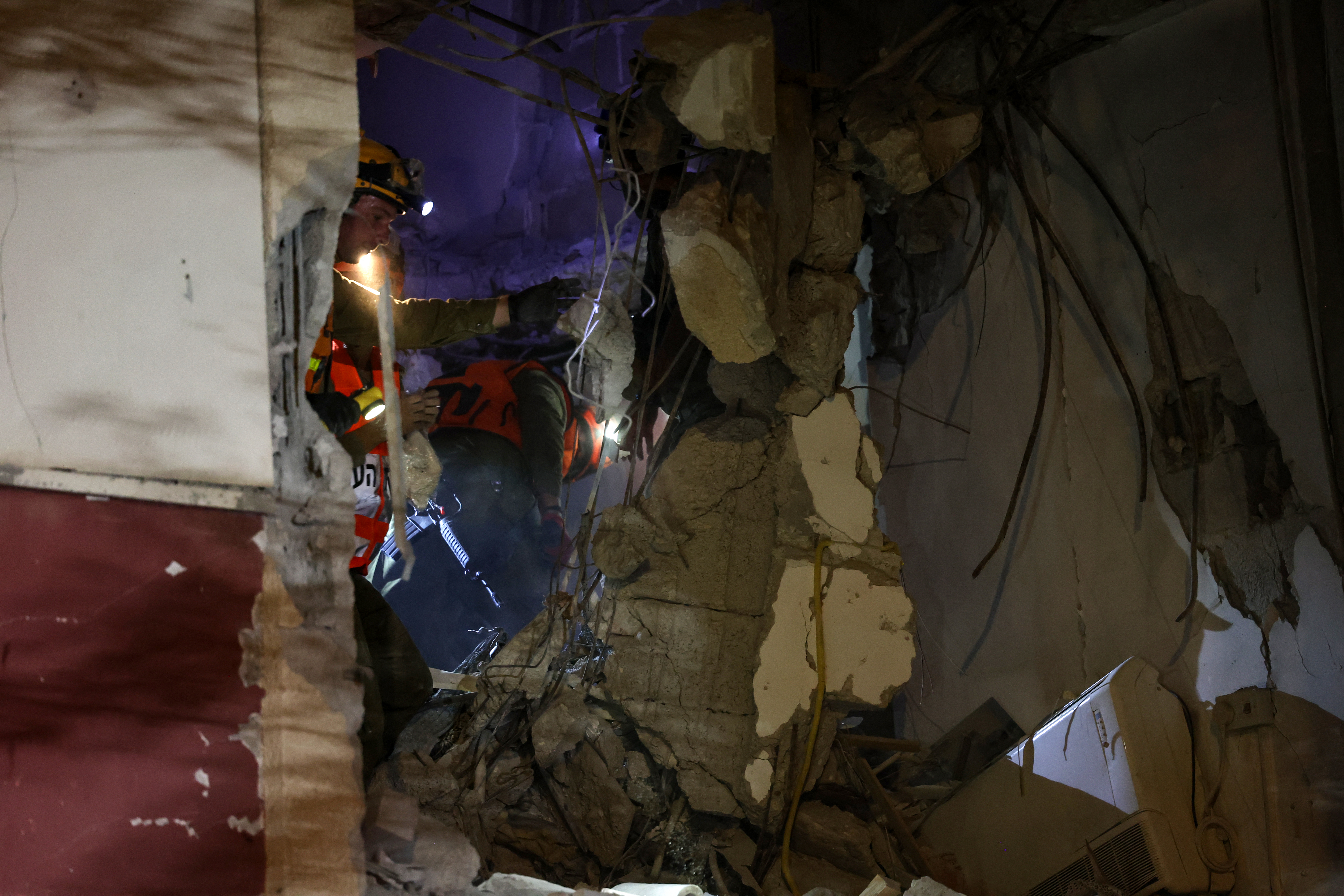
Rescuers check an apartment in a building hit by a rocket fired from the Gaza Strip, in the Israeli city of Rishon LeZion near Tel Aviv on October 25, 2023, amid ongoing battles between Israel and the Palestinian Hamas group. Photo by AHMAD GHARABLI / AFP
And as they were preparing to go live for news program 24Oras, the sounds of sirens blasted through the air.
“Para kang may malaking-malaking speaker sa langit na for some reason, rinig at ‘di ko alam kung saan galing ‘yung speaker na ‘yun. Para siyang system na may nag-a-announce sa langit na nagsasabing may airstrike,” Soriano said.
“Yung mga tao medyo parang nag-panic. Nagtatakbuhan na sila. Kanya-kanya sila para magtago kung saan sila pwede,” he added.
[There seemed to be these huge speakers in the sky and for some reason, I could hear it but didn't know where the speakers were. It's like a system that announces that there will be an airstrike... The people panicked. They started running. They went their own ways so they could take cover where they could.]
JP himself ran for the bomb shelter but it was too far. Instead, he and other media sought cover under staircases, in accordance with the safety rules given to them. But he was surprised when he turned around to see Kim setting up equipment to capture the scene.
“Sabi ko sa kanya, ‘Kuya Kim halika na… Let's go, let's go!’ I’m basically telling him, ‘Iwan mo na ‘yan halika na.’ Kasi more than anything else, ‘yung safety ‘yung pinakamahalaga,’” he said.
“Si Kuya Kim bumalik ulit. ‘Yun pala aayusin niya yung camera, making sure na nare-record niya at nafi-feed niya. Kasi naka-feed pala siya nang live sa Manila na kung sakaling may makuhanan na airstrike, makuhanan niya,” JP said.
[I told him, ‘Kuya Kim, let's go, let's go!' I'm basically telling him, 'Just leave that, let's go.' Because more than anything else, it's safety that's most important... Kuya Kim went back again. He was fixing the camera, making sure it was recording and sending the feed. He was sending a feed live to Manila in case he was able to capture the airstrike.]
Despite his own nerves, he too began shooting videos of the crowds and chaos.
“‘Yun ‘yung tense moment kasi it became real to us – nu’ng nakita namin talaga na tumatama pala. ‘Yung Iron Dome defense system is not perfect so puwede talaga siyang tumama, and we saw that happen.”
[That was the tense moment, because it became real to us. When we saw that it really does hit. The Iron Dome defense system is not perfect so it can really hit, and we saw that happen.]
Luckily, Kim got to safety, and after explosions that they felt would last for hours, people returned to upper ground.
The reality of a warzone
Kibbutz Be’eri, which was around 9 kilometers from Gaza, was one of the locations where the Hamas group first attacked.
Standing on the land where two Filipinos were killed made death a lot more tangible for JP and Kim. They felt an eerie silence envelop what had become a ghost town. Houses were crumbling into debris, and the walls reeked of blood. Soldiers patrolled the place continuously, still looking for members of Hamas.
“Pinagsuot kami ng bulletproof vest and helmet kasi hindi pa pala sure ‘yung Israeli Defense Force kung lahat ng Hamas ay nakuha na nila,” JP recalled. “Wala palang siren doon sa lugar. In-off ‘yun for security purposes, so magugulat ka na lang, may tumutunog na mga rocket.”
“Bukod sa nakakapanlumo ‘yung sitwayson, parang kinilabutan ako lalo kasi alam ko na doon pinatay ‘yung dalawang Pilipino sa Kibbutz Be’eri.”
[We were asked to wear bulletproof vests and helmets because the Israeli Defense Force was not sure if there were still Hamas fighters there. There was no siren in that place. They turned it off for security purposes, so you will just be surprised when there were sounds of rockets. Aside from the appalling situation, I was horrified because I knew that Kibbutz Be'eri was where two Filipinos were killed.]
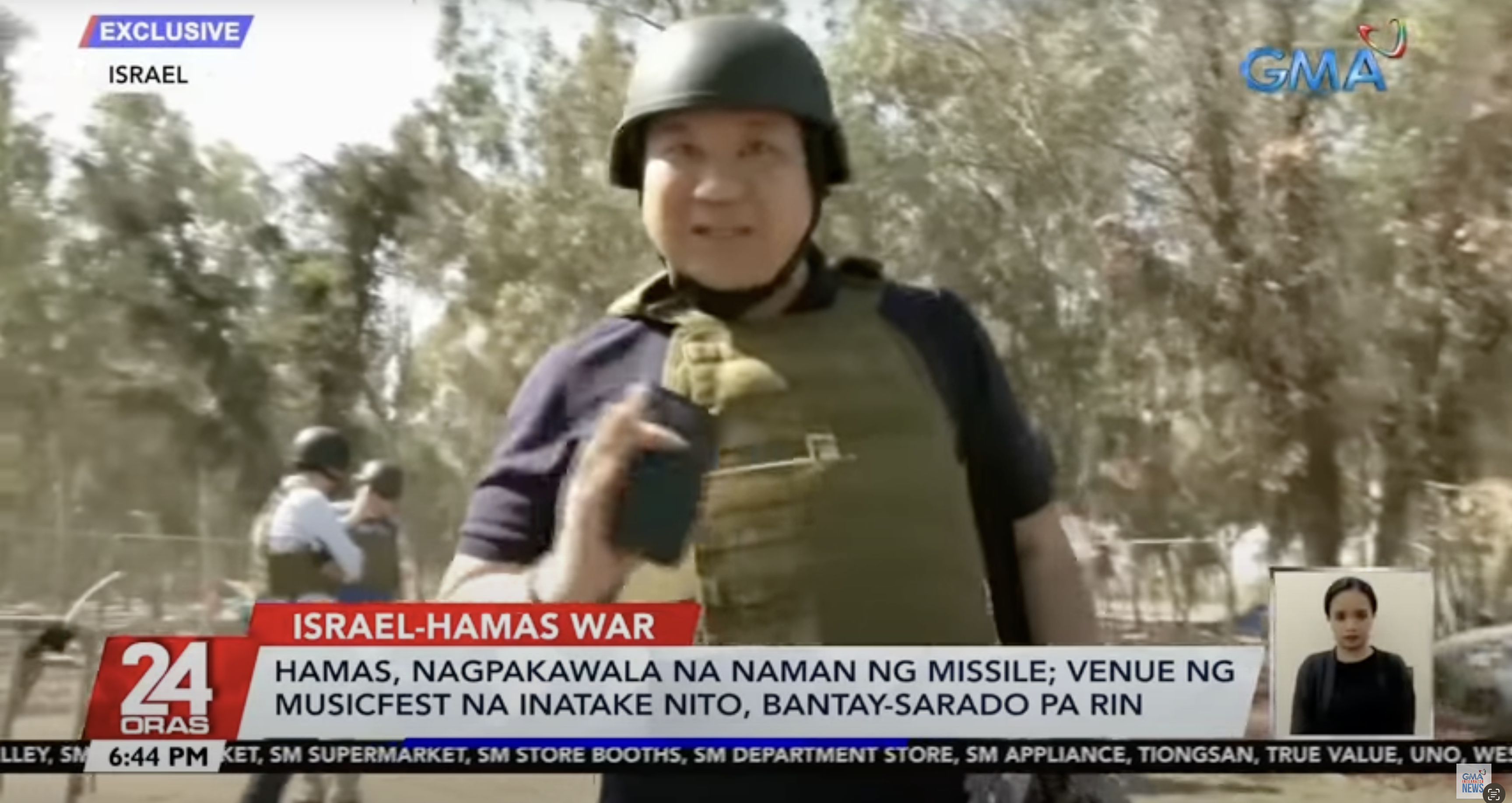
One of the Filipinos killed was Paul Vincent Castelvi, a Filipino caregiver from Pampanga who was a breadwinner to his family. Paul died when he was protecting his Israeli patient. His death left a devastated widow with an unborn child and two mourning parents in the Philippines. Upon roaming the warzone, JP learned that Paul lived in one of the crumpled houses he visited in Kibbutz Be’eri.
“Naaamoy ko pa ‘yung dugo na natuyo. Nandun pa nga ‘yung kutsilyo. It’s a crime scene. ‘Yung bahay na nakita namin na tadtad ng bala at may dugo, doon sila pinatay,” JP recalled.
[I could smell the dried-up blood. The knife was still there. It's a crime scene. The house that we saw was riddled with bullets and there was blood, that's where they were killed.]
In Tel-Aviv, a memorial Mass was held to mourn Paul’s death. More than the war-torn residential areas, perhaps this was the most difficult sight to see, especially through Kim’s lens.
“Nakita ko kasi ‘yung asawa niya na walang tigil na iyak nang iyak. Hindi niya alam kung ano ang gagawin niya sa sarili niya. Ang daming Pilipino pati mga Israeli na nagpapakalma sa kanya,” Kim recalled.
“Ang hirap nu’ng mga nangyari sa kanila. Lalo na nu’ng may nagkukwento na pati bata, sanggol talagang sinunog nang buhay at pinatay.”
“Nung umalis kami sa Israel, panay na ang pagpapalipad ng missile doon sa lugar. Kaya parang hindi mo na rin masasabi kung safe pa ba ‘yung mga Pilipino doon.”
[I saw his wife who could not stop crying. She did know what to do with herself. So many Filipinos and even Israelis tried to calm her down. What happened to them was so difficult. Especially when there were those who told stories about even children and infants were burned alive and killed. When we left Israel, the missiles were being launched often. So I can't say if the Filipinos are still safe.]
Escaping to Egypt
Filipinos in the region are torn – some choose to stay in the country to continue providing for their families in the Philippines while others have decided to prioritize their safety. For those who want to escape the strife, getting into Egypt was the only option.
Raffy Tima has been covering armed conflicts for over 20 years. But his experience was put to the test when he was thrust into Egypt to cover the Hamas-Israel war. However, unlike his previous coverages where he had a crew with him, he was alone in Egypt as a mobile journalist.
The plan, he thought, was simple: get to the border between Egypt and Gaza and report the situation. But when Raffy arrived in Cairo, things weren’t that simple after all.
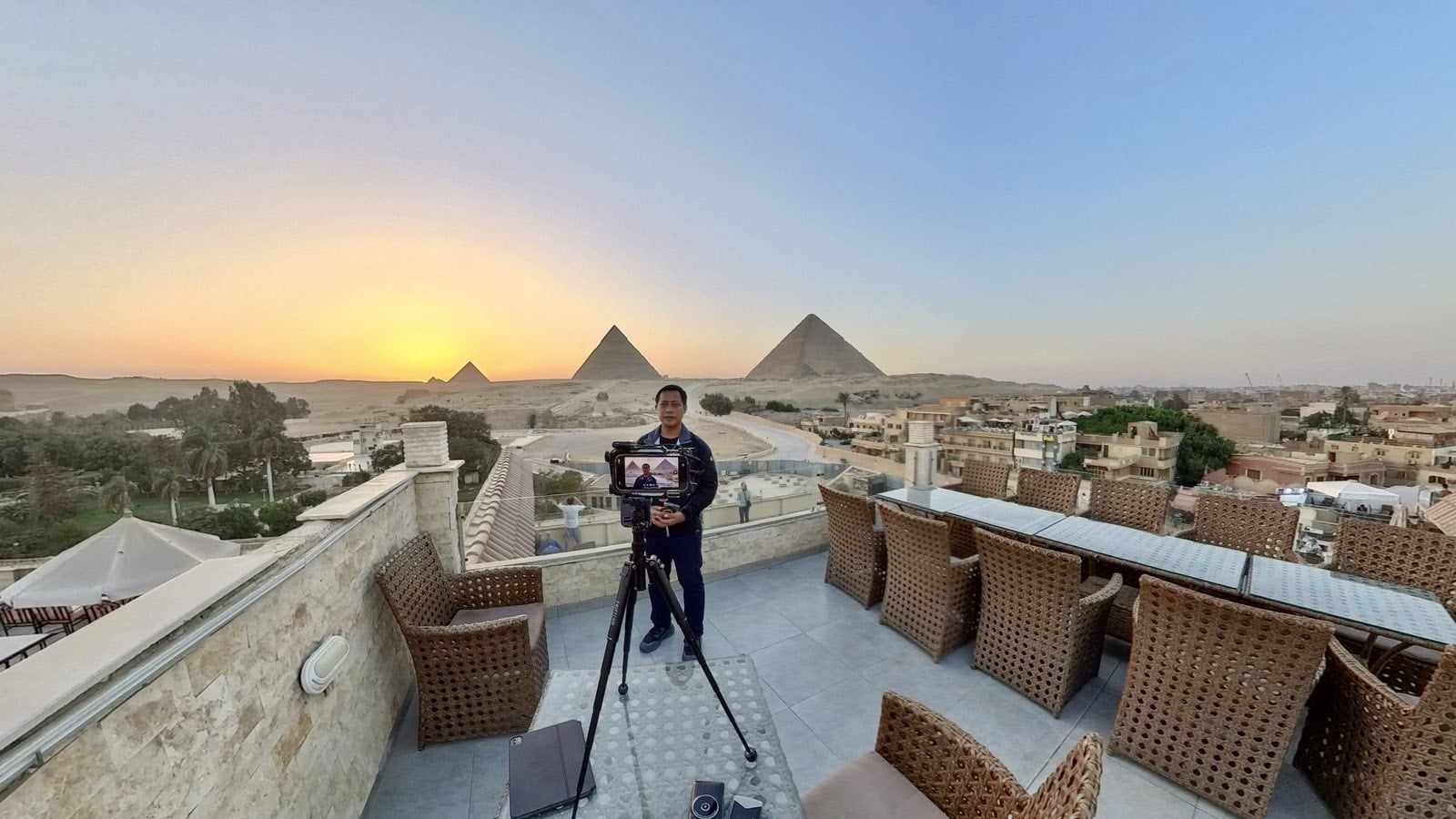
Raffy Tima's Giza live point. He had to pay for the use of the restaurant's roof top to use as a live point outside the watchful eyes of Egyptian authorities.
“Pagdating ko ng Cairo, nakausap ko ‘yung embassy officials. Sabi nila, ‘yung Sinai Peninsula ay mahirap pasukin. Kailangan, may special permit para makatawid ka ng Suez Canal. So doon pa lang, nakaka-disappoint na kasi hindi ako makakalapit sa mismong border.”
[When I arrived in Cairo, I spoke to embassy officials. They said the Sinai Peninsula would be difficult to enter. I need a special permit to cross the Suez Canal. So I was already disappointed there because I couldn't come close to the actual border.]
He also needed a permit to cover in Egypt, but getting one took at least a month. That meant he instead had to hide his coverage from local officials. Raffy was lucky enough to have a helpful driver who allowed him to use his 360-degree camera. Wherever Raffy went, he would just stick his camera out of their car and capture wide videos.
It went well at first. The videos were smooth, and they weren’t spotted by officials. Or so he thought.
“May isang beses na pinigilan kami. Nakalagpas na kami sa checkpoint pero hinabol kami ng police. Tumigil ‘yung driver ko at umalis siya. Pagbalik niya, sabi niya ginawan na lang niya ng paraan pero gusto na raw siyang posasan nu’ng pulis,” Raffy said.
[There were times we were stopped. We had already passed a checkpoint but the police chased us. My driver stopped and left. When he returned, he said he settled it but the police already wanted to put him in handcuffs.]
This wasn’t the last time that Egyptian officials approached them.
One time, he was at Tahrir Square, a place tourists would frequent. While taking videos, policemen checked in on Raffy and told him that taking videos was prohibited. He was also prohibited from taking videos in the hotel where he stayed. Later, he found out that the state security advised police officers that there was a journalist in the area, and they were told to be wary of him.
When Raffy met other journalists, they all had the same problem: they could not access Rafah and the Sinai Peninsula. Even when Egypt’s borders opened in early November, patrols and checkpoints were still enforced especially in Ismailia. Raffy was supposed to meet with people from the Philippine Embassy in the area to fetch a bus carrying around 20 Filipino refugees from war-torn Gaza, but communication proved to be challenging.
“Puro last minute lang ‘yung coordination pero ang swerte pa rin kasi nga at the time, talagang ang dami ng bus na dumadaan. Hanggang sa dumating nga ‘yung bus na may nakalagay doon na Philippine flag. Tumigil ‘yung bus doon sa harap namin, so nakasakay ako.”
[All of the coordination was last minute, but I'm still lucky because there were so many buses passing by at the time. Then I saw the bus with the Philippine flag. It stopped in front of us, and I was able to get on.]
Raffy anxiously waited for a month in Cairo to meet the Filipino refugees from Gaza, so he felt instant relief as he hopped onto the bus. Then, his eyes met those of the survivors.
A bus full of survivors usually meant there were plenty of stories to tell. But after getting on that bus, Raffy immediately felt the weight of the trauma the Filipino survivors experienced.
“Doon pa lang, makikita mo na medyo ilag sila nang kaunti at pagod sila. Ngayon lang sila hindi nakakarinig ng pagsabog. So ang daming tumatakbo sa utak ko na, ‘Papaano ko ba sila ia-approach?’”
[They were avoiding a little bit and they were tired. This was the first time they weren't hearing explosions. So there was a lot running through my head, 'How do I approach them?']
It took one OFW to break the ice when he recognized who Raffy Tima was. The OFW often watched GMA Integrated News, and this eventually led to Raffy slowly interviewing the Pinoy refugees.
Every story recounted was filled with worry, anxiety, and fear. Filipinos married to Palestinians were traumatized by the war, and getting to safety was pure joy until the realization set – their families were not yet safe, and they could not do anything for them.
“Halos lahat ng kamag-anak nila naiwan nila sa Gaza at para doon sa may mga asawang Palestinian at that time, lalo na ‘yung first bus, hindi nakasama ‘yung kanilang spouses. Ligtas na sila pero nandoon ‘yung takot nila para sa mga kamag-anak nila na nand’un pa rin. Parang gusto nilang magsaya pero pigil kasi nga hindi buo ‘yung kanilang pamilya,” Raffy recollected.
[Most of their relatives were still in Gaza and for those married to Palestinians at that time, especially on the first bus, they weren't with their spouses. They themselves were safe but there was fear for their relatives who were still there. They wanted to be happy but it was restrained because their families were not whole.]
Throughout his coverage, Raffy was in touch with Nadia, a Filipino whom he contacted via Zoom to get details on the events in Gaza. Nadia and her husband Mahmoud were among those who safely reached Egypt.
“Talagang makikita mo yung relief sa mukha. Nu’ng nakita nila ako, parang nag-lighten ‘yung mood nila na may familiar face, may familiar voice silang naririnig na kausap nila for the past several weeks.”
[You could see the relief in their faces. When they saw me, their mood lightened because of a familiar face and familiar voice that they've been hearing and speaking to for the past several weeks.]
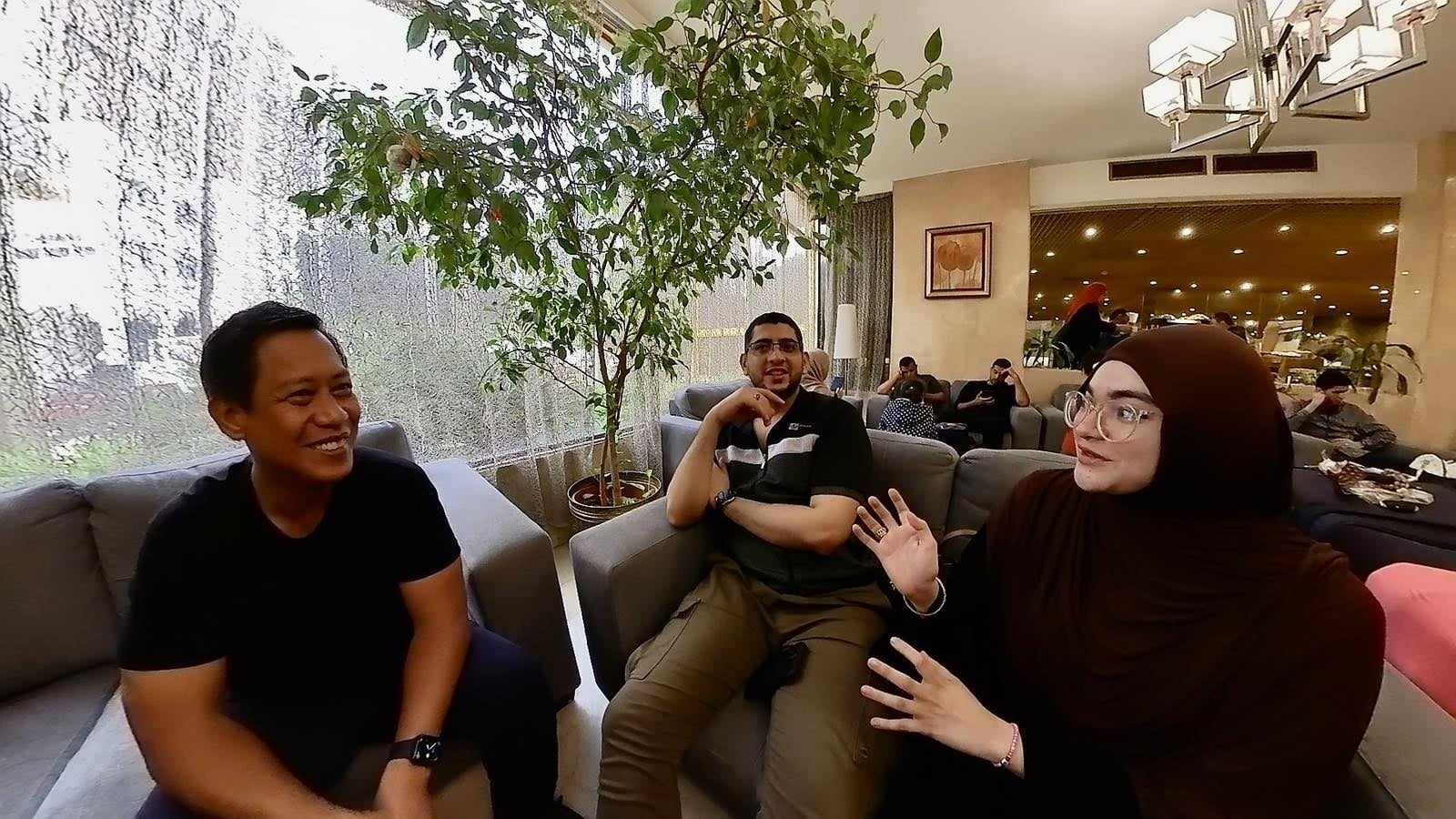
Nadia and Mahmoud upon their arrival in Cairo after weeks of trying to get out of Gaza. Relieved and happy they are safe, both said they can't fully rejoice because they left their family in Gaza not knowing what will happen to them.
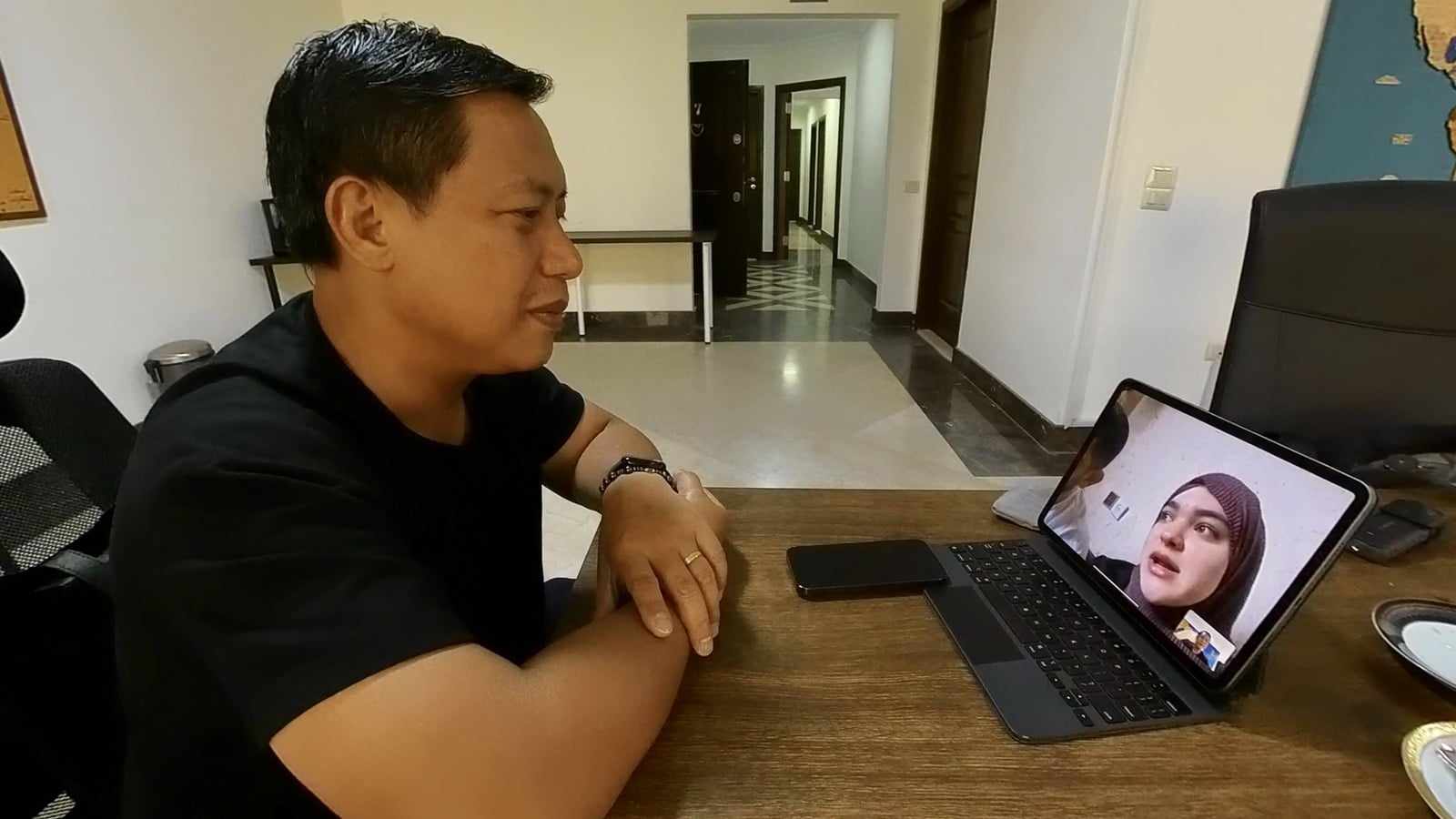
One of several online interviews with Nadia and her husband Mahmoud
while they were inside Gaza.
One particular person, though, tugged at Raffy’s core – a child he met while interviewing Filipinos. In one of his interviews, Raffy noticed Sara, a six-year-old girl who was eating a piece of chicken. It was her favorite food, which she hasn’t tasted since the war started. Sara would eat peacefully and would butt in from time to time during conversations. She was an outspoken child, Raffy noticed.
When Sara’s family arrived at the hotel where they would stay, Sara pulled out one of the biscuits she got after they crossed the Gaza border. She handed this to Raffy for him to eat. Raffy declined, thinking that the child needed the food more.
“No, you can have it,” Sara had insisted.
“Why?” Raffy asked, as he recounted the story in Filipino.
“It’s okay. You’re like a brother to me now,” Sara replied.
It was at this moment that Raffy saw how love, innocence, and joy can remain alive in the hearts of people despite the war.
“Kahit na siguro may trauma siya na pinagdaraanan, nand’un pa rin ‘yung saya niya bilang bata. ‘Yun ‘yung nakakatuwa – na may ganun pa rin na hindi nasira ng giyera ‘yung kanyang inosenteng pagiging musmos.”
[Even if she was going through trauma, there was still her joy as a child. That is what makes you happy, that the war was not able to take away the innocence of a child.]
Coming home to the Philippines
From then on, it was a matter of getting home to the Philippines.
The Department of Foreign Affairs on November 24 reported that 111 Filipinos from Gaza had already left the war-torn area. Meanwhile, the Department of Migrant Workers reported on November 23 that 313 Filipinos from Israel have gone home to their families in the Philippines, 299 of whom are OFWs.
For the three journalists, the initial task was simple: report the events that would unfold.
But it became more than that. They met the Filipinos who experienced the war. They listened to their stories, and told the world about their suffering. Ultimately, they also accompanied them on their journeys back home to their families in the Philippines.
Since arriving back here, JP has gotten back to his family, including his dog, who had met him with its tail wagging and all. But even after returning from his assignment, the sounds of alarms or simple ringing would jolt JP from his sleep and his mind would prompt him to look for a bomb shelter. The remnants of his experience clung to him, and only time will tell when he’d be free of them.
War journalist Raffy, whose journalist-wife was overseas on his return, made work his priority on his arrival. When asked his thoughts about coming home from war, his mind was still occupied with writing his scripts, checking his video material, and finishing his backlogs.
Kim was met at the airport by his assistant cameraman. It wasn’t necessarily to welcome him back, though. It was to help him load his equipment into a van to head straight back to the office.
After all, for the journalists who were sent to cover the war, this was still just another work day.
But for the Filipinos who endured the gunshots and bombings, coming home meant they could live in a house that stood upright and share meals with their families. It meant they could roam the streets without looking for bomb shelters while sirens blasted in the air. It meant they could sleep at night without worrying for their lives.
For our fellow Filipinos who experienced the Israel-Hamas war, coming home meant the world.

