
We use cookies to ensure you get the best browsing experience. By continued use, you agree to our privacy policy and accept our use of such cookies. For further information, click FIND OUT MORE.
Photography, graphics, and design for web by Jessica Bartolome
GMA News
May 29, 2026
Ube is among the most in-demand food trends of the year, taking over cafes and bakeries around the world and painting our social media feeds the vibrant color of purple for days on end.
But long before ube became a global phenomenon, the humble root crop has been enjoyed for generations in the Philippines, so much so that ube is deeply ingrained in Filipino culture.
Beyond its purple color lies a rich history and identity that generations of Filipinos have proudly called their own.
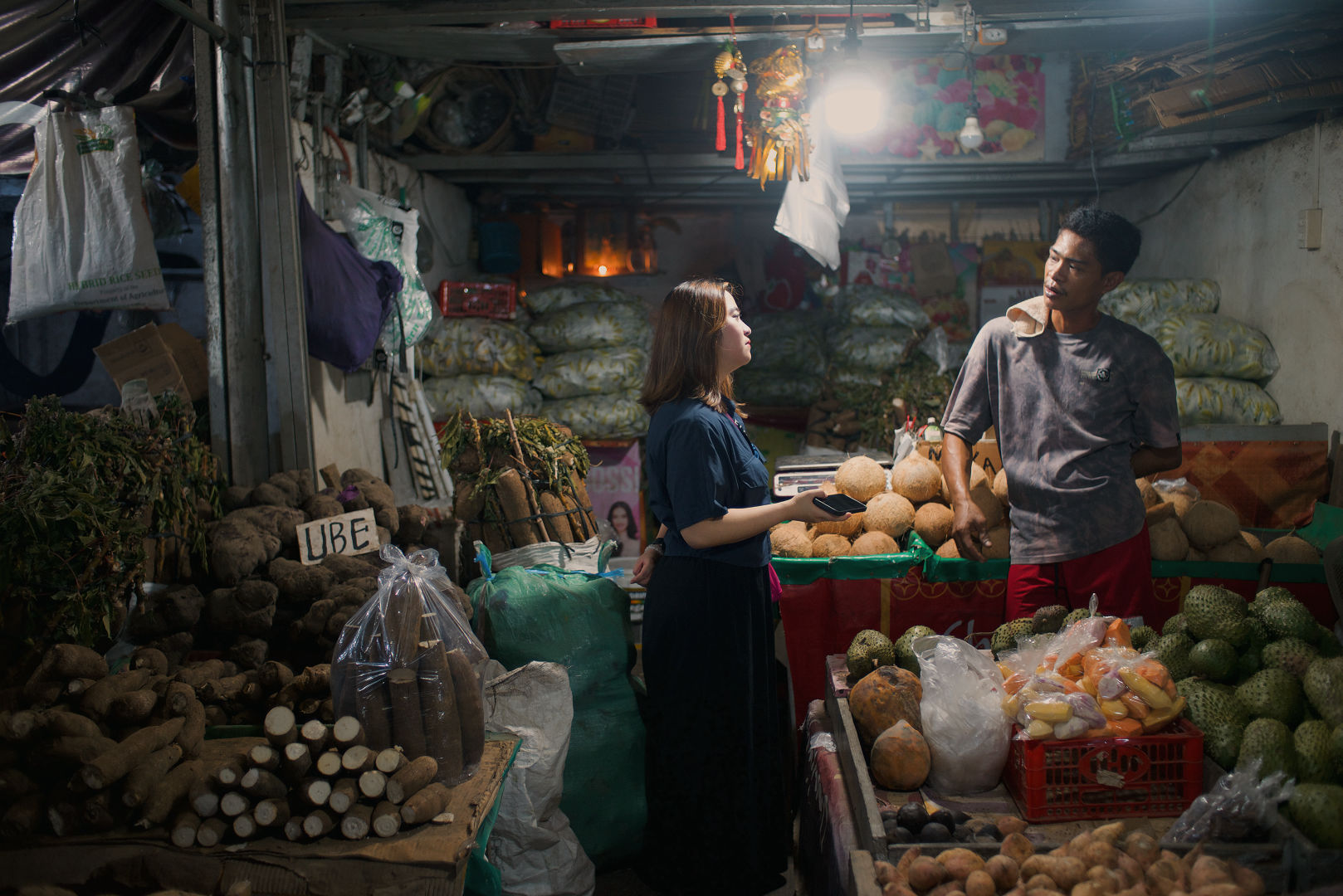
The author with Pipoy, an ube vendor at the Balintawak Market.
In March, Starbucks in the United States released an Iced Ube Coconut Macchiato. Inspired by the rich purple yam, the drink quickly made the rounds on social media, especially on TikTok, after a user shared her experience trying it and mispronouncing ube as “Oob.”
Since then, small- and large-scale food and beverage establishments in the US have joined the purple craze, offering different takes on the native Filipino flavor.
Jecca Santos, a 31-year-old Filipina based in Northern Virginia, said that aside from Starbucks, several bakeries and milk tea shops in her current hometown have started offering ube-inspired treats, like donuts, pastries, and even bubble milk tea.
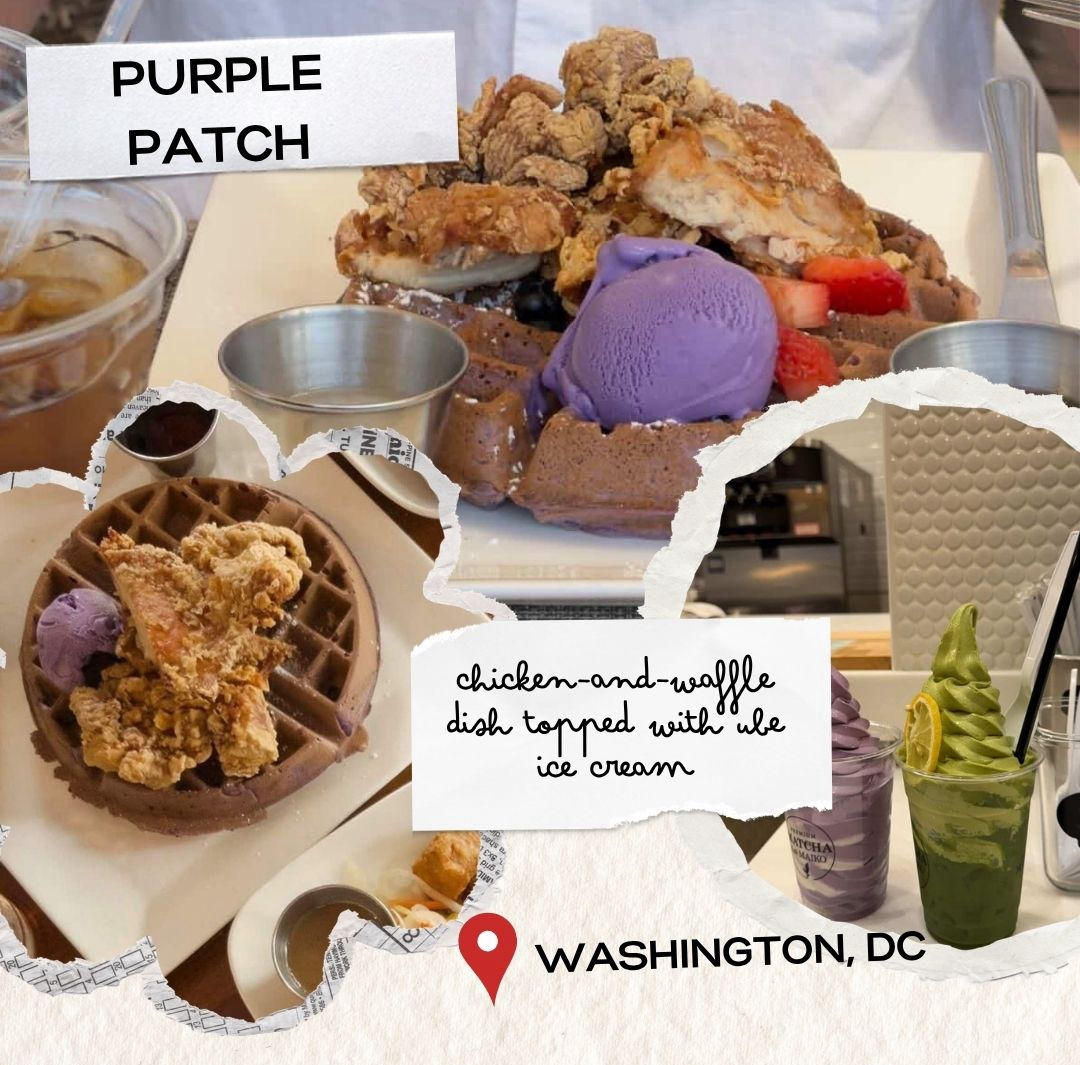
Photos courtesy of Jecca Santos
But remembering the ube she grew up with in the Philippines, Jecca says, "the ube drinks from milk tea shops were a bit different. They tend to be sweeter, not as strong or authentic.”
“Back home, ube has this deeper, richer, slightly nutty flavor,” she said.
She points to the Purple Patch, a Filipino-American fusion restaurant in Washington, serving a chicken-and-waffle dish topped with ube ice cream. According to Jecca, it's one meal that many non-Filipinos seem to enjoy.
“Every time I go there, I notice a lot of non-Filipinos ordering it and really enjoying it,” she said, adding that the restaurant is almost always full and that most customers are foreigners.
“Seeing that honestly makes me feel proud,” she expressed. “It’s nice seeing ube and Filipino flavors getting that kind of love.”
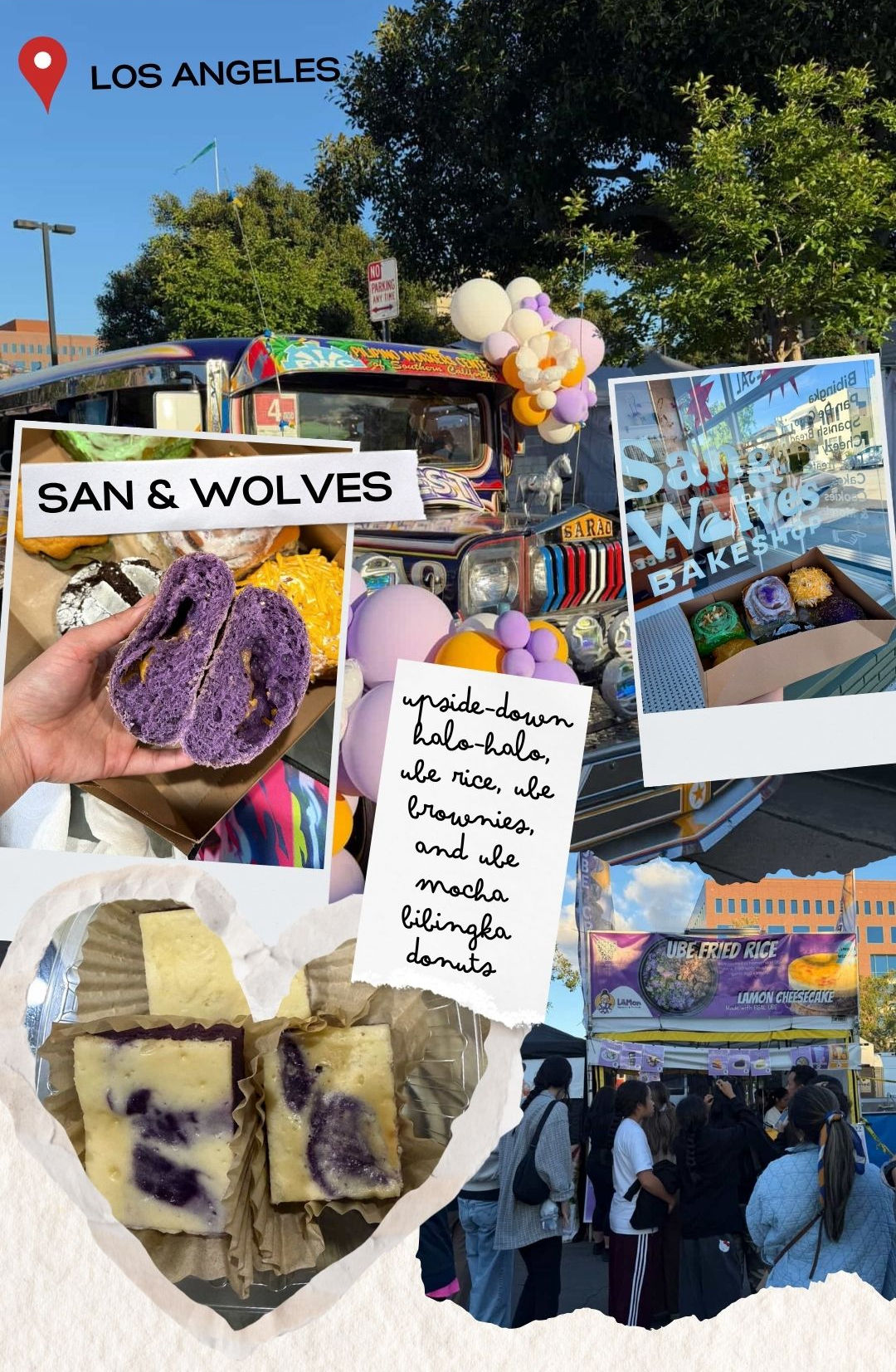
Photos courtesy of Arianne Evangelista-Pareja
In the West Coast meanwhile, 27-year-old Arianne Evangelista-Pareja said ube-flavored food and drinks have become more accessible in Los Angeles, California, where she currently resides.
One of her fondest ube memories in LA was trying the upside-down halo-halo served at Café 86, as she was craving the Filipino dessert.
“It is basically their take on halo-halo, where they put the ube into the icy milk instead of on top, hence the name upside down,” she said.
“There was also a touch of foreign influence because it included tapioca pearls instead of the regular sago and gulaman we use back home,” she added.
Her visit to Café 86 made her realize how popular ube has become in the US, especially among millennials and Gen Z consumers who are not necessarily Filipino.
In fact, in April, Arianne attended an ube festival where vendors gathered to sell a variety of ube-inspired dishes, including ube rice, ube brownies topped with cheesecake, and ube mocha bibingka donuts to cater to the trend.
“It is honestly flattering how it has become popular, and I realized how Philippine root crops have so much potential globally,” she said.
It's not just the United States.
In South Korea, specialty dessert shops like Name is Mavin, Cafe Knotted, and Rogelato have created their own takes on ube cakes, pastries, and gelato.
Europe has also caught up with the ube trend, with Panadera Bakery in Central London selling ube doughnuts, Sweden's Pilyo Café offering a variety of Filipino ube desserts such as sapin-sapin, puto, and biko, and Kape Paris in France serving ube affogato, lattes, and cookies.
In the Philippines, ube needs no introduction. It’s mostly used in ube halaya, bilo-bilo, and halo-halo, and is also a regular flavor option for cakes, pastries, and other desserts.
One cannot mention ube in the Philippines without thinking of Good Shepherd in Baguio, a go-to destination for its ube jam and other specialties like strawberry jam and peanut brittle.
Chef Miguel Cabel Moreno of Michelin-recognized restaurants Palm Grill and Cabel admitted he first started incorporating ube into his kitchen after tasting the iconic ube jam from Good Shepherd.
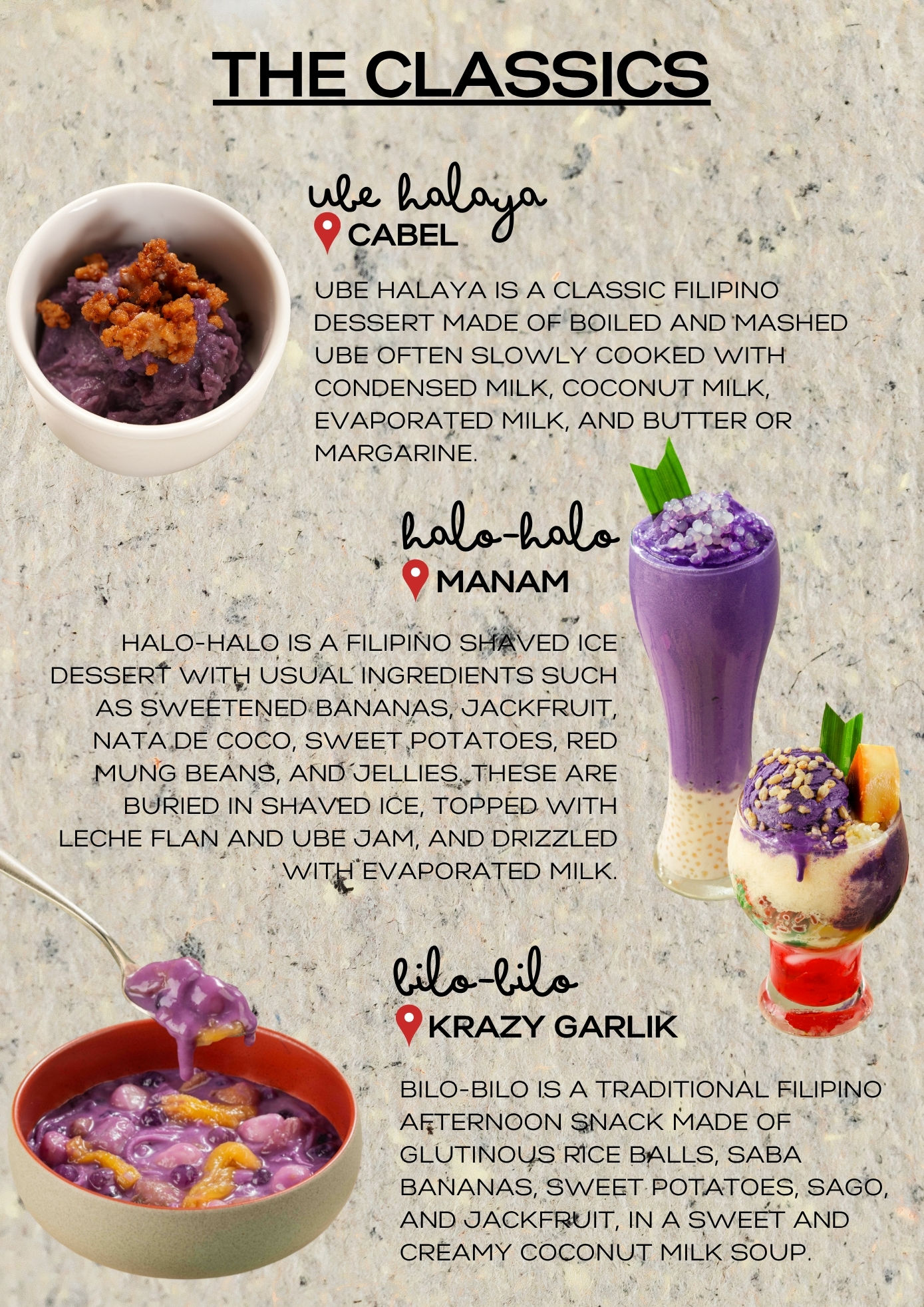
Describing himself as somewhat a purist in the kitchen, Moreno prefers simple preparations such as ube jam or ube halaya on their own.
At Cabel, a restaurant that prides itself on heritage Filipino cuisine, he serves ube halaya sourced directly from farmers.
“We are in the business of promoting Filipino heritage cuisine, and that means our work needs to transcend beyond our tables,” he said.
“Supporting local produce and buying from local farmers is one step to making sure that we walk the talk,” Moreno said.
Meanwhile, Abba Napa, co-founder of Michelin Bib Gourmand restaurant Manam, considers ube among the Filipino ingredients at the forefront of the restaurant’s identity.
“When we created Manam in 2013, there was a concerted effort to put forth our country’s ingredients in a meaningful manner. Ube was an important part of that effort," Napa said.
At Manam, several menu items feature ube, including ube sago, bibingkang ube, and halo-halo, primarily sourcing its ube from Pangasinan, Quezon, and Laguna.
But Napa said, “While origin is important, our focus is really on quality. Better-quality ube allows one to eliminate the need for additives like dyes or extracts, and instead highlight its natural character.”
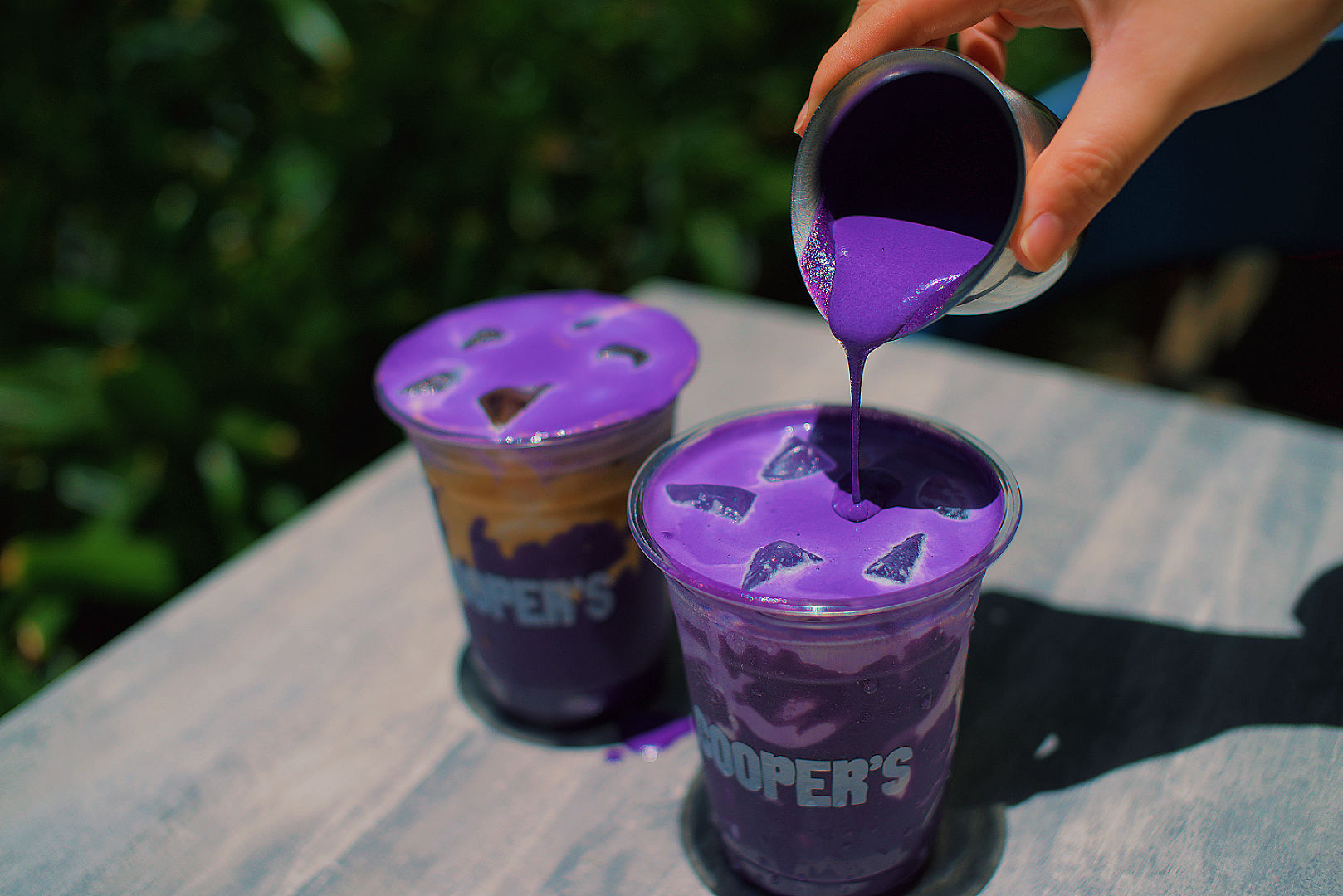
On the other hand, homegrown café Coopers Coffee Haus has been offering an Ube Latte and Dirty Ube Latte on its official menu since 2023.
“As a local cafe, we wanted to offer something familiar to Filipino customers yet enticing to international visitors,” Cooper’s chief beverage director Raoul said.
When the ube trend skyrocketed earlier in 2026, Cooper’s became one of the Metro Manila cafés that people flocked to in order to experience what the buzz was all about.
Cooper’s Ube Latte combines ube halaya and milk, topped with rich and velvety ube mousse, allowing the authentic flavor profile of ube to shine. Dirty Ube Latte, on the other hand, has the same components plus a shot of espresso.
“Beyond taste and presentation, we were also intentional with how it performs in the cup upon assembly,” the chief beverage director said, explaining, “ube needed to be dense enough to be scooped and mixed seamlessly, yet stable enough to hold its form for the cup walling."
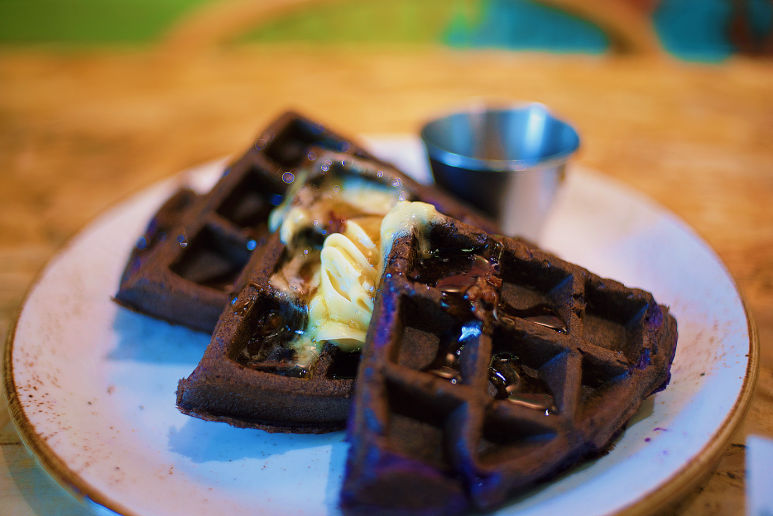
Chicken & Waffles: Buttermilk fried chicken and ube waffles served with bacon-infused maple syrup and salted egg sauce on the side.
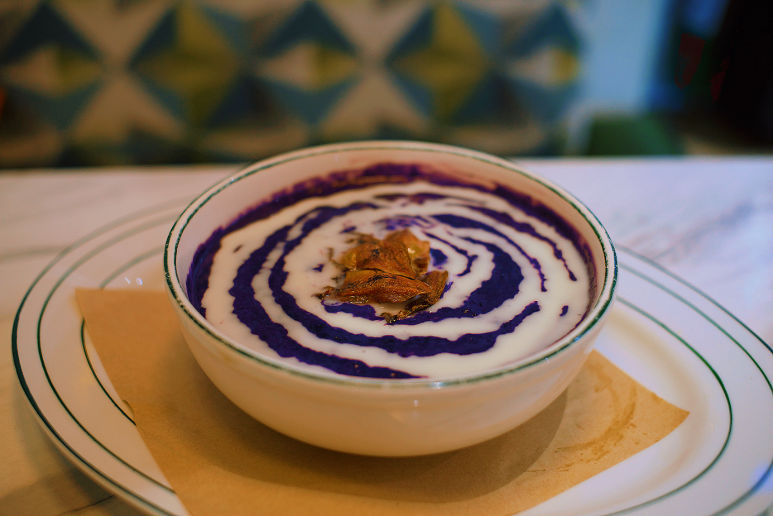
Ube champorado: A twist on the classic cacao champorado, ube champorado is made of glutinous rice made with ube and white chocolate, topped with evaporated milk and danggit dried fish.
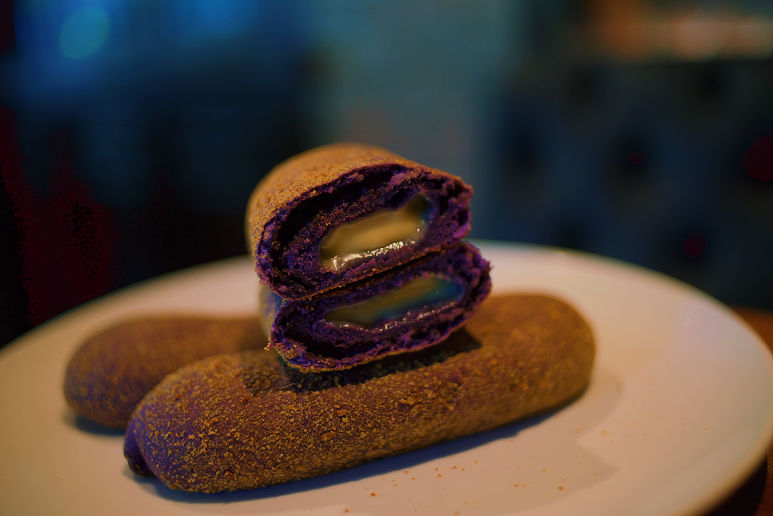
Ube pandesal: A classic pandesal filled with ube and melted cheese.
Before ube became a sought-after star ingredient behind viral purple drinks and desserts, it was first and foremost a humble root crop.
Scientifically known as Dioscorea alata, ube is widely cultivated across different parts of the Philippines, including Bohol — known as the country’s “Ube Capital” — as well as Benguet, Batangas, and Quezon, among others.
While the Philippines is strongly associated with ube on the global stage, it is not exclusive to the country.
According to Darel Kenth Solde Antesco, a licensed agriculturist and University Researcher I at the University of the Philippines Los Baños, ube has long been cultivated across exists in “parallel cultivation” across Southeast Asian countries and parts of Melanesia, reflecting the crop species' broader “center of origin” and “center of diversity.”
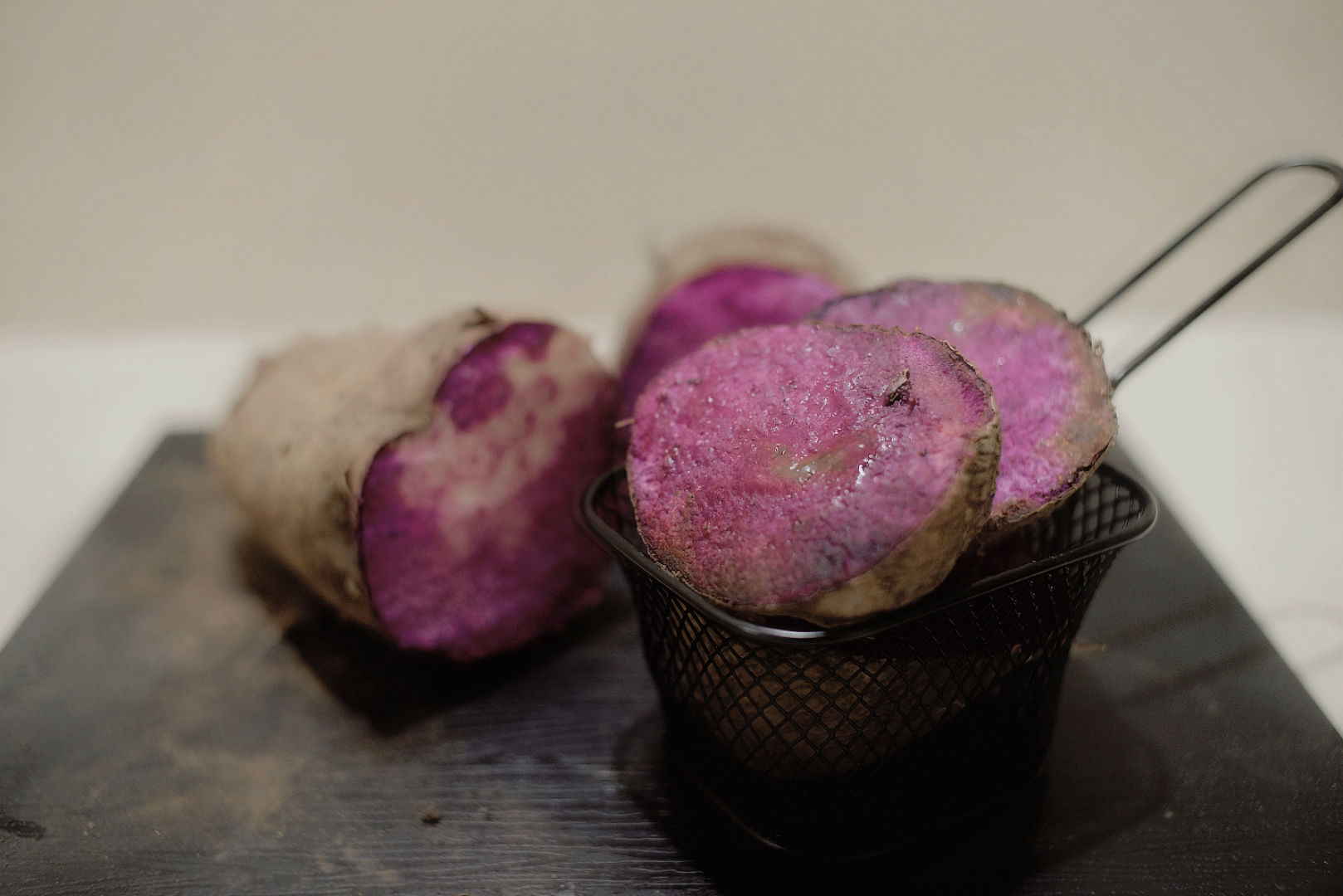
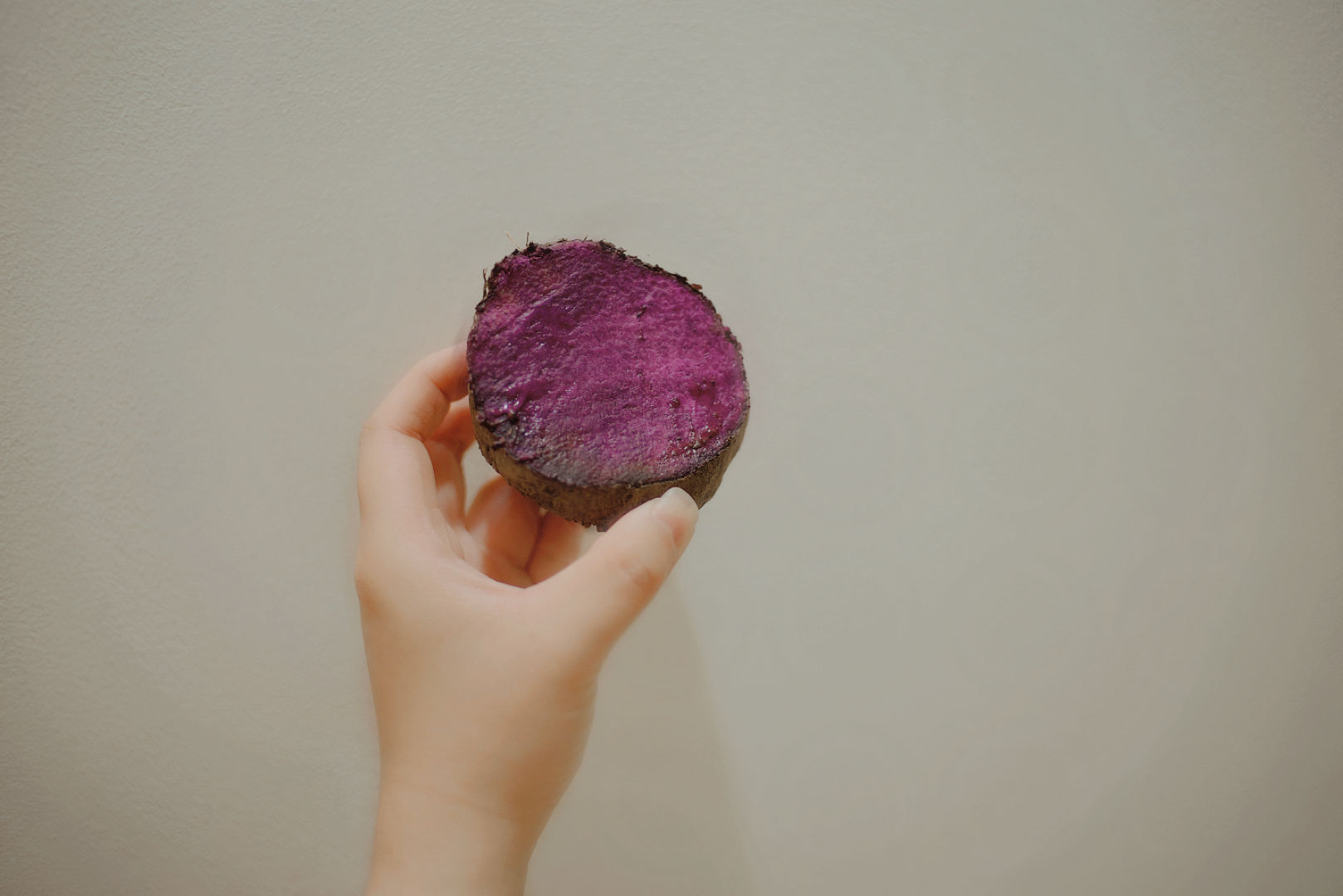
Ube is best known for its vibrant purple color, though its hues can vary across different cultivars.
Shot on location at Seda Vertis North.
However, he noted that the Philippines is widely recognized as an important center of diversity for ube with wide locally adapted varieties and landraces that have become closely associated with Filipino cuisines and food traditions.
But the Philippines has distinct cultivars, or plant varieties, like Ubi Kinampay of Bohol and Leyte Ubi, which it can proudly claim as uniquely Filipino.
“While ube itself as a crop need not be claimed in its entirety, the Philippines can rightfully promote its own unique and distinct cultivars like Ubi Kinampay of Bohol and Leyte Ubi, as superior and culturally significant products,” Antesco said.
Contrary to popular belief, ube is also not exclusively purple.
Antesco explained that ube’s flesh cortex color is influenced by several factors, including genetics, soil health, and nutrient composition. He further explained that ube gets its color from anthocyanin, a natural pigment also found in other fruits and vegetables.
Per the agriculturist, the intensity of ube’s color depends on “the cultivar genetics, growing conditions, well-drained soil moisture, sufficient potassium availability, and levels of abiotic stress.”
As a researcher who previously worked on the collection and conservation of root crops in the Philippines, including ube, Antesco strongly believes the misconception that ube only comes in purple should be corrected to encourage wider appreciation and utilization of the crop, potentially leading to broader commercial use and continued cultivation in the future.
To showcase the diversity and the many colors of ube, Antesco shared examples of cultivars from different parts of the Philippines and their ideal applications.
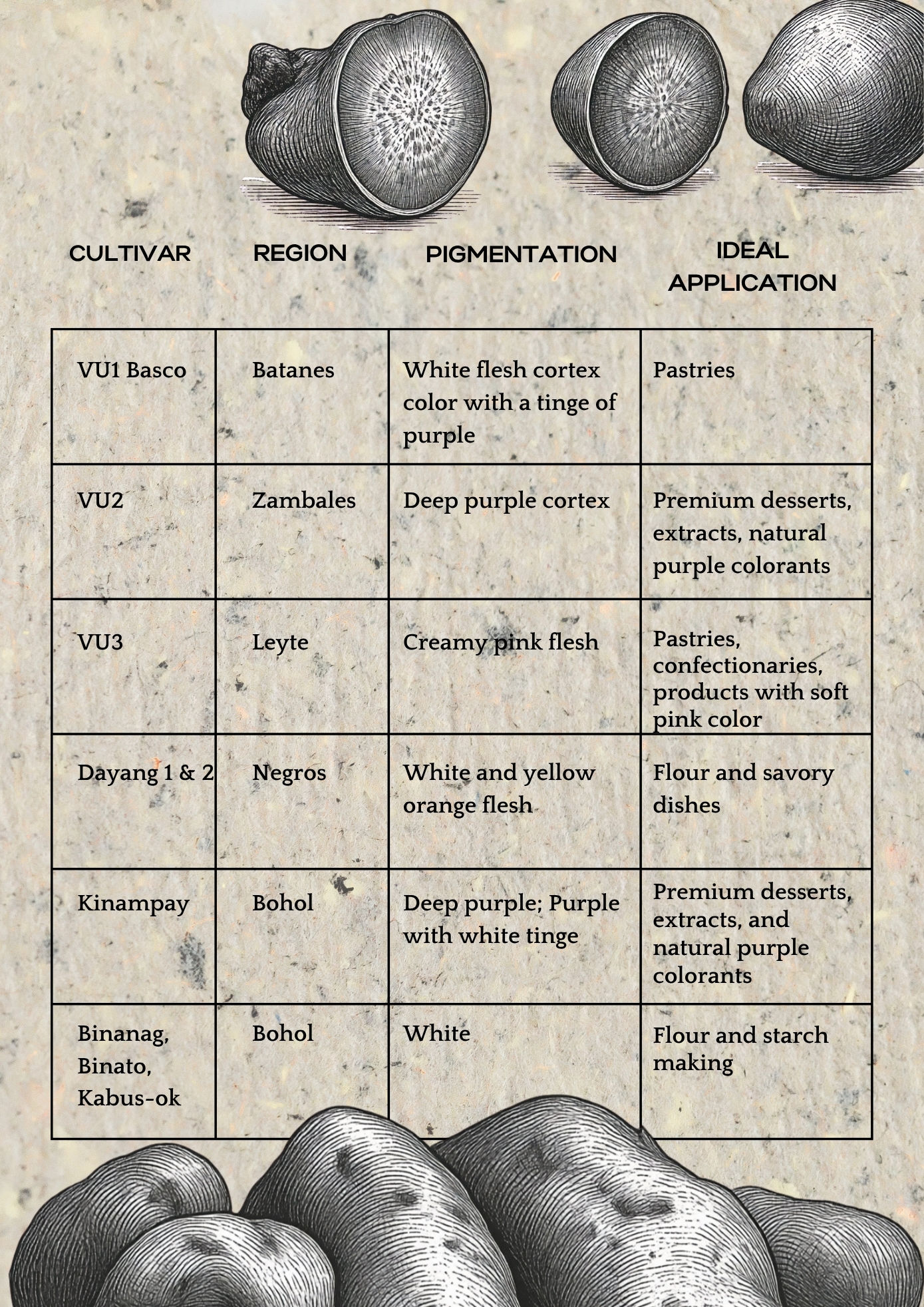
For context, the “VU” designation refers to the institutional code of the developer, Visayas State University, formerly known as the Visayas State College of Agriculture.
Meanwhile, “Dayang 1,” “Dayang 2,” “Binanag,” “Binato,” and “Kabus-ok” are considered traditional cultivated varietal names.
“Improved varieties developed by institutions are usually more consistent and standardized, whereas traditional local varieties continue to evolve through farmer selection, and shaped by local environmental conditions and cultivation practices,” he said.
In 2025, the Philippines recorded $3.06 million worth of ube and ube-based exports, according to the Department of Trade and Industry.
Among ube’s key markets are the Middle East, the United States, the United Kingdom, and Italy, while countries like Japan, China, and the United States emerged as leading markets for ube-driven innovations.
But according to data sent by the DTI to GMA News Online in April, the Philippines is currently experiencing a tight supply of ube amid rising global demand. It's “not an absolute shortage.”
“Latest data shows a slight decline in production of about 1.63% from 2024 to 2025, while demand continued to surge both in domestic and global markets,” DTI Secretary Cristina Roque said.
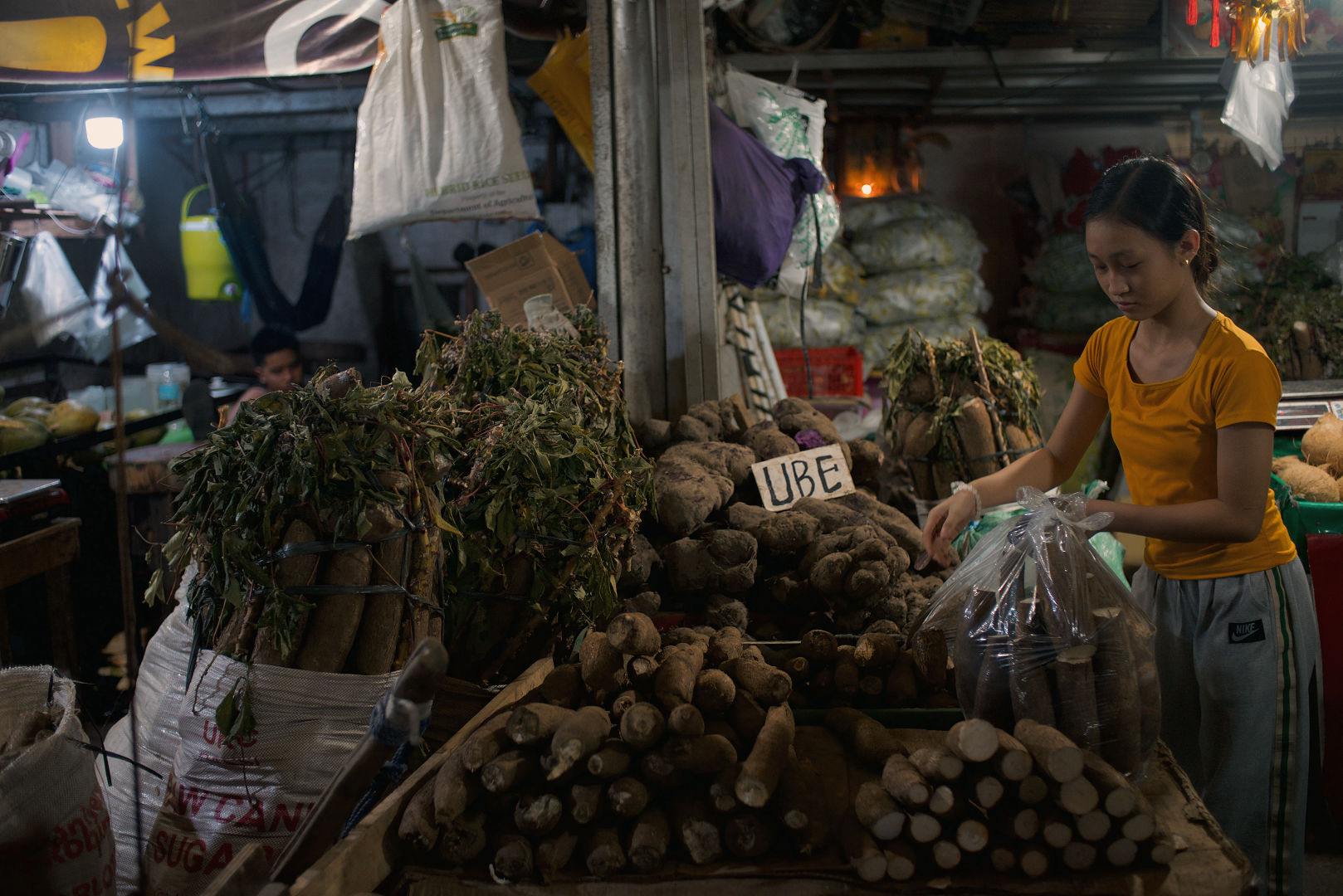
As of May 2026, fresh ube deliveries to the Balintawak Market arrive only once a week.
According to Roque, the gap is not necessarily due to a lack of supply, but largely because of ube’s agricultural cycle, which takes around 10 to 11 months to complete.
“Despite these constraints, high prices and strong demand are already encouraging farmers to grow more,” she said, assuring the current slowdown in supply “is expected to ease over time.”
The DTI also said it is working closely with the Department of Agriculture “to strengthen the entire supply chain,” while ensuring that “export growth does not come at the expense of local consumers.”
“The DA provides upstream support like distributing planting materials, farmer training, and better propagation technologies, while the DTI focuses on downstream efforts, linking farmers and processors with manufacturers, exporters, and buyers,” Roque said.
She adds, DTI’s goal is not simply to export raw ube but to further expand the industry through processed and premium products like ube powder, puree, jam, and flavor extract.
In this way, ube is positioned not just as a commodity, but “as a premium, innovation-driven export that showcases Filipino creativity and heritage.”
“DTI is also promoting the export of finished food products featuring ube, like snacks, pastries, biscuits, and desserts, which generate higher returns,” Roque added.
“By growing the overall supply base and focusing on value addition, we ensure that export opportunities complement, rather than compete with, local availability and affordability,” she added.
Looking ahead, the DTI believes ube has strong potential to become a strategic high-value product for the Philippines. The department projects the market could grow to nearly $943 million by 2035.
“The Philippines is well-positioned to lead this trend, given our strong production base and cultural ownership of ube,” DTI asserted.
“Its unique flavor, vibrant color, and health benefits are winning over international consumers, especially as plant-based and clean-label products gain traction,” Roque added.
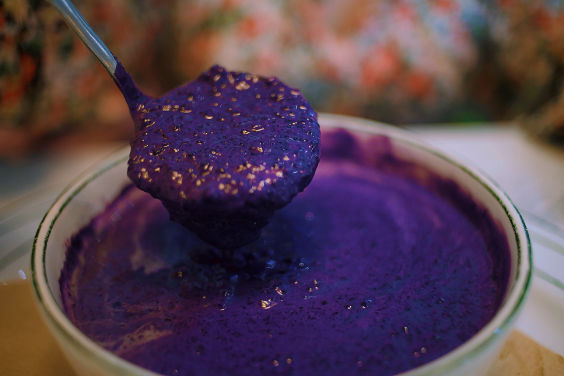
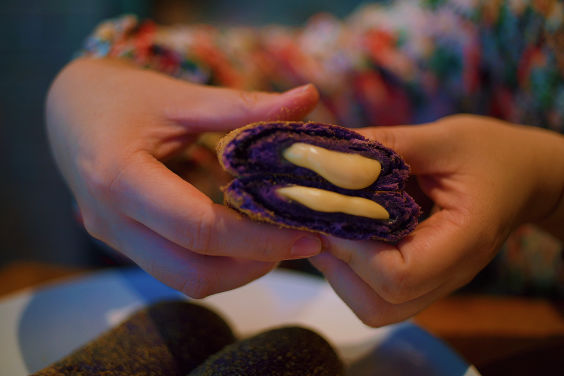
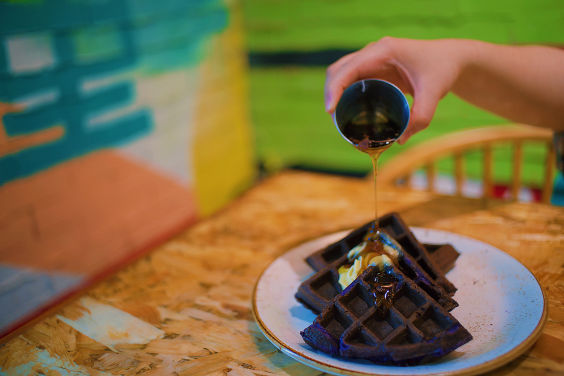
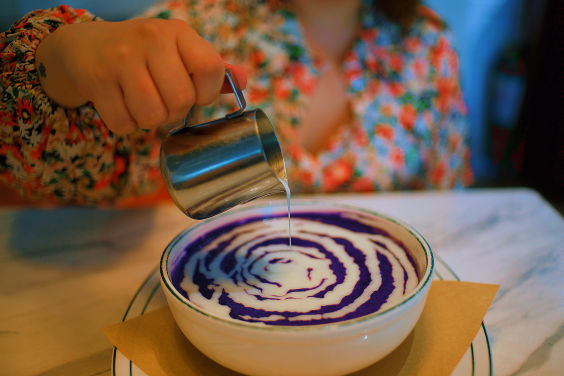
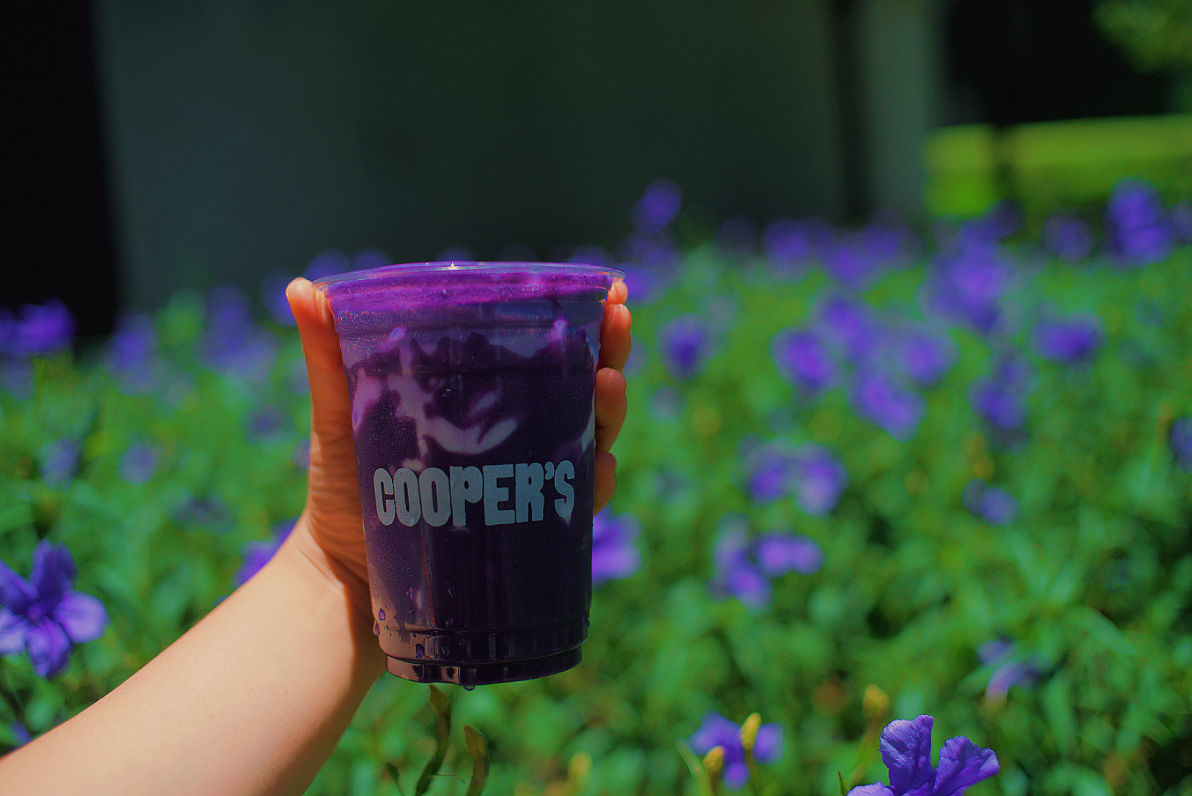
In Bonifacio Global City, restaurants continue to reinvent ube through creative food and beverage offerings.
As ube continues to paint the world purple, Filipino ube vendors are struggling to keep up with supply, in turn driving prices up.
Vendors point to several factors: severe weather conditions damaging crops and soaring fuel costs linked to tensions in the Middle East, making transportation more expensive.
Demand for ube grows every summer, driven by the popularity of iced desserts like halo-halo, but the crop remains out of season in May.
According to the Department of Agriculture, ube is typically harvested from late November to February of the following year.
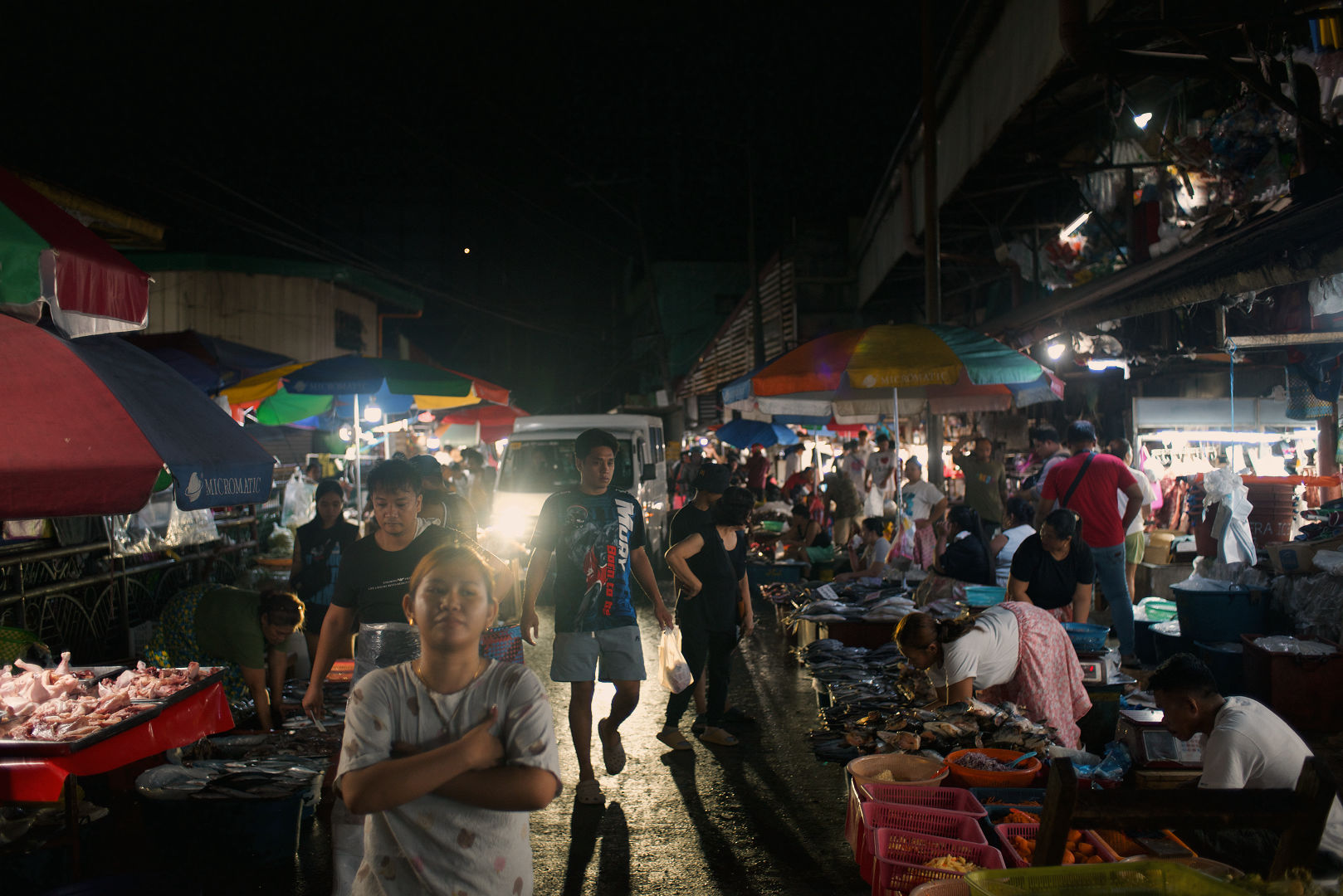
Even before sunrise, the Balintawak Market is already bustling with customers and fresh produce deliveries.
At the Balintawak market in Quezon City, around four to five stalls sell ube alongside other root crops. Most of the market’s supply comes from Mindoro, Quezon Province, and Isabela Province.
One of the vendors, Pipoy, 34, said their customers are mostly halo-halo and bilo-bilo sellers. But since the start of the summer season, the price of raw ube has surged by nearly 100%, from P60–P70 per kilo to P120–P140 per kilo.
“Tuwing tag-init, pataas nang pataas ang presyo,” he said. “Nagtaas kasi gawa ng taghirap ‘yung ube ngayon.”
[Every summer, the prices just keep going up. Ube has become more expensive now because supplies are scarce.]

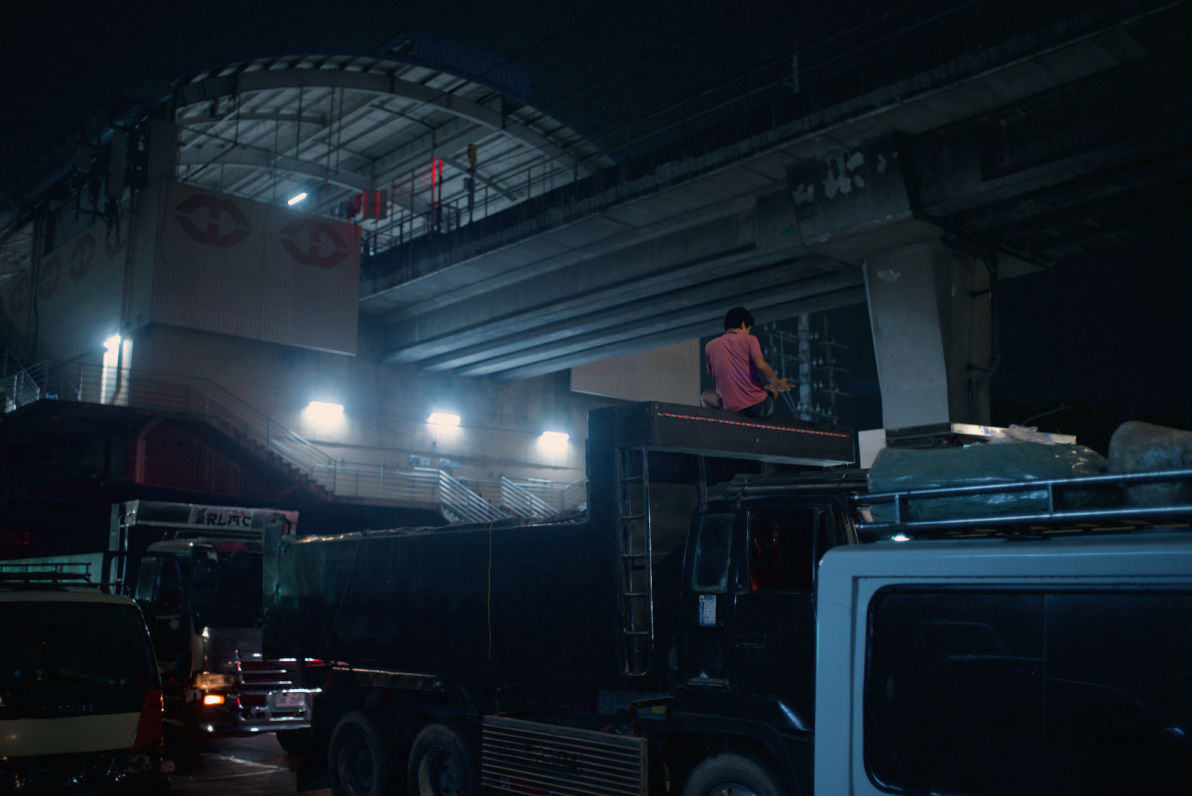
Trucks and jeepneys loaded with fresh produce arrive daily at the Balintawak Market from as early as 9 p.m. until 5 a.m.
Ube deliveries to the Balintawak Market vary depending on suppliers, but during off-season, stocks usually arrive only once a week, typically on Sundays or Tuesdays.
Nita, 57, who has been selling ube for more than 20 years, said current rising gasoline prices have significantly affected deliveries from suppliers, forcing vendors to raise prices.
“Ngayong tag-init tumaas, pero before ang bigay naming P60, ngayon lang naging P140 na kasi tumaas ang gasolina,” she said.
[This summer, prices went up. We used to sell it for P60, but now it has reached P140 because gasoline prices have increased.]
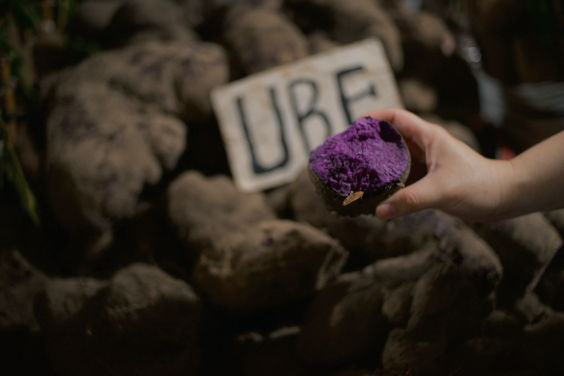
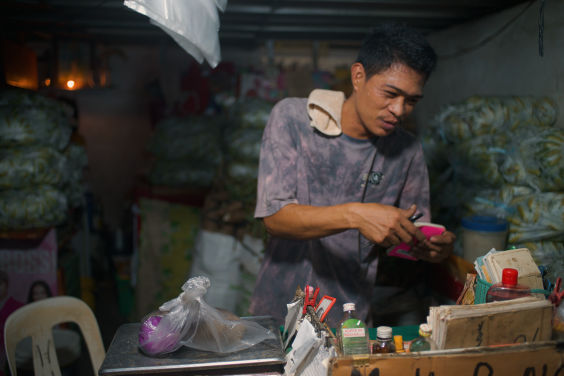
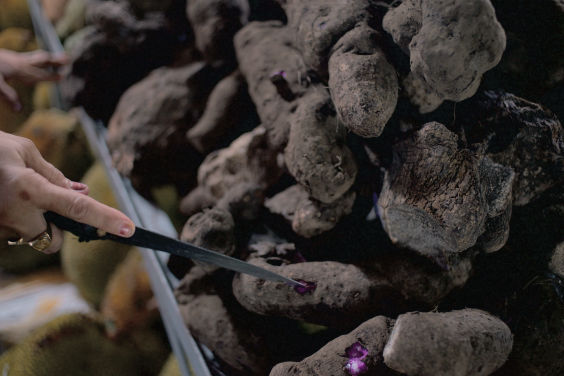
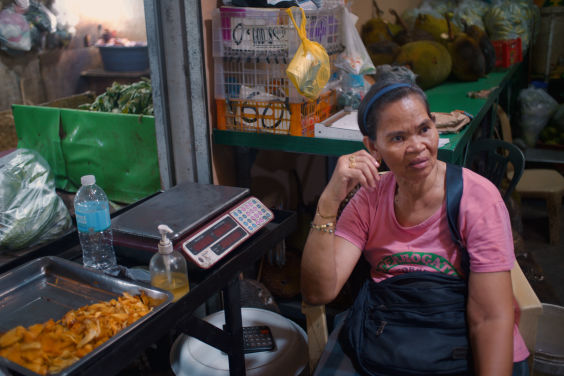
As of May 2026, fewer than ten stalls at the Balintawak Market continue to sell raw ube.
Meanwhile, at the Philippine National Food Fair 2026 in April, ube vendor Ayvee Ramirez said she has received growing inquiries from overseas buyers, particularly from the United States and Canada, about exporting ube products.
“It’s the quality of ube na talagang classic pinoy ‘yung hinahanap nila,” she said.
[They’re really looking for the quality of ube that feels truly classic Filipino.]
According to Ayvee, sales abroad are significantly stronger compared to local sales, although logistics remain a challenge. Still, she sees ube’s rising global popularity as an opportunity to showcase Filipino heritage on the world stage.
“Kung si Japan may matcha, sa Pilipinas may ube,” she said. “It’s about time na ma-recognize ang ube.”
[If Japan has matcha, the Philippines has ube. It’s about time that ube gets recognized.]
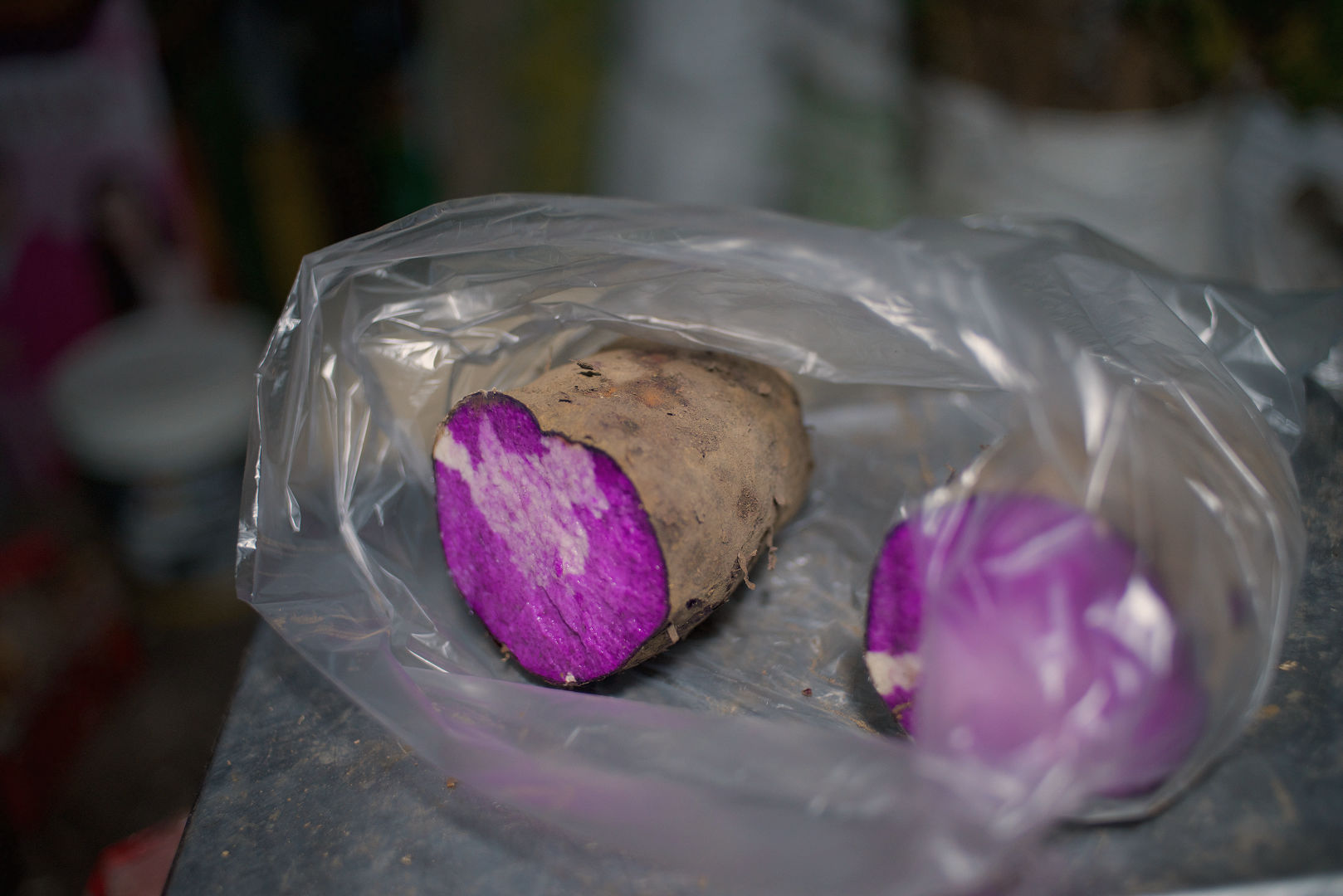
The vibrant purple hue of freshly sliced ube.
Ube’s growing global fame has both been rewarding and challenging for the Philippines.
Antesco emphasized the importance of preserving the Philippines’ many regional ube varieties for future generations, so that lesser-known local types will not be ignored or replaced by more popular ones, which could reduce crop diversity.
“Ube is diverse, and we should not focus on selecting just one cultivar since there is a wide variety of industries to which ube products can be utilized,” he stressed.
By maintaining the Philippines’ rich ube diversity, Antesco believes the country has a greater opportunity “to capture a bigger market,” not only for desserts, but also for products such as flour and starch.
At the same time, Antesco pointed out that ube farmers are not fully benefiting from the crop’s rising global demand.
“Since ube farmers mostly captured the by-product form in local markets, they only gain a lower tier of the market segment,” he said, adding "exporters, processors, food manufacturers, those who sell the finished products capture the higher profits."
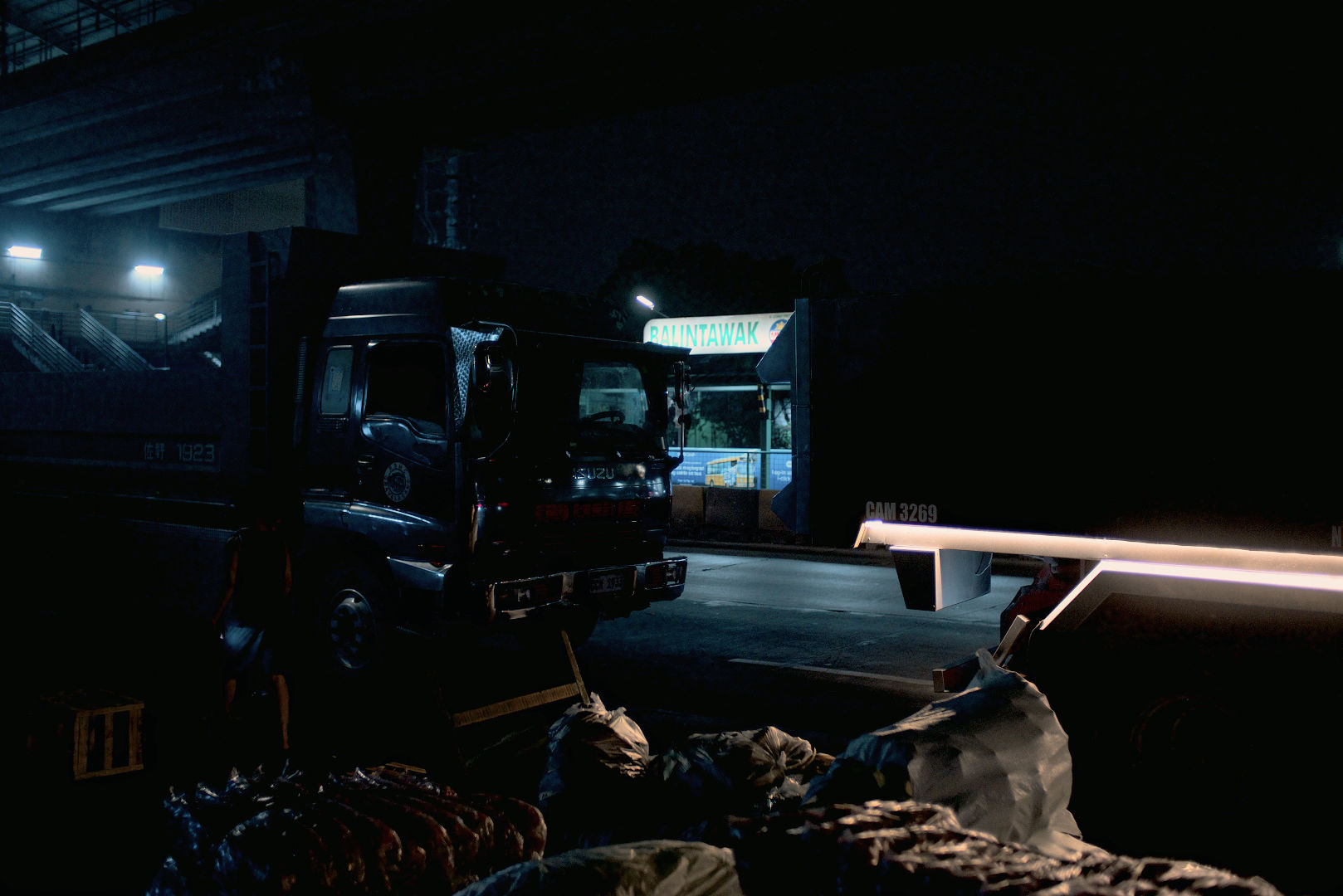
Midnight deliveries keep the Balintawak Market alive through the early hours of the morning.
Antesco also highlighted the Philippines’ “lack of post-harvest facilities and technical knowledge,” as well as the absence of a “systematized and standardized grading system for ube quality control.”
To secure the future of Philippine ube, Antesco strongly urged greater awareness of the crop’s wide diversity among consumers, farmers, and food innovators.
“Support conservation efforts on local cultivars of ube in the Philippines,” he added, as well as investing in “research and development.”
Lawmakers from Camarines Sur, headed by Rep. Luigi Villafuerte and Rep. Miguel Luis Villafuerte, have proposed House Bill No. 8814, or the Philippine Ube Industry Development Act, which seeks to empower farmers and strengthen local industries to maximize ube’s potential on the global stage.
“Sa pamamagitan ng panukalang ito, itatatag ang Philippine Ube Industry Council upang pangunahan ang long-term development ng industriya, from farm support, infrastructure, and funding, to branding, exports, and global market expansion,” Luigi Villafuerte said on Facebook.
[Through this proposed measure, the Philippine Ube Industry Council will be established to lead the industry’s long-term development: from farm support, infrastructure, and funding, to branding, exports, and global market expansion.]
“Ube is uniquely ours, and it’s time the world knows that the Philippines is the premier source of the best ube products,” he added.
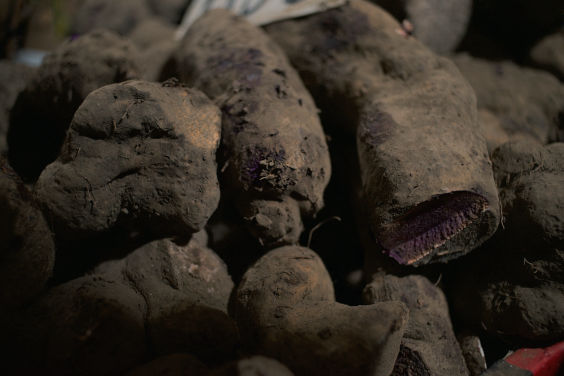
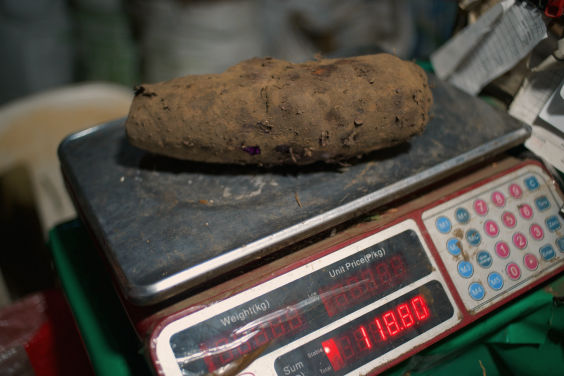
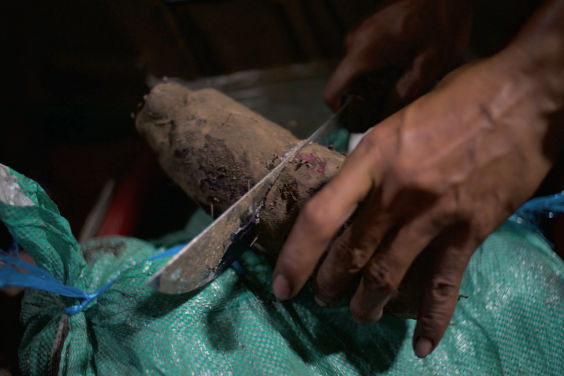
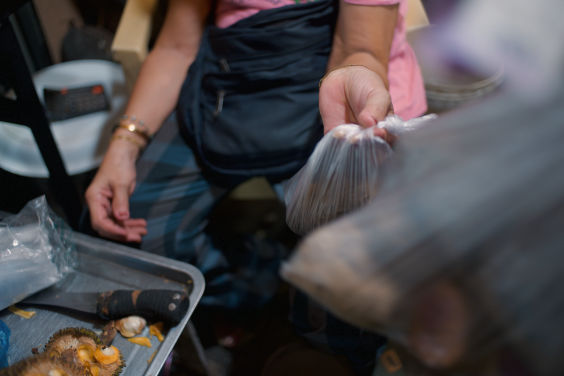
A closer look at the lives of ube vendors at the Balintawak Market, where ube prices range from P120 to P140 per kilo as of May 2026.
In the grand scheme of things, the international spotlight on Philippine ube is something many Filipinos can take pride in.
“Just like Japan’s matcha, the Philippines’ ube can be the next big thing,” Moreno expressed. “My only concern is how we can ensure that we do not overuse it or sacrifice certain areas that will affect farmlands and local farmers.”
“For as long as the message is clear and that trends don’t use it to change narratives, I’m glad with how ube is currently such a huge trend,” he added.
Trends may come and go, and whether the global ube craze eventually fades or not, ube will likely never go out of style in the Philippines.
Much like mangoes, it has long been tightly woven into the Filipino culture; a homegrown crop Filipinos proudly call their own, made possible by the hands of Filipino farmers.
Behind every spoonful of ube halaya, halo-halo, and bilo-bilo are the farmers who have cultivated and nurtured the root crop for decades, keeping not just its distinct flavor, but a piece of Filipino heritage. Without them, there would be no ube craze. Without them, purple would never turn into gold. —LA, GMA News

