
We use cookies to ensure you get the best browsing experience. By continued use, you agree to our privacy policy and accept our use of such cookies. For further information, click FIND OUT MORE.
I USED TO SLEEP WITH A BIBLE beside my pillow because I was convinced I was going to get possessed by the devil.
It’s funny now, but when I was 13, waking up at 3 a.m. repeatedly was terrifying. It wasn’t until I was in my late 20s that I stopped panicking whenever I’d blink wide awake to see the cursed hour glowing at me from my phone screen.
People used to tell me, “‘Pag nagigising ka ng ganyang oras, ibig sabihin may nanonood sa 'yo. (If you wake up around that time, it means someone is watching you).” Back then, the creaks in the house during the wee hours of the morning were eerie enough for me to believe that; all the horror movies I used to watch probably didn't help either. I scared myself so much that, indifferent as I was to religion, I'd stare at the Bible beside me, silently demanding it to protect me.
After decades of sleepless nights and over a year’s worth of sessions with psychiatrists, I now finally know at age 32 what the problem was: insomnia.
But that’s just the tip of the iceberg.
There’s something absurd about not realizing you have insomnia while chronically suffering from it.
In the movie “Fight Club,” the Narrator: "For six months, I couldn't sleep," and then it repeats on a loop. "With insomnia, nothing's real,” he continues. “Everything's far away."
I always assumed this cinematic sleeplessness was how insomnia was supposed to look, so it never occurred to me that I could ever have it. My problem was never falling asleep; it was staying asleep. I took pride in being a “morning person.” No matter what time I go to bed, no matter what I do beforehand, no matter how good or bad the quality of sleep is, I wake up forever early. Often, at 3 a.m., more consistently, at 5 a.m. No alarm. I hardly ever need it.
On good nights, I get a total of six hours of interrupted sleep. In practice, I can function with as little as three.
And yes, of course the science textbooks always said human bodies need between seven to nine hours of sleep, but clearly not mine, right?
It turns out I’ve severely misunderstood many things in my life, starting with exactly what insomnia even is.
UP UNTIL RECENTLY, my insomnia wasn’t glaringly obvious.
In my freshly resurfaced diary from sixth grade, I wrote, “Last night, I woke up at 12 a.m. for no reason, and this morning, I woke up maybe 7 a.m. I didn’t want to get out of bed until my mother told me to.” My 12-year-old self then went on to play games on the PC and listen to music via Walkman, unbothered.
The entry was dated June 17, 2002, and it was only one of many. I doubt I had a mobile phone in that day and age, no screen to keep me awake. It probably didn’t take me too long to go back to sleep. No one noticed, not even me, not for years.
In college, when I’d wake up at dawn after a long night out, hours before my friends stirred from where they’d conked out on the couch, I’d foolishly think, “I guess alcohol to me is what coffee is to others,” and, “Wow, I really am a morning person.”
It was only when I hit 26 that my nights turned erratic. There is one singular reason for this: in 2020, the Philippines went on lockdown due to the coronavirus pandemic.
Cue the total overhaul in daily routines and the adrenaline that comes with being a journalist at such an unprecedented time. Cue the weird dreams, the endless well of time, the restless boredom and the hyperfixations.
Cue the depression and anxiety that, like the insomnia, would go undetected and undiagnosed for years.
My sleep became unpredictable. I would pass out and then jolt awake at the oddest hours. I’d be napping when I shouldn’t, and be up and about while everyone’s out for the count. Sleep became intermittent. A quick search of my Discord chat logs with my friends would yield dozens of my confused ‘Why am I awake?’ messages, sent deliriously across several years.
Every time I tucked myself into bed, it was a Russian roulette, with a one in six chance of getting proper rest. At some point, I kept complaining about the moon waking me at 2 a.m. I chalked it up to being a light sleeper.
And when I did sleep, I dreamt. Multiple times in a night, a different one after each interruption. I'd be infiltrating a gun metal gray-eyed alien civilization one moment, and sprinting away from a cold-blooded assassin through a smoky, industrial city the next. I’d wake up looking for these creatures that my mind conjured, confused about the time, the world, the place. And then I’d check the time and see that I had only slept for three hours.
I wish I could say that I always went back to sleep, but I didn’t. I like the world at nighttime. No blinding brightness and oppressive heat from the sun. No hair dryer breeze, no candy sticky sweat. I’m fond of the shafts of moonlight that creep into my room even when they wake me. So I get up and pick up a game. Or I get up and fetch water for me and my dogs, and then end up doing things around the house. I open a book, or TikTok, or my emails. I’d proudly tell people that my body doesn’t need much sleep, and then talk about the latest novel or movie or show that I finished.
It became a thing. In “Wildflower,” RM sings, “I do wish me a lovely night,” a line that I tend to sing to myself on repeat when, without fail, I get a second wind once the sky deepens to pitch black.
That kind of life was surprisingly easy to get used to. It was just my reality, a thing that keeps happening to me. I figured, it probably happens to everyone, you know, slowly spiraling into madness. "When you're born in a burning house, you think the whole world is on fire," or whatever it is Richard Kadrey wrote in that one book. There was a pandemic. The world was on fire.
In other words, I didn’t think it was any sort of problem. After all, I still functioned perfectly well as a human being. My work didn’t suffer; in fact, I got promoted. Sure, I had days where I wasn’t in the mood to leave my bed at all, opting instead to waste hours staring at the shadows on my wall. But most of the time, I had extra energy for post-shift gaming, binging anime, debating with strangers on Twitter.
Eventually, I had collected so many distractions that I didn’t want to sleep anymore. During this period, I was constantly wired, even when my body was exhausted.
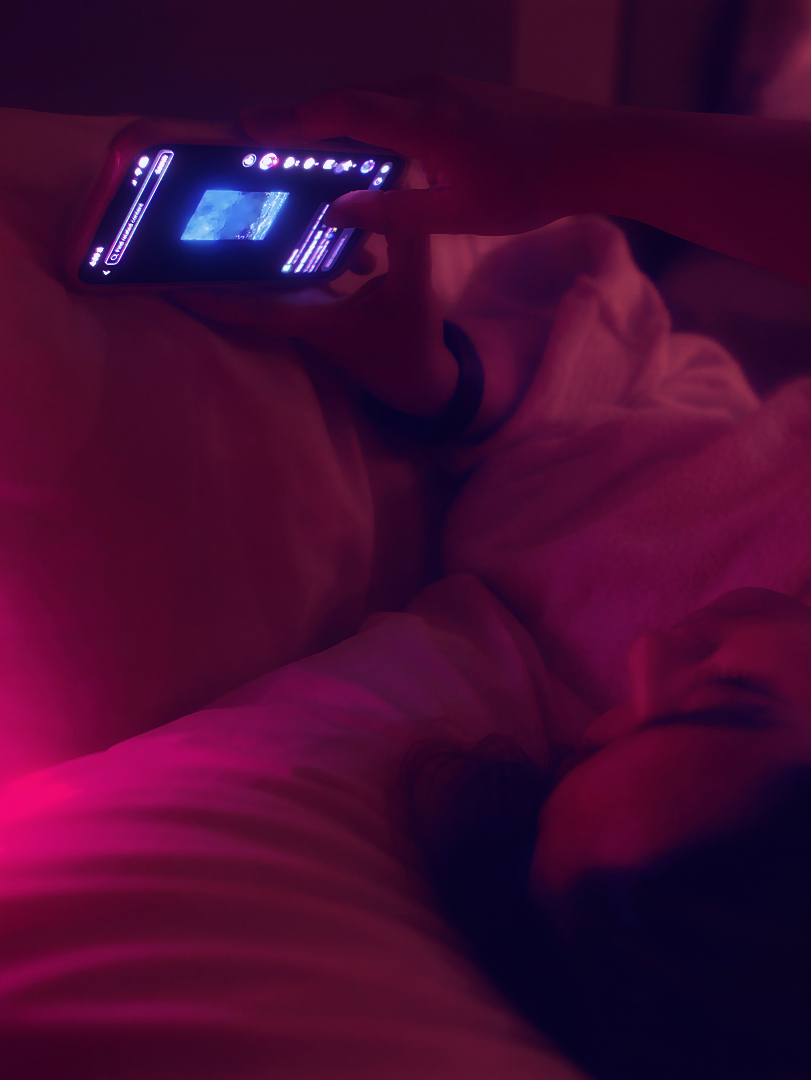
Soon, it was 2025, and long after the world restarted, that remained my life. Blue light after midnight. Doomscrolling on Twitter, and then later on TikTok. Panicking at the sunlight replacing moonlight in my room and diving under my blankets to nap for two hours. Hazy weekends, broken only by pinging notifications inviting me to play “Among Us,” “Elden Ring,” “Baldur’s Gate 3.” I stopped going out, preferring the world inside my head. I had a whole other life that nobody, not even my family, knew about.
How could they? Everyone was asleep.
And then I was diagnosed with ADHD (attention-deficit/hyperactivity disorder), and things started to make more sense.
I WAS DIAGNOSED WITH ADHD, DEPRESSION, AND ANXIETY in my first-ever psychiatric session in April 2025. Thirty-two is late for such a diagnosis, but according to experts, not uncommon, especially for women. And especially for women who grew up in the Philippines.
“I don’t understand,” I remember telling my psychiatrist, who I’ve come to refer to as Ripperdoc in my mind. She doesn’t want to be named in this feature, so we’ll stick to that. “I’m not hyper or anything. It’s the opposite, actually.” Physically low-energy, quiet and disconnected, with increasingly concerning hermit tendencies.
“But if your brain had legs, it probably reached all sorts of places by now,” she responded. Given my lifelong fascination with outer space, that’s probably as far as my brain would have reached.
I got in touch with Dr. Elizabeth Canlas-Pineda, a psychologist I first interviewed in 2020 about my lockdown dreams. I told her about the depression, the insomnia, the ADHD, and last year’s panic attack on that one red-eye flight that drove me to get consulted, and starting all this.
“I’m 32,” I said. “How could I not have known?”
Apparently, inattentive ADHD is the sort of thing that’s easy to miss among kids, particularly young girls.
“For boys, the expectation is that they're physically active. You cannot keep them in one place, they run and run. For girls, especially in our country, the ideal is that girls are demure. They are not expressive, so you don’t see that they’re already coping. People think that’s just how girls are,” Dr. Elizabeth said.
Masking, Dr. Elizabeth continued, is a learned defense mechanism where neurodivergent individuals "put up a front" to blend into perceived societal norms.
In the Philippines, getting branded as someone with “may diperensya” is traumatizing in itself.
“Lalo na sa Philippines, when it comes to mental health… we are already learning, pero majority is negative ang dating. (In the Philippines, when it comes to mental health… we are already learning, but it comes across as negative for the most part),” she said.
But no matter how well one learns to mask, sooner or later, things will take a toll. The increased demands and pressure to adhere to structured environments tend to expose just how difficult navigating the world is for neurodivergent people.
In adulthood, Dr. Elizabeth continued, those with ADHD may start to notice: "Why am I not able to attain my goals?"
“Isip ka ng isip pero walang nangyayari. Binigyan ka ng deadline, pero kahit wala kang ginagawa, hindi mo magawa (You keep thinking of making something happen, but it doesn’t happen. You’re given a deadline, but even though you’re not busy, you can’t bring yourself to do it),” she cited as an example.
This is called executive dysfunction, a common symptom of ADHD. It’s when it starts getting in the way, when you’re no longer able to perform the daily tasks expected from you, that you have to take stock of yourself, evaluate, and perhaps see a professional, Dr. Elizabeth said.
“Still, [ADHD] is not a sickness, it is a condition. It’s just that [people with ADHD] are atypical. They think differently.”
And like any condition, it comes with a slew of complications. For me, insomnia happens to be at the forefront.
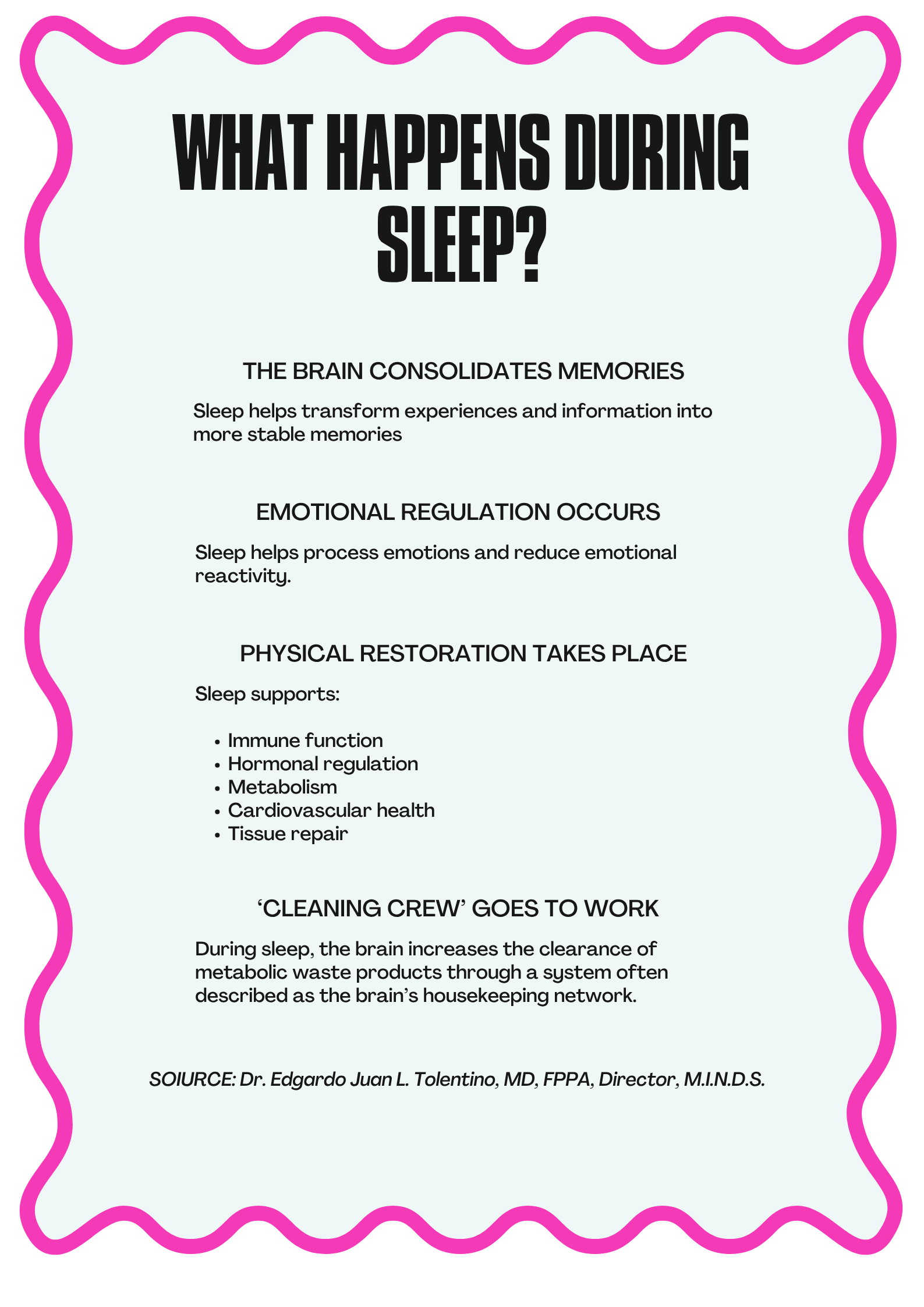
Apparently, insomnia is not just the most common sleep disorder — it is also one of the most common symptoms of psychiatric conditions.
“There is a very intricate relationship between mental health and sleep,” psychiatrist-sleep specialist Dr. Rose Anne C. Roque explained. “More recent studies now support the theory that the relationship is bidirectional. They both affect each other and one can lead to the other.”
Any chance it can go away on its own? I wondered.
“Depends on the cause of insomnia,” Dr. Roque said. “For insomnia due to poor sleep hygiene, irregular schedule, being mindful of sleep compatible practices may help.”
“For insomnia due to other causes like stress, anxiety, mood concerns, the cause should be addressed,” she added.
I STARTED MEDICATION IN 2025.
Sertraline first, for my depression and anxiety. My whole life, I’ve actively avoided becoming dependent on meds, going so far as to skip painkillers for headaches and cramps, but I knew I never wanted to experience another panic attack again. It’s not fun, thinking you’re having a heart attack in public, miles above sea level.
To my surprise and utter relief, the meds actually made me feel better, and I had to swallow my pride and inform everyone who had, for years, been telling me to “seek help,” that they were right.
Later, my psychiatrist got me on methylphenidate — a stimulant. It took a few attempts for me to commit to it, believing at first that I was fine without it.
I was. But medicated, I became better than ever.
I couldn’t believe how much mental energy I suddenly had. I was exceedingly productive in every aspect of my life: I was inspired to do features outside of my work dailies, I went on a two-week cleaning binge around the house, I was able to finish books and movies without stalling a dozen times, I met up with friends and went on walks — willingly! I wondered, is this how other people live without trying?
The only downside was that it further aggravated my insomnia. Or perhaps, exposed just how bad it was.
It wasn’t that I was sleeping worse, even though I was. It was more that I was no longer feeling the effects of sleep deprivation.
Before medication, my body would force me into random daytime naps, specifically on weekends. Suddenly, I didn’t need them anymore.
My stimulants kept me awake and alert throughout the day. When on it, I don’t feel the slightest bit drowsy. Even with only an hour of sleep, I could do a full day without faltering. Nine hours straight of cleaning the house, my sister peeking silently from the doorway with wide eyes. At one point, my father approached me slowly and, in a low voice, warned that my mother suspects I’ve been replaced by an alien, and that she was just trying to figure out when it happened.
“I’ve never been better,” I kept telling people, bright-eyed and bushy-tailed. I thought I had unlocked a superpower — the kind that only rivals the one-track focus I fall into during an active hyperfixation.
“I’ve never been better,” I repeated to Ripperdoc in our next appointment, six weeks after I started taking the stimulants.
“Why,” she asked carefully, “are you manic?”
We went over my sleep, which I had been tracking since I first got on methylphenidate. Unsurprisingly, it was abysmal. Two hours, three hours each night. Interrupted. After six weeks, the track record was concerning enough that Ripperdoc prescribed me agomelatine, an antidepressant which she said had “sedative effects.” They had to check my liver for it. I balked; it sounded intense.
“You need rest,” she told me firmly, staring in concern at my charts.
“But do I really?” I shot back. “I like being awake. Is it really a problem?”
And then, suddenly, the opposite was true.
Immediately after that session, I crashed back down into a two-week depressive episode so stark that I set an emergency appointment with Ripperdoc, reporting, I’m still on the stimulants but I’ve been napping a lot. I’ve barely left my bed. I even skipped some of my video game dailies.
Hilariously, it was the last part that truly alarmed her. She underscored the urgency of me taking the new antidepressants she recently prescribed on top of my regular antidepressants. “I know you have no energy right now, but you have to.”
And then cautiously, she floated a possible new diagnosis, one she’d been eyeing since our very first meeting over a year ago, but felt she first had to observe:
Bipolar disorder.
The worst part? It sank into my skin like a Tetris piece falling into place.
And then: Oh my God, why are there so many things wrong with me?
“This is called comorbidity,” Dr. Rowalt Alibudbud, a psychiatrist at Medical Center Manila, later told me. “For example, in my practice, ADHD commonly co-occurs with anxiety disorders or autism. Likewise, bipolar disorder may coexist with anxiety disorders, substance use disorders, or ADHD.”
The brain is complex, he added. Attention. Emotion regulation. Reward processing, executive functioning, sleep. Many conditions share underlying biological systems that involve all these things.
And somehow, I have a problem with them all.
“The brain does not organize itself according to diagnostic labels,” Dr. Rowalt reminded me. “Therefore, one person may have vulnerabilities that contribute to multiple conditions simultaneously.”
“Having multiple diagnoses does not necessarily mean someone is more severely ill. It often reflects the reality that human psychology, development, and brain functioning are more complex than the diagnostic labels.”
Dr. Roque shed more light on the matter.
"Bipolar disorder manifests with changes in a person's mood, energy and ability to function," she said. "Depressive episodes may manifest with either insomnia or hypersomnia."
"For manic episodes, there is a decreased need for sleep. The issue is not that they are unable to sleep but they do not see the need for it. Brought about by their manic state, these patients feel that sleep is just a waste of time as they have so much more that they have to do," she added.
And so, at 32, I learned that I wasn’t exempt from mental illness. The world wasn't on fire. It was my house that was burning, and this whole time, I mistook survival for normalcy.
MY INSOMNIA SUDDENLY BECAME the most important thing for me to fix. Sleep is a necessary regulation for mood stability. That's true for everyone, but — during manic episodes, I barely sleep. During depressive episodes, I sleep too much. I don’t need to be a rocket scientist to figure out that some stability is necessary here.
“You can think of sleep as one of the body's major stabilizing systems. When sleep is disrupted, emotional regulation becomes more vulnerable to significant changes,” Dr. Rowalt said. “For people with bipolar disorder, sleep disruption can sometimes do more than reflect an episode. It can also help trigger one.”
I suppose that won’t do. There’s no way chronic insomnia is good for anyone.
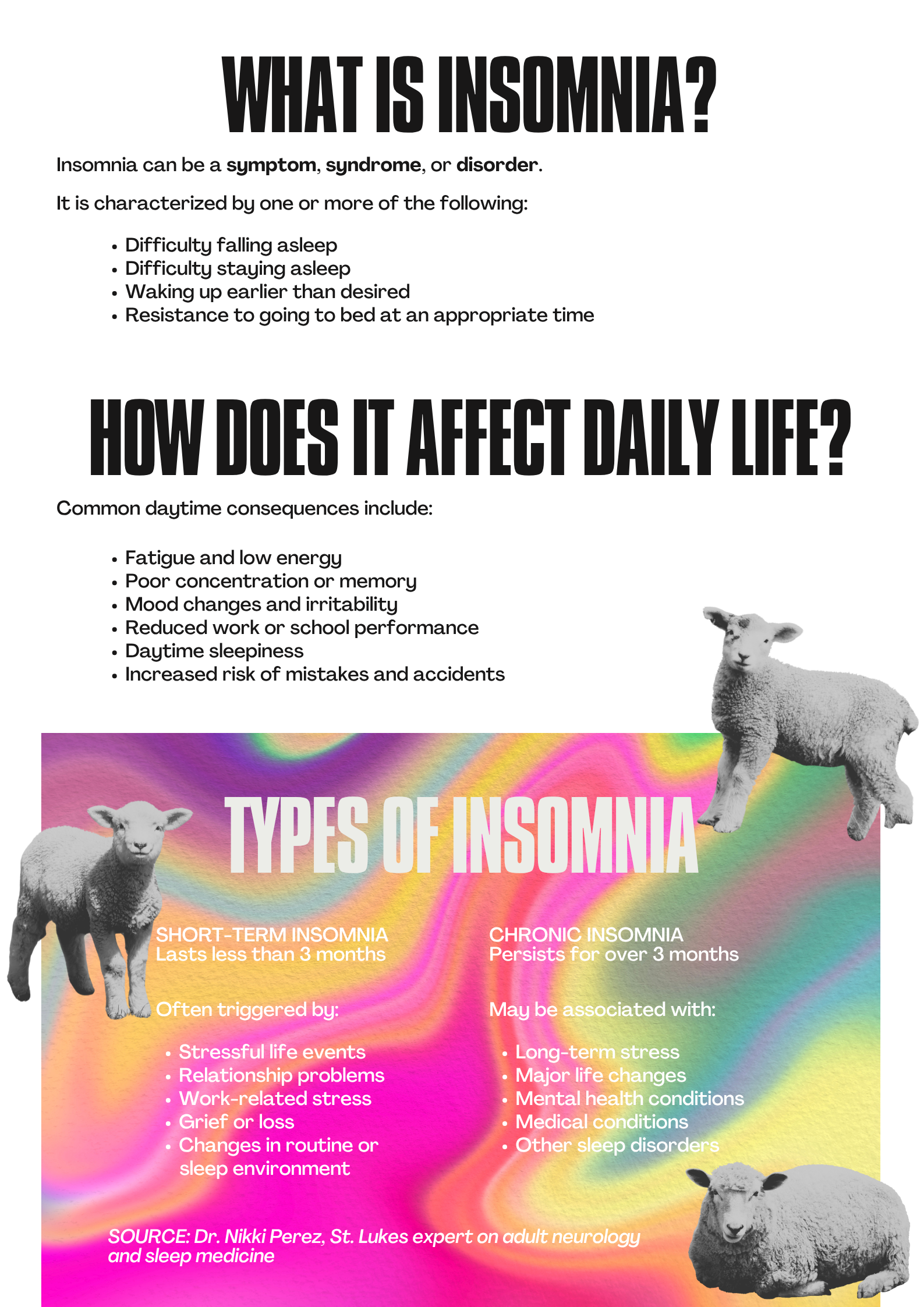
St. Luke's Dr. Nikki Perez, expert in adult neurology and sleep medicine, defines chronic insomnia as sleep disturbance that has been present for at least three months. Mine has been present for at least six years.
“A consultation with a sleep specialist is recommended as soon as signs and symptoms of an insomnia disorder develop,” Dr. Perez wrote to me. “There is no one-size-fits-all treatment for insomnia, and seeking advice as early as possible aims to identify the cause and break the vicious cycle.”
Oops.
Still, it took me, yet again, several attempts to get around to taking the ‘sedative’ pills Ripperdoc had been hounding me about. They scared me. What if this time, I actually get possessed by the devil, and I can’t wake up?
There was also the tiny problem of me not actually wanting to sleep.
“Sleeping is boring, right?”
EJ Mangilit is a behavioral interventionist who has helped neurodivergent kids and adults with sleep problems, and sounds it.
“It’s a hard sell,” he continued, smiling. "We have more stimuli now than ever that we can engage with. Think about sleeping. You're literally going to the bed, you're closing your eyes. That's not stimulating at all."
“Stimulating” is a word I had become intimately familiar with the past year. My brain loves — no, needs, in the most clinical sense, to be stimulated.
Which is why I’m muck-deep in this problem in the first place.
"It's that pattern behavior of... 'Well, this is a norm, this is a habit for me. This is what I usually do.' And so you overlook these things for that reason a lot of times, right?" EJ said.
"It is already a habit, strengthened by a long learning history that needs to be broken. And step one is going to be painful. More often than that, it's going to hurt."
Cutting down time spent on hobbies was definitely going to hurt, but it’s probably going to hurt more if I drop dead from sleep deprivation and end up being in the headlines instead of writing them.
Finally, I took the damn pills.
My left eye started drooping first. My phone slipped from my fingers.
And then, I slept. It was only six hours, but it was uninterrupted, and at the time, it had been too long since I had continuous sleep.
I woke up disoriented, not knowing what year it was. For the first time, I was actually sleeping while sleeping — fade to black, cutscene, quick save, exit game. That morning, I had to look around and wait for the launch screen that is my bedroom to come online, wait for the save file that is brain to be ready to load again. It was worse than any post-dream confusion I ever experienced.
I wrote down the results. My brain locked onto the quest. I took the pill for a second night, ready to document whether it would work any better.
It didn’t. This time, I got only three hours of sleep. And I still woke up long before my work alarm. And I tried and failed to force myself unconscious again. I got up and cleaned. Made it in time at the office, wired and only slightly tired, too used to this crap already.
It was the start of another manic episode.
I knew what to watch out for now. When I started pacing the house aimlessly and waking my family up for 6 a.m. walks, it clicked. My depression had cleared away like thunderclouds making way for the sun; “bipolar disorder” kept buzzing in the back of my head. I finally saw it, how horribly true it could be.
No miracle pill, then. Back to the lab I go. I impulsively bought a smart watch for more accurate data. Tracked my sleep obsessively. Made excel charts and line graphs in the middle of the night, always in the middle of the night.
Without telling anyone, I stopped taking all my meds. I wanted to see how much is me. I was once an angry teenager prone to going cold then hot — moody had been how the majority of people described me, growing up — but I had long since outgrown that.
Now I realize that it just morphed into a different shape: Grown, I’m an adult with chronic low-grade depression who, every once in a while, wakes up feeling like she’s on top of the world.
Bipolar disorder is not just being moody, I've come to learn. It's not a matter of winds changing after a few hours; it’s also not necessarily as extreme as a scene you'd watch from “Shameless.”
It can be subtle. It can be a matter of waking up more inspired than ever, thinking, ‘Today, I’ll change my life!’ And then blow thousands on pickleball clothes and sugarfree treats.
Out of nowhere, two weeks later, the drive disappears, nosedives into the negatives. You stay in bed until the treats go bad. You’re not sad. You simply can’t enjoy anything, not even the video games you play daily, ruining a two-year log-in streak.
I started seeing Ripperdoc every two weeks, instead of every two months. Every session, I was a different person. Subdued and anxious one week, happy and inspired the next. We waited as long as we could before confirming what we both already suspected.
The funny thing is, even after all this, I feel… overall fine. High-functioning, my favorite word. Well-adjusted, my second favorite word. Some days are a mental fistfight to get through, but I get through them. I started to ask, am I broken enough to need to fix? The ADHD, the bipolar, they’ve always been there, haven’t they? I'm intelligent both cognitively and emotionally, I can do anything!
Except get rid of my cup graveyard and maintain a stable sleep routine for longer than four nights.
But I knew, deep down, that the reason I had avoided this — the consultations, the psychiatric sessions, the truth — for years and years, was because I knew they would find something, and then another thing, and then another thing.
I always knew it. I just didn’t want to hear it. It was the way my elementary classmates called me the weird kid. It was the way my college friends were slightly afraid of my volatile temper. It was the way I slipped into a nicotine addiction for a good six years, the way something in my brain would suddenly decide to make destructive choices, the way I was eternally looking for a dopamine hit without knowing why I needed it so bad.
Now I know.
And when Ripperdoc finally and officially diagnosed me with bipolar disorder and prescribed me stabilizers, I accepted it with the resignation of someone who’s sure that life would have been easier had I known it earlier.
"So. New mechanism in play," she said seriously, after explaining the diagnosis and listing my new meds.
"New meta," I agreed.
"There's no doubt. It is what it is."
It is what it is.
Funny, how I’m trained to verify and stick to the facts, but couldn’t figure out myself first. In my defense, taking the first step is always the hardest part.
I WENT BACK to taking all of my meds.
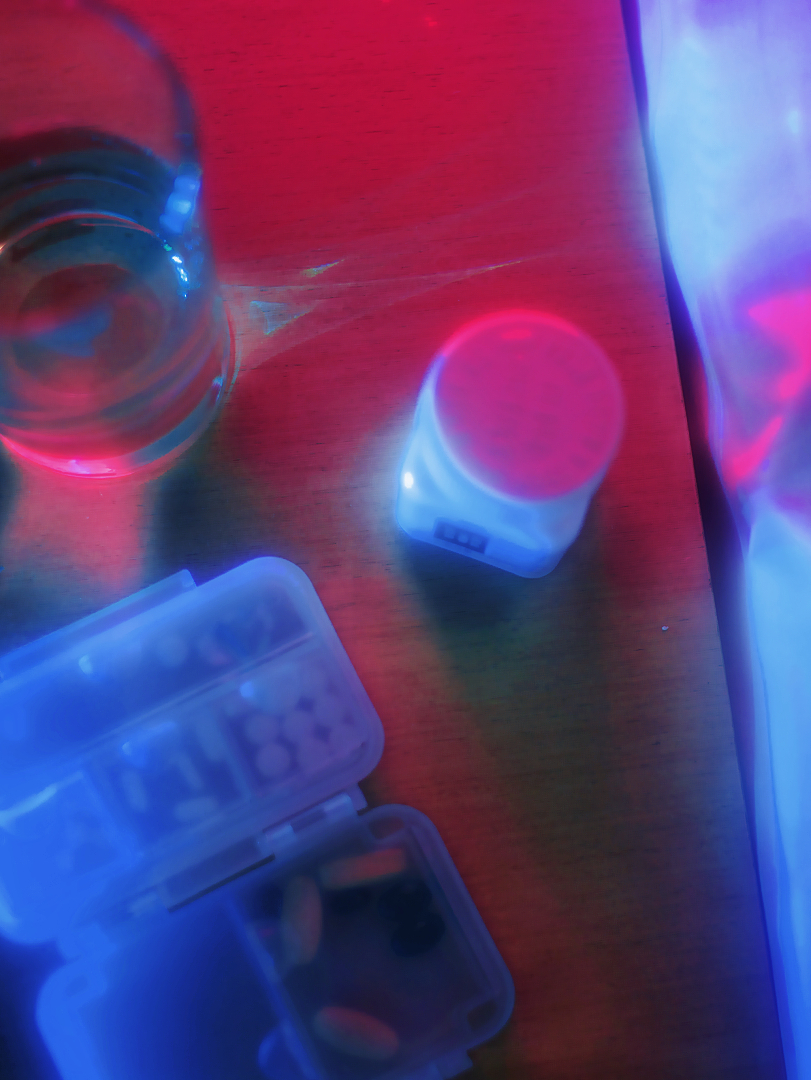
I have a pill for everything now: for sleeping, for stimulation and focus, for mood stabilization, for depression and anxiety.
I’m still under observation. Adjusting to a not-so-new reality where I lose more hours to sleep and trying to stay asleep, trying to convince myself it’s for the better, because if I don’t sleep, I destabilize. Trying to accept the fact that I need a cocktail of medication to rest, to wake and stay alert, to get moving, to become just right.
For other people, it’s as easy as breathing. For me, it’s a quiet, daily struggle. As someone who prides herself for thriving in the high-pressure environment that is the media industry, the sobering realization that it’s all catching up to me now is a tough pill to swallow.
I’ve been forcefully brought down to Earth.
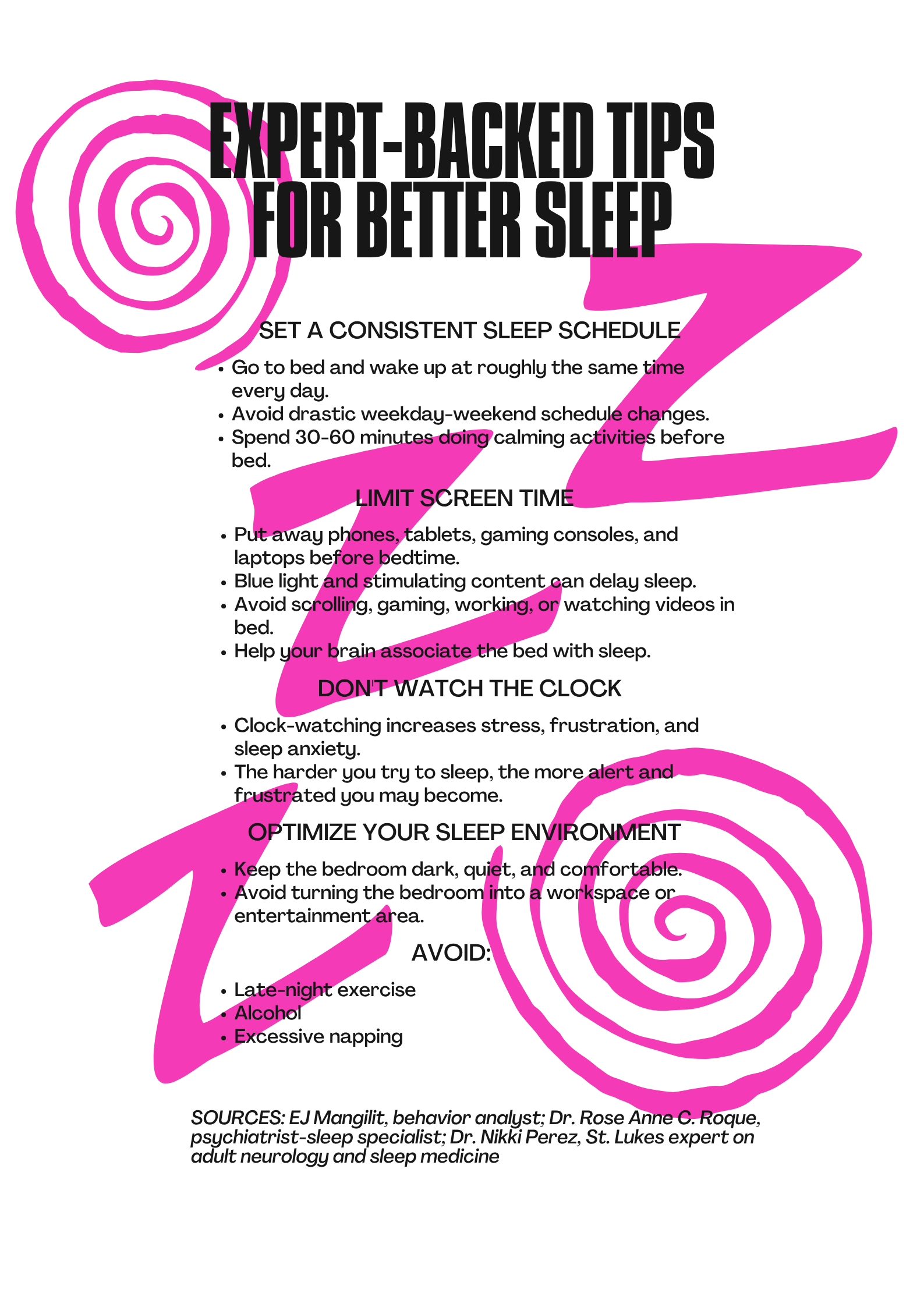
EJ advised me to make a new behavioral pattern, where I set time deadlines, a pre-sleep routine, and a conscious effort to remove things like phones, consoles, and remote controls from my immediate vicinity when going to bed. Sleep hygiene, he called it.
It’s all quite daunting.
Admittedly, I considered just doing… nothing. Stop taking the meds. Never show up in my psychiatrist’s clinic again. It’s not like she’ll hunt me down. I have long mastered the art of changing my mind and leaving ends loose. As Lucien Carr said in “Kill Your Darlings”: “I’m only good at beginnings.”
But if, after all this, I abandon it the way I abandon most of everything else, if I decide to leave it alone — what then? I wait for the next big panic attack, the next big addiction, the next big crash?
No, this cannot be where I throw in the towel. I’ve spent too much money for it to all amount to nothing. Besides, I’m writing a story about it.
So I started going on walks and working out at home. Twice a week, I force myself to do sports. I’ve switched to a healthier diet. And I hate to be the bearer of bad news, but it’s true what they say about exercise and sunlight. The problem is you have to get yourself out there first.
And honestly, just knowing exactly what’s wrong with me — or rather, what’s different about me — is already one big step on the moon. Faced with the laundry list of everything my brain clinically fails to do, I feel not bitterness but relief. Clarity.
I don't know how long it will take to find a new balance. I just try to remember — the next time I find myself waking up at 3 a.m., it’s me who has to fight my own demons.
And so I’ll keep taking my medication. I’ll keep trying to sleep. And I’ll keep trying to live better, healthier, and more self-aware.
So I can have more lovely nights. —LA, GMA News
