

 GMA Brandtalk
 Tracking
 Archives

Angara: Lack of digital familiarity affected PH learners in past PISA exams
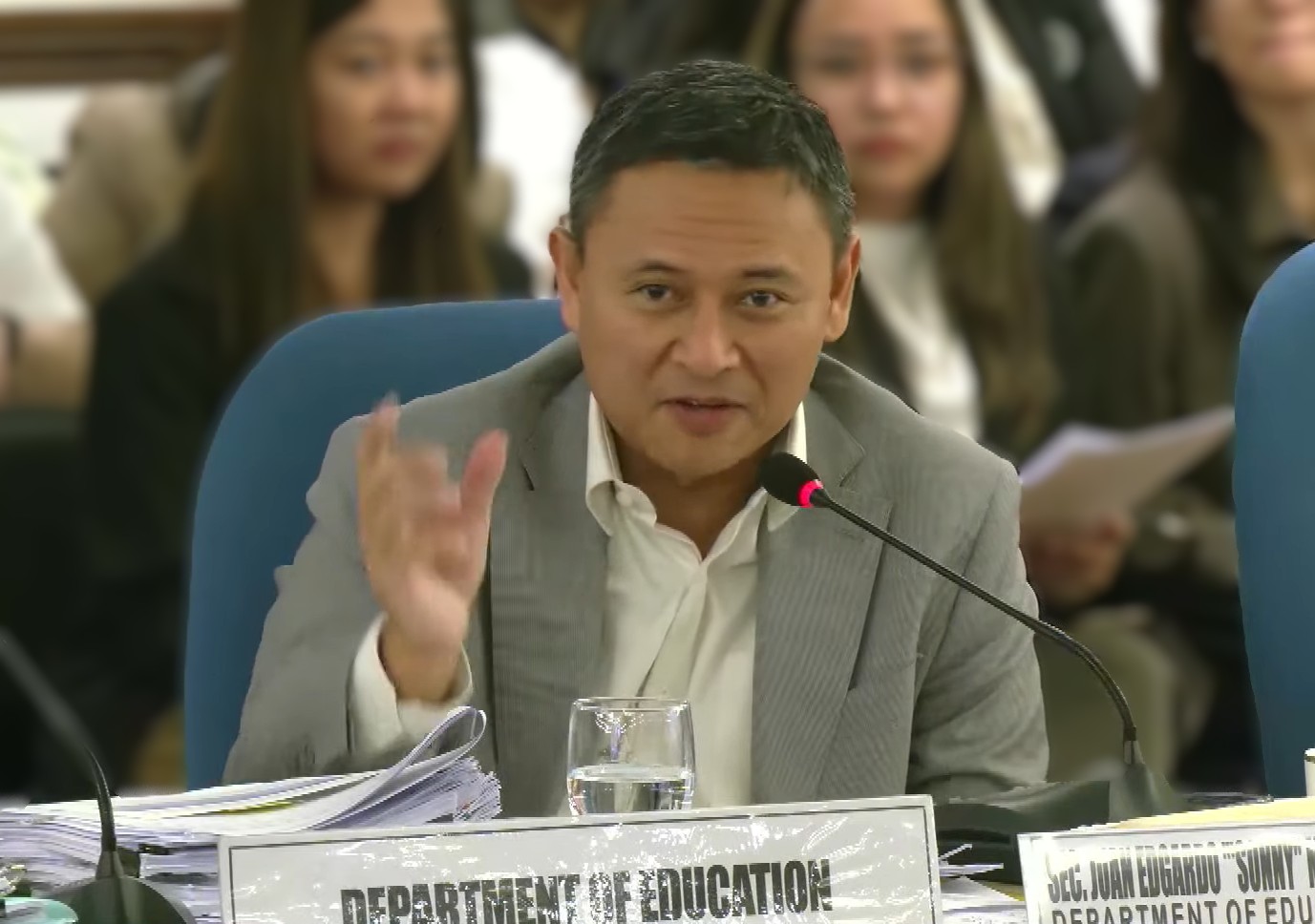
The Department of Education (DepEd) on Monday said a lack of familiarity with digital technology had been a concern among Filipino learners in previous rounds of the Programme for International Student Assessment (PISA).
Education Secretary Sonny Angara made the statement during the House Committee on Appropriations hearing on DepEd’s proposed 2027 budget, in response to questions from Representative Presley De Jesus about the country’s digital readiness in schools.
De Jesus asked whether the Philippines lagged behind other countries in terms of access to computers for learning.
Angara acknowledged that the country had fallen behind but said DepEd’s goal was to have at least one computer laboratory in every school.
“We are somewhat behind in that area. But the goal is really to have at least one computer lab in each school, Your Honor, so that at least there is an optimum…” he said.
On Monday, DepEd presented a proposed P975.96-billion budget for fiscal year 2027, including allocations for its attached agencies, before the House Committee on Appropriations.
According to the department’s press release, DepEd is seeking an additional P145.19 billion for critical programs not funded under the 2027 National Expenditure Program (NEP).
DepEd’s FY 2027 NEP presentation includes P2.4 billion for 50,337 laptops for teachers, P1.12 billion for the renewal of internet subscriptions for 14,261 schools, and P2.25 billion for ICT solutions and capacity building.
Digital familiarity and PISA
Angara said digital familiarity had emerged as an issue in the Philippines’ previous PISA assessments.
“And, that’s important because in PISA, if you read the PISA reports of 2018 and 2022, the feedback was that many of our learners were not familiar with digital technology,” he said.
Angara said some learners had encountered a computer mouse for the first time during the assessment itself.
“And it was the first time that they encountered using a mouse during the exam itself,” he added.
Angara said this could put students at a disadvantage because they could spend valuable examination time learning how to operate a computer.
For the 2025 PISA, he said DepEd sought to ensure that students taking the assessment had at least some experience using computers.
“That’s why for the latest PISA exam in 2025, we made sure that everyone taking the exam at least had some experience using a computer,” he said.
“They would not be unfamiliar with it because it would be a waste of their time if they had to learn how to use a computer during the exam,” Angara added.
Computer lab in every school
Angara said providing computers to schools remained a priority but cautioned that increased access should not necessarily mean excessive screen time.
“There’s such a thing as too much computer time also, actually. That’s a new finding now.”
He cited Nordic countries that have shifted toward limiting computer use and returning to pen-and-paper activities.
“They’re limiting computer use to one to three hours a week. So that is attainable, in my opinion, for us. As long as we are consistent in purchasing computers for the computer labs,” Angara said.
AI use in classrooms
De Jesus also asked how DepEd planned to cope with the rapid development of artificial intelligence (AI) and integrate the technology into education.
Angara said AI had both benefits and risks.
“So I think on the upside, it can really help our teachers upskill, especially when EDCOM has reported a skills mismatch, meaning the person teaching science is not actually a science teacher, and the person teaching chemistry is not actually an expert in chemistry,” Angara said.Angara also said AI could support personalized learning, allowing learners to progress at their own pace.
But he warned of possible risks, particularly among younger learners.
“The downside is that there are studies which show that AI can, in very young children, or in younger children, AI can diminish the creative thinking and the critical faculties of our learners,” he said.
According to Angara, AI should be introduced with appropriate safeguards and teacher training.
“You have to introduce it at the right age and with the right safeguards, and of course we must train our teachers to use it appropriately,” he said.— MCG, GMA News

