ADVERTISEMENT
LIVE
Filtered By: Topstories
News

LIVE UPDATES: Conflict in the Middle East (March 31, 2026)


+
Add GMA on Google
Make this your preferred source to get more updates from this publisher on Google.
LIVE UPDATES: Conflict in the Middle East (March 31, 2026)
Auto-refresh

Europe pushes back on some US military operations as concerns mount

France and Italy have pushed back against some US-Israeli military operations, sources said on Tuesday, as US President Donald Trump criticized NATO allies in Europe as unhelpful in the month-long war in Iran, highlighting divisions.

The decisions came against a backdrop of tensions between Washington and key partners over the war. Earlier this month, Trump called longtime NATO ?allies "cowards" over their lack of support. On Tuesday, he slammed countries that did not help in the US-Israeli strikes.

Meanwhile, highlighting divisions within Europe, Spain defended its decision to fully close its airspace to US planes involved in attacks on Iran.

Oil on track for record monthly gain; global equities rise

Global shares rose on Tuesday and Brent crude oil prices were poised for a record monthly increase, as traders came to the end of a tumultuous March dominated by the Iran war.

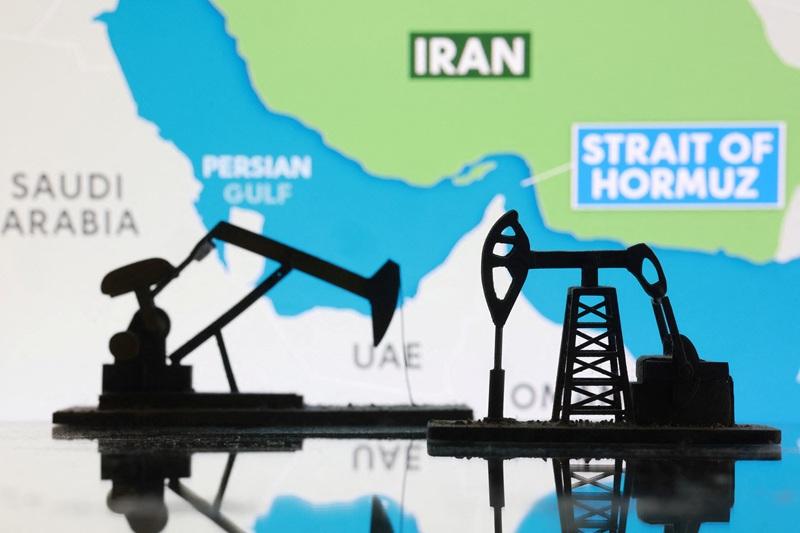
Iran attacked a fully-loaded oil tanker off Dubai early on Tuesday after President Donald Trump warned the US would obliterate Iran's energy plants and oil wells if it does not open the Strait of Hormuz.

Still, markets got a lift from a Wall Street Journal report that Trump had told aides he is willing to end the military campaign even if the strait remains largely closed.

The war, which began with the US and Israel launching coordinated strikes against Iran on February 28, has sent shockwaves across global markets and raised the risk of a worldwide recession.

Asia barters for scarce energy as Iran crisis throttles supplies

Indonesia's leader visited Tokyo this week in Asia's latest flurry of fuel bartering efforts to offset crippling shortages caused by conflict in the Middle East, a key source of regional energy supplies.

The race for alternatives has hotted up as China, the world's second largest economy, imposed fuel export bans, while nations such as South Korea and Thailand try to exploit the lifting of US sanctions on Russian energy as a stopgap move.

Matters are getting desperate for poorer nations as the Philippines became the first to declare a national energy emergency, Sri Lanka cut its work week to four days and rationed fuel, and Myanmar limited car drivers to alternate days.

Giant oil tanker off Dubai hit by Iranian strike after Trump’s latest threats

Iran attacked and set ablaze a fully loaded crude oil tanker off Dubai, after President Donald Trump warned the US would obliterate Iran's energy plants and oil wells if it does not open the Strait of Hormuz.

The strike on the Kuwait-flagged Al-Salmi is the latest attack on merchant vessels by missiles or explosive air and sea drones in the Gulf and Strait of Hormuz since the US and Israel attacked Iran on February 28.

The month-long conflict has spread across the Middle East, killing thousands, disrupting energy supplies and threatening to send the global economy into a tailspin

Crude oil prices briefly spiked again after the attack on the tanker, which can carry around 2 million barrels of oil worth more than $200 million at current prices.

EXPLAINER: What is Bab el-Mandeb Strait and why is it important?

The Iran-aligned Houthi forces have recently joined the Middle East conflict by firing missiles at Israel, raising the possibility that another important shipping route might be blocked—the Bab el-Mandeb Strait.

Called the "Gate of Tears" in Arabic, the Bab el-Mandeb Strait is a critical maritime choke point that connects the Red Sea to the Gulf of Aden and the Indian Ocean. It is also the only direct route to the Suez Canal.

House eyeing Bayanihan 3, ayuda to prioritize transport sector

The House of Representatives is looking into having a comprehensive Bayanihan 3 measure, similar to the COVID-19 pandemic aid laws, to address the impact of rising oil prices, Marikina 2nd District Representative Miro Quimbo said Tuesday. 

The said measure will have a cash aid program that would prioritize the transport sector which is most impacted by the fuel price increases, said Quimbo, who is also chairman of the House Committee on Ways and Means.

“This is Bayanihan 3. Number one, sino ba ang bibigyan ng ayuda (who will be given cash aid)? We will have to consult with our economic managers first as well as the DSWD (Department of Social Welfare and Development)," he said in an online press conference.

"Second, we need to know the distribution system that's available. And then third, how much money is available?" the congressman said.

"But definitely, our purpose here is to address [the concerns of] sectors that will, practically, might not survive, like transportation. Doon talaga tayo unang magbibigay ng direct na tulong kasi 'yun ang epicenter ng crisis (That is where we will first give the aid directly because that is the epicenter of the crisis),” Quimbo said.

“Because when oil prices are too expensive, they (transport vehicle operators and drivers) won’t be able to go ply their routes. In that situation, transporting goods will be more expensive. That is why we want an intervention to make sure that whatever aid we do is for the purpose of making sure that prices don't spiral," he added.

"We cannot control fuel price hikes, but since fuel is a major component of many products in the household, we need to have an intervention that will prevent high gas prices from making all the other products and services increase across the board more expensive,” Quimbo said.

The said measure will have a cash aid program that would prioritize the transport sector which is most impacted by the fuel price increases, said Quimbo, who is also chairman of the House Committee on Ways and Means.

“This is Bayanihan 3. Number one, sino ba ang bibigyan ng ayuda (who will be given cash aid)? We will have to consult with our economic managers first as well as the DSWD (Department of Social Welfare and Development)," he said in an online press conference.

"Second, we need to know the distribution system that's available. And then third, how much money is available?" the congressman said.

"But definitely, our purpose here is to address [the concerns of] sectors that will, practically, might not survive, like transportation. Doon talaga tayo unang magbibigay ng direct na tulong kasi 'yun ang epicenter ng crisis (That is where we will first give the aid directly because that is the epicenter of the crisis),” Quimbo said.

“Because when oil prices are too expensive, they (transport vehicle operators and drivers) won’t be able to go ply their routes. In that situation, transporting goods will be more expensive. That is why we want an intervention to make sure that whatever aid we do is for the purpose of making sure that prices don't spiral," he added.

"We cannot control fuel price hikes, but since fuel is a major component of many products in the household, we need to have an intervention that will prevent high gas prices from making all the other products and services increase across the board more expensive,” Quimbo said.

Not 'ayuda-centric'

Quimbo however said the Bayanihan 3 won’t be heavy on cash aid provisions since the House wants a long-term response to such crisis since the Middle East tensions resulting from the US-Israel war against Iran can happen again in the future. 

“It cannot just be ayuda-centric. In fact, ayuda is not even 15% of the entire package that Speaker [Francisco 'Bojie' Dy III] wants. Ang direksyon ng ayuda program ay kung ano ang makakapigil or at least makakapagpabagal ng pagtaas ng presyo ng mga bilihin. This means this is an opportunity to push for renewal energy sources for our transportation sector, because we have been delaying that,” Quimbo said. 

(Our direction is to prevent or slow down price increases in basic needs and commodities.)

“Ayuda (cash assistance) is just going to be a small portion of the legislation. What we want is a comprehensive way to address this so the country will be more resilient amid oil price hikes by figuring out how do we get out of oil dependence, such as mandatory use of electronic or hybrid vehicles for government transportation needs,” he added. 

Quimbo cited that gradual reduction of oil dependence is achievable, given that other countries were able to reduce their oil dependence from 80% to 40% in a matter of eight to 10 years with the right incentives and other related policies. 

“We have electric power plants which are not as dependent on diesel or bunker fuel, and we have renewable energy resources here, whether it is geothermal or hydro. It is there. We just need to have a policy that will encourage its development, starting with incentives,” he said. 

Quimbo said that the first hearing on the proposed Bayanihan measure is scheduled on April 8, Wednesday.

The US-Israel joint operation vs. Iran has since killed Iranian leaders and prompted Iran to retaliate by launching airstrikes targeting US bases and other sites in Middle Eastern countries where the Philippines sources 98% of its crude oil supply.

In addition, Iran has also shut the Strait of Hormuz, a major thoroughfare for the world’s oil supply.

President Ferdinand "Bongbong" Marcos Jr. has declared a state of national energy emergency due to the Middle East conflict.

Likewise, the President already signed a law allowing him to suspend or reduce excise taxes on fuel.

Cash aid meanwhile is being given by DSWD to the public transport sector to help its members cope with the rising fuel prices. —Llanesca T. Panti/KG, GMA News

Marcos eyes talks with Iran for safe passage of PH-bound vessels in Strait of Hormuz

President Ferdinand ''Bongbong'' Marcos Jr. wants high-level engagement discussions with Iran to ensure the safe passage of Philippine-bound vessels through the Strait of Hormuz amid the Middle East conflict.

Palace Press Officer Undersecretary Atty. Claire Castro said the President, during a meeting of the UPLIFT committee on Monday, already directed the Department of Foreign Affairs regarding this matter. —Anna Felicia Bajo/KG, GMA News

March inflation seen hitting fastest in over a year

Philippine inflation could pick up to 3.9% this month, the fastest in over a year, amid the continuous hikes in petroleum prices due to the ongoing conflict in the Middle East, the Bangko Sentral ng Pilipinas (BSP) said Tuesday.

According to the central bank, inflation could fall within the 3.1% to 3.9% range. If realized, inflation would either be the the fastest in 19 months since the 3.3% in August 2024 or the quickest in 20 months since the 4.4% in July 2024.

“Inflation risks have intensified with upward price pressures arising from the significant increase in domestic petroleum prices, higher rice prices, increased electricity charges in Meralco-services areas, and depreciation of the peso,” the BSP said in a statement.

Local pump prices were hiked anew on Tuesday, March 31, marking 12 straight weeks of increases for gasoline, and 14 for both diesel and kerosene.

Global prices have continued to increase due to the escalating conflict in the Middle East, as Iran closed off the Strait of Hormuz, a key global shipping corridor that carries around a fifth of the world’s oil.

The Manila Electric Company (Meralco) has also raised rates by 64.27 centavos per kilowatt-hour (kWh) in March, bringing the overall rate for a typical household to P13.8161 per kWh from P13.1734 per kWh the previous month.

The Philippine peso, meanwhile, has continued to depreciate, hitting several all-time lows in March. It closed Monday, March 30, at a new record low of P60.69:$1.

According to the central bank, inflation could fall within the 3.1% to 3.9% range. If realized, inflation would either be the the fastest in 19 months since the 3.3% in August 2024 or the quickest in 20 months since the 4.4% in July 2024.

“Inflation risks have intensified with upward price pressures arising from the significant increase in domestic petroleum prices, higher rice prices, increased electricity charges in Meralco-service areas, and depreciation of the peso,” the BSP said in a statement.

Local pump prices were hiked anew on Tuesday, March 31, marking 12 straight weeks of increases for gasoline, and 14 for both diesel and kerosene.

Global prices have continued to increase due to the escalating conflict in the Middle East, as Iran closed off the Strait of Hormuz, a key global shipping corridor that carries around a fifth of the world’s oil.

The Manila Electric Company (Meralco) has also raised rates by 64.27 centavos per kilowatt-hour (kWh) in March, bringing the overall rate for a typical household to P13.8161 per kWh from P13.1734 per kWh the previous month.

The Philippine peso, meanwhile, has continued to depreciate, hitting several all-time lows in March. It closed Monday, March 30, at a new record low of P60.69:$1.

The central bank noted, however, that the lower prices of vegetables, fish, and meat may partly temper inflation, but upside pressures continue to warrant close monitoring.

“The BSP will remain vigilant and guided by incoming data, specifically on inflation and growth prospects. We will continue to monitor recent developments in the Middle East for their implications on inflation and economic activity,” it said.

Iran over the weekend said it was ready to respond should the United States deploy its troops after it accused Washington of planning to send in its ground forces while pushing for negotiations to end the conflict.

US President Donald Trump for his part, in an interview with Financial Times, said he wants to “take the oil in Iran” and hinted at the possibility of taking over the export hub of Kharg Island, as reported by Reuters.

President Ferdinand “Bongbong” Marcos Jr. last week declared a state of national energy emergency and ordered the adoption of a Unified Package for Livelihoods, Industry, Food, and Transport (UPLIFT), to ensure energy supply stability, and support key sectors such as transport, agriculture, and micro, small, and medium enterprises (MSMEs).

Malacañang, citing Energy Secretary Sharon Garin, has maintained that there is no crisis in oil supply but rather a disruption in prices due to developments in the Middle East. —Jon Viktor D. Cabuenas/KG, GMA News

Trump issues new warning to Tehran; Iran calls US peace proposals 'unrealistic'

TEL AVIV/WASHINGTON/ISLAMABAD - President Donald Trump warned on Monday that the US would obliterate Iran's energy plants and oil wells if Tehran does not open the Strait of Hormuz, after Tehran described US peace proposals as "unrealistic" and fired waves of missiles at Israel.

Israel's military said two drones from Yemen had also been intercepted on Monday, two days after the Iran-aligned Houthis entered the war by firing missiles at Israel, and that Lebanon's Hezbollah had fired rockets at Israel.

Israeli forces carried out missile strikes on what they called military infrastructure in Tehran and infrastructure used by Iran-backed Hezbollah in Beirut, leaving black smoke hanging over the Lebanese capital.

Turkey's defense ministry said a ballistic missile launched from Iran entered Turkish airspace before being shot down by NATO air and missile defenses deployed in the eastern Mediterranean, the fourth such incident since the start of the war.

Tehran remains defiant in the month-old war, which began with US-Israeli attacks on Iran on February 28 and has spread across the region, killing thousands, disrupting energy supplies and hitting the global economy.

The majority of those reported killed were in Iran and Lebanon, and many were civilians. Iran has effectively blocked the Strait of Hormuz, a narrow waterway that normally carries about a fifth of global oil and liquefied natural gas supplies.

Troops deploy as talks continue

Thousands of soldiers from the US Army's elite 82nd Airborne Division have started arriving in the Middle East, two US officials told Reuters on Monday, part of a reinforcement that would expand Trump's options to include the deployment of forces inside Iranian territory, even as he pursues talks with Tehran.

White House press secretary Karoline Leavitt later said Trump wanted to reach a deal with Tehran before an April 6 deadline he set last week after extending an earlier deadline he had set for Iran to open the Strait of Hormuz. Leavitt said talks with Iran were progressing, adding that what Tehran says publicly differs from what it tells US officials in private.

Iran said earlier on Monday it had received US peace proposals via intermediaries, following talks on Sunday between the foreign ministers of Pakistan, Egypt, Saudi Arabia and Turkey.

Iranian Foreign Ministry spokesperson Esmaeil Baghaei said the proposals were "unrealistic, illogical and excessive".

"Our position is clear. We are under military aggression. Therefore, all our efforts and strength are focused on defending ourselves," he told a press conference.

Soon after Baghaei's remarks, Trump said in a social media post that the United States was in talks with a "more reasonable regime" to end the war in Iran, but he also issued a new warning over the Strait of Hormuz.

"Great progress has been made but, if for any reason a deal is not shortly reached, which it probably will be, and if the Hormuz Strait is not immediately 'Open for Business,' we will conclude our lovely 'stay' in Iran by blowing up and completely obliterating all of their Electric Generating Plants, Oil Wells and Kharg Island," Trump wrote.

Trump also threatened to attack the desalination plants that supply clean water in Iran.

The national security committee in the Iranian parliament, meanwhile, approved a bill that bans ships from the US, Israel and countries that unilaterally sanction Iran, from moving through the Hormuz Strait, according to state media. The bill must still be approved by the full parliament and it was not clear when or if such a vote would take place.

A Pakistani security official, whose country is trying to mediate in the war, said it appeared unlikely there would be direct US-Iran talks this week.

Baghaei also said Iran's parliament was reviewing a possible exit from the Nuclear Non-Proliferation Treaty, which recognizes the right to develop, research, produce and use nuclear energy as long as nuclear weapons are not pursued.

Trump has cited the prevention of Iran from obtaining nuclear weapons as a reason for attacking the country on February 28. Tehran denies it is seeking a nuclear arsenal.

Israeli Prime Minister Benjamin Netanyahu, in an interview with US media outlet Newsmax, declined to give a timeline for achieving his country’s objectives in the war. While he said that "it's definitely beyond the halfway point," he later clarified that he meant in terms of missions, not time.

Oil markets brace for turmoil

The White House said Trump was considering asking Arab nations to pay for the cost of the war. "It's an idea that I know that he has and something that I think you'll hear more from him on," Leavitt said in response to a reporter's question about the idea.

His administration requested an additional $200 billion in funding for the war, which faces stiff opposition in the US Congress, which must approve new spending.

Iran has fired on Arab Gulf states during the conflict and war has been reignited between Israel and Hezbollah in Lebanon. Three members of the UN peacekeeping mission in Lebanon (UNIFIL) were killed in two separate incidents in southern Lebanon after a bloody weekend ?in which Lebanese journalists and medics were killed in Israeli strikes.

Benchmark oil prices extended gains on Monday, with Brent crude futures LCOc1 on course for a record monthly rise.

The Houthis' attacks on Israel raised the prospect that they could target and block a second important shipping route, the Bab el-Mandeb Strait.

The oil market has all but discounted the prospect of a negotiated end to the war and "is bracing for a sharp escalation in military hostilities," said Vandana Hari of oil-market provider Vanda Insights.

The International Monetary Fund warned that war in the Middle East has caused serious disruption to the economies of frontline countries, and is dimming the outlook for many economies that had just started to recover from previous crises.

G7 finance leaders also said they were ready to take "all necessary measures" to safeguard energy market stability and limit broader economic spillovers from recent volatility. —Reuters


Iran parliament commission approves Hormuz toll plan — state TV

TEHRAN, Iran - Iranian state media reported Monday that a parliamentary commission had approved plans to impose tolls on vessels transiting the Strait of Hormuz, a waterway vital to oil and gas shipments that has been effectively closed due to the Middle East war.

Citing a member of the parliament's security commission, state TV said the plan involved, among other things, "financial arrangements and rial toll systems" and "implementing the sovereign role of Iran", as well as cooperation with Oman on the other side of the Strait.