ADVERTISEMENT
LIVE
Filtered By: Topstories
News

LIVE UPDATES: Conflict in the Middle East (May 3, 2026)


+
Add GMA on Google
Make this your preferred source to get more updates from this publisher on Google.
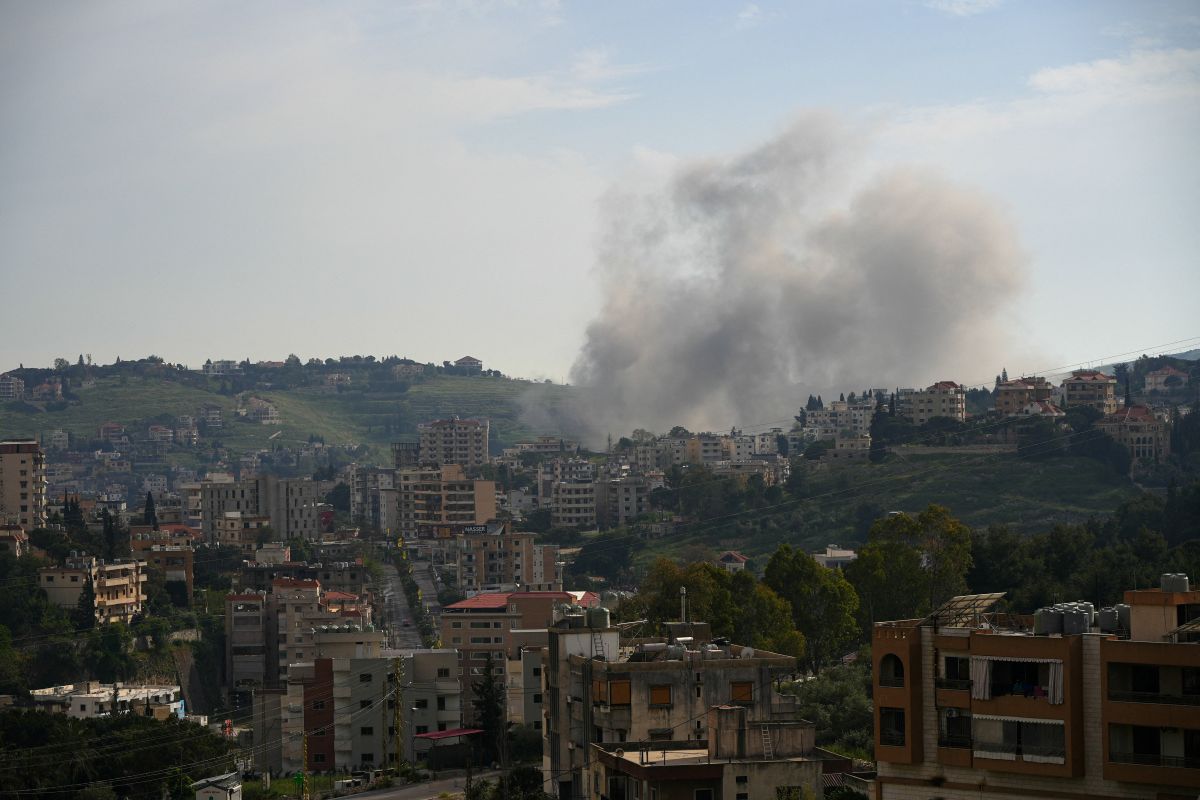
Smoke rises in southern Lebanon following Israeli strikes
Auto-refresh

Trump likely to reject peace proposal, says Iran has 'not yet paid a big enough price'

US President Donald Trump said that he had yet to review the exact wording of a new Iranian peace proposal but he was unlikely to accept it, because the Iranians had not yet "paid a big enough price."

Trump's remarks on social media concluded a day in which he publicly mused about the possibility of restarting airstrikes, the latest mixed signal as he seeks to end the war he launched more than two months ago.

On Sunday, Israel ordered thousands of Lebanese to leave villages in southern Lebanon, an escalation of a war between Israel and Iran's Hezbollah allies that has run in parallel to the Iran war and could further complicate wider peace efforts.

Trump says US could restart Iran strikes 'if they misbehave'

US President Donald Trump said on Saturday he had been told about the concept of a deal with Iran, but was waiting for the exact wording, while warning there was still the possibility of restarting strikes on the country if Tehran misbehaves.

A senior Iranian official said on Saturday that an Iranian proposal so far rejected by Trump would open shipping in the Strait of Hormuz and end the US blockade of Iran while leaving talks on Iran's nuclear program for later.

When asked about Iran's proposal before boarding a flight to Miami at West Palm Beach, Florida, Trump replied: "They told me about the concept of the deal. They're going to give me the exact wording now."

He added on his social media channel that he could not imagine the proposals would be acceptable and that Iran had not paid a big enough price for what it had done.

Asked if he might restart strikes on Iran, Trump replied: "I don't want to say that. I mean, I can’t tell that to a reporter. If they misbehave, if they do something bad, right now we’ll see. But it’s a possibility that could happen."

Iran says it's ready for diplomacy

Trump has said repeatedly that Iran can never have a nuclear weapon and said on Friday he was not satisfied with the latest Iranian proposal, while Iran's foreign minister said Tehran was ready for diplomacy if the US changes its approach.

Reuters and other news organizations reported over the past week that Tehran was proposing to reopen the strait before nuclear issues were resolved. The official confirmed that this new timeline had now been spelled out in a formal proposal conveyed to the United States through mediators.

Trump also said on Friday that "on a human basis," he did not prefer the military course of action and told congressional leaders he did not need their permission to extend the war beyond a deadline set by law for that day because the ceasefire had "terminated" hostilities.

While saying repeatedly he is in no hurry, Trump is under domestic pressure to break Iran's hold on the strait, which has choked off 20% of the world's oil and gas supplies and pushed up US gasoline prices. Trump's Republican Party faces the risk of a voter backlash over higher prices when the country votes in midterm congressional elections in November.

Iranian media said Tehran's 14-point proposal included the withdrawal of US forces from areas surrounding Iran, lifting the blockade, releasing Iran’s frozen assets, payment of compensation, lifting sanctions and ending the war on all fronts, including Lebanon, as well as a new control mechanism for the strait.

The United States and Israel suspended their bombing campaign against Iran four weeks ago, but appear no closer to a deal to end a war that has caused the biggest disruption ever to global energy supplies, roiled global markets and raised worries about the possibility of a wider global economic downturn.

Iran has been blocking nearly all shipping from the Gulf apart from its own for more than two months. Last month, the US imposed its own blockade of ships from Iranian ports.

Washington has repeatedly said it will not end the war, which has led to the deaths of thousands of people, without a deal that prevents Iran from obtaining a nuclear weapon, the primary aim Trump cited when he launched strikes in February in the midst of nuclear talks. Iran says its nuclear program is peaceful.

Speaking on condition of anonymity to discuss confidential diplomacy, the senior Iranian official said Tehran believed its latest proposal to shelve nuclear talks for a later stage was a significant shift aimed at facilitating an agreement.

Under the proposal, the war would end with a guarantee that Israel and the United States would not attack again. Iran would open the strait, and the United States would lift its blockade.

Future talks would then be held on curbs to Iran's nuclear program in return for the lifting of sanctions, with Iran demanding Washington recognize its right to enrich uranium for peaceful purposes, even if it agrees to suspend its nuclear program.

"Under this framework, negotiations over the more complicated nuclear issue have been moved to the final stage to create a more conducive atmosphere," the official said. —Reuters

Iran offers Strait of Hormuz deal, Trump says he's not satisfied

DUBAI/WEST PALM BEACH - An Iranian proposal so far rejected by US President Donald Trump would open shipping in the Strait of Hormuz and end the US blockade of Iran while leaving talks on Iran's nuclear program for later, a senior Iranian official said on Saturday.

Trump, who has said repeatedly that Iran can never have a nuclear weapon, said on Friday he was not satisfied with the latest Iranian proposal, while Iran's foreign minister said Tehran was ready for diplomacy if the US changes its approach.

Trump also said on Friday that "on a human basis," he did not prefer the military course of action and told Congressional leaders he did not need their permission to extend the war beyond a deadline set by law for that day because the ceasefire had "terminated" hostilities.

"Do we want to go and just blast the hell out of them and finish them forever? Or do we want to try and make a deal?" he told reporters at the White House when asked about his options.

Later on Friday, during a speech in Florida, Trump said the United States would not end its confrontation with Iran early "and then have the problem arise in three more years."

While saying repeatedly he is in no hurry, Trump is under domestic pressure to break Iran's hold on the strait, which has choked off 20% of the world's oil and gas supplies and pushed up US gasoline prices. Trump's Republican Party faces the risk of a voter backlash over higher prices when the country votes in midterm congressional elections in November.

Trump spends day on golf courses

Trump spent Saturday in Florida – at his Mar-a-Lago resort and the Trump National Golf Club in nearby Jupiter, and also visited the dentist. In the evening he was due to visit another of his golf resorts, Trump National Doral outside Miami, which is hosting the PGA Cadillac Championship.

Reuters and other news organizations already reported over the past week that Tehran was proposing to reopen the strait before nuclear issues were resolved. The official confirmed that this new timeline had now been spelled out in a formal proposal conveyed to the United States through mediators.

Iranian media said Tehran's 14-point proposal included the withdrawal of US forces from areas surrounding Iran, lifting the blockade, releasing Iran’s frozen assets, payment of compensation, lifting sanctions and ending the war on all fronts, including Lebanon, as well as a new control mechanism for the strait.

The United States and Israel suspended their bombing campaign against Iran four weeks ago, but appear no closer to a deal to end a war that has caused the biggest disruption ever to global energy supplies, roiled global markets and raised worries about the possibility of a wider global economic downturn.

Iran has been blocking nearly all shipping from the Gulf apart from its own for more than two months. Last month the US imposed its own blockade of ships from Iranian ports.

Washington has repeatedly said it will not end the war, which has led to the deaths of thousands of people, without a deal that prevents Iran from obtaining a nuclear weapon, the primary aim Trump cited when he launched strikes in February in the midst of nuclear talks. Iran says its nuclear program is peaceful.

Speaking on condition of anonymity to discuss confidential diplomacy, the senior Iranian official said Tehran believed its latest proposal to shelve nuclear talks for a later stage was a significant shift aimed at facilitating an agreement.

Under the proposal, the war would end with a guarantee that Israel and the United States would not attack again. Iran would open the strait, and the United States would lift its blockade.

Future talks would then be held on curbs to Iran's nuclear program in return for the lifting of sanctions, with Iran demanding Washington recognize its right to enrich uranium for peaceful purposes, even if it agrees to suspend its nuclear program.

"Under this framework, negotiations over the more complicated nuclear issue have been moved to the final stage to create a more conducive atmosphere," the official said.

Separately, the head of the Norwegian Nobel Committee said on Saturday the life of jailed Nobel Peace Prize laureate Narges Mohammadi was in the hands of the Iranian authorities after her health "deteriorated seriously," and called for her to be released to her dedicated medical team. Reuters could not independently confirm her condition. —Reuters

Gov't helps repatriated OFWs find jobs amid Middle East tensions

Several government agencies are working together to help overseas Filipino workers (OFWs) who have returned to the country due to unrest in the Middle East find employment opportunities.

According to JP Soriano's report on "24 Oras Weekend," caregiver Jesselyn Folloso, who previously worked in Israel, is among those who have returned home but is now looking to work abroad again following the regional tensions.

She said the wages offered in local job opportunities are not enough to support her family.

“Eh wala, hindi talaga kaya ng minimum lang eh. Oo, pati pagkain, siyempre, mga bayarin—kuryente, tubig—at siyempre may mga anak ka pang pakakainin. Ang mahal ng bilihin,” she said.

(It’s not enough for a minimum wage. There’s food, bills like electricity and water, and I still have children to feed. Prices are high.)

More than 160 OFWs from Kuwait have recently returned to the country, bringing the total number of repatriated workers from the Middle East to over 8,000.

The Overseas Workers Welfare Administration (OWWA) is assisting returning workers in finding jobs locally. However, based on an OWWA survey, when asked if they are still willing to work abroad—not limited to the Middle East—more than 70% said yes.

This suggests that many still view overseas employment as offering better opportunities.

The Department of Migrant Workers (DMW) said it is assessing the skills of returning OFWs from the Middle East to match them with job orders in other countries.

“It continuously is a challenge for us to be able to provide better opportunities here in the Philippines. At in practical terms, ang sinasabi ng mga kababayan natin na siguro kung mas maganda yung sitwasyon abroad at mas mapayapa, they are open,” said OWWA Administrator Patricia Yvonne Caunan.

(It continues to be a challenge for us to provide better opportunities here in the Philippines. In practical terms, our fellow Filipinos are saying that if conditions abroad are better and more peaceful, they are open to working there.)

Meanwhile, the OWWA and the Commission on Higher Education (CHED) have signed an agreement expanding scholarship programs for the children of OFWs in college. The coverage has also been extended to include OFWs themselves.

The DMW and OWWA are also monitoring more than 3,000 Filipino seafarers aboard vessels still inside the Persian Gulf and unable to pass through the Strait of Hormuz.

Migrant Workers Secretary Hans Cacdac said more than 1,300 Filipino seafarers have already safely exited the area.

“Minamanmanan natin doon yung sitwasyon ng pagtawid ng mga tripulante natin. Meron tayong inaantabayanan na at least makakatawid. Hopefully, makatawid sila.”

(We are closely monitoring the situation of our crew as they cross. We are expecting that at least some will be able to pass. Hopefully they make it through.) —MCG, GMA News