

 GMA Brandtalk
 Tracking
 Archives

Ralph Recto faces plunder complaint over P60-B Philhealth fund transfer
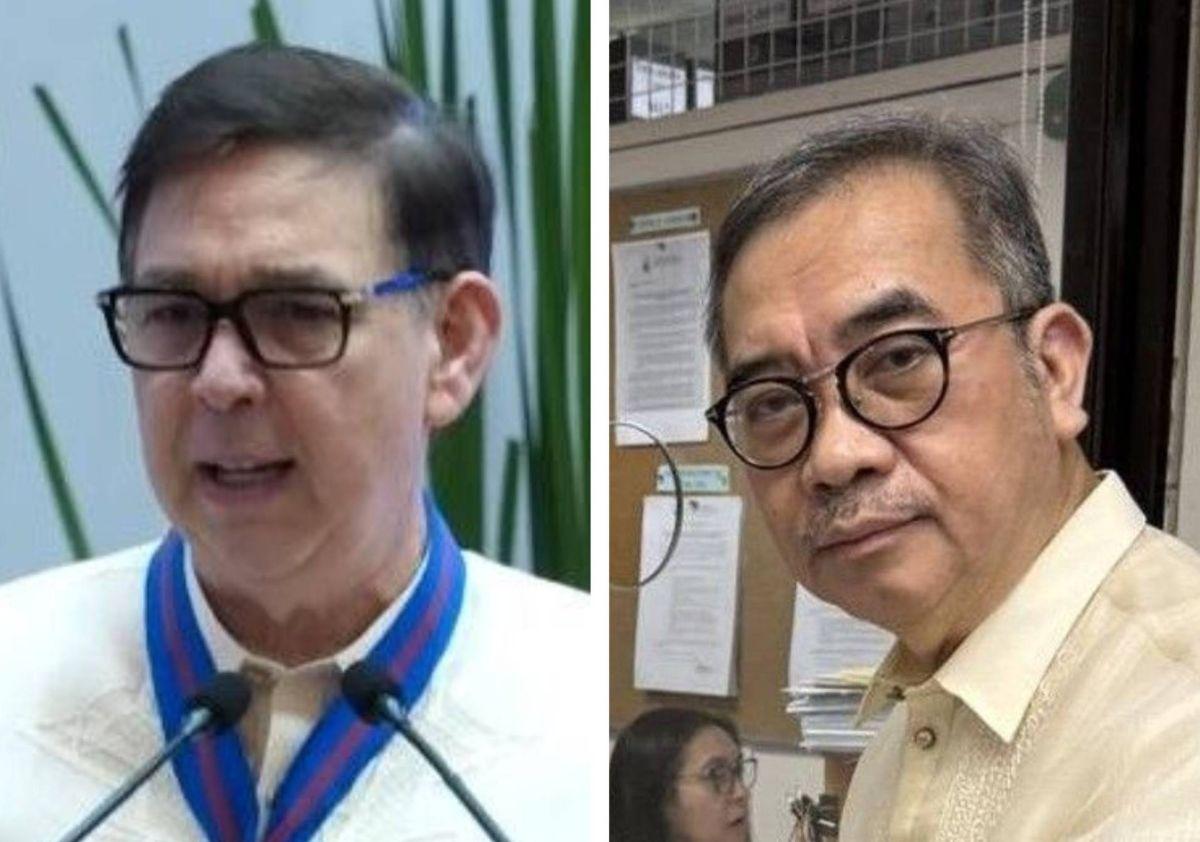
Health advocate Dr. Tony Leachon on Monday filed plunder and technical malversation complaints against Executive Secretary Ralph Recto and other Cabinet officials over the transfer to the National Treasury of the P60-billion excess funds of the Philippine Health Insurance Corp. (PhilHealth) and P107 billion of Philippine Deposit Insurance Corporation (PDIC) funds.
Leachon, who filed the complaint with the Office of the Ombudsman, said his complaint is backed by the 2025 Supreme Court decision, which declared as unconstitutional a special provision of the 2024 General Appropriations Act (GAA) or the National Budget law authorizing the return of the excess funds of government-owned or controlled corporations, such as PhilHealth, to the National Treasury.
Recto called the complaint a harassment case, saying the SC decision didn't find him liable since his actions were "done in good faith," having only followed the national budget provision.
The said special provision of the 2024 GAA is what initially prompted the Department of Finance (DOF), then headed by Recto, to issue a circular directing the transfer of P89.9 billion of PhilHealth funds to the National Treasury. When the High Court made the decision, it only ordered the return of P60 billion since only P60 billion out of the P89.9 billion PhilHealth funds were transferred to the National Treasury.
“These P60 billion [PhilHealth] funds, meant for indigent families and primary care, were stripped of their rightful purpose, betraying the people’s right to health. PhilHealth’s [already] P356.6 billion deficit left hospitals unpaid, cancer and dialysis programs starved, and millions of Filipinos abandoned,” Leachon said in a statement.
“The so-called 'restoration' of ₱60B in [the] 2026 budget was a hollow gesture — too late for families already buried in debt, too late for patients who never received care. This is not merely a legal matter but a moral one. The ₱60 billion could have saved lives, kept hospitals afloat, and brought dignity to families in despair. Instead, it was stolen from the sick and the poor,” he added.
Under the law, plunder is committed when any public officer who, by himself/herself in connivance with members of his/her family, relatives by affinity or consanguinity, business associates, subordinates or other persons, amasses, accumulates or acquires ill-gotten wealth through a combination or series of overt or criminal acts in the total amount of at least P50 million.
Likewise, the plunder law states that “any person who participated with the said public officer in the commission of an offense contributing to the crime of plunder shall likewise be punished for such offense.”
Technical malversation, on the other hand, is committed when a public official “applies public funds or property under his/her administration to some public use; and the public use for which the public funds or property were applied is different from the purpose for which they were originally appropriated by law or ordinance.”
Further, Leachon alleged that ₱107 billion worth of PDIC funds sent to the National Treasury “weakened depositor safeguards and eroded trust in financial institutions.”
“Filing these charges is a duty to the Filipino people — to restore integrity, deter future abuses, and reclaim the promise of universal health care,” Leachon said.
'Thrown out with great force'
In a statement, Recto called Leachon's suit was a harassment case.
“It should not be tossed aside gently. It should be thrown out with great force,” Recto said in a statement.
"His claim that I have financially benefited from said PhilHealth funds is an outright falsehood. This is libelous,” he added.
“To date, P60 billion has already been returned to the PhilHealth coffers. Hence, this case is nothing but a harassment case by a person masquerading as a health reformer, a perennial applicant for Health offices across several presidencies, but always rejected despite his aggressive self-promotion,” Recto said.
“An elementary understanding of public expenditure would lead one to conclude that I was not and never in a position to have been able to touch a single centavo of it. His claim that I have enriched myself has no iota of truth," he added.
Leachon insisted that Recto and other Cabinet members are criminally liable because they refused to heed the September 2025 call of no less than President Ferdinand Marcos, Jr., to return the excess P60 billion PhilHealth funds and instead waited for a Supreme Court decision before taking action.
“After the December 5 [2025] decision of the Supreme Court, they should have actually returned the money from the Treasury to PhilHealth," Leachon said.
"They should not have waited for the 2026 budget and charged that to the taxpayers' money. It means that there was no payment,” he told reporters, referring to the P60 billion government subsidy that was provided under the 2026 national budget.
“The Supreme Court did not make a decision [on their liability] because it was not in the prayer (pleading) [of the petitioners]. The prayer is that [to declare the] unconstitutionality of the P60 billion transfer. But we know that there should be accountability,” Leachon said.
“Ganun na lang ba ‘yun? Sorry, nagkamali kami. Paano na lang iyong pera? Sa lahat ng puwedeng pagnanakawan, bakit kalusugan ng tao?” Leachon added.
In a statement, Deputy Speaker Paolo Ortega V said Cabinet members should not be distracted by baseless complaints such as the ones filed by Leachon against Recto and other government officials.
“In public service, especially in high-ranking posts, allegations, intrigues, will be there to disrupt the work and taint the Cabinet officials’ credibility. Pero huwag magpatinag. Tuloy lang ang trabaho at serbisyo para sa taumbayan,” Ortega said.
(These should not faze them. They should focus on doing their jobs and being of service to people.)
“In the case involving the Executive Secretary, it is important to distinguish between policy decisions made by institutions and personal enrichment allegations directed at individuals. Filing a complaint does not automatically establish guilt,” Ortega added.
The House leader also underscored the need to separate institutional decisions from accusations of personal wrongdoing.
“In a democracy, accountability is important, but so is fairness. Allegations must always be tested against facts, evidence, and due process,” Ortega said. —KG/NB, GMA News

