






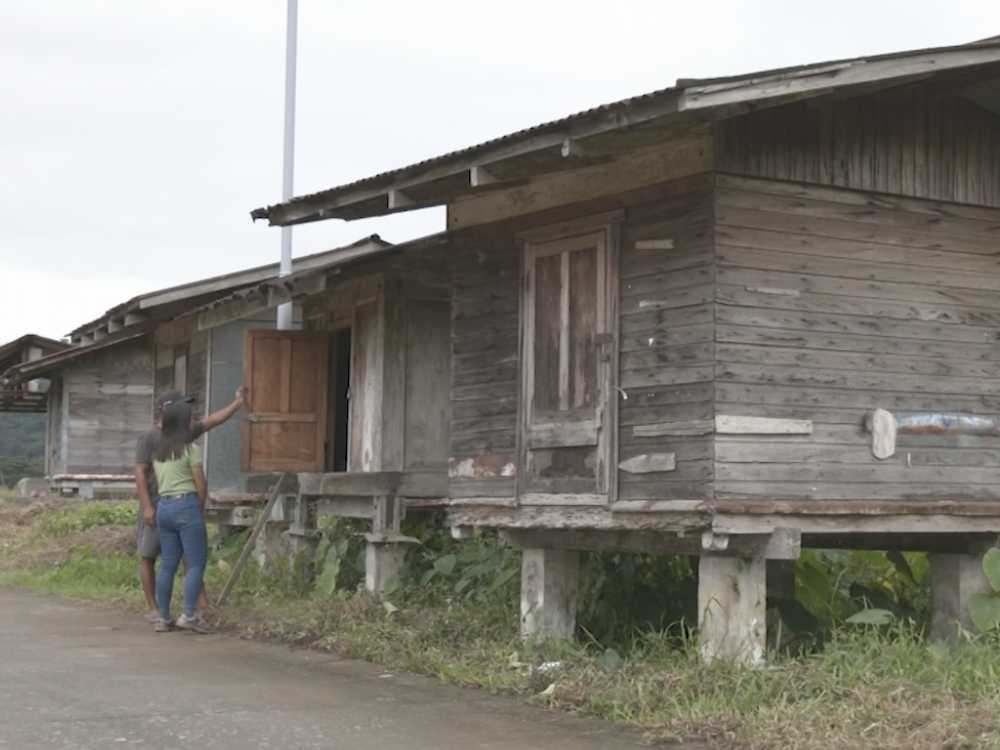
In the secluded city of Tabuk in Kalinga lies a hidden gem, the Naneng Heritage Village and Rice Terraces, established long before World War II.
Situated an hour away from the city proper, this village is a glimpse into the past, with houses known as Ginitob built in the 1920s.
Almost identical in structure, the Ginitob houses are home to a thousand residents, many of whom are closely related.
The entrance showcases traditional granaries or "agamang" alongside huts used for storing harvested rice.
At the heart of the village stands the Saint Joseph Parish, constructed in 1927, with 86-year-old Patricia Balawan reminiscing about her contribution to its construction.
"1 cubic [na] bato [ay] 6 pesos, 1 cubic darat [soil] [ay] 5 pesos, [lahat] galing sa ilog,” she said.
Adjacent to the church lies the resting place of the first two Belgian priests of the parish, Father Leon Lindemans and Father Miguel Veys. The Belgian carpenters they brought with them played a crucial role in designing the houses in the area.
"Yung mga style ng bahay noon, mga cogon lang siya at saka wala pa siyang first floor," Jonee Dangiwan, a staff member at the Tourism Information Center, said.
Naneng also pioneered the weaving of "Inabel," a traditional fabric.
Mary Balawan, a weaver, said that when she focuses, she can create about four pieces a month. She finds it challenging but it's the design of the people from Naneng.
Recognizing the richness of its culture and history, the Tabuk City Government is considering the enactment of an ordinance that can preserve the heritage village.
Atty. Dick Bal-o, the vice mayor of Tabuk City, emphasizes the need to balance the preservation of historical structures with property owners' rights:
“We want to support the original structures there so that we can have a tourist attraction here in the city… We are also considering passage of ordinance like that, but of course we need to subject it for more legal studies because we also need to balance the right of the owner, because that is a property of their own, and they also have the right to determine on what to do on their property.”
Preserving the legacy of the past, the Naneng Heritage Village stands as a testament to the city's rich history, weaving stories of culture and nature, awaiting discovery by tourists and future generations.