






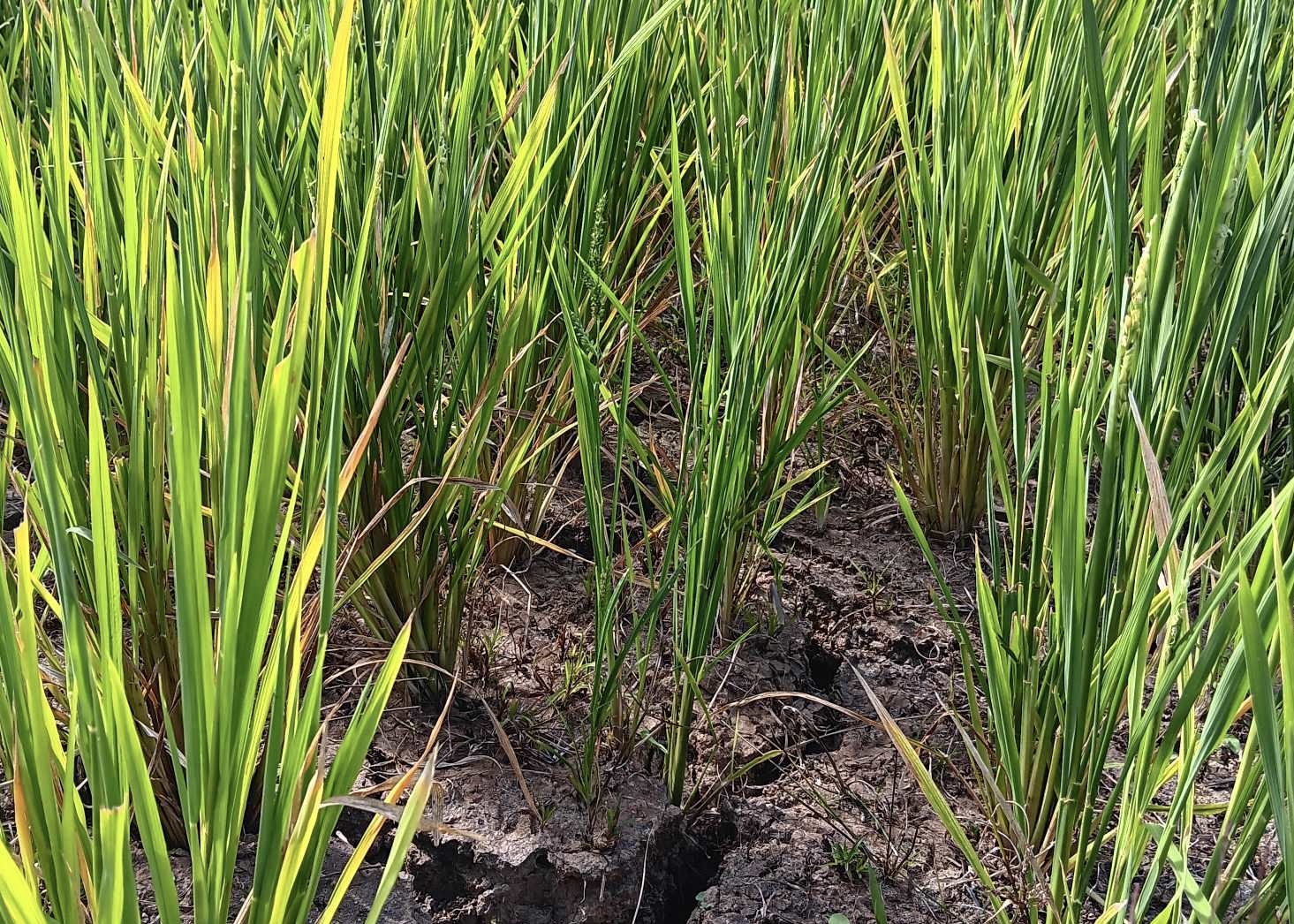
Manang Besing’s eyes plowed through the rice fields she cultivated in Sitio Sip-ak, Sudlon Uno, a mountain barangay of Cebu City.
The place is fit for farming. It is on highlands where rainclouds gather and the mist shrouds the area especially in the early afternoon in the cold months. But at the onset of the dry season, Sudlon Uno suffers from the miserable condition that a dry weather can bring about.
Manang Besing, or Visitacion Bellita, is set to count losses instead of grains. By March, she could have harvested rice again, but this would not happen this year. The panicle, or head of grain, has a hard time developing. Grains that were able to push their heads have not grown that much; these are either thin or hollow.
Last year's harvest rendered 30 sacks of unhusked rice, but Manang Besing could not hope for more this year. She even worries of losses she might not recover at all.
Manang Besing's prayer is more about rain, lately.
“Bisan kausa lang unta,” she said.
"Yamog na lang gyud ang nagbisibis ani," she said to mean that plants go moist because of the dew that looks as though they are watered in the early morning.
Manang Besing tilled rice fields that are terraces-like. From afar, the verdant benches are perfect for Instagram photo drops. However, the paddies have dried up because of the sweltering heat brought about by the El Niño phenomenon.
A farmers association in Sudlon Uno with 60 members has felt the same.
They have requested help from the barangay for additional water containers and water hoses. However, the barangay has also been waiting for answers from the Cebu City Agriculture Office the way Manang Besing is waiting for rain to fall amid the hot weather.
Narciso Ragudos, president of the Farmers Association in Sudlon Uno said additional hoses would help much in siphoning water from key sources.
The area has springwells which the residents are dependent on. With the demand for both domestic and agricultural uses, water supply recently has not been enough. The farmers group is grateful as the services provided by the National Irrigation Administration (NIA) that has at least 200 consumers have been of tremendous help to farmers resiliency and productivity amid the weather.
GMA Regional TV Balitang Bisdak went with the president of NIA-consumer association, Councilman Allan Cabilles, to Satuhan, a cavern where the supply of water is profuse on wet months. But even the water now flowing from Satuhan has also receded with below-normal rainfall received by Cebu in the past weeks.
Cabilles likened the circumference of flowing water from the cave to that of a man’s calf, but now the flow reduced to just about the circumference of a man’s wrist.
“Sa una ang gidak-on sa agas sa tubig mura'g bagtak sa tawo, pero karon mura na lang og gidak-on sa pulso,” Cabilles said.
Water from Satuhan is also siphoned by other farmers who have flower farms and vegetable farms to tend.
The City Agriculture Office, through assistant agriculturist Arlie Gesta, said they could not furnish yet the exact data on agricultural losses in the said barangay but they have provided the water containers.
“Naa na sila’y drums, plastic mulch, naa sad fertilizers, mga seeds, nagsugod na ta’g distribute sa seeds,” Gesta said.
Plastic mulch helps suppress weeds and conserve water in crop production.
Further, the Department of Agriculture-Disaster Risk Reduction and Management Operations Center in its Bulletin No. 04 on the Effects of El Niño on February 25, 2024 stated that there is no reported damage and losses to crops yet in the region.
DA-DRRM OpCen cited that there were "slight manifestation of wilting and soil cracks in all the provinces of Central Visayas. However, there is no reported damage and losses in crops in the region yet. The supply and prices of agricultural and fishery goods are still available and stable."
Moreover, the DA 7 is continuously conducting surveillance for possible pest and disease occurence due to the increasing temperature and lack of water.
Earlier, DA encouraged farmers to plant more drought-resistant crops such as mung beans (monggo) and peanuts.