






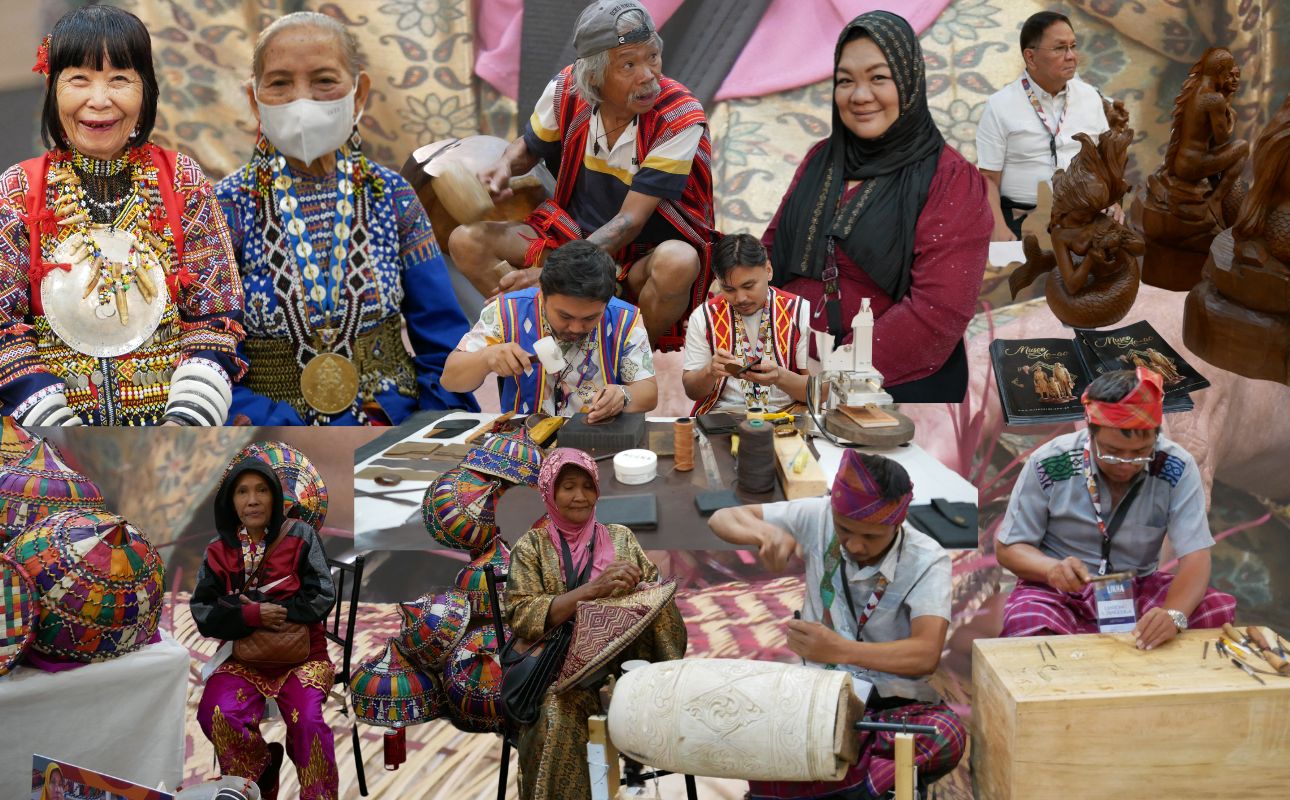
From the intricate Abaca-Ikat textile patterns of the Mandaya weavers of Davao Oriental, thriving under the passionate tutelage of Gawad sa Manlilikha ng Bayan awardee Samporonia Madanlo, to the delicately hand-woven silk binakol that is indigenous to communities in the Cordilleras and Ilocos region, the undeniable genius of Filipino craftspeople and artisans has found a proud home in the Metro in LIKHA – a gathering of sorts that brings together teachers of tradition in one grand showcase of Filipino arts.
LIKHA, now in its third edition, has put together a magnificent display of Filipino arts and craftsmanship at the Philippine International Convention Center (PICC), inviting approximately 87 community artisans, local craftspeople, and folk artists – all revered in their respective communities.
COMMUNITY ARTISANS: PRIDE OF THE REGIONS
A natural consequence of being a 7,641-island archipelago is being blessed by many multifaceted cultures, made unique by each region’s equally multifaceted cultural affordances and limitations.
Geography, for example, shapes how a particular community designs what is appropriate to wear for every occasion, like how Tausug weaver Abu Aida designs Saruk Kambigasans (fisherman’s hats) for the fisherfolk in her hometown in Maimbung, Sulu. Using shiny split stems of ‘nito,’ a fern commonly found in the forests of Sulu, Aida manually crafts these dome-shaped basketry hats that are used both as a functional headwear and an aesthetic embellishment by Tausug men.
The resources that are naturally abundant within each region also become its people’s go-to ingredient when making art. Such is the case for Lanao del Sur’s Salika Maguindanao, whose Kakaw Meranaw, a community-based livelihood project based in the town of Bayang, takes pride in its artisanal Palapa Chocolate. Palapa is a flavorful condiment made by the Maranao people of Lanao del Sur, produced using ginger, chili, white scallions, turmeric, and grated coconut.
Below are three more meaningful stories of creativity you can find at Likha– remarkable not only for their distinctive artisanal brilliance, but more importantly for their being accomplice in the sustenance and continuation of a Filipino culture that remains as diverse and strong as ever.
Eugenio Uyagon Bayninan, 74, is an Ifugao wood carver from the breathtaking town of Banaue, Ifugao who’s been perfecting his craft since he was 18. His ingenuity in wood carving is limitless, as he can make anything and everything his imagination affords him. “Imahinasyon talaga, kahit walang pag-gagayahan, basta imahinasyon lang,” said Bayninan, who came to Likha with a team of wood workers from a Banaue-based antique wood shop. “Based din po sa daily activities namin, sa pangaraw-araw,” explained young Ifugao Sammie Bulligan about their carvers’ inspiration when making wooden statues.
29-year-old Tausug weaver Ruhina Muhaimer, who hails from the town of Maimbung, dedicates more than eight hours a day to making Pis Siyabit, a laboriously hand-woven tapestry by the Tausug tribe of Sulu. She started when she was 9, learning from her own mother’s mastery of the Tausug’s iconic art of weaving that is heavily characterized by sacred geometries. “Kahit walang order, naghahabi ako. Yung pagwi-weave kasi namin, ito’y traditional na ginagamit namin, yung pis syabit ginagamit ng mga lalaki para sa headscarf, yung malong naman sa mga babae. Gumagawa rin kami ng tela para sa sablay at sawal,” said Ruhina.
The story behind Mugna Leather Arts, Bukidnon’s leading community-based leather shop, is somehow different. Its masterminds, Japhet and Christopher Pagaling, brothers from Bukidnon, were full-fledged musiqueros before figuring out a newfound passion for leather-made products in 2021. When the world closed down because of the pandemic in 2020, many forms of livelihood had to massively take a back seat, and for a while, in-person events almost became obsolete. As percussionists who used to make a living out of live performances and party invitations, Japhet and Christopher had to take a detour. “2021, pandemic time po, we tried to penetrate the online market, nagstart kami with zero money and knowledge. Nagsimula sa kung ano ang gusto ng client online and we would produce that, so kung ano talaga ang need ng aming market,” Japhet told GMA Regional TV News. As of writing, Mugna’s humble workshop in Barangay Violeta in Malaybalay, Bukidnon has provided livelihood to over 30 leather crafters and designers.
Their heterogeneous stories are just a few of the many colorful threads interwoven into one massive tapestry of Filipino craftsmanship and artistry,
At the end of the day, the cultural progress of our Filipino brothers and sisters from the regions stand on the shoulders of giants, taking after the exquisite genius of master artisans and craftspeople who continue to preserve, promote, and elevate their community’s respective .
“Likha 3: Likha Ko, Lahi Ko” is offering free admission and is open to the public from June 7 to 11 at Forum 2 and 3 in PICC. It launched its week-long exhibit last June 6, 2024, during which a special press and an opening ceremony was held, graced by First Lady Louise Araneta Marcos.