






The University of the Philippines (UP) Tacloban has introduced a new breakthrough in the processing of mussel, referred to locally as “tahong."
In a report of the Philippine Information Agency Eastern Visayas, it cited that the breakthrough has “given hope and a brighter future for the mussel industry in the Eastern Visayas region.”
UP Tacloban President Angelo Jimenez opened officially its Mussel Glycogen Production Facility at its new campus in Barangay Santa Elena in Tacloban City, Leyte, according to the report dated July 7, 2025.
In his message, Jimenez expressed optimism that the "facility signifies a positive approach to address the challenges faced by mussel farmers due to frequent red tide infestation in the mussel-producing region."
“Every time there is a red tide phenomenon, a lot of farmers here, particularly fisherfolk, the poorest of the poor in the fishing industry endure its heaviest impact, and the damage could hit P300 million. But we are able to extract another use for the mussels so people can continue to make a living out of it,” Jimenez said.
Further, the report said that mussel glycogen production facility is the first of its kind in the Philippines where UP Tacloban made an innovation by converting the mussel broth or “tahong” soup into glycogen.
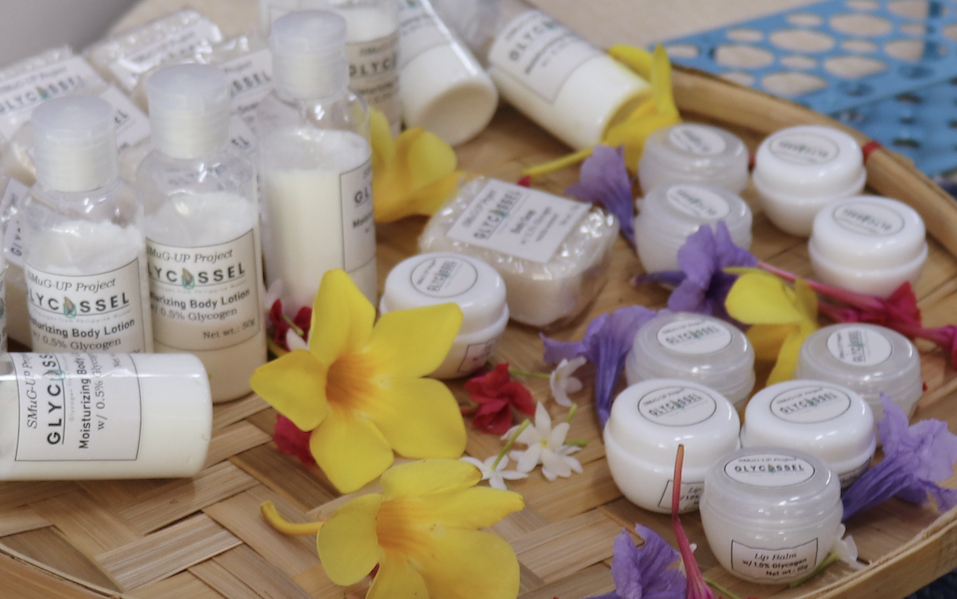
The broth extracted from mussel was used initially in the production of cosmetics such as lip balm, soap, lotion, among others.
Furthermore, the report said that the project was funded primarily by the Department of Science and Technology-Philippine Council for Agriculture, Aquatic and Natural Resources and Research Development (DOST-PCARRD), through its Research and Development Program.
“Since ang raw material nito ay yung ating tahong, we will be able to help the mussel industry in the Philippines through this project,” said Dr. Adelaida Calpe, director of PCARRD Inland Aquatic Resources Research Division in an interview with PIA 8.
Moreover, it was learned that since its inception a few years back, DOST-PCARRD granted “over P11 million for the project comprising the first and second phases.”
According to Dr. Rolly Fuentes, a Chemistry professor at UP, who leads the project dubbed “Sustainable Strategies for Mussel Glycogen Upscale Production” (SMUG-UP), the glycogen facility aims to address the problem of the region relative to the frequent occurrence of red tide.
(Courtesy: CBA/PIA Eastern Visayas)