






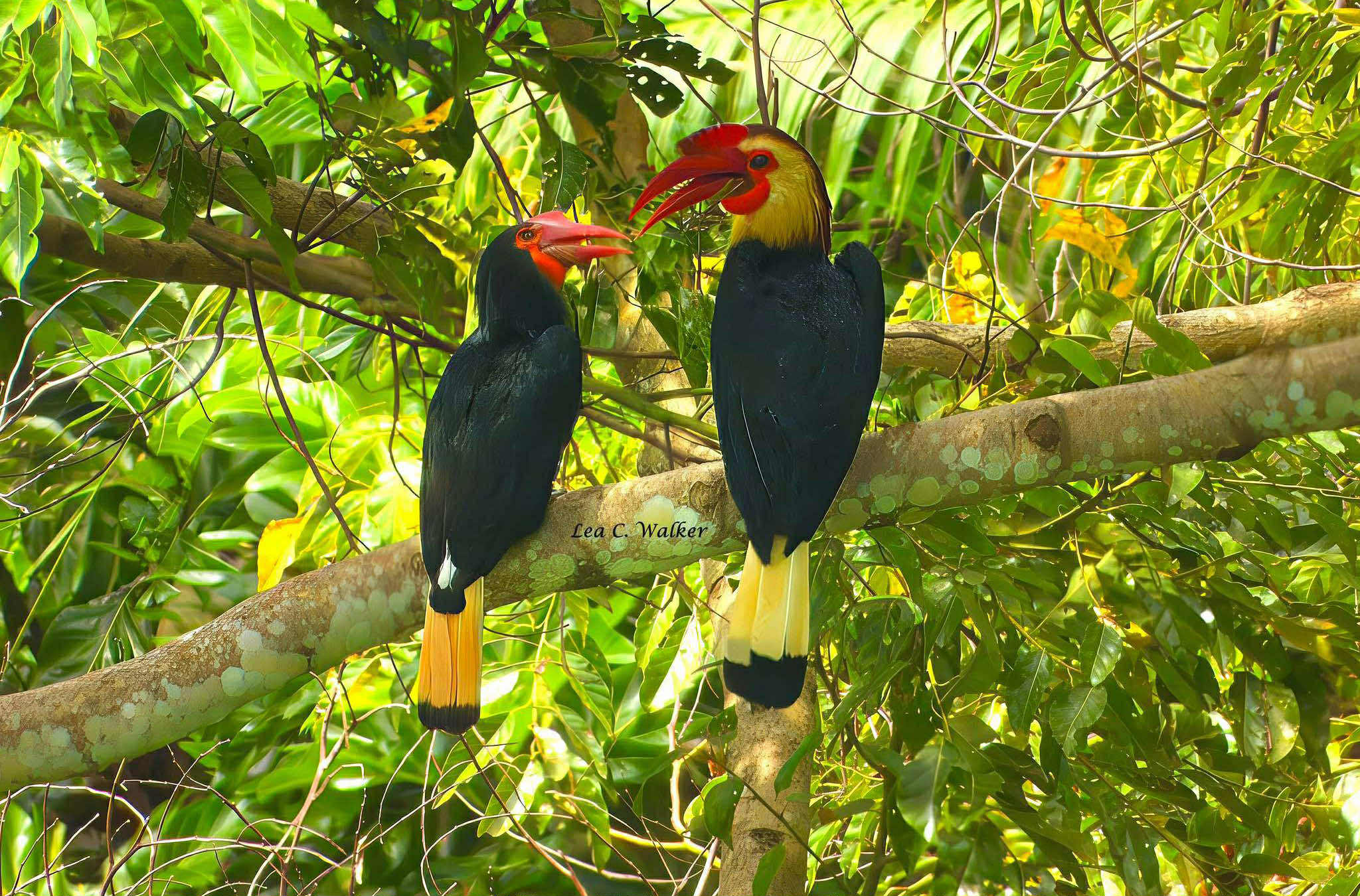
A pair of Mindanao wrinkled hornbills known locally as “Kalaw” was spotted perched on a branch of a tree in Barangay Tagpopongan, Samal Island in Davao del Norte.
Lea Walker, a photography enthusiast and birder, captured photos of the birds near their resort on September 6, 2025.
She said her nephew first recorded a hornbill sighting in Samal Island in 2022, prompting them to put the photo in a frame.
She considers the sighting of the birds as a blessing to her family.
“Blessing for us na they are here, to find out na naa ra diay dinhi sa among yuta maka-happy kaayo,” Walker said.
According to John Eric Lador, a biologist and environmental management specialist of the City Environment and Natural Resources Office-Island Garden City of Samal (CENRO-IGACOS), Mindanao wrinkled hornbills are classified as vulnerable species and eat mostly fruits.
They can reportedly survive if forests and watersheds are healthy as these provide them with food and shelter.
“Sagad ginakaon sa kalaw is mga prutas pero mokaon sab ni og insekto ug giklasipika nga vulnerable species. Mabuhi lang ang mga kalaw kung magpabilin nga buhi ug lig-on ang mga watershed ug lasang tungod kini ang nagahatag kanila og pagkaon ug pinuy-anan,” Lador said.
However, their population has been under threat from hunting and deforestation.
PROTECTION
Recently, Councilman Jack Daniel Juntilla recovered marble guns from a shanty in the forest, which are believed to be used for hunting hornbills.
“Ato lang undangon ang pagpangayam ug pagpanguha og mga kahayupan sa kalasangan kung ato man gud ning buhaton posible kining mawala na sila dill na makita sa sunod nga henerasyon, kung naay makakita (mangayam) isumbong lang sa barangay,” Juntilla said.
Lador also said protecting hornbills is not only about saving a species but also about preserving the watersheds.
“Kinahanglan masabtan sa kumunidad ang pagpanalipod sa mga kalaw dili lamang nagluwas sa usa ka species apan nagapadayon usab sa himsog nga watershed,” Lador added.
Since 2022, Walker has been planting native trees in the area to create more nesting and resting sites for birds and other wildlife.
“Mawala na ang ubang kahoy dira but we have a forest here nga amone gi-preserve. I am hoping nga ang atong wildiife mupuyo sila ba, they will come,” Walker said.