




Have I been blind to the word “blind?” Should I even be using that term in this context? Is describing ignorant behavior or fanatical adherence as “blind” unintentionally insensitive to the visually impaired?
I didn’t expect to be asking these questions after writing an essay last week about the Baybayin script embedded in our passports (repeated on nearly every odd-numbered page.) To my surprise and delight, the piece sparked over 150 mostly thoughtful comments. Some gently debated the meaning of “katwiran” — does it mean reason, righteousness, or justice in the Baybayin statement in Philippine passports, “Ang katwiran ay nagpapadakila sa isang bayan?”
I anticipated some pushback on my personal translation — “Reason can elevate a nation” — especially when I linked it to Rizal’s critique of “blind obedience” to religious authority under colonial rule. I also referenced his disdain for “blind faith.”
What I didn’t expect was a comment from a discerning reader named Aaron John Dizon, who identified himself as “someone who is actually blind.” His message was simple but pointed:
“Yung paggamit po ba ng ‘blind faith’ at ‘blind obedience’ ibig sabihin ay kaming mga bulag, by default, kulang sa critical thinking at sunud-sunuran na lang?”
*(When you use ‘blind faith’ and ‘blind obedience,’ does that imply that we blind people, by default, lack critical thinking and simply follow orders?)”
He added:
“We rely heavily on reason and independent thought. I guess even the blind can see the irony. Just a small push for more mindful and inclusive language in our media. It goes a long way in building a more inclusive society. Thanks!”
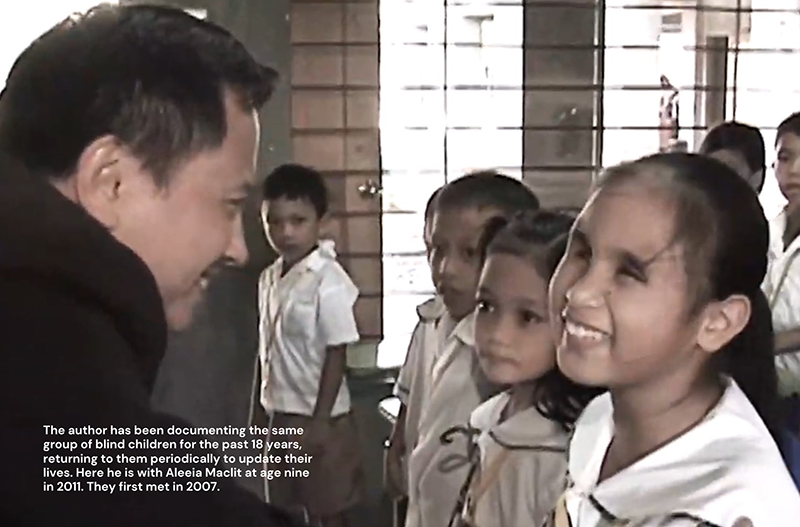
The irony wasn’t lost on me either. At the very moment I read Aaron’s comment, I was working on a video about Aleeia Maclit — a blind college student I’ve been documenting since she was a bright, talkative five-year-old. She’s now 23, in her final year of pursuing a psychology degree.
For nearly two decades, I’ve told stories of the blind: their triumphs, challenges, and the systemic barriers they face. If anyone should have been more mindful about inclusive language, it’s me.
My initial instinct was to revise my essay. I replaced “blind obedience” with “mindless obedience” and “robotic obedience.” Not only did I think this avoided offending a community that has long been marginalized, but it also forced me to choose words that were arguably more precise.
But then I began to wonder: how many other expressions do we use routinely that carry unintended baggage?
Take “cripple,” for example. It’s often used metaphorically — “Fear can cripple a person’s ability to make rational decisions,” or “The cyberattack crippled the hospital’s database.”
To be clear, I wouldn’t use the word “cripple” to refer to anyone with a disability. But even as a metaphor, as with “blind,” I can see how it can subtly reinforce negative stereotypes, such as helplessness when it comes to the disabled. In fact, there was once an attempt to replace disabled with “diffabled,” short for differently abled, which never really caught on.
As a writer and editor, I know these nuanced word choices matter. I should’ve considered more carefully whether using blind in a negative context, however metaphorical, was fair.
Curious, I asked the blind college student Aleeia how she felt about those phrases, “blind faith” and “blind obedience.” Her response was thorough, layered and worth quoting in full:
“‘Blind obedience’ and ‘blind faith’ are both real expressions, and they actually have deep meanings connected to human behavior. I won’t go into textbook definitions, but I’ll explain what they really mean in my own words. Both are examples of following or believing without thinking, questioning, or recognizing when something is already wrong. ‘Blind obedience’ means obeying someone completely, even when what they are asking for is not right. ‘Blind faith’ means believing in something or someone so strongly that you refuse to see any mistake or flaw, no matter how obvious it is. Both can look like loyalty on the surface, but when you look closer, it’s loyalty without awareness, loyalty that turns into denial.
“Both phrases include the word ‘blind,’ but that doesn’t mean they are referring to people who are physically blind or visually impaired. The ‘ blind’ in those expressions is metaphorical. It means being unable — or unwilling — to see the truth. Still, the concept is similar in a symbolic way. When someone is visually impaired, they can’t literally see the world. In the same sense, a person with ‘blind faith’ or ‘blind obedience’ chooses not to see reality, especially when that reality is uncomfortable or painful. It’s like closing your eyes to the truth because it’s easier to pretend that everything and everyone you believe in is perfect.
“For me, hearing the word ‘blind’ in this context isn’t offensive at all. Just because a word is used doesn’t automatically mean it’s discrimination or an insult. Some people get offended right away when they hear ‘blind,’ but I think that reaction often comes from misunderstanding the context. In my case, I don’t feel insulted when someone calls me blind, because it’s simply the truth. I am blind. It’s a fact, not a negative label. And I don’t treat my blindness as a problem I need to get rid of or a weakness I have to fix. I see it as something that’s naturally part of me, something that shapes how I experience the world. It’s not something separate from who I am — it’s part of my story.
“You can compare it to having a tattoo. A tattoo becomes a visible mark that’s part of your identity. It tells a story about you, and you carry it everywhere you go. My blindness is like that — it’s visible in how I live, but it’s not something shameful or painful to admit. It’s part of my whole being. That’s why I don’t get offended when I hear the word ‘ blind’ used in expressions like ‘blind faith’ or ‘blind obedience.’ For me, it depends on the *context* — on how and why the word is used.
“Before people react or feel hurt, they should first look at where the word comes from, what it really means, and what the speaker’s intent was. Words don’t always have the same meaning depending on the situation. In ‘blind faith,’ for example, the word ‘blind’ is not used to describe a disability — it’s used to describe the *refusal to see what’s wrong.* That’s very different from the literal meaning.
“And if we changed the word ‘blind’ to something else, like ‘wrong faith’ or ‘imperfect faith,’ it wouldn’t mean the same thing anymore. ‘Wrong faith’ only talks about a belief that’s incorrect, while ‘blind faith’ talks about *how* the person believes — how they follow something without seeing or recognizing what’s wrong. The word ‘blind’ adds that deeper image of being unaware, of choosing not to open your eyes to the truth. That’s what gives it weight and meaning.
“So for me, ‘blind faith’ and ‘blind obedience’ are not offensive words. They are metaphors meant to describe certain human behaviors, specifically, the danger of believing or following without thinking. And just because the word ‘blind’ is used doesn’t mean it’s attacking people who are actually blind. It’s describing a mental and emotional condition, not a physical one. What really matters is understanding the meaning, the context, and the intention behind the words — because that’s where respect and real understanding begin.”
Her words are not just eloquent; they offer a perspective grounded in clarity, not offense. Not all blind people will feel the same way, of course. Language evolves, and so do sensitivities. But Aleeia’s response reminded me that it’s not just about what we say, but why and how we say it.
Her words don’t excuse insensitivity, but they offer space for reflection and nuance, something we desperately need in conversations about language and inclusion.
So, will I continue using phrases like “blind faith” and “blind obedience?”
Maybe. But only after thinking through what I’m trying to say, and whether there’s a better, clearer, or more considerate way to say it.
I thank Aaron and Aleeia for that.