






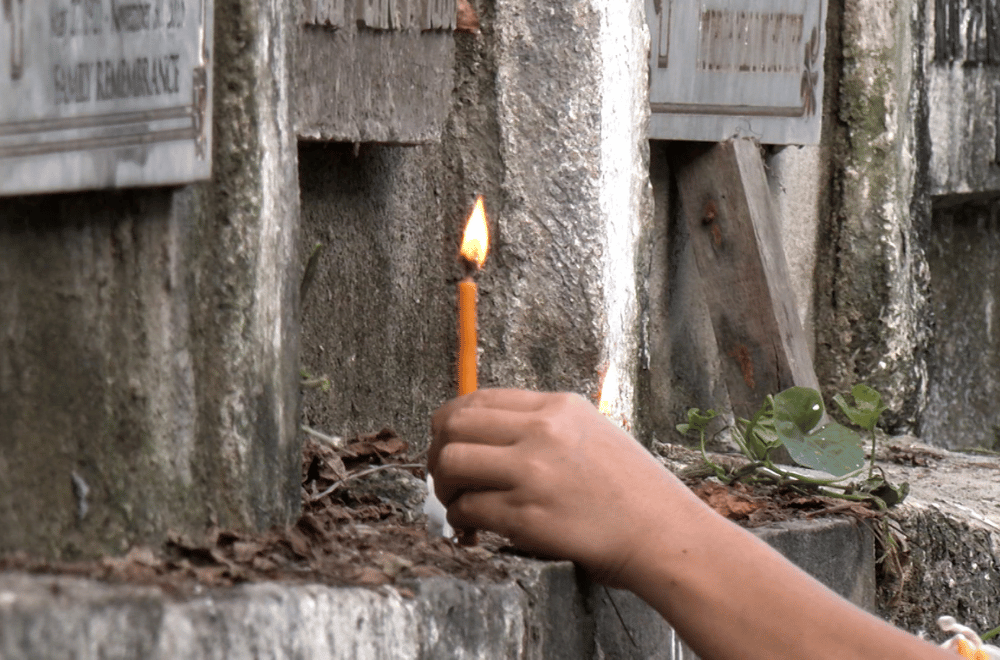
As Filipinos visit cemeteries to honor their departed loved ones this Undas season, many may not know where the term “Undas” actually came from.
For residents like Hazelyn Parayno, Undas is a time to remember and offer prayers for their loved ones who have passed away.
“’Yung Undas ay para ma-remember natin yung loved ones natin na sumakabilang buhay po,” she said while visiting her father’s grave in Calasiao, Pangasinan.
Sociologist Professor Herdy Yumul of Mariano Marcos State University said the word “Undas” likely originated from the Spanish word honras, which means “honor,” and the term das, which means “to give.”
“This is a combination of Spanish terms which may have been adopted by Filipinos kaya naging Undas, na pagbibigay-galang, pagbibigay-respeto at pagpupugay sa mga patay,” Yumul said.
Aside from remembering the dead, many Filipino families also prepare food offerings known as “atang,” especially in Ilocano culture. Hazelyn said she also observes this practice.
“Atang is pag-offer sa kanila — favorite food ng mga yumao noong nabubuhay pa sila,” she said.
Professor Yumul added that the word atang may have originated from the Hokkien term “ià-tǎng,” referring to food offerings to the dead — a practice also common among Chinese communities.
“We have the term ià-tǎng from the Hokkien. Alam naman natin the Chinese are also very big on offering foods for the dead,” Yumul explained.
He also noted that the term traces further back to the Proto-Malayo-Polynesian word “ataŋ,” showing how ancient trade and cultural exchange influenced Filipino traditions and language.
No matter where the words Undas and Atang came from, Yumul said what matters most is the meaning behind them, honoring and remembering the departed with love and respect.