





Janus Victoria’s Japan is not the Japan of Pinoy dreams. There’s no Tokyo Disneyland in her film or graceful geishas or the chic geometric spectacle of Shibuya’s frenetic pedestrian crossing.
It’s certainly not the quaint, idealized Japan captured in “Kita Kita,” the last Filipino feature we saw set in that country.
Ten years in the making, Victoria’s “Diamonds in the Sand” instead immerses us in Japan’s underbelly: lonely salarymen scrolling through porn at their desks, elderly people dying alone, and brief reprieves of joy found in drunken gatherings at girlie bars. Yet this is only half the story.
Lily Franky, one of Japan’s most respected character actors, imbues divorced salaryman Yoji with quiet, understated nuance. After his mother dies, he begins to glimpse another world through Minerva, his mother’s middle-aged Filipina caregiver and her sole companion.
As they sort through his mother’s belongings, Yoji recalls her parting words, warning him of the solitude that awaits.
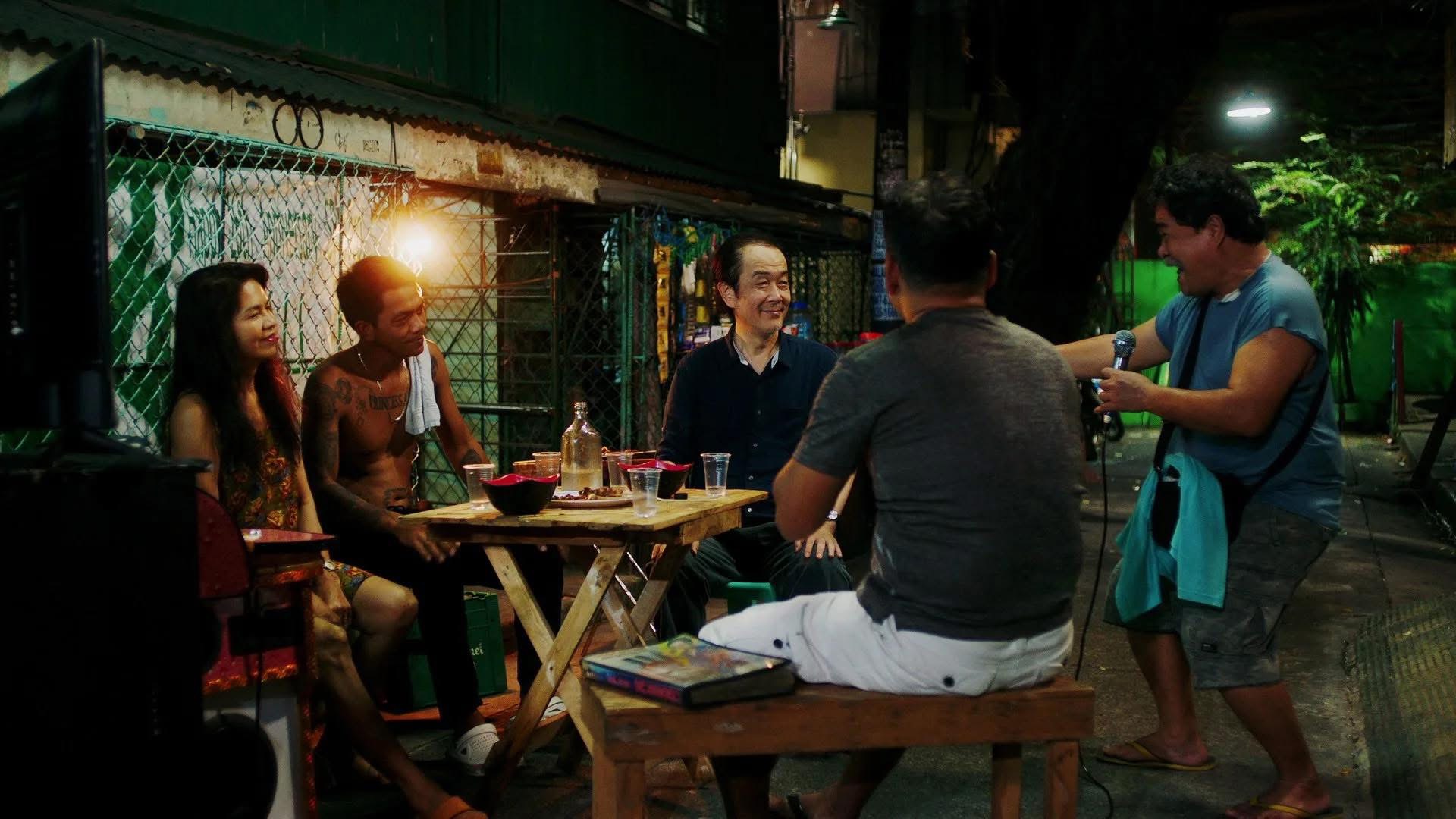
His search for a different way of living soon takes him to chaotic Manila, into Minerva’s dense Sampaloc neighborhood, where silence is rare and no one ever eats alone. Here, Yoji makes friends with ease, including the warm, folksy Uncle Toto, played with effortless charm by Soliman Cruz.
The film’s central tension lies in its attempt to navigate this delicate, emotionally fraught cultural transition.
Before I go any further, I should disclose that Janus Victoria and I have worked together for more than ten years on TV documentaries and podcasts. My voice is even briefly heard in this film, which is the extent of my involvement.
After the gala screening, during the QCinema International Film Festival, I told her how amazed I was to learn that, while we were consumed by documentary work all those years, including several bloody stories about the drug war, she had been carrying this ambitious, complex Japan story in her head the whole time.
She could have chosen an easier subject, one that didn’t require moving back and forth between two vastly different societies. Japan, after all, is not just another country. Some Filipinos still alive today survived the brutality of the Japanese occupation in World War II, and those memories have been passed down through generations. Today, the Philippines’ relationship with Japan is friendlier but remains complicated. Japan is one of the Philippines’ largest aid donors, while hundreds of thousands of Filipinos have lived there for work. Some have raised a generation of “Japinos,” among them the daughter of the film’s lead actress, Maria Isabel Lopez, who lends her caregiver role a restrained, steely dignity.
These cultural contrasts are the essential backdrop for Yoji’s search for an exit from his isolation.
Some societies unfamiliar to filmmakers have ended up as caricatures in their films, the product of sloppy research or insensitive treatment.
In “Diamonds in the Sand,” however, the believable characters and meticulous attention to detail reflect Janus’s careful, patient engagement with a culture not her own, an understanding earned through study and immersion. I like to think that this commitment to authenticity is one of the advantages of a documentary background.
According to Janus during the gala’s talk-back session, the story was triggered by a news report about “kodokushi,” the Japanese phenomenon of dying alone. In Japan, commercial companies are often tasked with clearing the belongings of the deceased when no family is available to perform this mournful duty.
This grim reality becomes Yoji’s epiphany in the film, when he discovers a neighbor decomposing in his apartment after such a death. Later, as he eats alone, he realizes that his leftovers have been overtaken by maggots. It’s a graphic and unexpected image of our common fate.
Yoji’s life feels transformed when he walks into Minerva’s Manila, where “kumain ka na ba?” is a friendly greeting and strangers invite him to take shots of gin. He’s treated like family. There’s even the prospect of romance.
But it’s also a noisy world where loud music keeps him up at night.
A less skillful filmmaker might have oversimplified this contrast of two cultures. It’s true, Manila is where you’ll always have company, and where Yoji rediscovers intimacy.
Yet it’s also a place where a friend can be gunned down in cold blood in a crowded alley. A TV newscast drones in the background, recounting the latest killings of the drug war. Unlike in Japan, at least people in the Philippines do not often die alone. And wakes are lively reunions. But there are many causes of death.
At first, Janus’s Japan seems too dystopian to be true. In its sterile loneliness, time drags on, not much is said, and the camera lingers on stoic faces and mundane spaces.
Then the chatter of OFWs disrupts the quiet, reminding us of what Japan signifies for many Filipinos: a stable refuge where work is steady, trains run on time, crime is low, and the state provides even when families won’t.
Would Yoji give all of that up to be in a sociable Manila that has its own dystopian dangers? Friendship there has a price, as he learns.
Life offers no simple answers, and this film leaves us questioning the choices we ourselves might make.

We use cookies to ensure you get the best browsing experience. By continued use, you agree to our privacy policy and accept our use of such cookies. For further information, click FIND OUT MORE.