






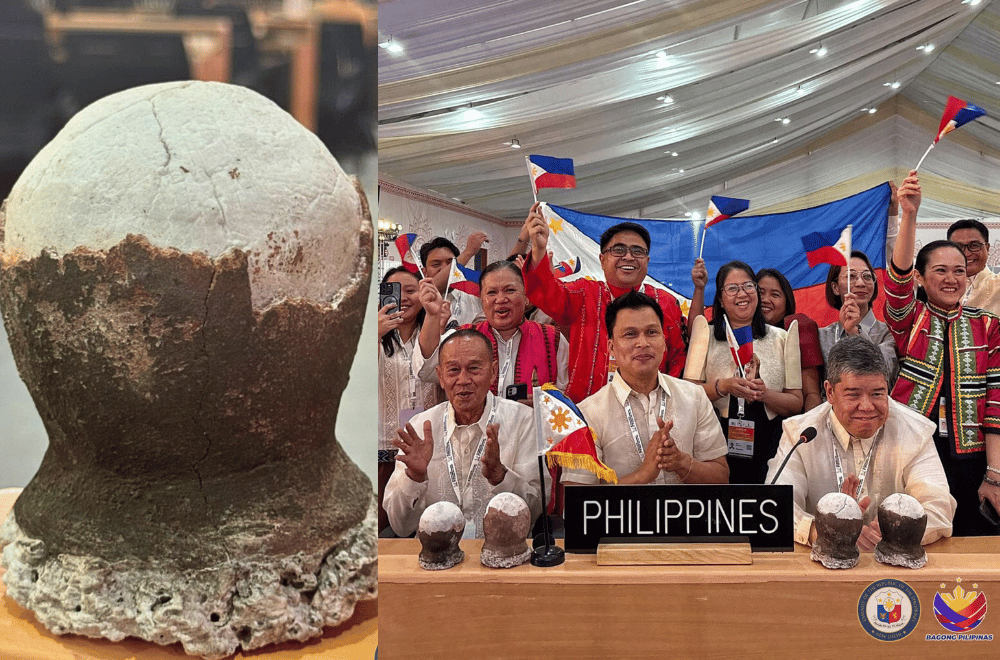
The practice of making what is called 'Asin Tibuok,' the artisanal sea salt of Bohol, has been inscribed into the UNESCO List of Intangible Cultural Heritage (ICH) in Need of Urgent Safeguarding. This marks the first Philippine traditional food process to ever be included in a UNESCO ICH list, according to the National Commission for Culture and the Arts (NCCA).
In a separate post on Facebook, the Philippine Embassy in India says it has organized a special lecture on Asin Tibuok in connection with the 20th Session of the UNESCO Intergovernmental Committee for the Safeguarding of Intangible Cultural Heritage in New Delhi this December 2025.
"The Philippine Embassy in India joins our colleagues from the Philippine Embassy in France, the National Commission for Culture and the Arts, and the Provincial Government of Bohol in celebrating the inscription of the practice of making #AsinTibuok, the artisanal sea salt of Bohol, Philippines, on the list of Intangible Cultural Heritage in Need of Urgent Safeguarding, at the ongoing UNESCO session in New Delhi," its post reads.
CLOSE TO DISAPPEARING
Much of what is known publicly today about the technique behind Asin Tibuok was documented through a project funded by the Endangered Material Knowledge Programme (EMKP) of the British Museum on 2022.
The project, led by Principal Investigator Andrea Yankowski, with Dr. Ana Maria Theresa P. Labrador as collaborator and Joselito Alipala as research assistant, recorded the complete process of building a traditional kamalig (salt workshop) and producing Asin Tibuok in Alburquerque, Bohol, the only town where the craft survives.
The work was hosted by the Central Visayas Association of Museums, Inc. (Cebu).
According to the EMKP report, household salt-making once lined the southwestern coast of Bohol. A century ago, families built open-air salt workshops made with native materials and produced artisanal salt for local trade. Today, very few people can still build a workshop, shape the clay pots, or make the salt itself, and this knowledge had never been documented fully until the project.
Workers and demonstrators for the project were organized by KASAMA, headed by its president Felix Pinlac, who managed the construction team and selected artisans to demonstrate the craft. Drone images were provided by local videographer Lejun Vincent M. Boiser.
TIED TO LOCAL SOIL, BELIEFS, AND COMMUNITY
According to the Intellectual Property Office of the Philippines (IPOPHL), Asin Tibuok, or “whole salt,” is oval-shaped and made through a labor-intensive process involving burned coconut husks, filtered ash, and seawater boiled in clay pots. The salt’s smoky flavor and light sweetness come from this long method.
IPOPHL said the craft depends on Alburquerque’s clay-rich soil, coastal environment, pottery skills, and cultural beliefs, including traditions meant to “protect” the fragile clay pots during firing and boiling.