






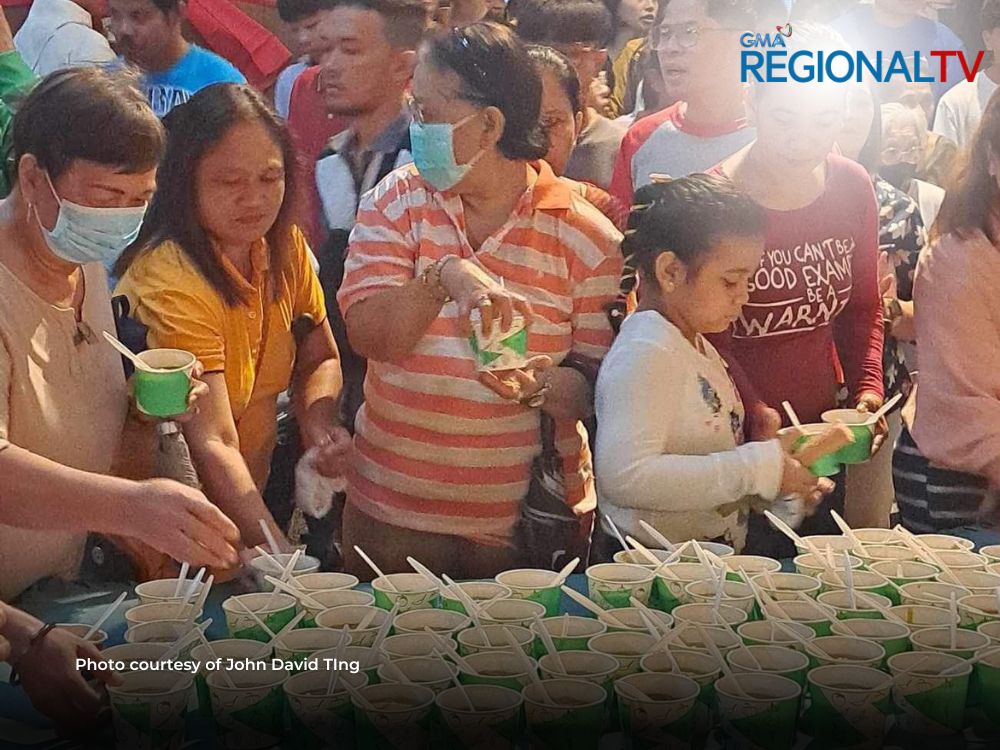
“Lugaw is life” is a battlecry for the ages. The Filipino rice porridge, popular for being the versatile dish that it is, has endured the test of time. Porridge, in general, has always been the sick’s comfort food, the rainy weather’s best friend, and, in the Philippines at Christmastime, a quintessential breakfast-in-a-styro that gives warmth to Misa de Gallo attendees.
‘SIMBANG GABI’ STAPLE
During the holidays, this boiled, seasoned, and soft-textured rice gets a special assignment not on the Noche Buena table, but on early mornings during the nine-day Simbang Gabi where Filipino Catholics don’t mind getting up at dawn to attend Mass.
Local church organizers in the Philippines hold feeding sessions typically after every dawn Mass. Bowls of fresh porridge can be seen lined up on red-and-green-clothed tables at the chapel’s veranda.
Lugaw, with all its much-needed warmth at 5 a.m., awaits to fill the stomach of churchgoers.
In Bacoor Cavite, Father Migz Reyes Concepcion III of Nuestra Señora dela Paz y Buen Viaje Parish Church believes that having a ‘feast’ with dawn Mass attendees can be one of the easiest ways to connect with his parishioners.
“The quickest way to a man’s heart is through his stomach,” Father Migz tells a church patron after celebrating the fifth of the nine dawn Masses on December 20.
According to Father Migz, he applies aptly the lessons from the stories of Jesus Christ having a ‘salo-salo’ with people from all walks of life, suggesting that Jesus would sit down and feast with anyone and everyone.
“Kasama lahat, makasalanan man o hindi,” he says.
Elma, who hails from Sorsogon, attends dawn mass not only to fulfill her faith’s mission but because she sees this as an opportune moment to serve others.
"Mayroon kaming obligasyon na pagpa-lugaw sa mga simbahan tuwing Simbang Gabi,” she says.
THE LUGAW’S APPEAL
The rice porridge is a staple in the Philippines for a reason. Lugaw, in its most basic form, is soft, served warm, and packed with everything one needs: meat (usually chicken), rice, seasoning, and boiled egg.
Any variation or tweak in its recipe only makes it better. Always better.
Lugaw can be more gingery. It can be topped with chicharon bits. It can be seasoned with calamansi, toyo (soy sauce), patis (fish sauce), or with any combination from these three. It can be without egg, but with tripe and other innards.
Because Simbang Gabi’s time slot is unusually early, organizers and volunteers double their efforts - from kitchen preparations to table clean-up. It is only fitting, therefore, for this after-service gathering to be graced with good food.
“I think it’s a nice gesture by the Parish for its patrons because they are going the extra mile. It may be just lugaw to some, but it takes effort to prepare. It’s like a treat for us na gumigising in the wee hours of the morning,” said Bacoor, Cavite’s Johannes Nicolo Yap, a regular dawn Mass attendee.
Filipinos’ love and appreciation for lugaw is incomparable. It is an iconic dish that wears many hats and serves many masters. In fact, one can find a dedicated ‘lugawan’ on almost every corner of every community even without looking hard enough.
Eating lugaw during Simbang Gabi is more than just enjoying a sumptuous and culturally important dish. It gives a sense of community and belongingness, a quintessential opportunity for Filipino Catholics to mingle with people of the same faith and conviction.
This practice, as simple as it may seem, touches the Pinoy seeking warmth against December’s cold ‘Amihan’ breeze - either as a regular churchgoer or, as Filipino pop culture reference puts it, a member of the ‘Samahan ng Malalamig ang Pasko.’