





The National Museum of the Philippines (NMP) said it is open to a “constructive dialogue and exchange of technical assistance” with parties concerned to facilitate sharing with Cebu four 19th century panels donated recently to the museum.
NMP issued the statement after Cebu officials appealed for the return of the panels to Boljoon town where the panels trace original provenance from the Patrocinio de Maria Santissima Parish Church.
In the statement furnished to GMA Regional TV News on February 19, 2024, NMP also said its donors “procured these specific panels through legitimate means, highlighting their commitment to ethical acquisition.”
STATEMENT
NMP’s statement reads in full:
“In light of the ongoing conversations surrounding the recent donation of 19th-century panels to the National Museum of the Philippines (NMP), we wish to address concerns and provide clarity on the matter.
First and foremost, we reaffirm our unwavering commitment to our mission of preserving, curating, and exhibiting cultural and historical artifacts for the Filipino people. The inclusion of these panels in our National Fine Arts Collection ensures that they will benefit from the expertise and resources necessary for their proper study, display, and conservation for generations to come.
We recognize the broader historical context surrounding the Roman Catholic Parish Church of Patrocinio de Maria Santisima in Boljoon, Cebu. A revered cultural landmark known for its architectural uniqueness and historical significance, the church and its artifacts hold a nostalgic and spiritual place in the hearts of many Boljoanons and Cebuanos, embodying centuries of religious and cultural heritage.
It is noteworthy to emphasize that our donors procured these specific panels through legitimate means, highlighting their commitment to ethical acquisition. Moreover, the donors' decision to acquire these artifacts and donate to the Philippines reflects their dedication to preserving cultural heritage and promoting patriotism.
We acknowledge the historical vulnerability of church artifacts to looting and improper disposal in the past. While ethical concerns may arise, it is essential to consider the intricate historical context influencing these actions. The dynamic ownership and circulation of these cultural assets underscore the necessity for open dialogue and collaborative initiatives to address these complexities.
We extend our assurance to Governor Gwen Garcia, Mayor Jojie Derama, Archbishop Jose Palma, and the community of Boljoon that the NMP is eager to engage in constructive dialogue and exchange of technical assistance to facilitate sharing the four panels with the people of Cebu as soon as possible.
In the meantime, in order to prioritize the welfare of these panels, we will continue to pursue preventive conservation measures necessary to prepare them for public display in due course. This demonstrates our steadfast dedication to fostering understanding, appreciation, and access to our rich cultural heritage for all Filipinos.”
“A GIFT TO THE NATION”
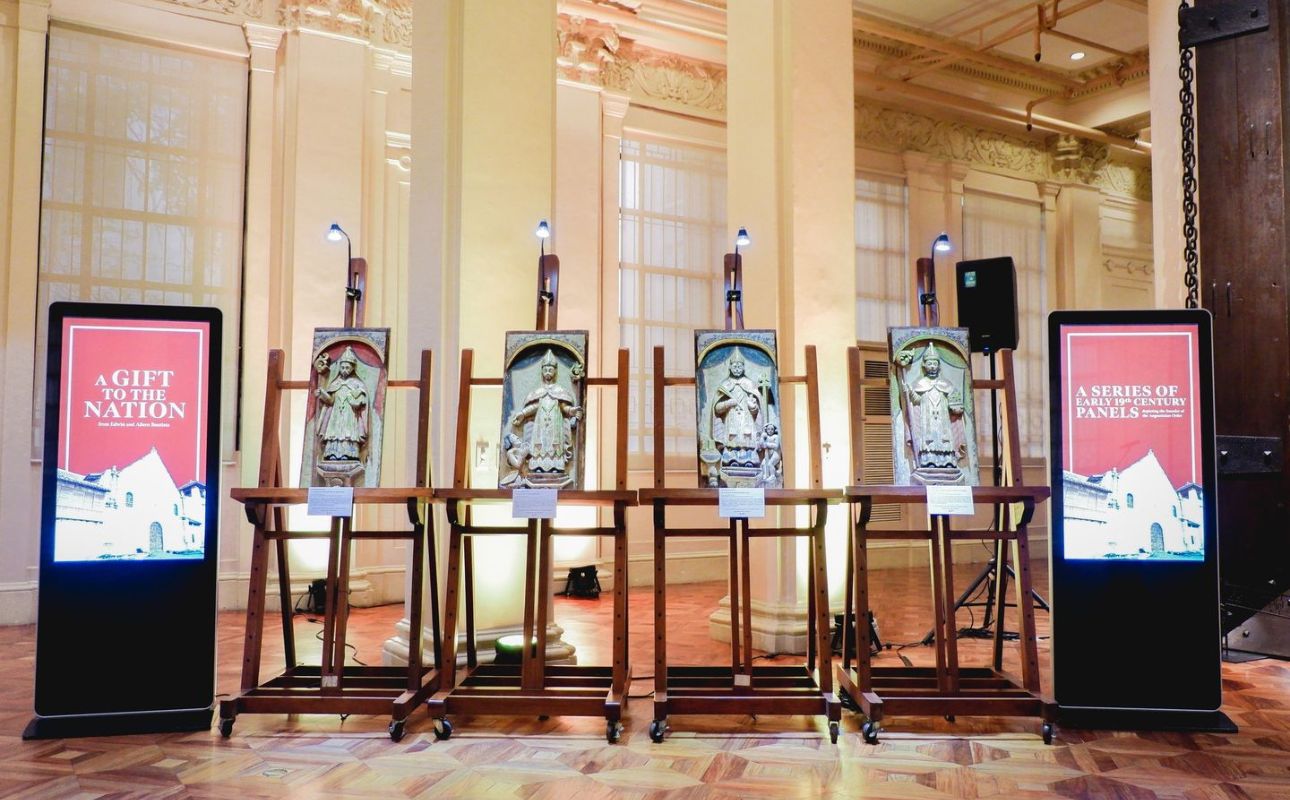
During a turnover ceremony on February 14, 20204, the National Museum of the Philippines welcomed to its collection a “Gift to the Nation” - four 19th-century panels “depicting the founder of the Augustinian Order.”
The pieces were received as a donation from private collectors.
The panels, which reportedly went missing some time during the 1980s, exhibit the image of Augustinian order founder Saint Augustine of Hippo and have its original provenance from the pulpit of Boljoon’s heritage church.
But images of the panels posted online generated reactions with netizens from Boljoon calling for the panels’ return to the town, citing the artifacts’ vast significance to the town’s preservation of material culture.
APPEAL
Cebu Governor Gwendolyn Garcia and Boljoon City Mayor Jojie Derama, in separate social media posts, appealed for a conversation with NMP for the possible return of the panels to Boljoon.
Derama turned to Facebook to express his “ardent desire to see these panels installed once again in the pulpito of the church.”
“As the Mayor of the Municipality of Boljoon I am mandated to serve the general interest of my beloved people of Boljoon. This mandate includes the valorization of the cultural identity of the people of Boljoon which is closely associated to our rich cultural heritage assets,” Derama said.
Describing the need to preserve the town’s culturally rich history, he referred to these church assets as a defining element of the city’s identity that urgently needs “safeguarding.”
“Church cultural assets are included in this mandate since Boljoon's identity is deeply rooted to our faith as a local church. As of these past days, we are made aware of the resurfacing of the lost panels in the pulpito of the heritage church of Boljoon,” he said.
“This is our unified call and appeal to the National Museum of the Philippines to open a venue for proper negotiations to have these panels be returned to Boljoon,” he said further.
Garcia, meanwhile, said in a report by the Capitol’s news portal:
“I hope that we can — the National Museum and the Provincial Government of Cebu — come to an agreement here because after all, usa ra may atong tumong. We have just one goal: to preserve, and more so to nurture and cherish, these irreplaceable treasures of our Cebuano past.”