






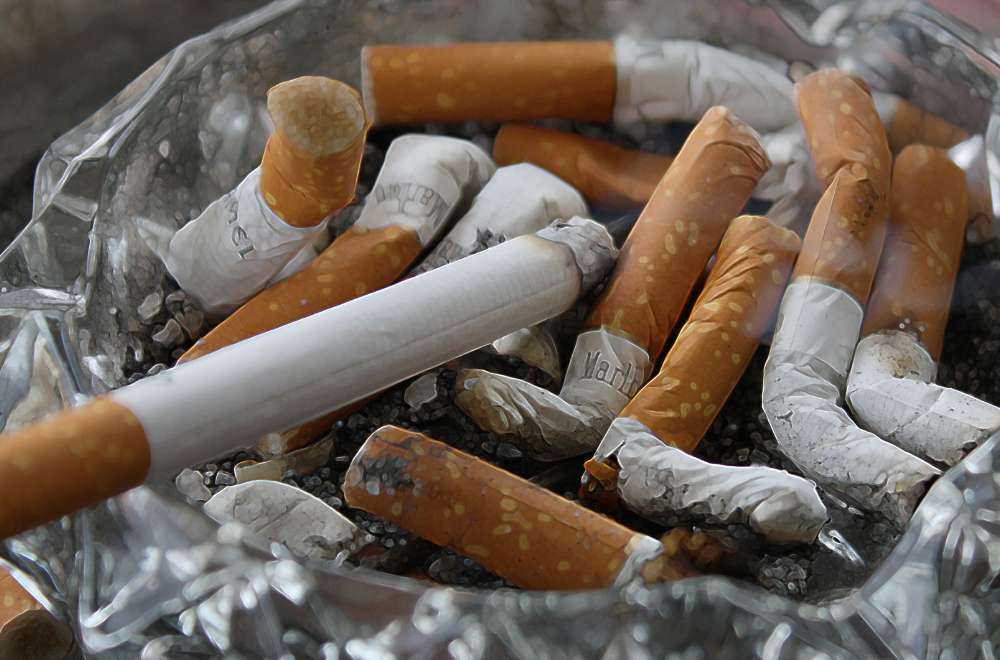
The number of smokers in the Bicol region rose to 503,149 users in 2023 from 78,958 in 2022, based on the data from the Department of Health (DOH) Bicol Center for Health Development (CHD).
According to DOH Bicol CHD, the numbers were recorded during a risk assessment for Bicolanos in 2023.
Factors that contributed to the rise include vaping and the ongoing pandemic.
Since 2019, the number of smokers continued to rise until 2021. It dipped slightly in 2022, and went up again in 2023.
2019 - 46,181
2020 - 79,431
2021 - 80,163
2022 - 78,958
2023 - 503,149
In Barangay Malbong, Gainza, Camarines Sur, 'Alona' has been running her sari-sari store for 25 years. She noticed a continuous increase in the number of people buying cigarettes even among minors over the past two decades.
"Kasi sa ngunyan, ang na-oobserve ko, dawa mga menor de edad siya, nagsisigarilyo na siya," Alona said.
Among her regular customers is Michael Caudilla, 39, who started smoking at the age of 19 reportedly due to influence of friends. Now, with a family to support, he is feeling the financial strain caused by his smoking habit.
"Magastos [mag-sigarilyo]... lalo nagmamahal ang mag sigarilyo talaga. [Mas maray pa na] sa allowance na lang kan mga aki pag-eskwela [i-gastos]," he said.
Jonel Abayon, 18, used to smoke but has transitioned to vaping, describing it a more cost-effective alternative.
"Naisip ko, mapundo na ako pagsigarilyo, kaso dae ko tulos mapundo-pundo kaya nagvi-vape na muna ako [pero] magastuson,” he said.
RISKS
Carla Ludivice, RN, Manager of Lifestyle-Related Diseases and Risk Factors/Occupational Safety and Health Program, warned that smoking can lead to various diseases.
"Smoking kills 100% kung ikaw ay chain-smoker. You could have various diseases from long-term smoking. Number one would be COPD [Chronic obstructive pulmonary disease] and emphysema, and lung cancer kapag masyado nang malala," she said.
The effects of smoking also extend to those exposed to second-hand to fourth-hand smoke.
Individuals in close proximity to smokers or those inhaling residual smoke on clothes or other items may face health risks.
According to the Centers for Disease Control and Prevention (CDC), some health risks linked with secondhand smoke are:
1. Respiratory issues with increased risk in asthma, bronchitis, and pneumonia,
2. Ear infections,
3. Sudden Infant Death Syndrome (SIDS) for infants exposed to secondhand smoke,
4. Development of a heart disease,
5. Lung cancer,
6. Stroke,
7. Worsening of existing health conditions,
8. Pregnancy complications,
9. Reduced lung function; and,
10. Behavioral and cognitive issues to children such as attention deficit hyperactivity disorder (ADHD) and decreased academic performance.