






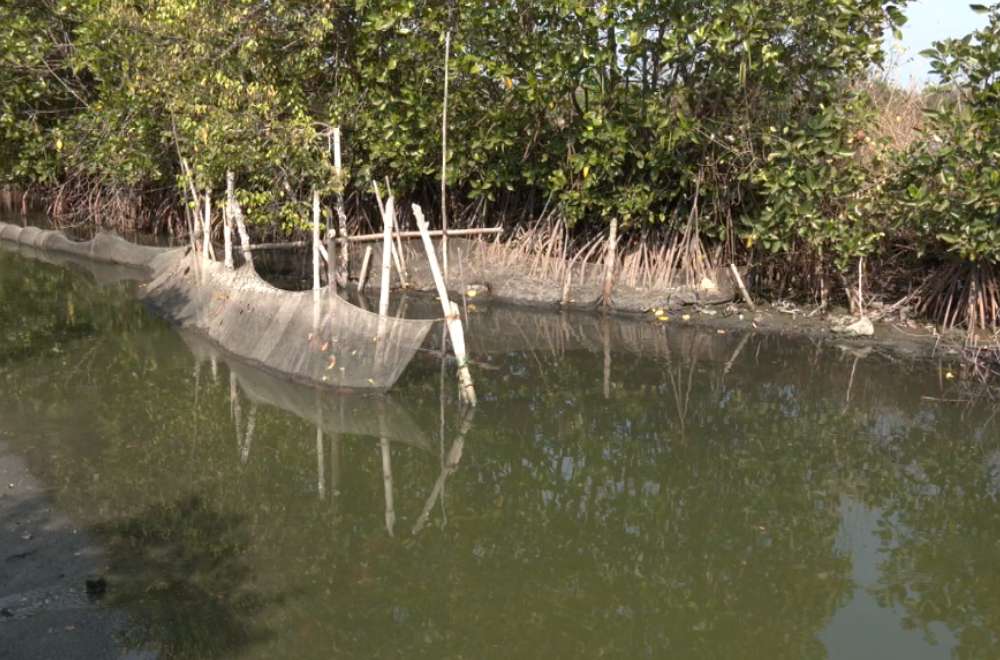
Barangay Maasin in Mangaldan, Pangasinan is grappling with the effects of El Niño, which have led to decreasing water levels in fish farms.
The dwindling water supply is impacting the growth of milkfish, which rely on sufficient water for nutrition.
"Inaantay [namin] ang tag-ulan, kung sakaling umulan. Mamatay ang isda, matutuyo kasi," Roger Petilla, a barangay councilman, said.
Some fish growers have resorted to forced harvests to salvage their fish and prevent further losses.
"Sila ay may natanggap na intervention sa Department of Agriculture. Nabigyan sila ng water pump if in case na kailangang patubigan ang kanilang fish pond," Merle Cuison-Sali, the Municipal Agriculturist, said.
Despite this, the supply of fish is still enough, according to authorities.
"'Yung fish, maganda naman ng ani ng kausap natin, sa mga tilapia. Itong hito, maganda 'yung growth, wala pang problema. We hope na by May, kung may El Niño, doon natin makikita talaga kung apektado 'yung patubig kasi freshwater," Engr. Rosendo So, Chairman of the Samahang Industriya ng Agrikultura (SINAG), said.
Meanwhile, in Barangay Potiocan, Malasiqui, Pangasinan, the cultivation of okra has suffered due to the harsh effects of El Niño.
Farmers report stunted growth, yellowing plants, and difficulties in cultivation despite efforts to irrigate the crops.
"Kapag mainit kasi ang panahon, imbes na maganda ang paglaki, naapektuhan, naninilaw at ‘yung puno tumitigas. Mahirap na paasensuhin kahit na anong gawin mong patubig," Roel Tadina, a farmer, said.
In Barangay Tolonguat, El Niño has led to the abandonment of okra fields as the crops were damaged by pests, including hoppers.
The Municipal Agriculture Office is still assessing the extent of the damage and identifying potential assistance for affected farmers.
Jovilito Alamar, the Municipal Agriculturist of Malasiqui, notes that delayed planting may have been the cause of the stunted growth of crops.
"Siguro mga late planting na ‘yung mga sinasabi nilang nababansot," Alamar said.