






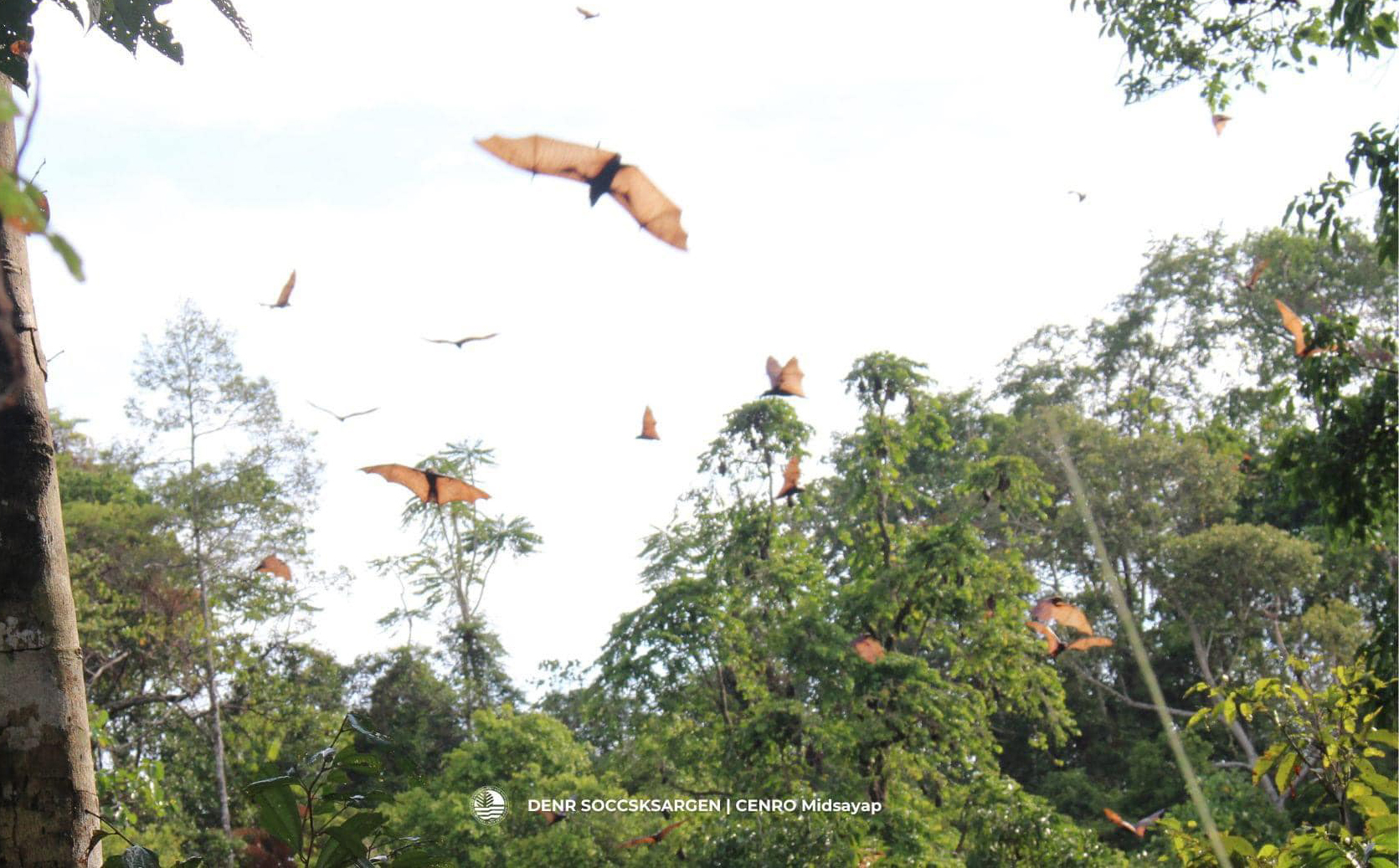
Between 50,000 to 80,000 species of flying foxes are being monitored in the forest area of Barangay Malagap in Banisilan, Cotabato.
The Community Environment and Natural Resources Office (CENRO)-Midsayap said these include flying foxes or island flying foxes (Pteropus hypomelanus), Philippine fruit bats or large flying foxes (Pteropus vampyrus), and golden-crowned flying foxes (Acerodon jubatus) in the area.
Conversing the biodiversity in the area is key to protecting the habitat of the bats.
“In a brief orientation with the composite monitoring team, Senior Ecosystems Management Specialist and CENRO Midsayap - CDS Chief Forester Mary Ann Cadungog emphasized the importance of conserving the biodiversity in the area to maintain a healthy and sustainable habitat for the bats/ flying foxes and other wildlife therein. She also mentioned the idea that the loss of roost and forage habitat would pose the biggest threat to these species since a great deal of flying fox mortality could result from starvation,” the Department of Environment and Natural Resources-Soccsksargen (DENR-12) said.
Under the Wildlife Resource Conservation Act (RA 9147), collection of such species is prohibited strictly. The law also provides for the conservation and protection of wildlife resources.
“Though the island flying fox (Pteropus hypomelanus) has a generally decreasing population, the International Union for Conservation of Nature (IUCN) listed its conservation status as the least concern. The large flying fox or the Philippine fruit bats (Pteropus vampyrus) are widely spread in lowland forests throughout the Philippine islands and its conservation status is listed as nearly threatened while the golden-crowned flying fox (Acerodon jubatus), possibly the largest bat in the world, though endemic to the country, is already classified as endangered species,” DENR-12 said.